Ice Cube Earrings: Technical Guide to Cuts, Settings & Carat Weight
An expert technical guide to ice cube earrings, detailing Asscher vs. Princess cuts, platinum bezel metallurgy, and heavy-gauge post engineering.

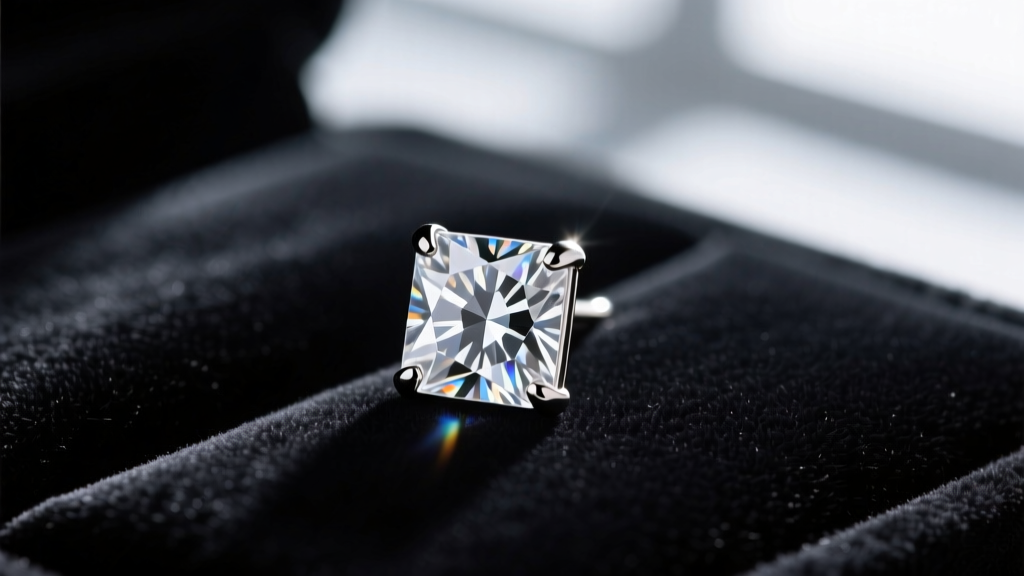
The Anatomy of the "Ice Cube" Silhouette
In the contemporary fine jewelry market, the term "ice cube earrings" refers to two distinct but overlapping design categories. The first is the architectural square-motif, heavily popularized by luxury houses, which utilizes pavé-set diamonds within sharp, geometric cubes. The second, and more gemologically complex category, features literal square-cut diamond solitaires—specifically Princess, Asscher, or Square Emerald cuts—secured in precision bezel settings to mimic the smooth, optical geometry of a frozen cube. As we navigate the 2026 landscape of high jewelry, understanding the technical specifications behind these designs is critical for both collectors and bench jewelers.
Gemological Specifications: Cuts That Mimic Ice
Not all square diamonds yield the "ice cube" effect. The optical performance of the stone dictates whether it resembles a brilliant, fiery gem or a crystalline block of ice. According to the Gemological Institute of America (GIA), the facet arrangement fundamentally alters light return.
| Cut Style | Facet Arrangement | Optimal Depth % | Visual Effect |
|---|---|---|---|
| Princess Cut | Brilliant (Chevron facets) | 65% - 75% | High scintillation, crushed ice center |
| Asscher Cut | Step (Concentric squares) | 60% - 68% | Hall of mirrors, glassy ice clarity |
| Square Emerald | Step (Linear parallel) | 60% - 65% | Flashy, broad planes of light |
For the truest "ice cube" aesthetic, the Asscher cut is the undisputed champion. Its stepped pavilion creates a mesmerizing, glassy depth that closely mimics the internal refraction of actual ice. However, step cuts are entirely unforgiving of inclusions and fluorescence. An Asscher cut intended for an ice cube earring must be a minimum of VS1 clarity, as the open table acts as a magnifying window directly into the stone's crystal lattice. Furthermore, the length-to-width ratio must be strictly between 1.00 and 1.05 to maintain the perfect square illusion; anything higher drifts into elongated territory, breaking the geometric motif.
Architectural Pavé vs. Solitaire Geometry
While solitaire square cuts rely on the diamond's internal lattice for their visual impact, the architectural pavé "ice cube" relies on micro-metallurgy. These designs feature interlocking cubes completely encrusted with melee diamonds (typically 0.01 to 0.03 carats each). The technical challenge here is the corner mitering. Bench jewelers must set the melee stones so that the metal beads do not interrupt the sharp 90-degree outer edges of the cube. This requires a technique called "bright cutting," where the metal is carved away to leave the outer rim perfectly flush and sharp, preserving the illusion of a solid block of ice.
When evaluating pavé ice cube earrings, scrutinize the milgrain or bead work under 10x magnification. High-end manufacturing will feature perfectly rounded, uniform beads that secure the melee diamonds without overlapping the stone's table. Poorly executed CAD/CAM casting often results in flat, misshapen beads that dull the overall scintillation of the geometric cube.
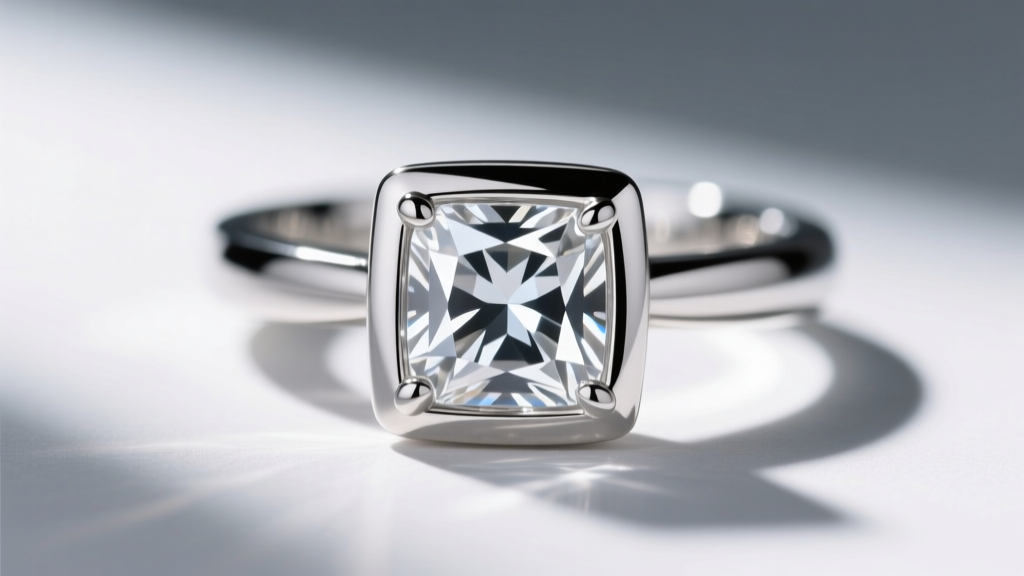
Metallurgy and Setting Mechanics
The setting mechanism is where the "ice cube" illusion is either perfected or ruined. Prong settings, while excellent for maximizing light entry, introduce metal claws that disrupt the geometric continuity of the square silhouette. Therefore, the full bezel setting is the industry standard for this style.
Platinum 950 vs. 18k White Gold
When crafting a bezel for sharp-cornered square stones, metal choice is a structural imperative. 18k White Gold relies on a microscopic layer of rhodium plating to achieve its bright white finish. Over time, friction and skin acids wear this plating away, particularly on the high-friction edges of a bezel rim, revealing the yellowish-grey alloy beneath.
Conversely, Lang Antiques notes that Platinum 950 (typically alloyed with 5% Ruthenium or Iridium) is naturally white and highly malleable. This malleability allows bench jewelers to burnish the metal tightly against the sharp 90-degree corners of a Princess or Asscher cut without chipping the diamond's girdle. Furthermore, platinum's tensile strength ensures the bezel wall will not warp if the earring is dropped, protecting the vulnerable points of the square stone.
Post Gauge and Backing Engineering
A common failure point in heavy geometric earrings is the post-and-backing assembly. Square-cut diamonds have a higher face-up spread per carat than round brilliants, meaning a 2.00 CTW (Carat Total Weight) pair of Asscher ice cube earrings will have a substantial physical footprint and weight distribution that sits further from the earlobe.
- Standard 20-Gauge (0.81mm): Entirely unsuitable for ice cube earrings over 0.50 CTW. The post will bend under the leverage of the square bezel.
- Heavy 18-Gauge (1.02mm): The minimum acceptable standard for 1.00 to 2.50 CTW studs, providing adequate shear strength.
- Custom 16-Gauge (1.29mm): Required for architectural drop earrings or "ice cube" motifs exceeding 3.00 CTW, often necessitating a stretched or surgically modified piercing.
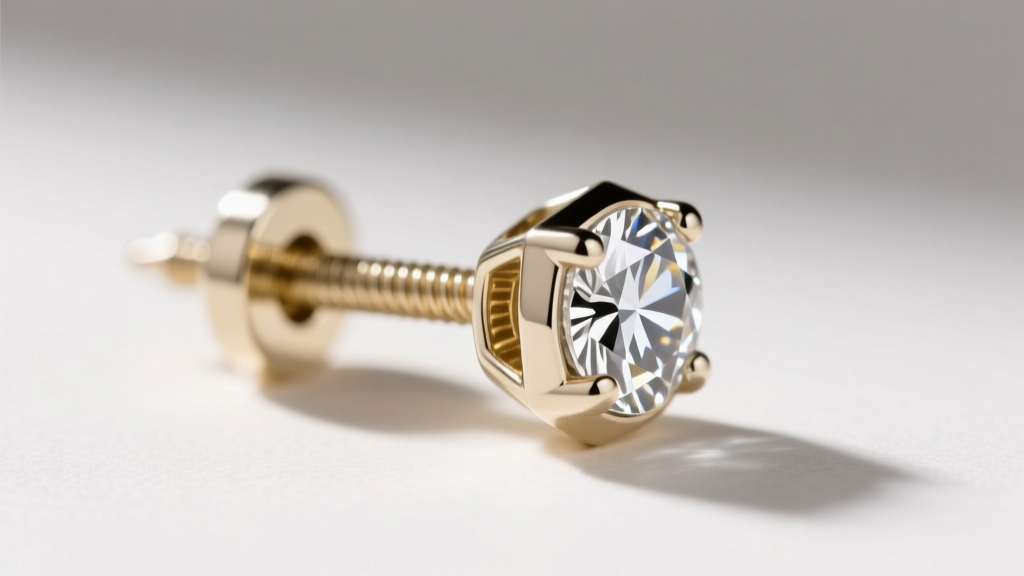
For heavy bezel-set square studs, standard friction backs (butterfly clutches) are a liability. The smooth metal of a bezel creates a front-heavy center of gravity. Always specify threaded screw-backs or La Pousette locking mechanisms to prevent catastrophic loss.
Carat Weight, Spread, and Pricing Matrices
Understanding the pricing matrix for ice cube earrings requires looking beyond simple carat weight. Because the "ice cube" look demands precision cutting, the market heavily penalizes stones with poor symmetry or thick girdles (which hide dead weight). Below is a baseline matrix for high-quality (D-F color, VS1+ clarity) Asscher cut pairs in the current market.
| Total Carat Weight (CTW) | Approx. Face-Up Spread (mm) | Required Post Gauge | Estimated Price Range (USD) |
|---|---|---|---|
| 1.00 CTW | 4.5mm x 4.5mm (each) | 18-Gauge | $6,500 - $9,200 |
| 2.00 CTW | 5.8mm x 5.8mm (each) | 18-Gauge | $14,000 - $21,000 |
| 3.00 CTW | 7.0mm x 7.0mm (each) | 16-Gauge | $28,000 - $45,000 |
Maintenance and Light Performance Optimization
The "ice cube" effect relies entirely on the pavilion's ability to transmit light unimpeded. Step cuts like the Asscher and Square Emerald act as grease magnets; sebum and cosmetic oils quickly coat the flat pavilion facets, transforming a glassy ice cube into a dull, opaque square. The American Gem Society emphasizes that clarity and transparency in step cuts are disproportionately affected by surface grime compared to brilliant cuts.
Cleaning Protocols for Square Cuts
While ultrasonic cleaners are generally safe for high-clarity, untreated diamonds set in platinum bezels, they can loosen the burnished metal rim if the jeweler was overly aggressive during the initial setting. The optimal maintenance routine involves a localized steam cleaner or a soft-bristled brush with a mild degreasing agent (such as diluted dish soap) applied specifically to the culet and pavilion mains.
Furthermore, avoid wearing these earrings in environments with heavy aerosol exposure, such as hairspray or perfume application zones. The flat, open facets of a square step cut will immediately trap aerosolized polymers, creating a filmy residue that requires professional ultrasonic intervention to remove safely without scratching the platinum bezel rim.
By mastering the intersection of step-cut gemology, precision bezel metallurgy, and structural post engineering, collectors can secure ice cube earrings that maintain their architectural brilliance and structural integrity for decades.


