Italian Gold Hoop Earrings: Expert Buying Guide & Tips
Discover what to look for when buying Italian gold hoop earrings. Learn about hallmarks, clasp types, tubing vs. solid gold, and pricing in our expert guide.

Why Italian Goldsmithing Sets the Standard
When discerning collectors and everyday wearers search for the perfect pair of hoops, Italian gold hoop earrings consistently emerge as the gold standard. Italy’s dominance in fine jewelry manufacturing is not merely a marketing triumph; it is rooted in centuries of metallurgical innovation and localized artisan guilds. Districts like Vicenza (famous for its intricate gold chains and lightweight tubular hoops) and Valenza (renowned for heavy, gem-set masterpieces) operate as specialized micro-economies where techniques are passed down through generations.
However, the global prestige of Italian jewelry has also spawned a market saturated with counterfeits, misleading karat stamps, and mass-produced imitations that simply use Italian-style clasps. With gold spot prices reaching historic highs in 2026, understanding the exact manufacturing markers of authentic Italian goldsmithing is critical to protecting your investment. This guide will teach you how to decode hallmarks, evaluate structural integrity, and select the perfect pair based on your lifestyle and anatomy.
Decoding Hallmarks: The Italian Lozenge and Purity Stamps
Unlike the United States, where a simple "14K" or "18K" stamp is often the only legal requirement, Italy enforces a rigorous, multi-layered hallmarking system. According to the World Gold Council, authentic Italian gold jewelry must bear specific state-mandated marks that trace the piece back to its exact manufacturer.
The Anatomy of an Italian Hallmark
When inspecting the post or the inner rim of the hoop, look for the following distinct stamps:
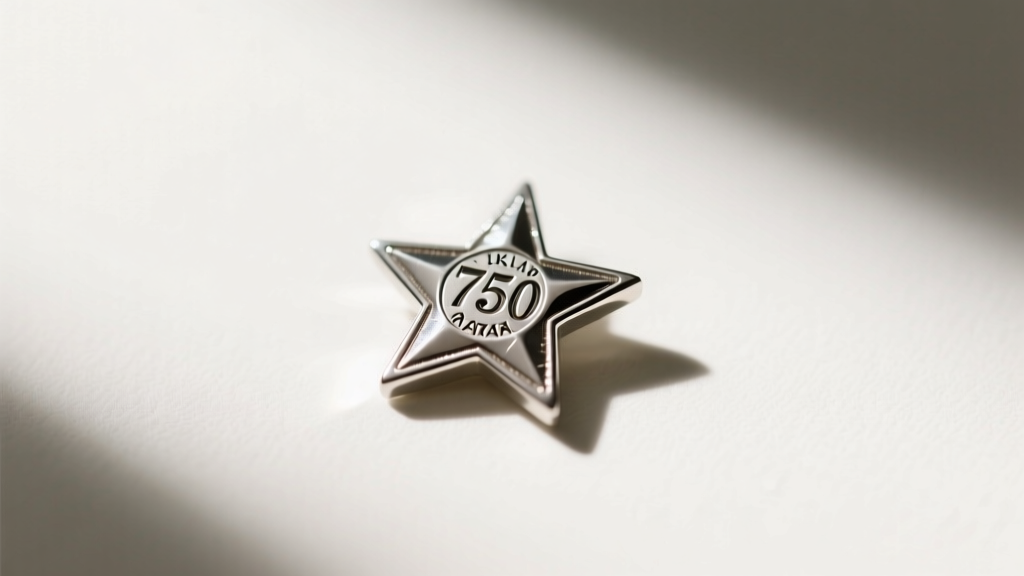
- The Purity Mark: Italy predominantly uses the millesimal fineness system. You will rarely see "18K"; instead, look for 750 (18k gold, 75% pure) or 585 (14k gold, 58.5% pure). 18k is the traditional Italian standard, offering a rich, buttery yellow hue that 14k cannot replicate.
- The Maker’s Mark (Lozenge): This is a stretched diamond shape containing three elements: a star (indicating new, post-1968 production), a unique registration number, and a two-letter province code. For example, a lozenge reading * 123 VI identifies the 123rd registered goldsmith in Vicenza. Valenza pieces will bear AL (Alessandria), and Arezzo pieces will show AR.
- The Trademark/Brand Stamp: High-end houses like Bulgari, Pomellato, or Crivelli will also include their registered brand logo alongside the state-mandated marks.
| Stamp | Karat Equivalent | Gold Content | Best Use Case | Durability |
|---|---|---|---|---|
| 999 | 24K | 99.9% | Investment bullion, rarely used for hoops | Very Soft (Bends easily) |
| 750 | 18K | 75.0% | Premium Italian hoops, rich color | Moderate (Scratches but holds shape) |
| 585 | 14K | 58.5% | Everyday wear, budget-friendly | High (Resists denting) |
| 417 | 10K | 41.7% | Low-end export markets | Very High (Prone to tarnishing) |
Tubular vs. Solid Gold: Weight, Durability, and Pricing
One of the most common points of confusion when buying Italian gold hoop earrings is the discrepancy in weight and price between seemingly identical sizes. This comes down to the manufacturing technique: tubular (hollow) versus solid gold.
Electroformed and Tubular Hoops
Italy pioneered advanced galvanic forming (electroforming) and sheet-rolling techniques to create large-diameter hoops that remain feather-light. A 50mm tubular 18k gold hoop might weigh only 3 grams, making it comfortable for all-day wear.
The Catch: Tubular hoops are highly susceptible to denting if squeezed. Furthermore, if the clasp seal is compromised, water and sweat can become trapped inside the hollow tube. This leads to internal corrosion, which can eventually cause a greenish discharge or skin irritation. Always ensure tubular hoops are completely dried after swimming or showering.
Solid Cast and Die-Struck Hoops
Solid hoops are poured into molds or stamped from thick gold sheets. A 50mm solid 18k hoop can weigh upwards of 12 to 15 grams. They are virtually indestructible, will never trap water, and possess a satisfying, premium heft.
Pricing Context (2026): Due to elevated gold markets, a pair of 30mm solid 18k Italian hoops will typically range from $800 to $1,400, whereas a tubular pair of the exact same dimensions might retail for $250 to $450. You are paying strictly for the melt weight and the labor of casting.
Clasp Mechanisms and Common Failure Modes
The clasp is the most critical structural component of any hoop earring. Italian manufacturers are famous for their precision engineering in closure mechanisms. According to gemological and jewelry repair experts at the Gemological Institute of America (GIA), clasp failure is the number one reason fine jewelry is lost. Here is what to look for:
The Hinged Snap (Click Closure)
Common in medium-to-large hoops, this features a V-shaped wire that snaps into a hollow catch on the opposite end.
Failure Mode: Over time, the V-wire can bend outward, preventing a secure "click." Conversely, the catch can widen, allowing the wire to slip out. Pro Tip: Test the clasp by giving it a gentle lateral tug. It should require deliberate, straight-line pressure to open, not lateral wiggling.
The Omega Back
Often used for heavy, thick Italian hoops, a straight or slightly curved post passes through the ear, while a hinged, omega-shaped clip swings up from the bottom of the hoop to secure the post against a grooved saddle.
Failure Mode: The omega clip relies on spring tension. If bent backward accidentally while taking the earring off, the tension is lost, and the earring will slide off the earlobe.
The Saddle Back (Latch Back)
A hinged wire passes through the piercing and latches into a curved saddle that wraps around the back of the hoop. This is incredibly secure and common in high-end Italian huggies and small hoops. It is the most failure-resistant mechanism available.
Sizing Guide: Choosing the Right Diameter
Italian gold hoop earrings are measured by their outer diameter in millimeters. Selecting the right size depends on your face shape, earlobe thickness, and lifestyle.
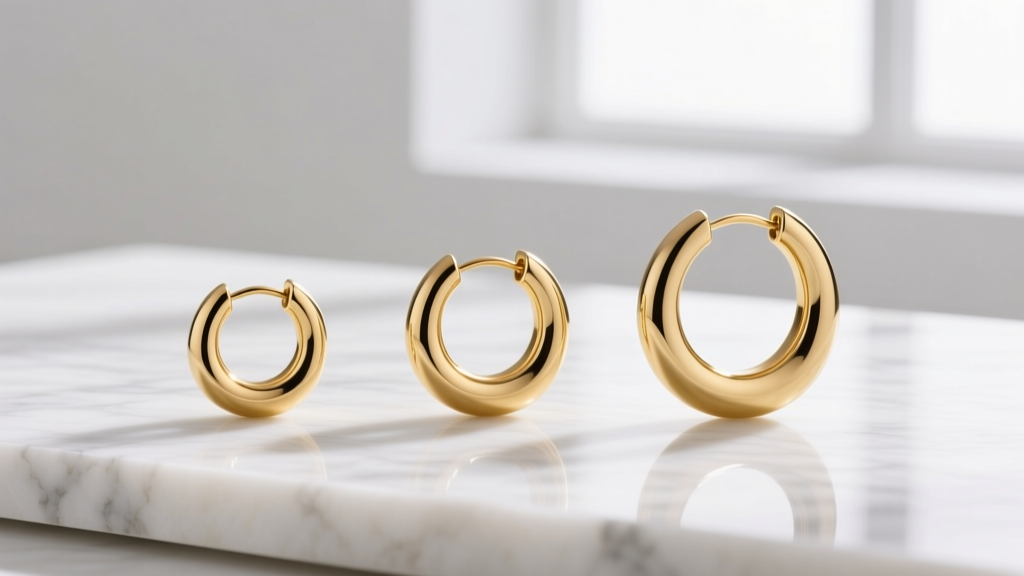
- 10mm - 15mm (Huggies): Snug against the earlobe. Ideal for sleeping, active lifestyles, and secondary cartilage piercings. Look for saddle-back clasps in this size range.
- 20mm - 30mm (Small Hoops): The classic everyday size. They frame the jawline without interfering with phone calls or collars. A 25mm solid 18k Italian hoop is a staple wardrobe investment.
- 40mm - 50mm (Medium/Large Hoops): A bold statement that draws the eye horizontally, which can help balance a longer, oval face shape. Tubular construction is highly recommended here to prevent earlobe stretching.
- 60mm+ (Statement Hoops): Dramatic and eye-catching. Ensure these feature reinforced tubing and a robust hinge mechanism, as the leverage placed on the post increases exponentially with the diameter.
Red Flags: Spotting Fakes and Overpriced Tourist Traps
When traveling through Italy or buying from online liquidators, beware of these common pitfalls:
- The Magnet Test Failure: Gold is non-magnetic. If the hoop or the internal spring of the clasp sticks to a neodymium magnet, the core is likely steel or iron, heavily plated with a microscopic layer of gold.
- Missing Province Codes: A piece stamped "750 ITALY" but lacking the official lozenge maker's mark is likely mass-produced overseas and laser-stamped to deceive tourists. True Italian artisans proudly display their provincial registration.
- Suspiciously Low Weight-to-Price Ratios: If a pair of 50mm solid 18k hoops is being sold for $300, it is a mathematical impossibility based on the raw spot price of gold. The piece is either heavily alloyed (below 10k), gold-plated over brass, or hollow but sold as solid.
- Seam Lines on "Solid" Hoops: Run your fingernail along the inner curve of the hoop. If you feel a distinct ridge or seam, the hoop is made from rolled sheet metal soldered together, not cast solid. While not inherently a "fake," it should not command solid cast pricing.
Investing in authentic Italian gold hoop earrings is a celebration of heritage, metallurgy, and timeless design. By scrutinizing the lozenge hallmark, understanding the structural trade-offs of tubular versus solid gold, and testing the precision of the clasp, you ensure that your purchase will remain a secure, beautiful fixture in your jewelry box for decades to come.