How to Style Rectangle Earrings Silver for Any Face Shape
Learn how to style rectangle earrings silver for your face shape. Step-by-step guide on choosing grades, gauges, and preventing tarnish.

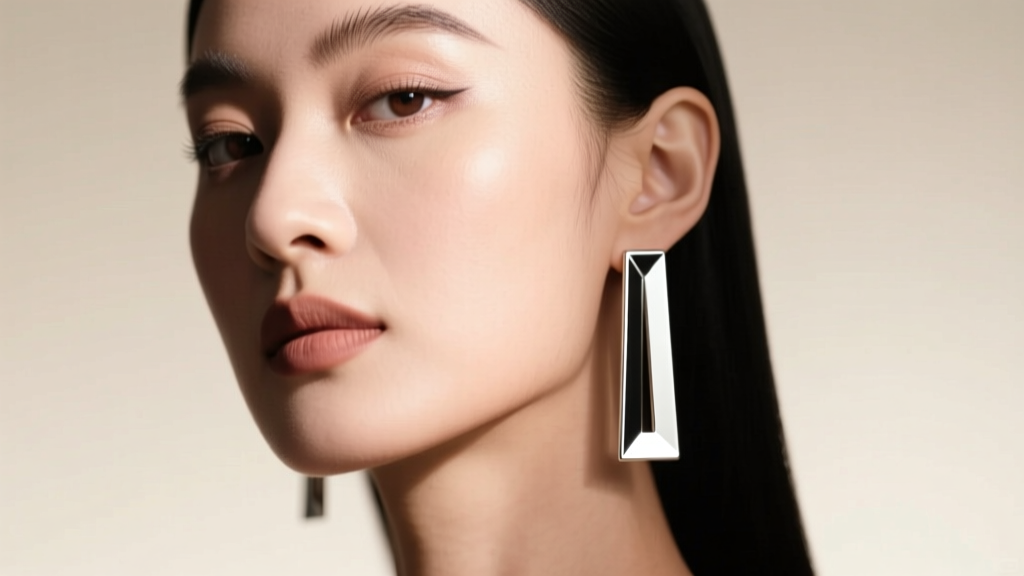
Geometric jewelry has transcended seasonal trends, cementing itself as a cornerstone of modern minimalist wardrobes. As we navigate the style landscape of 2026, the architectural elegance of rectangle earrings silver remains a definitive staple. However, pulling off sharp, linear silhouettes requires more than just slipping them on. It demands an understanding of facial geometry, metallurgical grades, and structural gauge weights. This step-by-step guide will teach you exactly how to select, style, and maintain your geometric silver earrings for a flawless, comfortable fit.
Step 1: Identify Your Silver Grade and Gauge Requirements
Before focusing on aesthetics, you must evaluate the structural integrity and material composition of your earrings. Not all silver is created equal, and the wrong gauge can lead to painful earlobe drooping or tearing.
Choosing the Right Silver Alloy
- 925 Sterling Silver: Composed of 92.5% pure silver and 7.5% copper. According to the Gemological Institute of America (GIA), this copper addition provides necessary hardness but makes the metal susceptible to tarnishing when exposed to sulfur and moisture.
- 960 Argentium Silver: A modern alloy that replaces some copper with germanium. It is highly tarnish-resistant, hypoallergenic, and naturally brighter. If you live in a humid climate or have sensitive skin, Argentium is the superior choice for daily-wear geometric drops.
Matching Gauge to Earring Weight
Standard lobe piercings are typically 20-gauge (0.81mm) or 18-gauge (1.02mm). However, elongated rectangle earrings silver act as levers. A heavy 40mm silver block on a thin 20G wire will pull the piercing downward, causing discomfort and stretching the tissue over time.
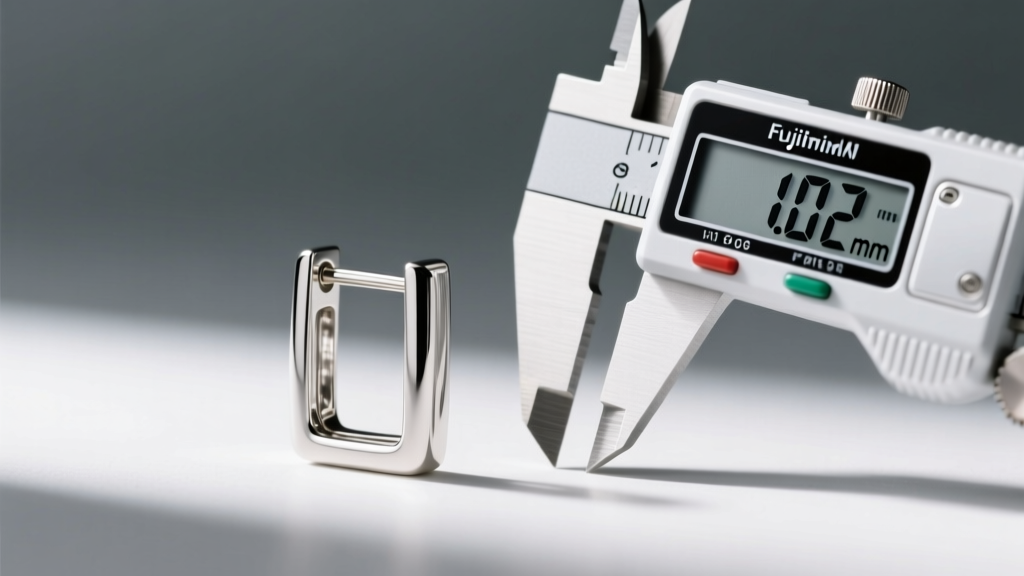
Expert Rule of Thumb: For any rectangular drop earring exceeding 25mm in length or 8 grams in weight, insist on an 18-gauge (1.02mm) or 16-gauge (1.29mm) post. This thicker wire distributes the leverage across a wider surface area of the earlobe.
Step 2: Match Rectangle Proportions to Your Face Shape
The core principle of styling geometric jewelry is contrast and balance. Sharp, linear earrings can either harmonize with your natural bone structure or provide a striking, intentional contrast. Use this framework to select the exact dimensions of your rectangle earrings.
| Face Shape | Ideal Rectangle Dimensions | Styling Rationale |
|---|---|---|
| Round | Long & Thin (e.g., 45mm x 4mm) | Elongates the face and adds sharp, structural contrast to soft curves. |
| Square | Medium & Wide (e.g., 20mm x 12mm) | Opt for blocks with slightly rounded corners to soften a strong jawline without adding excessive length. |
| Oval | Proportional (e.g., 30mm x 8mm) | Oval faces are highly versatile. Mid-sized rectangular drops maintain natural facial harmony. |
| Heart | Tapered or Inverted (e.g., 15mm top to 25mm bottom) | Draws the eye downward, adding visual weight to a narrower chin. |
Step 3: Step-by-Step Styling for Different Occasions
The finish and scale of your silver rectangles dictate their appropriateness for various environments. Here is how to deploy them effectively.
The Professional Environment (Office & Boardroom)
In corporate settings, high-shine jewelry can sometimes read as overly flashy. Opt for brushed or matte-finish silver rectangles. A 15mm x 5mm horizontal rectangular stud or a modest 20mm vertical drop in a satin finish reflects light softly, projecting quiet confidence and modern professionalism without causing visual distraction.
Evening & Editorial (Dinners, Galas, & Nightlife)
For evening wear, leverage high-polish or oxidized silver. Oxidized silver (where the recessed areas are intentionally darkened) highlights the sharp, architectural edges of the rectangle. Pair a 50mm high-polish rectangular dangle with a sleek, pulled-back updo to ensure the earrings catch ambient lighting and frame the neck beautifully.
Step 4: The 5-Minute Silver Tarnish Prevention Routine
Silver tarnish is not a sign of poor quality; it is a natural chemical reaction. The copper in sterling silver reacts with hydrogen sulfide in the air, skin oils, and cosmetics to form silver sulfide (the black layer). Follow this precise maintenance routine to keep your geometric lines sharp and bright.
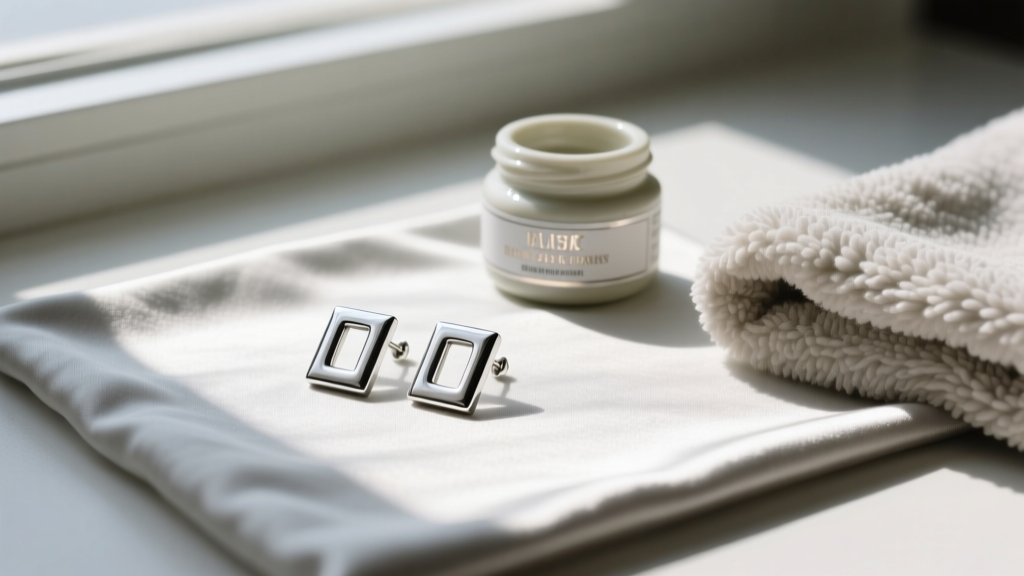
- The Post-Wear Wipe Down: Never put silver away immediately after taking it off. Use a 100% cotton flannel cloth to wipe away skin oils, lotions, and sweat. Moisture is the primary catalyst for the oxidation process.
- Strategic Storage: Store your rectangle earrings in an airtight ziplock bag with a 3M anti-tarnish strip. The strip absorbs airborne sulfur compounds before they can reach the metal. Replace the strip every 3 to 6 months.
- Corrective Polishing: If tarnish appears, avoid harsh liquid chemical dips. These strips away the rhodium plating (if present) and can leave a porous, matte surface. Instead, use a calcium carbonate-based silver polishing paste applied with a microfiber cloth, rubbing strictly in a back-and-forth motion (never in circles, which highlights microscopic scratches).
Troubleshooting Common Silver Earring Issues
Issue 1: The 'Green Earlobe' Effect
If your silver earrings leave a green or black smudge on your skin, it is due to the copper content in the alloy reacting with the acidic pH of your sweat or the chemicals in your perfume. The Fix: Coat the earring post and the back of the rectangle plate with a thin layer of clear, hypoallergenic nail polish to create a physical barrier. For a permanent solution, switch to Argentium silver or platinum-plated geometric styles. The American Academy of Dermatology notes that ensuring a barrier between reactive alloys and the skin is the primary defense against contact dermatitis and localized staining.
Issue 2: Bent Earring Posts
Silver is a relatively soft metal. If you sleep in your rectangle studs or pull a sweater over them, the post will bend. The Fix: Do not use your fingers or standard metal pliers to bend it back, as this will snap the post or mar the metal. Use nylon-jaw jewelry pliers. Grip the base of the post firmly and apply gentle, steady pressure to realign it to a perfect 90-degree angle.
Final Thoughts on Geometric Silver
Mastering the art of wearing rectangle earrings silver is about respecting both the geometry of your face and the chemistry of the metal. By selecting the correct gauge for structural support, matching dimensions to your bone structure, and implementing a rigorous anti-tarnish protocol, your geometric silver collection will remain a sharp, sophisticated anchor in your jewelry wardrobe for decades to come.