How to Stop Hook Type Earrings From Falling Out & Stretching Piercings
Discover expert troubleshooting for hook type earrings. Learn how to prevent them from falling out, stop piercing stretch, and fix uneven hanging.

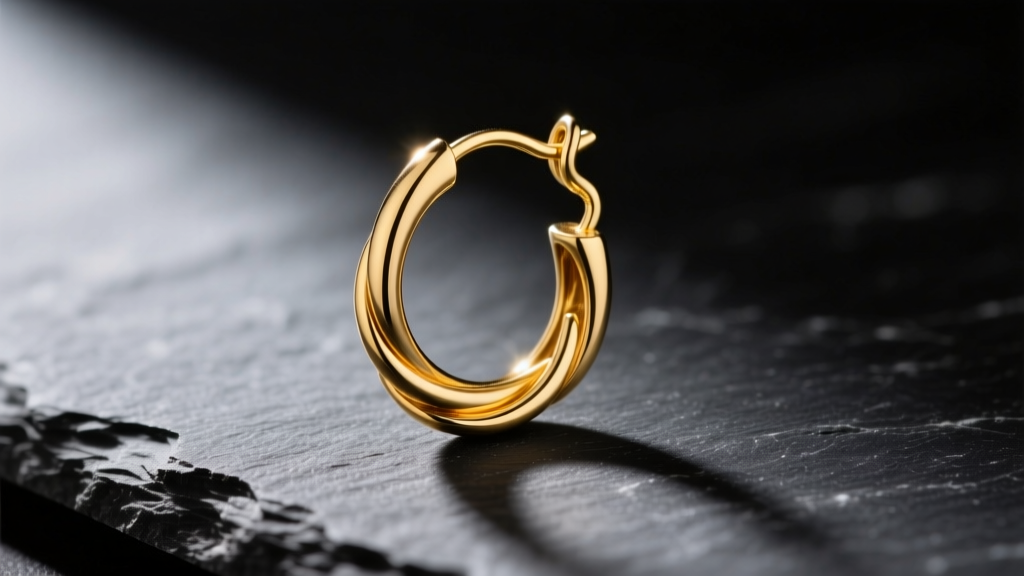
Hook type earrings—often referred to as French hooks, fishhooks, or ear wires—are a staple in fine and fashion jewelry design. They offer effortless elegance and allow dangles to swing freely, catching the light with every movement. However, their open-wire design introduces a unique set of mechanical and biological challenges. From mysterious disappearances (falling out) to the dreaded "cheese-cutter" effect (stretching the earlobe), troubleshooting hook type earrings requires an understanding of metallurgy, gauge thickness, and ear anatomy.
In this comprehensive troubleshooting guide, we break down the four most common failures associated with hook earrings and provide actionable, jeweler-approved solutions to fix them, ensuring your favorite pieces stay secure and comfortable.
The Anatomy of a Hook Earring: Why They Fail
Before fixing the problem, you must understand the mechanics. A standard hook earring consists of three parts: the wire (which passes through the piercing), the loop (where the dangle attaches), and the tension bend (the curved hook that rests behind the earlobe). Because there is no locking mechanism, the earring relies entirely on gravity and the friction of the earlobe to stay in place. This open architecture is the root cause of 90% of hook earring complaints, making structural adjustments necessary for daily wear.
Troubleshooting Problem 1: Hook Type Earrings Keep Falling Out
The most frequent issue is losing an earring to a sweater, a brush of hair, or a restless night's sleep. Since the wire lacks a secure backing, it can easily slip backward through the fistula (the piercing hole), especially if the wearer has low-set earlobes or frequently touches their hair.
The Friction Back and Silicone Stopper Solution
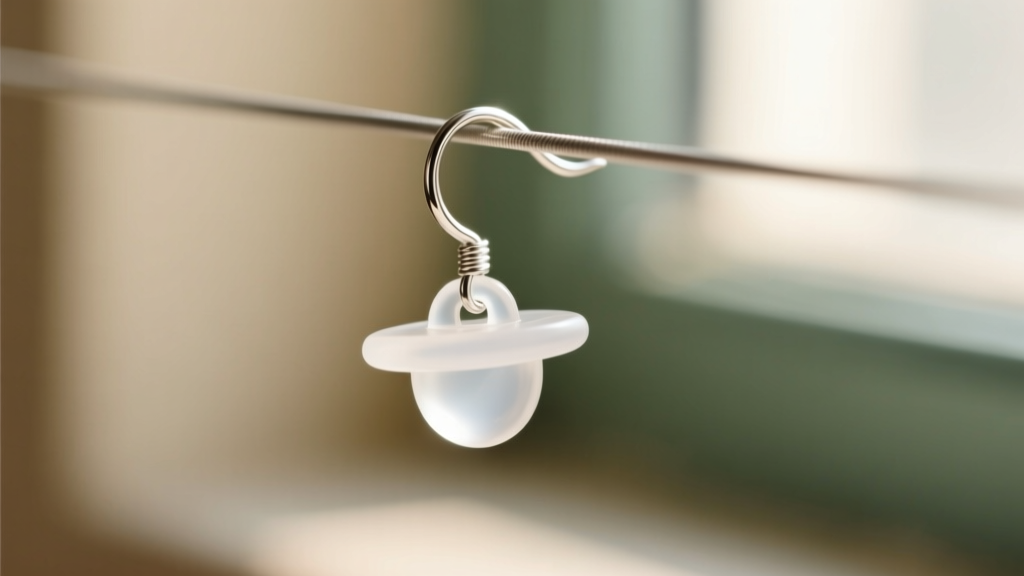
The most immediate fix is adding a physical barrier to the end of the wire. While traditional metal butterfly clutches rarely fit over the thicker bend of a French hook, modern silicone alternatives are highly effective and comfortable.
- Silicone Bullet Stoppers: These feature a narrow channel that grips the 20-gauge or 22-gauge wire tightly. Brands like BlingGuard offer medical-grade silicone stoppers that prevent slippage without harboring bacteria or causing friction burns on the neck.
- French Wire Stoppers (Plastic Tubing): Small, clear PVC tubes that slide over the hook. They are virtually invisible and prevent the metal from scratching the skin behind the ear.
- The "Pinch" Method: If you are caught without a stopper, use clean fingers to gently pinch the end of the hook into a tighter "U" shape, creating a physical bulb that cannot easily pass back through the piercing.
Troubleshooting Problem 2: Heavy Hooks Stretching the Earlobe
The "cheese-cutter effect" occurs when a thin wire supports a heavy dangle. Over time, the downward force slices through the tissue of the earlobe, causing permanent stretching, thinning, or even complete tearing of the fistula. This is a slow process, and many wearers do not notice the damage until the piercing becomes visibly elongated.
Gauge Thickness vs. Weight Tolerance
Wire thickness is measured in gauges; the lower the number, the thicker the wire. Most commercial hook type earrings are manufactured in 22-gauge or 20-gauge wire to save on precious metal costs. However, this is entirely inadequate for statement pieces or heavy gemstones.
| Wire Gauge | Diameter (mm) | Max Safe Weight | Best Use Case |
|---|---|---|---|
| 22-Gauge | 0.64 mm | Under 3 grams | Featherweight charms, tiny seed pearl drops |
| 20-Gauge | 0.81 mm | 3 to 7 grams | Standard gemstone drops, medium hoops |
| 18-Gauge | 1.02 mm | 7 to 12 grams | Heavy statement dangles, large gemstone clusters |
| 16-Gauge | 1.29 mm | 12+ grams | Avant-garde heavy brass/bronze art pieces |
The Fix: If your heavy earrings are on 22-gauge wire, take them to a bench jeweler to have the ear wires swapped for 18-gauge or 16-gauge wire. Alternatively, apply a liquid silicone earlobe support patch (like LobeWonder) behind the ear to distribute the weight across a wider surface area of skin, relieving pressure on the fistula.
Troubleshooting Problem 3: Allergic Reactions and "Green Ear"
Because hook earrings pass entirely through the piercing and rest against the sensitive skin behind the ear, they have a high surface-area contact zone. If you experience itching, weeping, or green discoloration, the culprit is almost always base metal oxidation or a nickel allergy. Sweat and natural skin acidity accelerate the oxidation of copper and brass alloys, leading to the notorious "green ear" stain.
Material Upgrades for Sensitive Piercings
According to the Association of Professional Piercers (APP), only specific materials are safe for long-term wear in the body. Cheap "gold-plated" hooks will eventually wear down, exposing the brass or nickel-silver core beneath, which triggers contact dermatitis.
"Implant-grade titanium (ASTM F136) and Niobium are the gold standards for reactive skin. They contain zero nickel and will not oxidize against the skin's natural acidity."
If you love the look of gold but have reactive skin, you must upgrade to solid 14k or 18k gold, or high-quality gold vermeil (a thick layer of gold over sterling silver, rather than brass). The Gemological Institute of America (GIA) notes that nickel is the most common contact allergen in jewelry, and avoiding it requires strict attention to the core metal of the ear wire, not just the surface plating.
Troubleshooting Problem 4: Asymmetrical Hanging and Twisting
Have you ever put on a pair of hook type earrings, only to find that the dangle on the left ear faces perfectly forward, while the right one twists awkwardly to the side? This is a center-of-gravity issue caused by the loop's orientation. Furthermore, sleeping on one side or taking off a tight turtleneck can slightly warp the wire over time, requiring periodic maintenance.
The Pliers Adjustment Guide
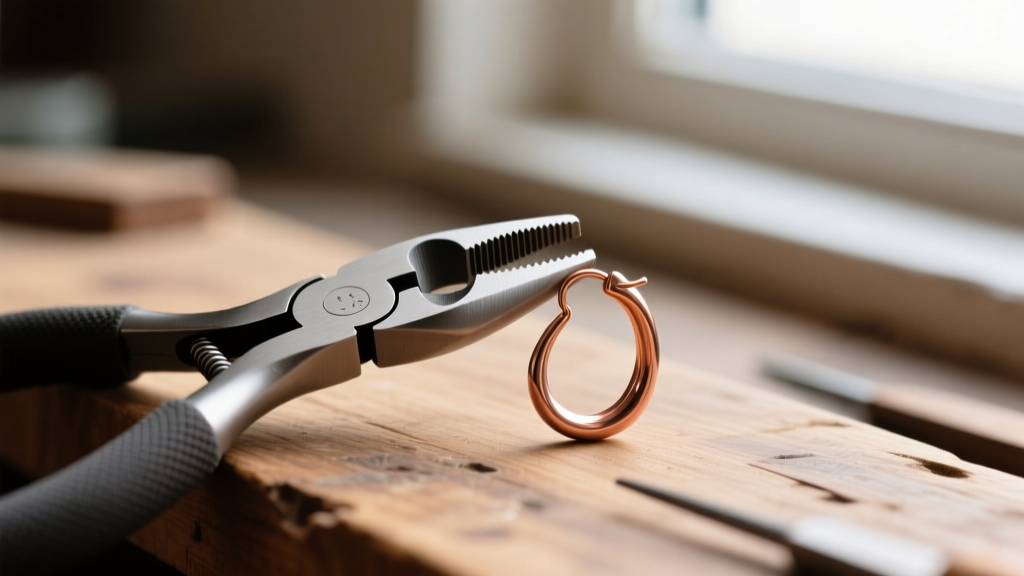
The loop at the bottom of the ear wire dictates how the dangle hangs. If the dangle twists, the loop is likely angled slightly off-center. You can fix this at home with the right tools.
- Acquire Nylon-Jaw Pliers: Never use standard steel pliers on jewelry wire; the metal teeth will permanently scratch and mar the finish. Nylon-jaw pliers grip the metal safely without leaving tool marks.
- Isolate the Loop: Hold the main body of the ear wire steady with one pair of pliers to avoid bending the main hook.
- Micro-Adjust: Use the second pair of pliers to gently twist the bottom loop a fraction of a millimeter left or right until the dangle hangs perfectly parallel to your face.
When to Retire the Hook: Upgrading to Leverbacks and Latches
Sometimes, the troubleshooting efforts required to keep a hook earring secure and balanced outweigh the benefits of the design. If you are dealing with an active lifestyle, frequent travel, or severe lobe stretching, it is time to swap the finding entirely.
Leverback earrings feature a hinged wire that snaps securely into a latch at the front of the earlobe. They provide the same elegant swinging motion as a French hook but eliminate the risk of falling out. French clips (omega backs) offer another secure alternative, utilizing a spring-loaded hinge that clamps gently against the back of the earlobe, distributing weight evenly and preventing the cheese-cutter effect.
Finally, proper storage is critical. Never toss hook type earrings loosely into a jewelry box where they will tangle and bend. Use a slotted earring organizer or hang them on a dedicated rack to preserve the structural integrity of the tension bend. By understanding the mechanics of gauge, weight distribution, and metallurgy, you can rescue your favorite hook type earrings from the jewelry box purgatory and wear them with absolute confidence.


