Gold Paper Clip Earrings: 2026 Trend & Style Guide
Discover why gold paper clip earrings dominate 2026 trends. Explore styling tips, metal grades, gauge sizes, and face-shape matching in our expert guide.

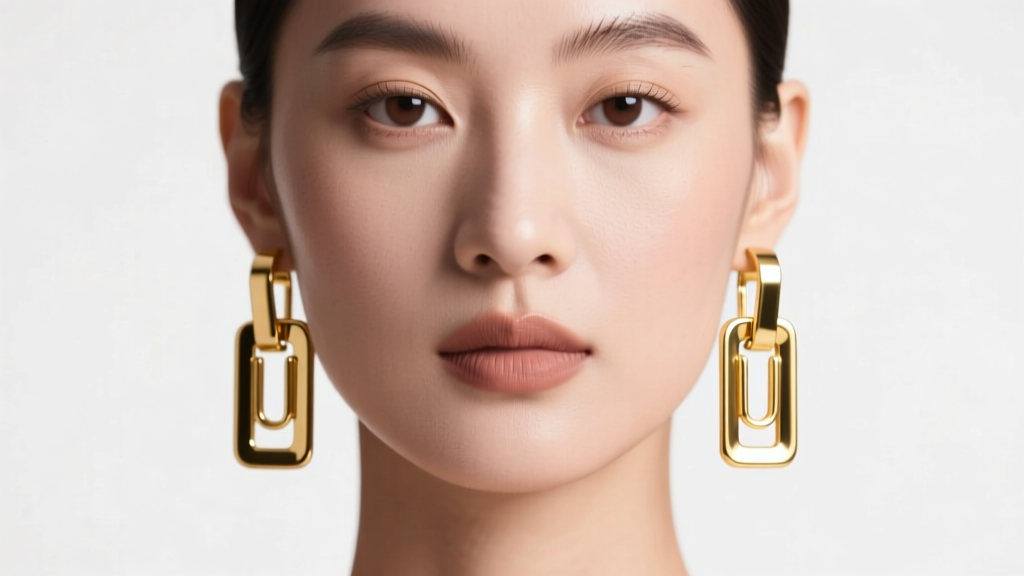
The Geometry and Anatomy of the Paper Clip Link
Gold paper clip earrings have transcended their status as a fleeting minimalist trend to become a foundational pillar of modern jewelry wardrobes in 2026. The defining characteristic of this style is the strict 1:2 aspect ratio of the rectangular links, mimicking the proportions of actual hardware. However, not all paper clip chains are engineered equally. In fine jewelry, these links typically fall into three distinct size categories: micro (2x4mm), standard (3x6mm), and chunky (5x10mm or larger). The structural integrity of gold paper clip earrings relies heavily on whether the links are soldered or unsoldered. Unsoldered links, while cheaper to produce, are prone to warping and pulling apart under tension, especially in higher karats like 18k or 22k gold where the metal is inherently softer. For drop earrings that experience kinetic movement, always seek out laser-soldered links to ensure longevity.
Material Grades, Weight, and Pricing Tiers
When investing in gold paper clip earrings, understanding the difference between solid construction and hollow electroformed links is critical. Hollow links offer a massive, chunky aesthetic at a fraction of the weight and cost, but they are highly susceptible to denting if dropped on a hard surface. Solid cast or die-struck links provide a satisfying drape and heirloom durability. According to the Gemological Institute of America (GIA), the alloy mix in 14k gold provides the optimal balance of rich color and tensile strength for chain links, whereas 18k gold offers a deeper yellow hue but requires more careful handling.
| Material Grade | Construction Type | Estimated Price Range (Standard Drop) | Durability Rating |
|---|---|---|---|
| Gold Vermeil (Sterling Base) | Solid Silver, 2.5µm Gold Plating | $45 - $120 | Moderate (Prone to eventual wear) |
| 10k Solid Gold | Solid Cast Links | $150 - $280 | High (Very rigid, pale yellow) |
| 14k Solid Gold | Solid or Hollow Electroformed | $300 - $850 | Very High (Industry standard) |
| 18k Solid Gold | Solid Die-Struck Links | $900 - $2,500+ | High (Softer, requires soldered links) |
Biomechanics: Gauge Sizing and Placement
A common failure point in trend-driven jewelry is ignoring the biomechanics of the ear. The post or wire gauge must match the piercing placement to prevent tissue migration. Standard lobe piercings are typically done at 20-gauge (0.81mm) or 18-gauge (1.02mm). However, if you are wearing heavy, chunky gold paper clip earrings, an 18-gauge post is highly recommended to distribute the weight and prevent the earring from drooping forward. For cartilage placements, such as the helix or conch, the jewelry must be thicker to avoid the 'cheese-cutter effect,' where thin wires slowly slice through the tissue under the weight of the chain. As noted by jewelry manufacturing experts at Rio Grande, 16-gauge (1.29mm) or 14-gauge (1.63mm) wire is the mandatory standard for supporting suspended chain elements in upper-ear piercings.
Helix and Conch Considerations
When adapting the gold paper clip motif for cartilage, huggie hoops or clicker rings are vastly superior to standard friction posts. A hinged clicker closure with a secure snap mechanism ensures that the linear chain element hangs perfectly plumb without rotating awkwardly against the curvature of the ear.
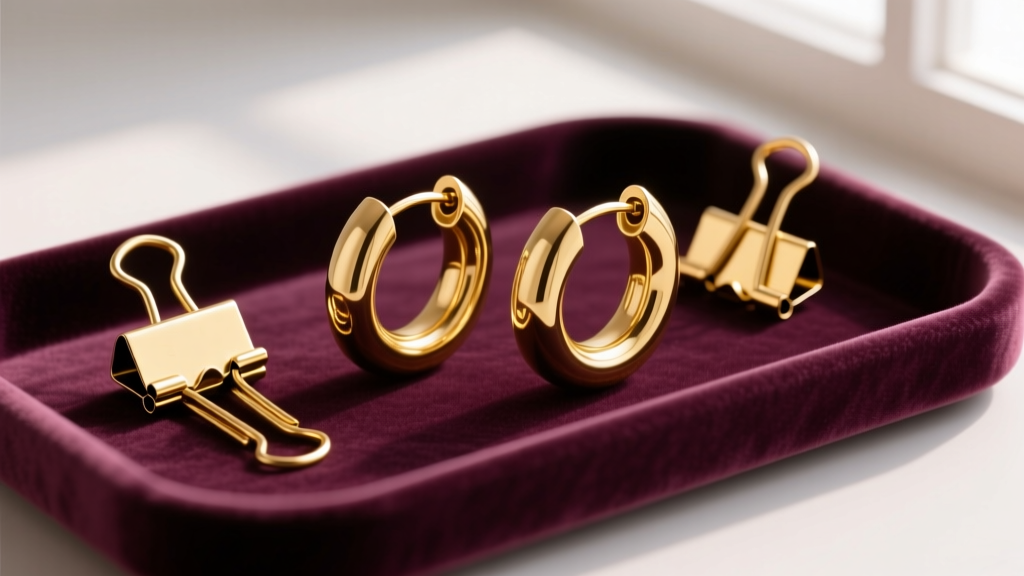
Face Shape and Styling Matrix
The linear geometry of gold paper clip earrings makes them an incredible tool for visual balancing. Because the links draw the eye vertically, they can be used to manipulate the perceived proportions of the face. Here is a practical framework for selecting the right silhouette based on your bone structure:
- Round Faces: Opt for long, linear drop earrings (3x6mm or 5x10mm links) that extend at least two inches below the earlobe. The sharp, rectangular geometry and vertical drop create an elongating illusion, contrasting beautifully with soft jawlines.
- Square Faces: Avoid stiff, straight drops that end exactly at the jawline, as this emphasizes angularity. Instead, choose gold paper clip huggies or medium-length dangles that feature a slight curve or terminate in a rounded gemstone bezel to soften the lower face.
- Oval Faces: The universal canvas. You can experiment with asymmetrical styling, such as a chunky 5x10mm paper clip ear cuff on one side and a delicate micro-chain stud on the other.
- Heart-Shaped Faces: Look for styles that are wider at the bottom. Paper clip chains that terminate in a teardrop or pear-shaped charm add necessary visual weight to the lower half of the face, balancing a narrower chin.
Curated Ear Integration in 2026
The 'curated ear' trend has evolved from a random assortment of studs into highly intentional, themed compositions. Gold paper clip earrings serve as the perfect 'bridge' piece in a multi-piercing setup. Because the chain introduces a linear, industrial texture, it pairs exceptionally well with smooth, high-polish geometric studs (like gold spheres or flat squares) in adjacent piercings. Avoid mixing paper clip chains with other highly textured chains, such as rope or wheat chains, in the same ear, as the competing visual frequencies create a cluttered, chaotic aesthetic. Stick to mixing the paper clip motif with solid, unbroken metal forms.
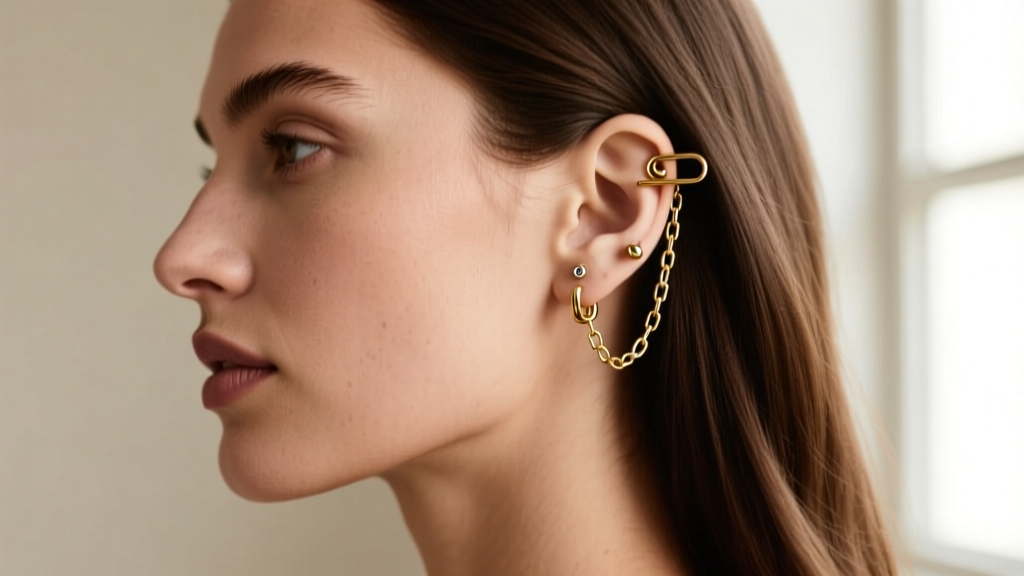
Pro-Tip: When threading gold paper clip chain elements through a secondary piercing (a popular 2026 styling hack), always ensure the terminal link is large enough to rest flush against the earlobe. If the link is too small, it will slip entirely through the piercing hole, requiring tedious retrieval with tweezers.
Maintenance, Snag Hazards, and Failure Modes
The very design that makes gold paper clip earrings visually striking—the open, rectangular centers of the links—also creates a prime hazard for snagging. The sharp inner corners of unsoldered or poorly finished links can easily catch on knitwear, silk blouses, and loose hair. To mitigate this, high-end manufacturers use a process called 'tumbling' to slightly round the inner edges of the links without losing the overall rectangular silhouette.
Cleaning hollow gold paper clip earrings requires specific care. Never place hollow electroformed chains in an ultrasonic cleaner. The high-frequency vibrations can easily shake loose the microscopic resin fillers or compromise the thin gold walls, leading to irreversible structural failure. Instead, use a soft-bristled baby toothbrush, a drop of mild dish soap, and warm water, gently brushing the interior of each link to remove accumulated sebum and cosmetic residue. Store them flat in a lined jewelry box; hanging heavy paper clip chains on standard jewelry trees can cause the top links to stretch and deform under their own weight over time.


