Style Guide: Golden Earring Members' Rockstar Gold Hoops
Discover how the vintage gold hoops worn by golden earring members of 70s rock bands are shaping 2026's edgiest ear styling trends and piercing gauges.


The Resurgence of the Rockstar Gold Hoop in 2026
Fashion operates in cycles, and the 2026 ear-styling landscape is currently dominated by a gritty, unapologetic revival of 1970s and 80s rock-and-roll aesthetics. At the forefront of this movement is the thick, unadorned yellow gold hoop. Throughout the classic rock era, golden earring members of legendary bands used heavy gold jewelry as a symbol of rebellion, success, and counter-culture flair. Icons like Barry Hay and George Kooymans of the band Golden Earring, alongside peers in Led Zeppelin and Aerosmith, popularized a specific breed of men's and unisex gold jewelry that was bold, slightly oversized, and inherently edgy.
Today, this vintage rockstar aesthetic has transcended its musical origins to become a staple in high-fashion and streetwear ear curation. Modern stylists are no longer treating the gold hoop as a mere afterthought; it is the anchor of the ear stack. However, recreating the authentic vibe of these golden earring members requires more than just buying any off-the-shelf circle. It demands a precise understanding of metallurgy, wire gauge, and historical proportions. In this deep-dive analysis, we deconstruct the anatomy of the rockstar gold hoop and provide actionable specifications for achieving the look in 2026.
Decoding the 'Golden Earring' Aesthetic
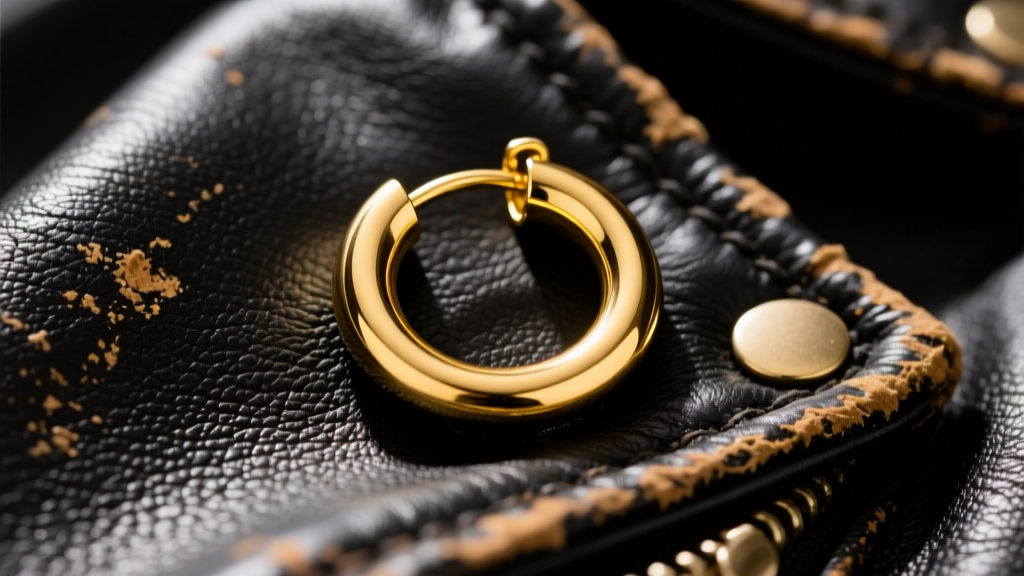
The signature look championed by these golden earring members relies on visual weight and a distinct lack of polish. Unlike the delicate, high-shine huggies popular in minimalist trends, the rockstar hoop is meant to look lived-in. It catches the stage lights, swings with kinetic energy, and develops a unique patina over decades of wear.
The Karat Conundrum: 14k vs. 18k Gold
When sourcing vintage-style hoops, the purity of the gold dictates both the color and the structural integrity of the earring. According to the Gemological Institute of America (GIA), 24k gold is far too soft for jewelry that experiences high friction and movement. The golden earring members of the 70s predominantly wore 14k yellow gold (58.5% pure gold). The higher copper and silver alloy content in 14k gold not only provides a slightly warmer, vintage-leaning hue but also increases the Vickers hardness to around 120-140 HV. This makes 14k significantly more resistant to warping, bending, or snapping when snagged on clothing or hair compared to 18k gold (which sits around 100-110 HV). For an authentic, durable rocker hoop, 14k yellow gold is the undisputed champion.
Wire Thickness and Gauge
The most common mistake modern consumers make when attempting this look is choosing wire that is too thin. Standard fashion earrings often use 20-gauge (0.8mm) or 22-gauge (0.6mm) wire, which looks flimsy and lacks the masculine, heavy-duty energy of vintage rock jewelry. The golden earring members of the past favored hoops cut from 14-gauge (1.6mm) or even 12-gauge (2.0mm) wire. This substantial thickness provides a bold silhouette that commands attention without needing gemstones or intricate detailing.
Technical Specifications: Recreating the Rocker Hoop
To bridge the gap between vintage inspiration and modern 2026 wearability, we have mapped out the exact technical specifications required to build or source the perfect rockstar gold hoop. This data table serves as your definitive buying guide.
| Feature | Vintage Rocker Spec (1970s) | Modern 2026 Adaptation |
|---|---|---|
| Wire Gauge | 14G (1.6mm) to 12G (2.0mm) | 16G (1.2mm) to 14G (1.6mm) |
| Inner Diameter | 30mm to 45mm | 20mm (Huggie) to 35mm (Classic) |
| Gold Alloy | 14k Yellow (Copper-heavy) | 14k to 18k Recycled Yellow Gold |
| Clasp Mechanism | Latch-back (Fishhook) | Hinged Snap, Clicker, or Latch-back |
| Finish | High Polish (worn to satin) | Satin, Brushed, or Tumbled Polish |
While the traditional latch-back (often called a fishhook closure) is historically accurate, modern 2026 adaptations frequently utilize hinged snap closures or segment clickers. Clickers, which feature a hinged segment that locks into a precision-machined groove, are particularly favored for cartilage placements due to their security and seamless visual profile.
Modern Styling: Cartilage vs. Lobe Placements
The beauty of the rockstar gold hoop lies in its versatility. While the golden earring members of the past primarily utilized standard lobe piercings, contemporary ear curation leverages the entire auricle. As noted by style analysts at GQ Magazine, the modern approach to men's and unisex jewelry is all about intentional stacking and asymmetric balancing.
The Stacked Lobe Approach
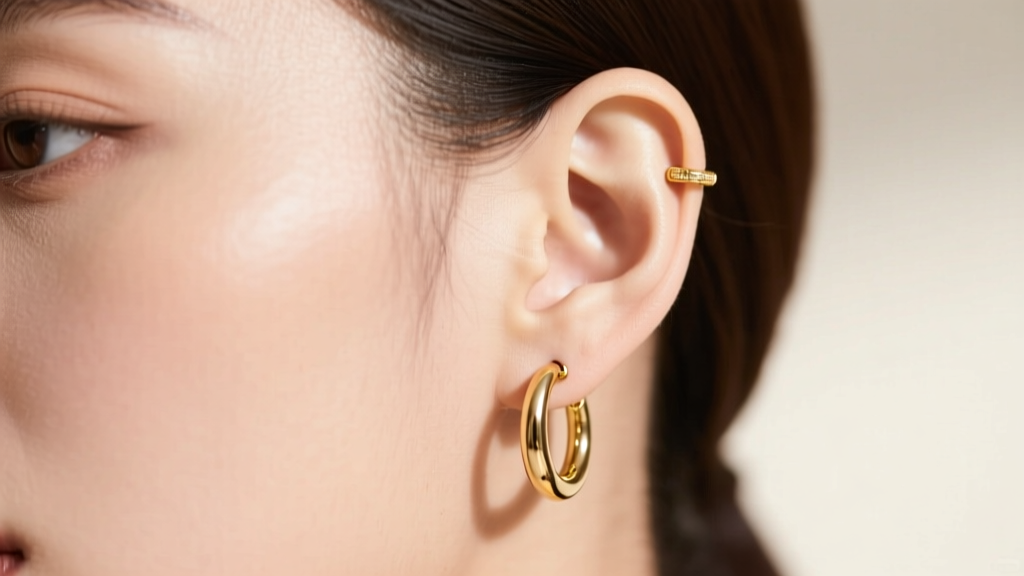
For a modern interpretation of the classic rocker lobe, opt for a 30mm to 35mm 14k gold hoop in the primary lobe piercing (usually 18G or 16G). To anchor the stack, pair it with a thick 14G gold huggie (10mm to 12mm diameter) in the second lobe hole. This creates a bottom-heavy, grounded look that mimics the visual weight of vintage rock jewelry while utilizing modern multi-piercing layouts. For those with stretched lobes (00G and above), specialized flared gold eyelets or heavy-gauge continuous hoops are essential to maintain the aesthetic without causing tissue strain.
Conch and Helix Adaptations
Cartilage piercings offer a fresh canvas for the rockstar hoop. A 14-gauge gold clicker hoop in the conch piercing provides a striking, industrial-meets-vintage contrast, especially when the gold rests against dark hair or leather collars. For the outer helix, a slightly smaller 20mm hoop with a 16G wire thickness ensures the jewelry hugs the ear's natural curvature without protruding awkwardly. When styling cartilage hoops, always ensure the inner diameter accounts for swelling and the natural fold of the ear; a hoop that is too tight will cause migration and irritation bumps.
Maintenance and Care for Vintage-Style Gold
The 'lived-in' patina of a rockstar hoop is desirable, but structural maintenance is non-negotiable. Gold alloys, particularly those with higher copper content like 14k rose or warm yellow gold, are susceptible to tarnish when exposed to sulfur, chlorine, and prolonged sweat.
- Routine Cleaning: Use a mild, phosphate-free dish soap and warm water with a soft-bristled baby toothbrush. Avoid harsh chemical dips that strip the metal's natural oxidized crevices, which give vintage hoops their character.
- Clasp Lubrication: Hinged snap closures and clickers can accumulate dead skin cells and sebum in the locking mechanism, leading to a stiff hinge. Apply a microscopic drop of jojoba oil to the hinge pin and work it back and forth to maintain smooth operation.
- Polishing Strategy: If your hoop has developed deep scratches from decades of wear (or you want to simulate it), use a jeweler's rouge cloth sparingly. Focus on the high points of the wire, leaving the inner curves slightly darker to enhance the three-dimensional depth of the metal.
Final Verdict on the Rockstar Revival
The enduring appeal of the styles popularized by golden earring members proves that true rock-and-roll aesthetics are immune to the fleeting nature of micro-trends. By prioritizing 14k yellow gold, substantial 14G to 16G wire thicknesses, and intentional ear stacking, you can authentically channel the rebellious spirit of the 1970s while adhering to the ergonomic and stylistic standards of 2026. Whether you are anchoring a curated lobe stack or outfitting a fresh conch piercing, the heavy gold hoop remains the ultimate sartorial power chord.


