American Eagle Earrings: Technical Motif Deep Dive
Explore the metallurgy, turquoise stabilization, and structural gauge requirements of American Eagle earrings in this expert technical deep dive.

The Anatomy of American Eagle Earrings
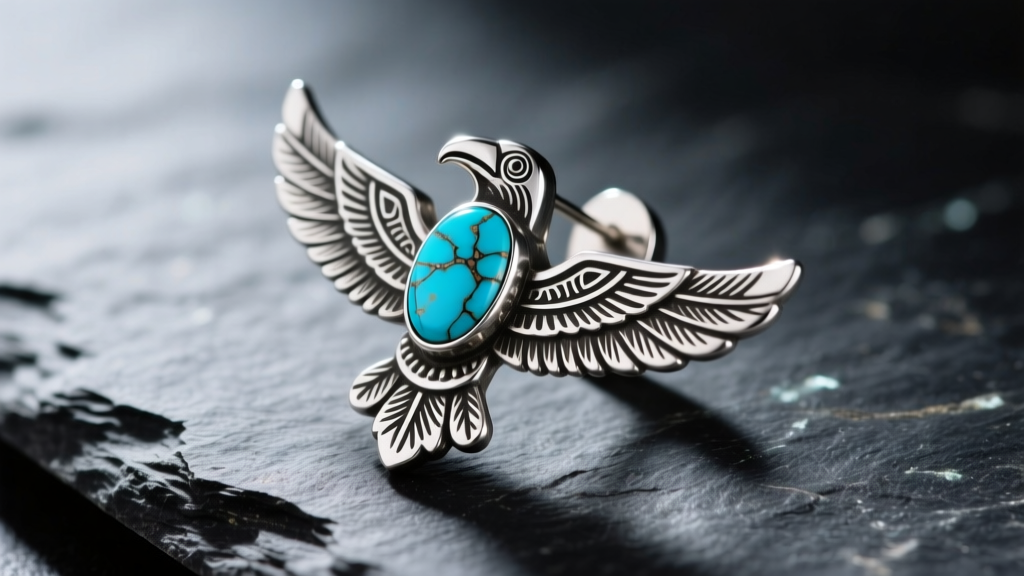
When analyzing thematic jewelry, the avian motif remains one of the most structurally demanding designs to execute in precious metals. Jewelry analysts tracking the search phrase 'earrings american eagle' note a distinct bifurcation in the market between mass-market brass alloys and artisan-crafted sterling silver pieces. Whether the design draws from the Native American Thunderbird (characterized by wide, symmetrical wingspans and heavy stone inlay) or the patriotic Bald Eagle (featuring asymmetrical profiles and deep-relief feather etching), these earrings present unique metallurgical and engineering challenges.
The primary issue with eagle motif earrings is the leverage created by the wingspan. A standard 15-millimeter wingspan on a drop earring shifts the center of gravity away from the earlobe, creating torque on the post or wire. In 2026, advanced CAD (Computer-Aided Design) and laser welding have allowed jewelers to mitigate these stress points, but understanding the underlying material science remains critical for both collectors and creators. This guide deconstructs the technical specifications required to produce and maintain high-quality eagle motif earrings.
Metallurgy: Silver Alloys and Tarnish Resistance
The vast majority of premium American Eagle earrings are cast or fabricated in sterling silver. However, standard 925 sterling silver (92.5% silver, 7.5% copper) is highly susceptible to copper-oxide tarnish, particularly in the deep, hard-to-polish crevices of etched eagle feathers. To combat this, expert silversmiths increasingly turn to advanced alloys.
| Alloy Type | Composition | Vickers Hardness (HV) | Tarnish Resistance | Best Application |
|---|---|---|---|---|
| Standard 925 Sterling | 92.5% Ag, 7.5% Cu | 60-70 HV | Low (Requires rhodium plating or frequent polishing) | Cast thunderbird bases, heavy bezels |
| Argentium 935 | 93.5% Ag, Germanium | 80-90 HV | Exceptional (Forms protective germanium oxide layer) | Intricate feather detailing, un-plated finishes |
| Continuum Silver | 92.5% Ag, Palladium | 95-110 HV | High | Springs, tension settings, high-stress wing joints |
According to The Silver Institute, the addition of germanium in Argentium silver fundamentally alters the oxidation process, making it ideal for eagle motifs where polishing the micro-textures of individual feathers would otherwise degrade the design over time.
Gemstone Integration: Turquoise Stabilization Techniques
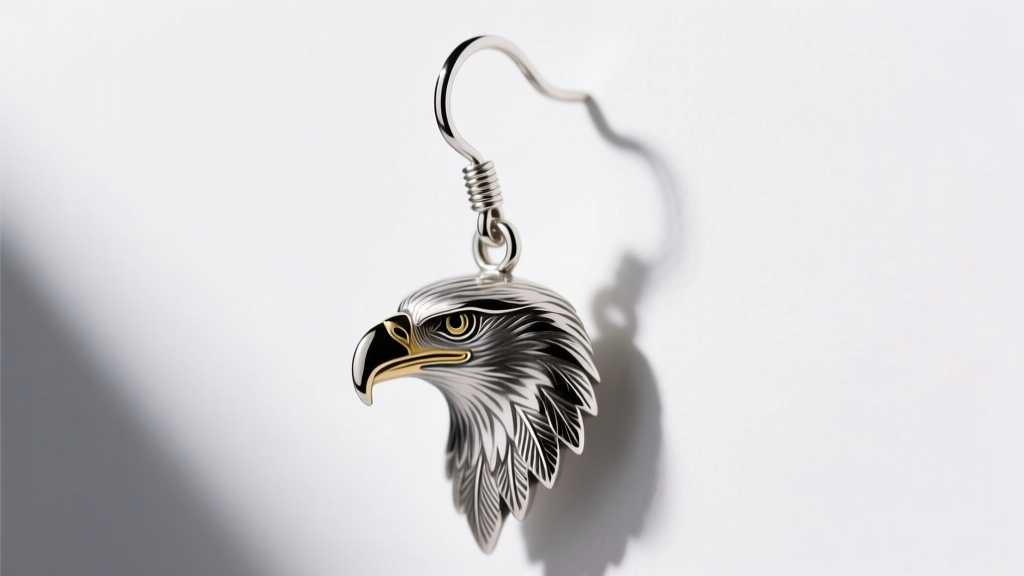
In Southwestern and Native American Thunderbird designs, turquoise is the predominant gemstone. However, natural turquoise is a porous copper-aluminum phosphate with a Mohs hardness of just 5 to 6. When subjected to the compression forces of a bezel setting on an eagle's wing, untreated natural turquoise is prone to micro-fracturing and color shifting from skin oils.
Expert jewelers utilize stabilization processes to ensure the stone survives the manufacturing process and daily wear. The Gemological Institute of America (GIA) recognizes several stabilization methods, but not all are equal in longevity:
- The Zachery Process: A proprietary, non-plastic method that uses potassium and sodium silicate to harden the turquoise without altering its natural matrix. This is the gold standard for high-end Thunderbird earrings.
- Epoxy/Resin Impregnation: Common in mid-tier jewelry. The stone is vacuum-impregnated with clear epoxy. While it increases hardness, prolonged UV exposure or high heat (e.g., leaving the earrings in a hot car) can cause the epoxy to yellow, dulling the eagle's 'eyes' or wing inlays.
- Block Turquoise: Reconstituted turquoise dust mixed with resin and dyed. This should be avoided in fine motif jewelry as it lacks structural integrity and gemological value.
Failure Modes in Inlay Work
When turquoise is used as channel inlay across an eagle's wingspan, thermal expansion becomes a critical failure point. Silver expands and contracts at a different rate than stabilized turquoise. If the jeweler does not leave a microscopic expansion gap or use a flexible setting compound beneath the stone, ambient temperature fluctuations will cause the turquoise to pop out of the silver channel.
Structural Gauge Requirements for Wingspan Drops
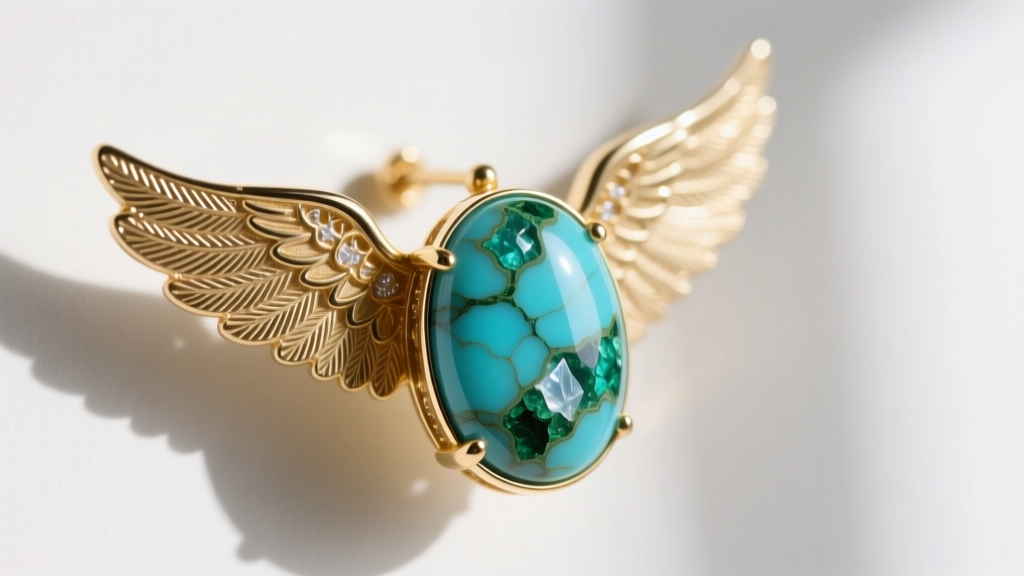
The most common point of catastrophic failure in eagle drop earrings is the hardware. The leverage exerted by a 20mm wide eagle wing puts immense shear stress on the earring post or wire. Standard fashion jewelry utilizes 20-gauge (0.81mm) or 22-gauge (0.64mm) wire, which will permanently bend under the weight of a solid silver thunderbird.
To ensure structural integrity, technical specifications for hardware must be upgraded:
- Stud Posts: Must be a minimum of 18-gauge (1.02mm) or 16-gauge (1.29mm). Furthermore, the solder joint connecting the post to the eagle's back must be laser-welded rather than torch-soldered. Laser welding penetrates deeper without annealing (softening) the surrounding work-hardened silver or damaging adjacent heat-sensitive turquoise.
- French Wires (Fishhooks): If using a French wire, the wire should be 18-gauge, and the design must incorporate a silicone O-ring stopper. Because eagle drops are front-heavy, they tend to slide forward and fall out of the earlobe; the O-ring provides necessary friction.
- Omega Backs: For heavy, solid-cast bald eagle studs, an Omega clip back provides a wider surface area of support against the earlobe, distributing the weight and preventing the earring from drooping forward.
Sourcing, Hallmarks, and Authenticity
When investing in artisan-crafted American Eagle earrings, verifying the metallurgical claims and artisan origin is paramount. The Federal Trade Commission (FTC) strictly regulates the use of the term 'Sterling' and requires that any piece stamped '925' must also bear a registered maker's mark or trademark to ensure accountability.
In the realm of Native American jewelry, authentic Thunderbird earrings will often feature the artist's hallmark (a stamped initial, symbol, or bear claw) alongside the sterling stamp. Mass-produced imports frequently mimic these hallmarks with generic '925' stamps and faux-matrix turquoise. A loupe inspection of the eagle's feather detailing will reveal the difference: hand-stamped and chiseled feathers will show slight, organic asymmetries and tool marks, whereas cast imports will have perfectly uniform, but shallow and muddy, feather textures.
Conclusion
Crafting and collecting American Eagle earrings requires looking past the aesthetic symbolism to evaluate the underlying engineering. From the implementation of tarnish-resistant Argentium silver to the precise gauge requirements needed to support a wide wingspan, the technical execution dictates the piece's longevity. By demanding proper stabilization for turquoise inlays and insisting on laser-welded, heavy-gauge hardware, collectors can ensure their motif jewelry remains structurally sound and visually striking for decades.


