Gold Earrings Flower Designs: 14k vs 18k Material Guide
Discover how alloy composition impacts gold earrings flower designs. Compare 14k, 18k, vermeil, and gold-filled properties for lasting botanical detail.

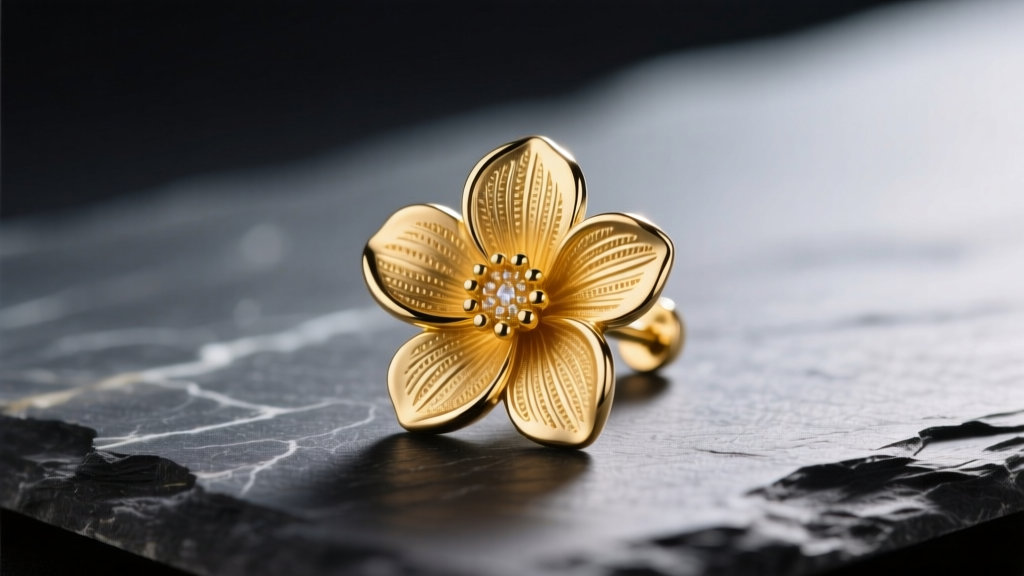
The Metallurgy of Botanical Jewelry
When selecting a gold earrings flower design, the aesthetic appeal of delicate petals and winding stems often overshadows the critical metallurgy required to make those shapes endure. Botanical jewelry presents unique structural challenges. Unlike simple geometric studs or smooth hoops, floral silhouettes feature extreme variations in thickness, sharp petal edges, and deep crevices. As of 2026, advanced CAD (Computer-Aided Design) casting allows for unprecedented detail in floral motifs, but the physical properties of the gold alloy ultimately dictate whether a delicate orchid or rose design will survive daily wear or bend out of shape within a month.
According to the Gemological Institute of America (GIA), pure 24-karat gold is far too malleable for intricate jewelry, registering at merely 25 on the Vickers Hardness (HV) scale. To create a durable floral earring, gold must be alloyed with metals like copper, silver, and zinc. Understanding these alloy ratios is the key to choosing botanical earrings that balance rich color with structural rigidity.
14k vs 18k Gold: Structural Integrity for Petals and Stems
The debate between 14k and 18k gold is especially pronounced in floral designs. The karat weight directly impacts the Vickers Hardness, which measures a metal's resistance to deformation and scratching.
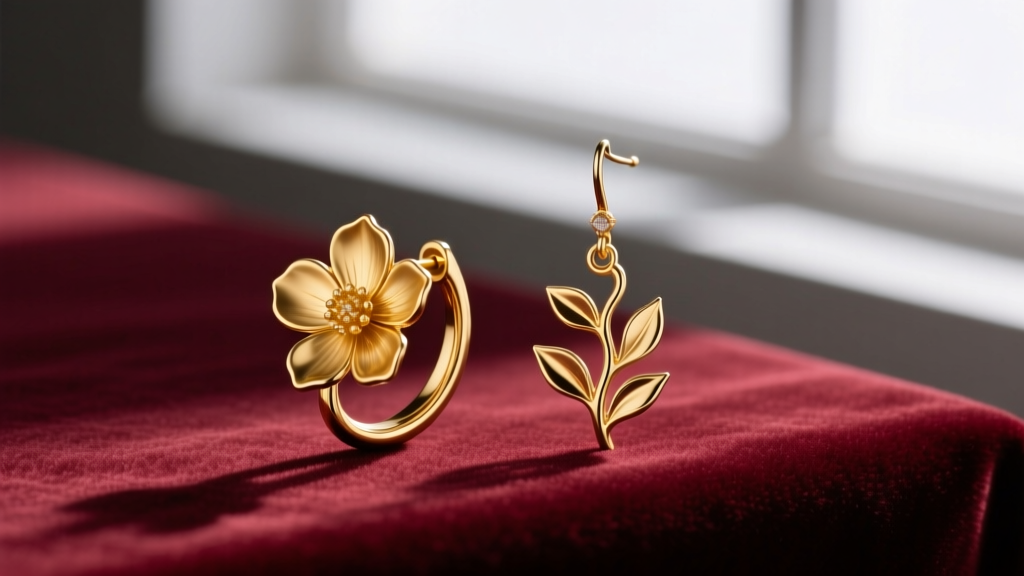
18k Gold (75% Pure Gold)
With a Vickers Hardness of approximately 125 HV, 18k gold offers a rich, saturated yellow hue that beautifully mimics the warmth of natural flora. However, its relative softness means that thin, protruding elements—like the stamen of a lily or the pointed tip of a lotus petal—are prone to bending if snagged on clothing. Jewelers compensate for this by increasing the baseline thickness of 18k floral castings, which inherently increases the weight and the final price point.
14k Gold (58.3% Pure Gold)
Registering at roughly 160 HV, 14k gold is significantly harder and more resilient. For a gold earrings flower design featuring micro-pavé diamonds along the petal edges or incredibly thin, die-struck stems, 14k is the superior choice. The higher copper and zinc content provides the tensile strength needed to hold sharp, crisp edges during the polishing process. According to manufacturing standards outlined by Rio Grande's Metals Guide, 14k yellow gold also exhibits better flow characteristics in lost-wax casting, ensuring that the finest details of a floral mold are perfectly replicated without porosity.
The High-Point Wear Problem: Vermeil vs. Gold-Filled
For shoppers seeking affordable botanical styles, gold vermeil and gold-filled earrings dominate the market. However, floral designs suffer from a phenomenon known as 'high-point wear.' Because flowers feature raised ridges, textured petals, and embossed centers, these high points experience concentrated friction against hair, skin, and clothing.
- Gold Vermeil: By legal definition, vermeil requires a sterling silver base plated with at least 2.5 microns of gold. On a smooth hoop, this lasts years. On a heavily textured floral dangle, the gold at the tips of the petals can wear through to the silver base in as little as 6 to 12 months of daily wear.
- Gold-Filled: Gold-filled jewelry features a much thicker outer layer of gold (at least 5% of the total weight, or 1/20th) mechanically bonded to a brass core. For intricate floral shapes, gold-filled is vastly superior. The thick gold layer can withstand the polishing and friction that high-relief botanical designs endure without exposing the base metal.
Pro Tip: If you are buying gold vermeil flower earrings, look for 'recessed' or 'satin-finished' high points. A matte or sandblasted texture on the raised petals hides micro-scratches and slows the visual impact of high-point wear.
Material Comparison Chart for Floral Ear Studs & Dangles
| Material | Vickers Hardness (HV) | Best Floral Application | Estimated Price Range (Studs) | Longevity of Detail |
|---|---|---|---|---|
| 24k Gold | ~25 HV | Thick, chunky cast flowers (no thin edges) | $400 - $800+ | Poor (Edges will round) |
| 18k Gold | ~125 HV | Premium dangles, gemstone-set botanicals | $250 - $600 | Good (Requires care) |
| 14k Gold | ~160 HV | Intricate die-struck studs, thin stems | $120 - $350 | Excellent (Crisp edges) |
| 14k Gold-Filled | ~150 HV (Brass core) | Everyday textured floral hoops & huggies | $40 - $90 | Very Good (Thick layer) |
| Gold Vermeil | ~110 HV (Silver core) | Smooth, low-relief floral silhouettes | $30 - $75 | Fair (Wears on ridges) |
Gauge Sizing and Weight Distribution in Botanical Drops
A common failure point in heavy gold earrings flower designs is the earring post. Large floral drops—such as oversized hibiscus or peony silhouettes—can easily weigh between 4 to 8 grams per earring. If the manufacturer uses a standard, thin 22-gauge (0.6mm) or 20-gauge (0.8mm) post, the weight of the flower will cause the earring to droop forward, stretching the earlobe piercing over time.
To counteract the 'cheese-cutter effect,' where a thin wire slowly migrates through the earlobe tissue, premium botanical dangles utilize 18-gauge (1.0mm) or even 16-gauge (1.2mm) posts. Furthermore, the placement of the solder joint where the post meets the flower head is critical. In high-quality manufacturing, the post is soldered to a reinforced 'solder pad' on the back of the floral design, distributing the leverage across a wider surface area rather than concentrating stress on a single, fragile petal.
Care and Tarnish Prevention for Textured Gold Blooms
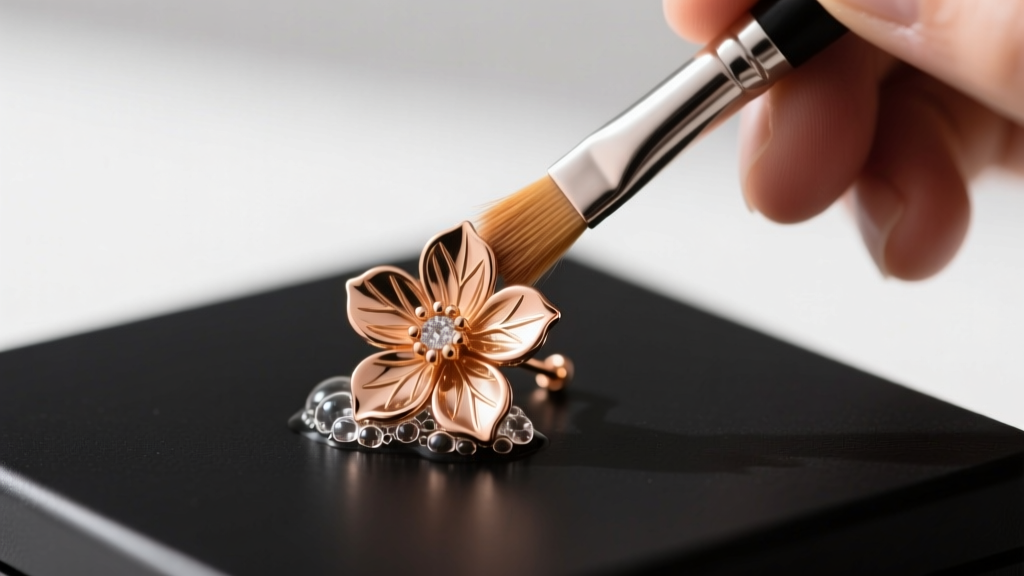
The deep crevices found in the center of floral designs, where petals overlap or where a pistil meets the base, are notorious traps for lotions, dead skin cells, and environmental dust. This buildup not only dulls the shine but can accelerate tarnishing in lower-karat alloys (like 10k or 14k) due to the copper content reacting with sulfur and moisture.
To maintain the crisp definition of your gold flower earrings, avoid using harsh chemical dips, which can strip the alloyed metals and leave the surface porous and matte. Instead, use a few drops of mild dish soap in warm water and a specialized, extra-soft baby toothbrush to gently agitate the crevices. If your floral earrings feature glued-in gemstones (like pearl centers or turquoise inlays), avoid ultrasonic cleaners entirely, as the high-frequency vibrations will shatter the adhesive bond and dislodge the stone from its floral setting.


