How to Style, Clean, and Wear a Gold Nugget Earring
Learn how to style, clean, and maintain your gold nugget earring. Expert steps for preserving raw textures, choosing karats, and lobe sizing.

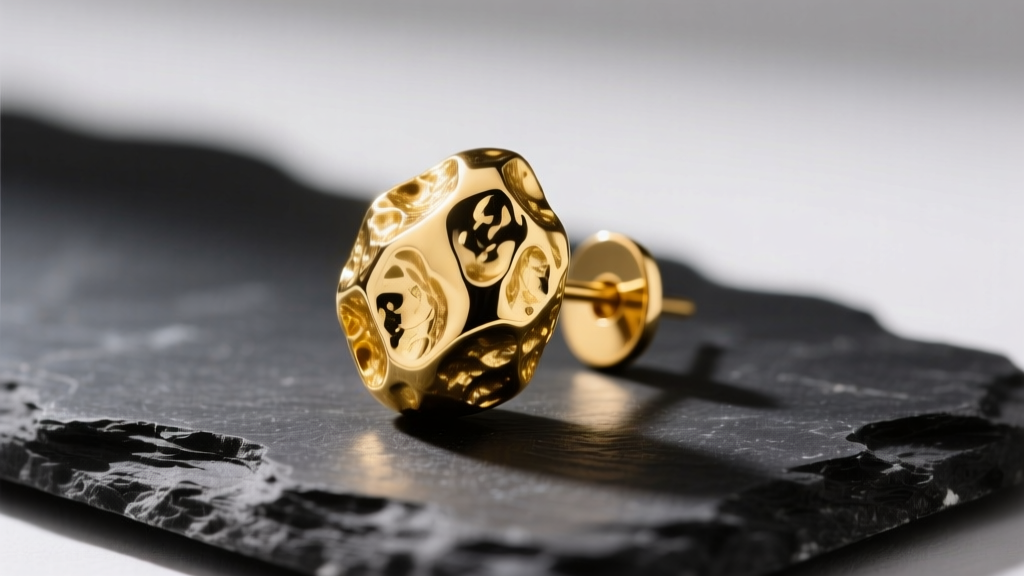
The Anatomy of a Nugget Earring: Natural vs. Cast
The term nugget earring encompasses two vastly different categories of jewelry, and understanding the distinction is critical for proper care and styling. Natural gold nuggets are placer deposits mined from riverbeds and glacial tills, primarily sourced from regions like the Yukon and Alaska. Because they are formed in nature, they are rarely pure 24k gold; instead, they are naturally alloyed with silver (creating electrum), copper, and often feature embedded quartz or ironstone inclusions. Their organic, pitted textures are entirely unique.
Conversely, cast nugget earrings are manufactured using the lost-wax casting method. A jeweler carves or 3D-prints a wax model mimicking the chaotic, dimpled surface of a raw nugget, which is then cast in standard karat gold alloys. While cast pieces offer uniform structural integrity and precise karat control, they lack the geological inclusions and historical provenance of natural placer gold. Knowing which type you own dictates your cleaning protocol and long-term maintenance strategy.
Step 1: Selecting Karat, Gauge, and Hardware
Because nugget designs are inherently three-dimensional and dense, they carry more weight than flat, stamped jewelry. Selecting the correct metallurgical purity and post gauge is essential to prevent earlobe damage.
| Karat Purity | Gold Content | Durability & Hardness | Best Use Case |
|---|---|---|---|
| 10k Gold | 41.7% | Highly durable, scratch-resistant | Everyday wear, heavy cast nuggets |
| 14k Gold | 58.3% | Excellent balance of purity and strength | Standard lobe and cartilage nuggets |
| 18k Gold | 75.0% | Softer, richer color, prone to scratching | Lightweight, special-occasion cast pieces |
| Natural (Placer) | Varies (Usually 85-92%) | Variable hardness, brittle at inclusions | Collector pieces, gentle lobe wear |
The Gauge Rule: A standard 20-gauge (0.81mm) earring post can comfortably support up to 3 grams of weight. However, a solid gold nugget earring of moderate size can easily weigh between 5 and 9 grams. If you hang a heavy nugget on a 20-gauge wire, gravity and movement will cause the "cheese-cutter effect," where the thin wire slowly slices through your earlobe tissue. For any nugget earring exceeding 4 grams, you must upgrade to an 18-gauge (1.02mm) or 16-gauge (1.29mm) post. Furthermore, secure the earring with a La Pousette locking clutch or a wide silicone O-ring backed by a flat disc to distribute the weight evenly across the back of the lobe.
Step 2: Styling for Face Shape and Proportion
The irregular, asymmetric silhouette of a nugget earring makes it a powerful styling tool. Because raw nuggets catch light unpredictably across their dimpled surfaces, they add visual volume and texture to your profile.

- Round Faces: Opt for an elongated, teardrop-shaped nugget or a nugget suspended from a delicate drop chain. The vertical line draws the eye downward, creating a slimming, lengthening illusion.
- Square Faces: Choose clustered, rounder nugget formations or medium-sized hoops with a cast nugget texture. The organic curves soften strong jawlines and angular cheekbones.
- Oval Faces: You have the most versatility. A bold, oversized natural nugget stud worn snugly against the lobe provides a striking, avant-garde contrast without overwhelming your natural proportions.
- Heart-Shaped Faces: Select bottom-heavy nugget dangles or chandelier designs featuring small gold nuggets. The added visual weight at the bottom balances a narrower chin.
Step 3: The Step-by-Step Cleaning Protocol
Cleaning a nugget earring requires navigating deep, microscopic crevices where skin oils, lotions, and environmental dust accumulate. The protocol differs drastically depending on whether your piece is a solid cast alloy or a natural nugget with geological inclusions.
Critical Warning for Natural Nuggets: Never place a natural gold nugget earring in an ultrasonic cleaner. The high-frequency acoustic cavitation can cause internal stress fractures in embedded quartz (Mohs hardness 7) or shatter ironstone inclusions, ruining the piece. According to guidelines from the Gemological Institute of America (GIA), natural inclusions require strictly gentle, non-vibrational cleaning methods.
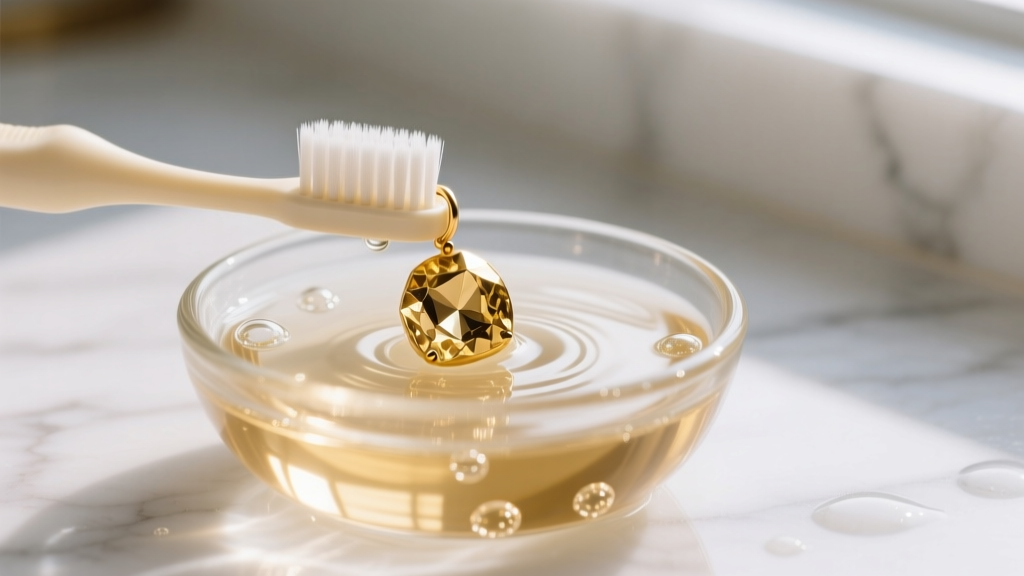
The Safe Cleaning Method (For Both Cast and Natural):
- Prepare a Surfactant Bath: Fill a small glass bowl with warm (not hot) distilled water. Add three drops of a mild, phosphate-free dish surfactant (like original blue Dawn). Avoid harsh chemical jewelry dips, which can strip the natural patina from raw placer gold.
- Soak and Soften: Submerge the nugget earring for 10 to 15 minutes. This allows the surfactant to break down the sebum and cosmetic residue trapped deep within the textured pits.
- Agitate Gently: Using a brand-new, ultra-soft baby toothbrush, gently sweep the bristles across the nugget's surface. Brush in multiple directions to reach the undercuts. Do not apply heavy pressure, especially on 18k or natural gold, as gold is highly malleable and can scratch.
- Rinse and Dry: Rinse thoroughly under a gentle stream of lukewarm distilled water to prevent hard water spotting. Pat dry with a lint-free microfiber cloth. Use a wooden toothpick or a blast of compressed air to remove moisture from the deepest crevices to prevent post tarnishing.
For routine maintenance between deep cleans, the Jewelers of America recommends wiping gold jewelry with a dedicated, untreated jewelry polishing cloth to restore surface luster without abrading the textured details.
Troubleshooting Common Nugget Issues
Snagging on Hair and Knits: The porous, jagged edges of raw nuggets are notorious for catching on loose hair threads and knit sweaters. If your natural nugget has sharp, protruding quartz edges, consult a master jeweler to apply a microscopic bead of clear, jewelry-grade epoxy to the sharpest points, or have them gently file the most aggressive burrs using a rubber polishing wheel.
Post Bending: If your heavy cast nugget earring frequently droops or the post bends, the wire is too soft or too thin. Take the piece to a bench jeweler and request a "post and head replacement" using a heavy-duty 16-gauge nickel-free white gold or platinum post. These metals possess a significantly higher tensile strength than yellow gold alloys and will keep your heavy nugget sitting perfectly upright on the lobe.


