Standard Gauge Earring Trends: 2026 Curated Ear Styling
Discover 2026 standard gauge earring trends. Learn how 16G and 14G thicknesses prevent lobe tearing and elevate your curated ear styling.

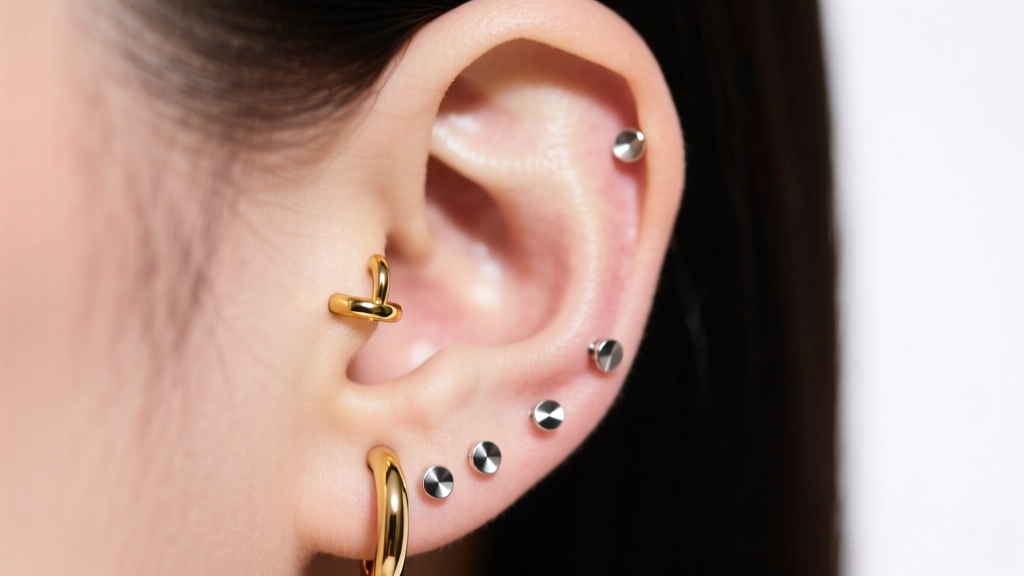
In the evolving landscape of body modification and high jewelry, the concept of the standard gauge earring has undergone a radical transformation. For decades, the ubiquitous mall-kiosk piercing gun dictated a flimsy, often traumatic 20-gauge (0.81mm) or 18-gauge (1.0mm) baseline for earlobes. However, as we navigate the style and trend analysis of 2026, the modern curated ear demands structural integrity, intentional sizing, and premium metallurgy. Today’s standard is no longer about the thinnest wire possible; it is about the optimal thickness required to support heavy statement pieces, prevent tissue migration, and create a cohesive, high-end aesthetic.
This comprehensive guide breaks down the physics of fistula health, the material science of implant-grade metals, and the exact styling frameworks professional piercers and jewelry designers are utilizing this year. Whether you are upgrading your foundational lobe piercings or architecting a complex cartilage constellation, understanding gauge thickness is the cornerstone of modern ear styling.
The Physics of the Fistula: Why Gauge Thickness Matters
To understand current trends, we must first examine the biomechanics of the piercing fistula (the healed tube of tissue). A common failure mode in traditional ear styling is the "cheese-cutter effect." This occurs when a heavy earring—such as a solid brass drop or a thick gold hoop—is suspended from a thin 20-gauge post. The extreme pressure concentrated on a sub-millimeter surface area slowly slices through the earlobe tissue, leading to irreversible migration, elongation, and eventual tearing.
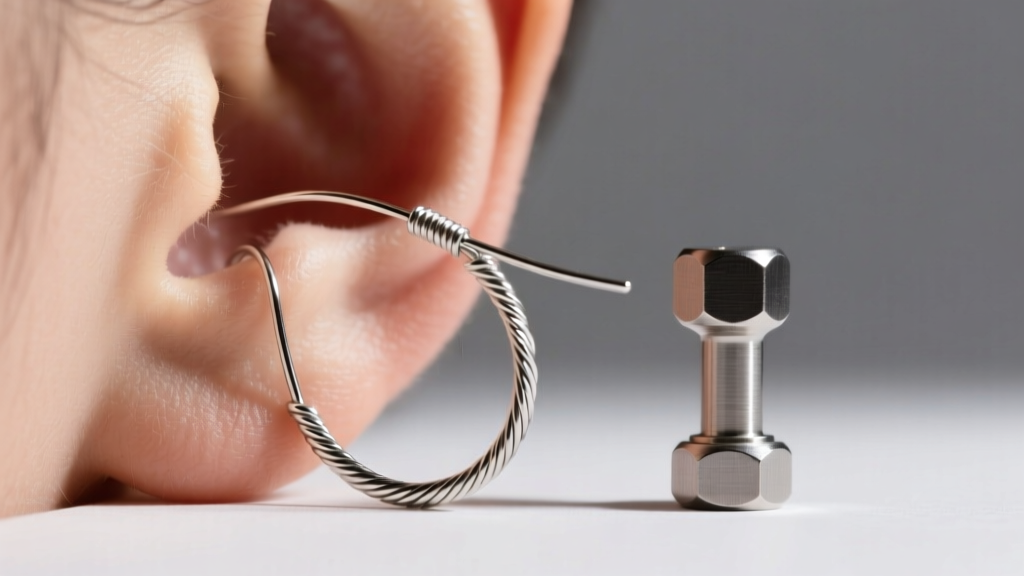
By upgrading to a thicker standard gauge earring, specifically 16-gauge (1.2mm) or 14-gauge (1.6mm), the surface area distributing the weight of the jewelry increases exponentially. According to guidelines published by the Association of Professional Piercers (APP), a 14-gauge post provides the necessary structural foundation to support the heavier, architectural jewelry designs trending in 2026 without compromising tissue health. This shift from 20G to 14G is not merely a stylistic preference; it is a vital intervention for long-term ear lobe preservation.
The 2026 Shift: From 20G Mall Piercings to 14G Statement Lobes
The most prominent trend this year is the deliberate stretching or re-piercing of standard lobes to accommodate 14-gauge jewelry. High-end jewelry houses and bespoke piercers are championing the "Statement Lobe" aesthetic. This involves wearing substantial, chunky gold hoops or heavy gemstone drops that require a 1.6mm post for safe wear.
Why the Shift is Happening Now
- Visual Weight: A 14-gauge post visually anchors heavy jewelry, making the piece look intentional and bespoke rather than precariously balanced on a thin wire.
- Threadless and Internally Threaded Tech: Thicker posts accommodate advanced securing mechanisms. 20-gauge jewelry often relies on weak friction backs or butterfly clutches that harbor bacteria. 14-gauge and 16-gauge standards allow for secure, internally threaded or press-fit threadless ends, which are vastly superior for hygiene and security.
- Healing Stability: Thicker jewelry moves less within the fistula during the healing process, reducing irritation bumps and angular migration.
"The era of the 20-gauge butterfly clutch is over. In 2026, a true standard gauge earring for a curated lobe is 16-gauge or 14-gauge, utilizing threadless ends for a seamless, secure, and high-end finish." — Industry consensus from elite piercing studios.
Material Science: What Supports a Thicker Standard?
As gauge thickness increases, the volume of metal resting inside the body increases. This makes material purity non-negotiable. The APP recommends specific implant-grade materials to prevent allergic contact dermatitis and galvanic reactions. Surgical steel (ASTM F-138) is increasingly rejected by modern consumers due to its nickel content. Instead, the 2026 standard relies on two primary metals.
| Gauge Size | Millimeter (mm) | Best Application | Material Standard | Avg. Price Range (USD) |
|---|---|---|---|---|
| 20G | 0.81mm | Legacy piercings, delicate nose bones | 14k/18k Gold (Avoid Steel) | $40 - $120 |
| 18G | 1.0mm | Standard cartilage, delicate lobes | Implant-Grade Titanium | $25 - $85 |
| 16G | 1.2mm | Modern lobe standard, flat-backs, huggies | ASTM F-136 Titanium / 14k Gold | $35 - $250 |
| 14G | 1.6mm | Statement lobes, heavy hoops, clickers | ASTM F-136 Titanium / 18k Gold | $60 - $500+ |
ASTM F-136 Implant-Grade Titanium: The undisputed king of foundational posts. It is lightweight, entirely nickel-free, and can be anodized to create vibrant colors without using surface paints or dyes that could flake into the fistula. Brands like Anatometal and Industrial Strength lead this space.
Solid 14k and 18k Gold: For the visible ends and statement hoops, alloyed gold (specifically nickel-free, cadmium-free formulations) remains the ultimate luxury standard. Brands like BVLA (Body Vision Los Angeles) and Maria Tash dictate the high-end pricing and design trends for these thicker gauges.
Cartilage Architecture: Flat-Backs and 16G Huggies
While lobes are moving toward 14G, the cartilage standard in 2026 has firmly settled on 16-gauge flat-back labrets and specialized huggie hoops. The traditional butterfly-back stud is entirely obsolete in the helix, tragus, and conch. Flat-back labrets feature a smooth, low-profile disc that rests flush against the back of the ear, eliminating the painful pressure points associated with sleeping in traditional earrings.
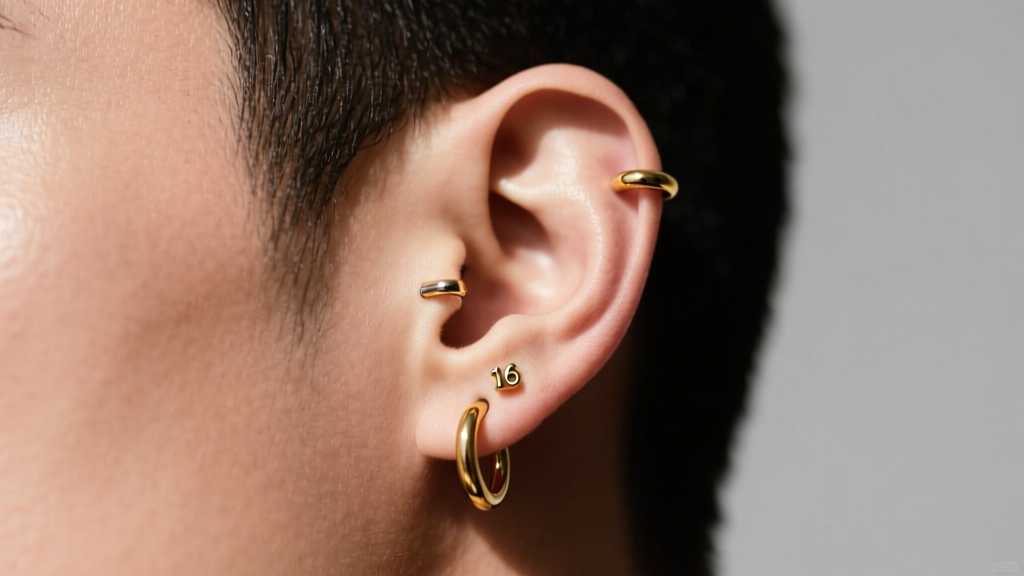
The styling trend for cartilage involves "snug-fit" aesthetics. Instead of dangling charms that catch on hair and clothing, 2026 favors 16-gauge huggie hoops that hug the helix or tragus tightly. These hoops utilize a continuous or segment ring design, or a specialized clicker mechanism, ensuring the 1.2mm wire glides smoothly through the cartilage fistula without causing torque or irritation.
Troubleshooting Gauge Mismatches
A frequent issue arises when consumers purchase high-end 18-gauge cartilage jewelry for a fistula that was pierced with a 16-gauge needle. Forcing a thinner post into a thicker hole can lead to the "cheese-cutter" effect on the delicate cartilage edge, or cause the jewelry to sit at an awkward angle. Always verify your exact fistula gauge with a professional piercer using a taper and gauge wheel before investing in luxury cartilage pieces.
The Curated Ear Framework: Mixing Gauges Intentionally
The hallmark of an expertly styled ear in 2026 is the intentional contrast of gauge thicknesses and jewelry types. The "Anchor and Orbit" framework is the leading methodology used by master piercers to design ear constellations.
- The Anchor (14G or 16G): The foundational lobe piercing is stretched or pierced to a thick 14-gauge or 16-gauge standard. This anchor piece is usually a substantial geometric stud, a heavy clicker hoop, or a large bezel-set gemstone. It provides visual weight and grounds the entire ear.
- The Orbit (16G): Secondary and tertiary lobe piercings, as well as the lower helix, utilize 16-gauge flat-backs with smaller, complementary gemstones or minimalist gold beads. These pieces orbit the anchor, drawing the eye inward.
- The Apex (16G or 14G): The highest cartilage piercings, such as the forward helix or rook, feature delicate but structurally sound 16-gauge threadless ends or specialized 14-gauge curved barbells, completing the vertical flow of the ear.
By treating the standard gauge earring not as a one-size-fits-all afterthought, but as a deliberate architectural choice, you ensure your curated ear is not only visually stunning but biologically sustainable. The investment in thicker, implant-grade metals and professional gauge mapping is the defining difference between a temporary accessory trend and a lifelong, elevated personal aesthetic.


