How to Choose and Style 6mm Size Earrings for Cartilage
Master the fit and styling of 6mm size earrings. Learn gauge matching, cartilage placement, material grades, and step-by-step sizing techniques.

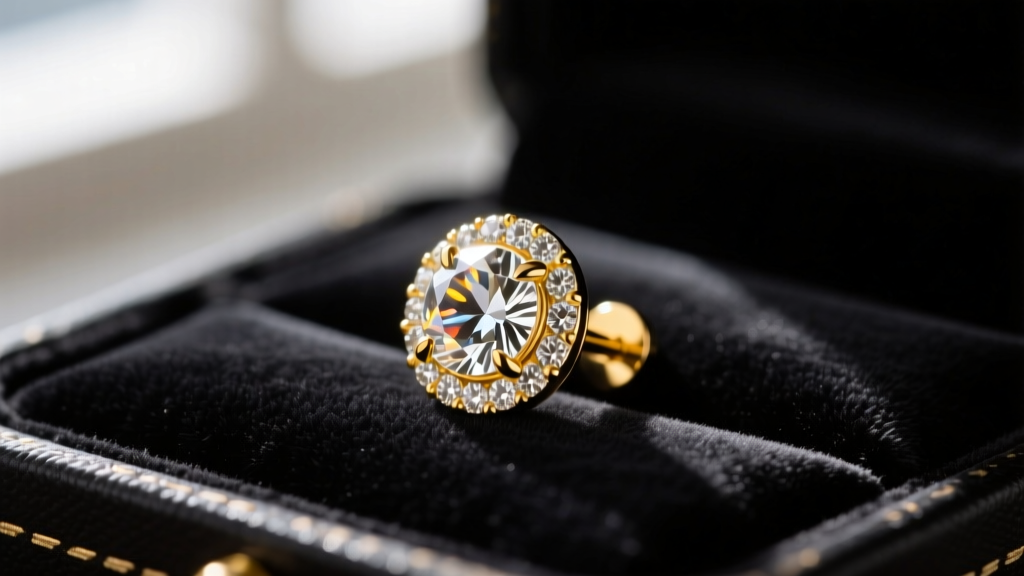
When navigating the intersection of fine jewelry and professional body modification, the search for 6mm size earrings frequently causes confusion among consumers. Does the measurement refer to the diameter of the decorative gemstone, or the wearable length of the metal post? As a senior stylist and piercing consultant, I see this ambiguity lead to poor fits, cartilage irritation bumps, and aesthetic mismatches. This comprehensive 2026 guide breaks down exactly how to measure, select, and style 6mm earrings, whether you are sizing a 0.80-carat diamond stud for the lobe or fitting a 6mm titanium labret for a fresh tragus piercing.
The Dual Meaning of 6mm in Jewelry
To shop intelligently, you must first understand the two distinct ways the jewelry industry applies the 6mm metric. Confusing the two is the primary reason customers end up with jewelry that either swallows their anatomy or painfully embeds into their tissue.
1. The 6mm Gemstone Diameter
In fine jewelry, a 6mm round brilliant diamond, moissanite, or cubic zirconia equates to roughly 0.75 to 0.85 carats, depending on the cut depth and stone density. According to the Gemological Institute of America (GIA), a well-proportioned 6mm round brilliant offers substantial visual presence on the earlobe. It is large enough to catch the light from across a room but remains elegant enough for daily wear without overwhelming delicate facial features.
2. The 6mm Post Length (Wearable Area)
In body jewelry, a 6mm post (approximately 1/4 inch) refers to the wearable area—the exact length of the metal bar that passes through the skin. A 6mm post is the industry standard for initial cartilage piercings (like the helix, conch, or flat) to accommodate the inevitable swelling that occurs during the first 4 to 8 weeks of healing. Once fully healed, many professional piercers recommend downsizing to 4mm or 5mm to prevent the post from catching on hair and clothing. However, 6mm remains the permanent gold standard for thicker earlobes, daith piercings, and specific cartilage folds like the rook.
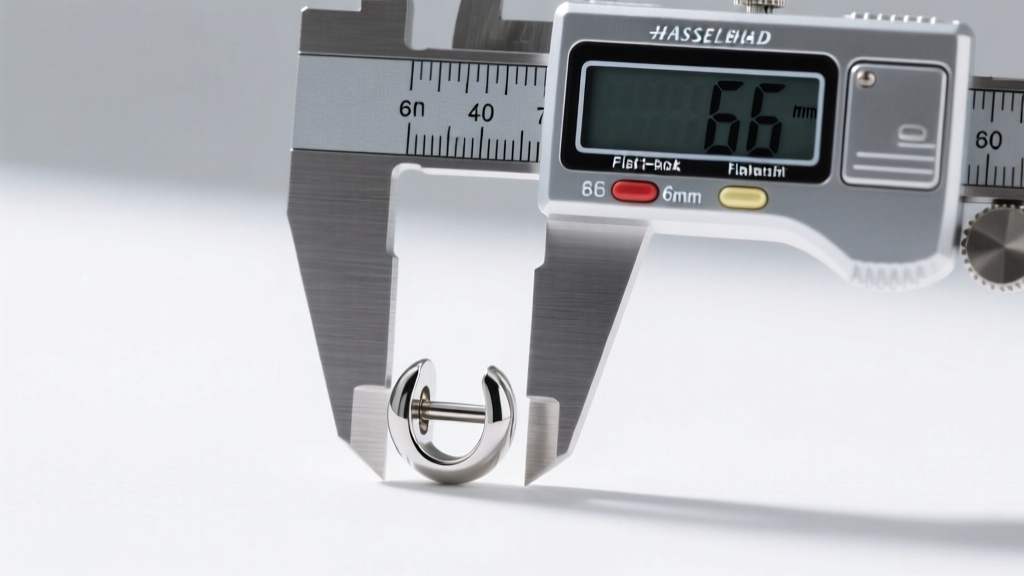
Step-by-Step: Measuring Your Ear for a 6mm Post
Guessing your post length is a recipe for irritation. If a 6mm post is too long for your healed cartilage, the exposed metal will act as a lever, creating an uneven angle in the piercing channel. If it is too short, the flat back will compress the tissue, restricting blood flow and causing hypertrophic scarring. Follow this precise framework to verify if a 6mm post is your true anatomical fit.
- Acquire a Digital Caliper: Do not use a standard ruler. Purchase a digital caliper (available for under $15 online) capable of measuring to the hundredth of a millimeter.
- Measure Your Current Jewelry: If you have a well-fitting earring, remove it and clamp the caliper jaws strictly around the wearable post. Exclude the base plate and the decorative end from your measurement.
- Assess Tissue Thickness: For a fresh piercing, a 6mm post is almost always correct to allow 1.5mm to 2mm of swelling space. For a healed piercing, the post should sit flush against the skin with no more than 0.5mm of clearance.
- Check the Piercing Angle: Look in a mirror or have a friend take a macro photo. If your piercing was done at a steep 45-degree angle rather than a 90-degree perpendicular angle, a standard 6mm straight post will not sit flush. You may require a custom-bent barbell or a different length to compensate for the angled channel.
- Factor in the End Type: Threadless (push-fit) ends sit slightly higher on the post than internally threaded ends. If switching from threaded to threadless, you may need to drop from a 6mm to a 5mm post to maintain a flush fit.
Material Grades: What to Demand in 2026
When investing in 6mm size earrings for cartilage, the material grade is non-negotiable. Cartilage is highly avascular (lacking direct blood supply), making it exceptionally slow to heal and highly prone to rejecting impure metals. The Association of Professional Piercers (APP) strictly outlines which materials are safe for prolonged dermal contact.
| Material | Grade Standard | Best For | Avg. Price Range |
|---|---|---|---|
| Implant-Grade Titanium | ASTM F-136 | Fresh piercings, hyper-sensitive skin, MRI safety | $25 - $65 |
| Niobium | Unalloyed (99.9%) | Color-anodized custom pieces, nickel allergies | $30 - $75 |
| Solid Gold | 14k or 18k (Nickel-Free) | Healed piercings, luxury curation, long-term wear | $120 - $450+ |
| Surgical Steel | 316L (ASTM F-138) | Healed lobes only (contains trace nickel) | $10 - $30 |
Expert Warning: Never wear gold-plated or gold-filled 6mm earrings in any cartilage piercing. The friction of the post passing through the fistula will wear away the microscopic gold layer, exposing the reactive brass or copper core to your bloodstream, almost guaranteeing a contact dermatitis reaction.

Styling Framework: Pairing 6mm Studs and Hoops
A 6mm gemstone or decorative end acts as a visual anchor in an ear curation. Because it commands attention, you must balance it using the stylist's 'Rule of Thirds' to avoid making the ear look cluttered or bottom-heavy.
- The Focal Point: Place your 6mm stud in the primary lobe or the mid-helix. This draws the eye to the center of the ear profile.
- The Supporting Cast: Surround the 6mm anchor with smaller, subtler pieces. Pair it with 2mm or 3mm bezel-set diamonds, or minimalist 16-gauge titanium clickers.
- Balancing Hoops: If your 6mm earring is in the lobe, opt for a snug 8mm or 10mm huggie hoop in the upper cartilage. Avoid large, dangling statement hoops in the same ear, as they will compete with the visual weight of the 6mm stone.
- Face Shape Considerations: For round or square face shapes, a 6mm geometric or elongated drop earring helps elongate the jawline. For heart-shaped faces, a classic 6mm round brilliant stud softens the chin and balances the forehead.
Troubleshooting Common 6mm Fit Issues
Even with perfect measurements, anatomical quirks can cause issues. Here is how to troubleshoot the most common problems associated with 6mm cartilage jewelry.
Issue 1: The 'Cheese-Cutter' Effect
If your 6mm hoop or stud is slowly migrating downward, slicing through the tissue, you are experiencing the cheese-cutter effect. This happens when the jewelry gauge is too thin for the weight of the 6mm decorative end. Solution: Upgrade your post thickness from 20-gauge (0.81mm) to 18-gauge (1.02mm) or 16-gauge (1.29mm) to distribute the weight over a wider surface area of the fistula.
Issue 2: Persistent Irritation Bumps
If a small, fluid-filled bump appears next to your 6mm flat-back labret, it is usually caused by mechanical friction, not an infection. The 6mm post might be slightly too long, allowing the jewelry to wiggle and strike the delicate healing tissue inside the channel. Solution: Visit a professional piercer to downsize to a 5mm or 4.5mm post and perform a sterile saline compress routine twice daily.
Pro-Tip from the Studio: Never attempt to bend or cut down a 6mm titanium post yourself with jewelry pliers. This compromises the structural integrity of the metal, creates micro-tears that harbor bacteria, and voids any warranty from high-end body jewelry brands like BVLA or Anatometal.
Final Thoughts on Sizing
Mastering the fit of 6mm size earrings bridges the gap between uncomfortable body modifications and high-end, effortless style. By understanding the critical difference between gemstone diameter and post length, investing in ASTM-certified implant-grade metals, and meticulously measuring your unique anatomy, you ensure your ear curation remains healthy, secure, and visually stunning for decades to come.


