Sunflower Earrings Gold: 2026 Budget & Value Guide
Discover the true value of gold sunflower earrings in 2026. Compare 10k, 14k, and 18k pricing, casting methods, and how to spot overpriced floral jewelry.

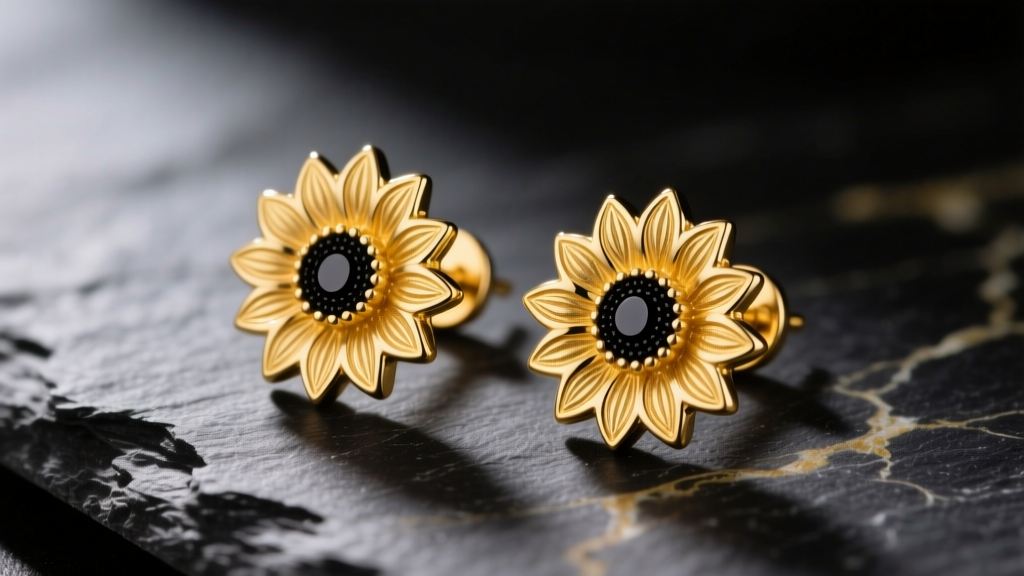
The botanical jewelry market has seen a massive resurgence, and sunflower earrings gold designs remain at the absolute forefront of this trend in 2026. However, the sheer volume of floral jewelry available online and in brick-and-mortar stores has created a confusing landscape for buyers. From ultra-thin, fast-fashion gold-plated studs to heavy, heirloom-quality 18-karat solid gold drops, the price variance is staggering. As a buyer, how do you determine if a pair of gold sunflower earrings is priced fairly based on its metallurgical value, or if you are simply paying a premium for a trendy motif? This comprehensive budget and value assessment breaks down the exact manufacturing costs, karat weight differentials, and structural failure points you must evaluate before purchasing gold sunflower earrings this year.
The Anatomy of Gold Sunflower Earrings: Where Your Money Goes
When assessing the value of any floral jewelry, you must first understand the manufacturing technique used to create the intricate petal structures. There are two primary methods used for gold sunflower earrings: die-striking and lost-wax casting. Die-striking involves using immense pressure to stamp a sheet of gold into a mold. This process work-hardens the metal, meaning the resulting earrings are incredibly dense and durable. A die-struck sunflower earring can feature remarkably thin petals (often between 0.5mm and 0.8mm) without sacrificing structural integrity. Because this method requires expensive, custom-machined steel dies, it is usually reserved for high-volume, standardized designs. If you find a relatively flat, lightweight, yet highly detailed 14k gold sunflower stud for under $120, it is almost certainly die-struck, representing excellent value for everyday wear.
Conversely, lost-wax casting is used for three-dimensional, domed, or heavily textured sunflower designs. Molten gold is poured into a plaster mold created from a wax original. While casting allows for breathtaking, sculptural depth, it leaves the gold in a softer, more porous state. To prevent the petals from snapping off at the base, cast sunflower earrings require thicker metal walls (typically 1.2mm or higher). This increased gold weight directly drives up the melt value and the final retail price. When evaluating a 3D cast sunflower earring, you are paying for both the higher gram weight and the intensive labor required for the post-casting polishing and detailing.
Karat Weight vs. Price: A 2026 Market Breakdown
The purity of the gold alloy is the single largest factor dictating the baseline value of your earrings. According to the Gemological Institute of America (GIA), pure 24k gold is far too soft for intricate jewelry making, necessitating the use of alloy metals like copper, silver, and zinc. Here is how the different karat weights impact the pricing and longevity of sunflower earrings in the current market.
| Karat Weight | Gold Purity | Avg. Price Range (15mm Studs) | Durability & Petal Strength | Best Use Case |
|---|---|---|---|---|
| 10k Gold | 41.7% | $65 - $110 | Extremely high; highly resistant to bending | Budget buyers, active lifestyles |
| 14k Gold | 58.3% | $130 - $240 | Excellent balance of strength and richness | Everyday wear, standard lobe piercings |
| 18k Gold | 75.0% | $280 - $450+ | Softer; requires thicker petal casting | Heirloom pieces, special occasion drops |
| Gold Vermeil | N/A (Sterling base) | $45 - $85 | Prone to wear; plating thickness varies | Trend-driven, short-term seasonal wear |
For the best intersection of intrinsic value and structural durability, 14k gold remains the undisputed champion for sunflower motifs. It provides the rich, warm yellow hue associated with sunflowers while retaining enough alloyed hardness to keep delicate petal tips from warping during accidental impacts.
Construction Quality: Avoiding the "Bent Post" and "Bent Petal" Traps
A common failure mode in budget-friendly floral jewelry is the bending of the earring post or the snapping of the petals. This is rarely a flaw in the gold itself, but rather a failure in gauge sizing and weight distribution. Many mass-market jewelers utilize 22-gauge (0.64mm) posts across all their stud earrings to save on precious metal costs. While a 22-gauge post is perfectly adequate for a simple 1-gram gold ball stud, it is entirely insufficient for a multi-dimensional, domed sunflower earring that weighs 3 to 5 grams. The top-heavy nature of a 3D sunflower creates a lever effect on the earlobe, causing thin posts to bend downward, which ultimately leads to metal fatigue and snapping.
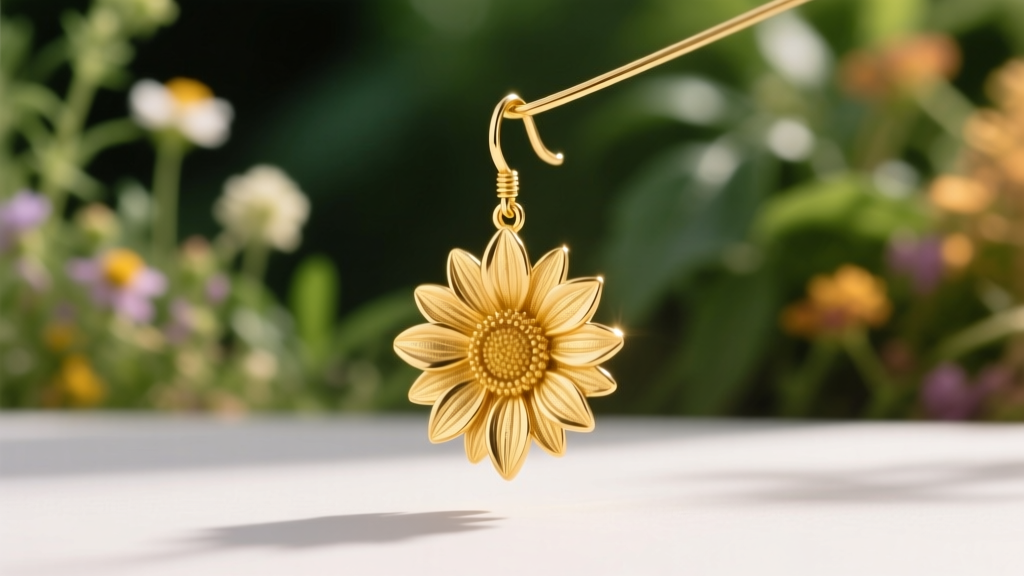
When conducting your value assessment, always check the product specifications for the post gauge. For sunflower studs weighing over 2.5 grams, insist on a 20-gauge (0.81mm) or 18-gauge (1.02mm) post. For sunflower drop or dangle earrings, the piece should not rely on a standard post and butterfly back at all; instead, it should utilize a sturdy French wire or a lever-back closure to accommodate the swinging weight of the floral pendant. Furthermore, examine the friction backs (butterfly clasps). High-value earrings will feature double-notched posts and heavy, stamped friction backs that grip securely, whereas low-value pieces often include flimsy, thin-wire scroll backs that easily slip off, risking the loss of your investment.
The Center Seed Head: Enamel, Rhodium, or Gemstone?
The center of the sunflower—the seed head—provides striking contrast to the yellow gold petals, but the material used here drastically affects both the price and the lifespan of the earring. The cheapest method is applying black enamel paint, which frequently chips or yellows over time. A step up is black rhodium plating. While black rhodium provides a beautiful, metallic dark center, it is a surface treatment that will inevitably wear away after one to three years of regular use, requiring professional re-plating. The highest value, albeit the most expensive, is a bezel-set black onyx or black spinel cabochon. A gemstone center adds significant labor costs (often increasing the retail price by $50 to $100) but guarantees a permanent, scratch-resistant contrast that will outlast the gold itself.
Budget Tiers: What to Expect at Every Price Point
To help you navigate the 2026 market, we have categorized gold sunflower earrings into distinct budget tiers, detailing exactly what your money should secure at each level.
- Under $75 (The Entry Tier): At this price, you are looking at 10k solid gold or high-quality gold vermeil (sterling silver base with 2.5 microns of 14k gold). Expect flat, die-struck studs measuring 8mm to 12mm. The centers will likely be textured gold or painted enamel. These are excellent for teenagers or as secondary cartilage piercings where heavy drops are impractical.
- $75 to $200 (The Sweet Spot): This tier unlocks solid 14k gold. You can expect 12mm to 16mm studs with intricate die-struck detailing or small, lightweight cast drops. The centers should feature black rhodium or small synthetic accent stones. Posts should be a reliable 20-gauge. This is the best tier for daily-wear lobe studs that offer genuine intrinsic melt value.
- $200 to $450 (The Artisan Tier): Here, you enter the realm of 18k gold and complex, 3D lost-wax castings. Earrings in this tier often feature graduated petal layers, diamond or sapphire accents in the center, and premium lever-back closures for drops. You are paying for superior craftsmanship, heavier gold weight, and ethical sourcing certifications.
- $450+ (The Heirloom Tier): Pieces in this bracket are typically crafted by independent bench jewelers or luxury houses. Expect custom-carved wax originals, unique satin or hammered finishes on the petals, and ethically mined, bezel-set gemstone centers. These pieces hold their value exceptionally well and are designed to be passed down through generations.
How to Verify Authenticity and Avoid Overpaying
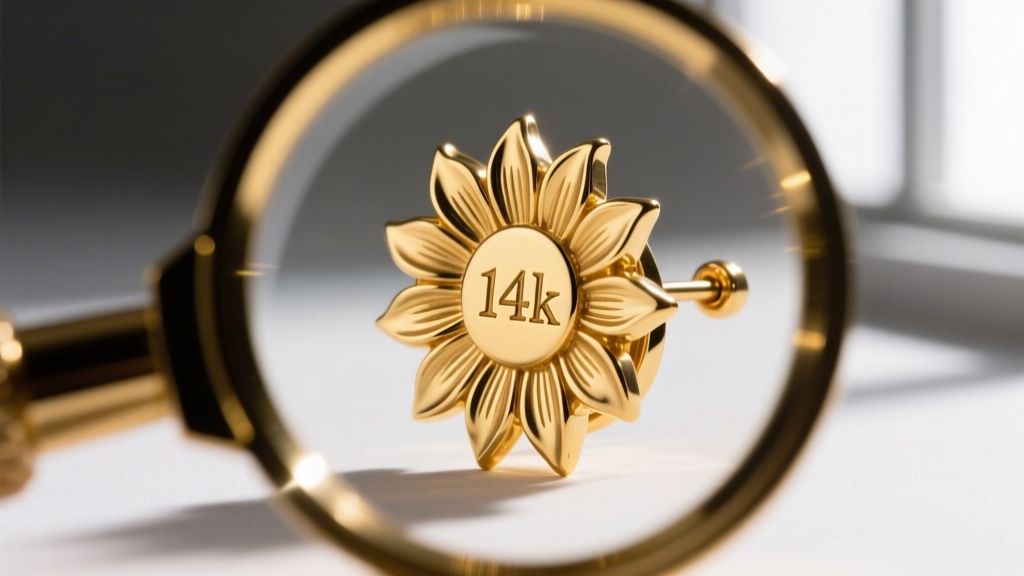
The Federal Trade Commission (FTC) Jewelry Guides strictly regulate how gold jewelry can be marketed in the United States. To ensure you are getting the value you pay for, never purchase gold sunflower earrings that are simply labeled "gold" without a karat designation. Legitimate sellers will explicitly state 10k, 14k, or 18k, and the physical earrings must bear a corresponding quality hallmark (e.g., "585" for 14k) stamped in an inconspicuous area, usually on the back of the sunflower face or the earring post itself.
Expert Tip: Be highly skeptical of "gold-filled" sunflower earrings being sold at prices comparable to solid 10k gold. While gold-filled jewelry is more durable than standard plating, it contains only a fractional layer of gold bonded to a brass core. It holds virtually zero intrinsic melt value and cannot be resized or easily repaired by a jeweler if a petal snaps.
Ultimately, assessing the value of gold sunflower earrings requires looking past the aesthetic appeal of the botanical design and scrutinizing the metallurgy and engineering beneath it. By prioritizing 14k or 18k solid gold, demanding appropriate post gauges for the weight of the design, and opting for permanent gemstone centers over temporary plating, you can confidently invest in floral jewelry that retains both its beauty and its financial value for decades to come.


