Sacred Heart Earrings: Expert Cleaning & Care Guide
Learn how to safely clean and maintain sacred heart earrings. Expert tips for enamel, oxidized silver, and gemstone inlays to prevent damage.

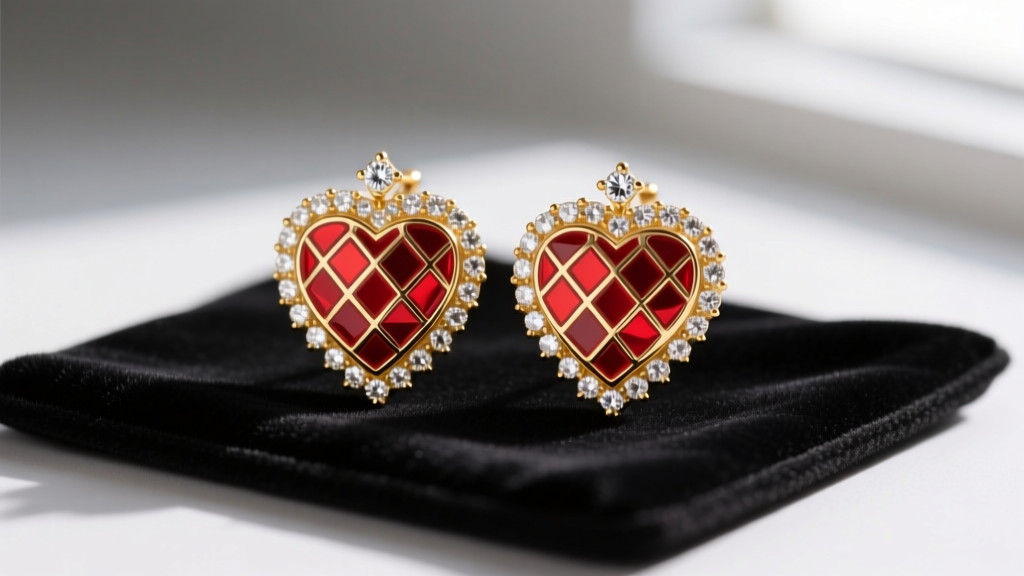
Sacred heart earrings have transcended their traditional religious roots to become a staple of contemporary, vintage-inspired, and neo-gothic jewelry wardrobes. Characterized by their intricate anatomy—often featuring a flaming crown, a halo of thorns, and a central cabochon or enameled heart—these pieces are masterclasses in mixed-metal and multi-material craftsmanship. However, this very complexity makes them notoriously difficult to maintain. The deep crevices trap skin oils and cosmetic residues, while the delicate combination of enamel, pave gemstones, and oxidized silver means that standard jewelry cleaning methods can cause catastrophic, irreversible damage.
Whether you own a pair of heavy 18k gold dangles or delicate sterling silver studs, maintaining their luster requires a targeted, material-specific approach. This comprehensive guide breaks down the exact protocols, chemical warnings, and mechanical maintenance routines required to keep your sacred heart earrings in pristine condition for decades.
The Anatomy of Sacred Heart Earrings: Material Vulnerabilities
Before applying any cleaning solution, you must identify the specific materials used in your earrings. Sacred heart motifs frequently combine three or more distinct materials in a single piece, each with its own chemical tolerances and structural弱点 (weak points).
1. Guilloché and Champlevé Enamel
High-end sacred heart earrings often utilize guilloché (translucent enamel over engine-turned metal) or champlevé (enamel filled into carved recesses) to create the vibrant red or blue heart center. Enamel is essentially fused glass. While hard, it is highly brittle and susceptible to thermal shock and high-frequency vibrations.
2. Intentional Oxidation (Antiquing)
To make the intricate details of the thorns, flames, and halo pop, jewelers often use oxidized sterling silver or blackened gold. This is a controlled application of liver of sulfur to create dark patinas in the recesses. Aggressive polishing or chemical dips will strip this intentional contrast, leaving the earring looking flat and chalky.
3. Pave Gemstone Halos
The 'crown' or 'halo' of the sacred heart is frequently set with micro-pave diamonds or rubies. These stones are held in place by microscopic beads of metal. Over time, these beads can wear down, and harsh brushing can dislodge the stones entirely.
Step-by-Step Cleaning Protocols by Material
Abandon the idea of a 'one-size-fits-all' jewelry cleaner. According to the Gemological Institute of America (GIA), multi-material jewelry requires compartmentalized cleaning strategies to protect the most vulnerable component.
Protocol A: Enamel and Gemstone Inlays
- The Solution: Mix three drops of pH-neutral dish soap (like original Dawn) into a bowl of lukewarm distilled water. Avoid tap water, as chlorine and hard water minerals can leave micro-scratches on glass enamel.
- The Tool: A brand-new, extra-soft baby toothbrush.
- The Technique: Dip the brush into the solution and gently tap it against the gemstone settings and enamel recesses. Do not scrub in circles. Use a 'tapping' motion to dislodge sebum and lotion buildup.
- The Rinse: Briefly run the earring under a gentle stream of distilled water. Never soak enamel earrings, as water can seep beneath the glass matrix and cause the enamel to lift or 'craze' over time.
- The Dry: Pat dry with a lint-free microfiber cloth and use a hair dryer on the 'cool' setting to blow moisture out of the pave settings.
Protocol B: Oxidized Sterling Silver
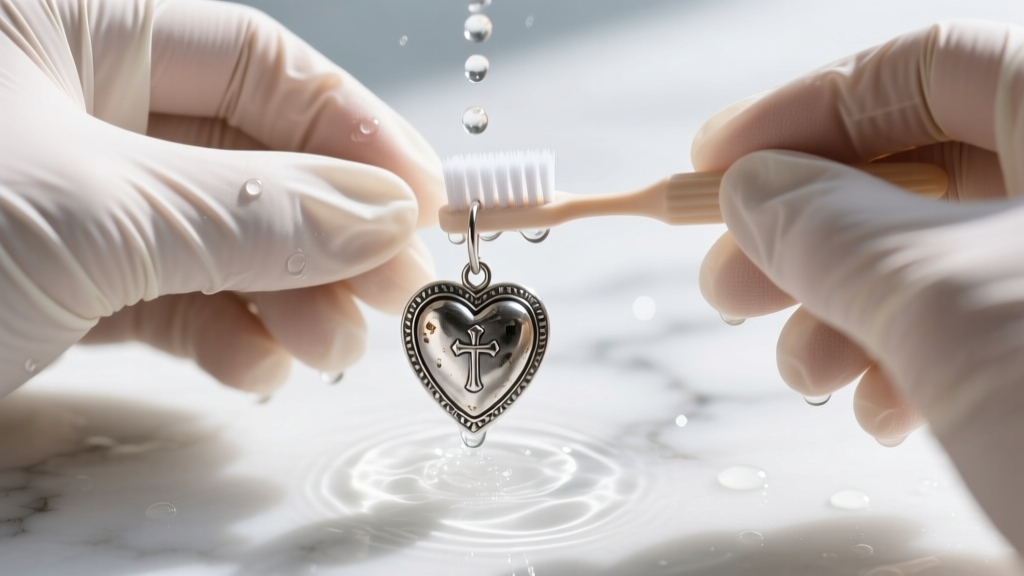
Cleaning oxidized silver requires a surgical approach. Your goal is to remove tarnish from the high-polish areas without touching the dark recesses.
- The Tool: A treated silver polishing cloth (such as a Sunshine cloth).
- The Technique: Wrap the cloth tightly around your index finger and gently glide it only over the raised, high-polish surfaces of the flames and crown. Use a wooden toothpick wrapped in a microfiber swab to carefully clean dirt out of the deep crevices without rubbing away the black oxidation.
The 'Never-Do' List: Chemical and Mechanical Hazards
The fastest way to ruin a pair of vintage or artisan sacred heart earrings is by using automated or chemical-heavy cleaning methods. Below is a compatibility matrix detailing what to avoid.
| Cleaning Method | Enamel | Oxidized Silver | Pave Diamonds | Failure Mode |
|---|---|---|---|---|
| Ultrasonic Cleaners | NEVER | Caution | NEVER | High-frequency vibrations shatter glass enamel and shake pave stones loose from their micro-bead settings. |
| Steam Cleaners | NEVER | Safe | Caution | Thermal shock causes immediate thermal fracturing in enamel and can crack temperature-sensitive gems like opals or emeralds. |
| Chemical Silver Dips | NEVER | NEVER | Caution | Acids and thiourea instantly strip intentional oxidation, leaving a dull, irreversible chalky white finish. |
| Baking Soda Paste | NEVER | NEVER | NEVER | High abrasiveness (Mohs 2.5) micro-scratches high-polish gold and silver, creating a cloudy appearance. |
Maintenance, Storage, and Wear Habits
Proper care extends far beyond the cleaning cloth. The mechanical stress placed on sacred heart earrings—particularly drop and dangle styles—requires routine hardware inspections.
Post Gauge and Friction Back Upgrades
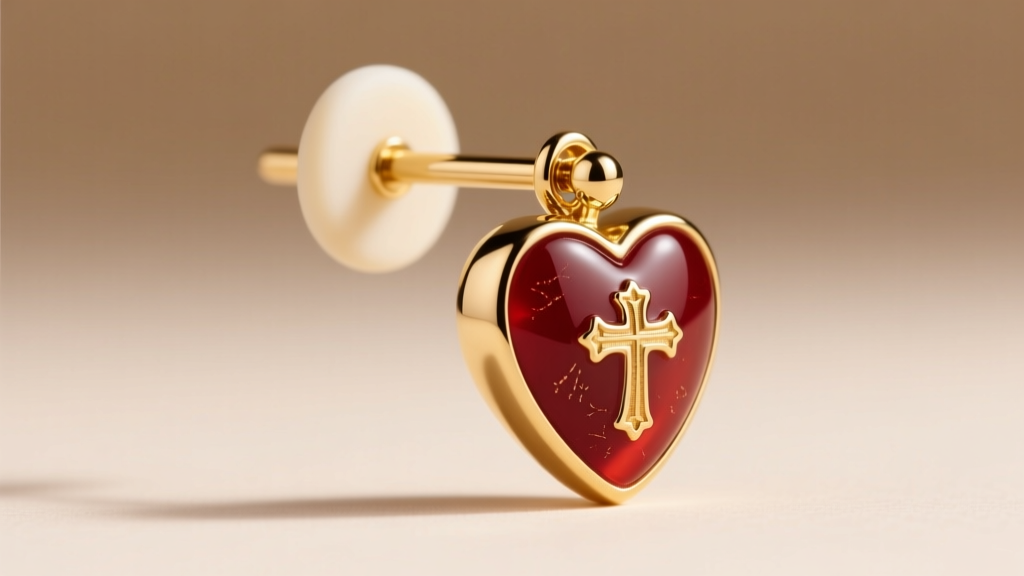
Sacred heart dangles are notoriously front-heavy. A standard earring post is usually 20-gauge (0.81mm thick). When a heavy, ornate dangle (weighing 5 to 10 grams) is suspended from a 20g post, the lever effect places immense shear stress on the metal. Over time, this will bend the post, warp the earring backing, and eventually lead to the loss of the earring.
If your sacred heart earrings feel heavy, take them to a bench jeweler to have the posts upgraded to an 18-gauge (1.02mm) or 16-gauge (1.29mm) thickness. Furthermore, discard standard metal 'butterfly' friction backs. They offer inadequate surface area for heavy motifs. Instead, upgrade to La Pousette backs (which lock like a safety pin) or use 1mm inner-diameter silicone O-rings to provide a secure, shock-absorbing grip that prevents the earring from slipping off the lobe.
Proper Storage to Prevent Micro-Abrasion
Never toss sacred heart earrings into a communal jewelry box. The sharp points of the crown and thorns will easily scratch the enamel or gold of adjacent pieces. Store them individually in anti-tarnish flannel pouches. For added protection, insert the posts through a small piece of archival-quality foam to keep the earrings suspended and prevent the delicate pave halo from being crushed against hard surfaces.
When to Seek Professional Restoration
While home maintenance is sufficient for routine cleaning, certain issues require the intervention of a master jeweler. According to the American Gem Society, you should seek professional help if you notice any of the following:
- Enamel Crazing: If you see a spiderweb of tiny cracks in the red or blue enamel, stop wearing the earrings immediately. A jeweler can stabilize the piece or recommend a specialized enamelist for restoration.
- Loose Pave Stones: If you hear a faint 'rattle' when shaking the earring near your ear, or if a stone shifts when gently prodded with a wooden toothpick, the micro-beads have worn down. A jeweler will need to re-tighten the settings under a microscope.
- Bent Posts or Solder Joints: If the jump ring connecting the sacred heart charm to the fishhook or post is pulling apart, do not attempt to squeeze it shut with pliers. This will weaken the metal through work-hardening and cause it to snap. A jeweler must laser-weld or re-solder the joint.
Expert Insight: The beauty of sacred heart earrings lies in their layered symbolism and intricate relief work. By respecting the distinct chemical properties of enamel, oxidized metals, and micro-set gems, you ensure that these deeply personal talismans remain vibrant and structurally sound for generations.


