Earrings 925 Sterling Silver: Technical Guide to Alloys and Tarnish
Discover the technical realities of earrings 925 sterling silver. Learn about copper alloys, rhodium plating, gauge integrity, and tarnish prevention.

The 92.5% Reality: Copper, Alloys, and Structural Integrity
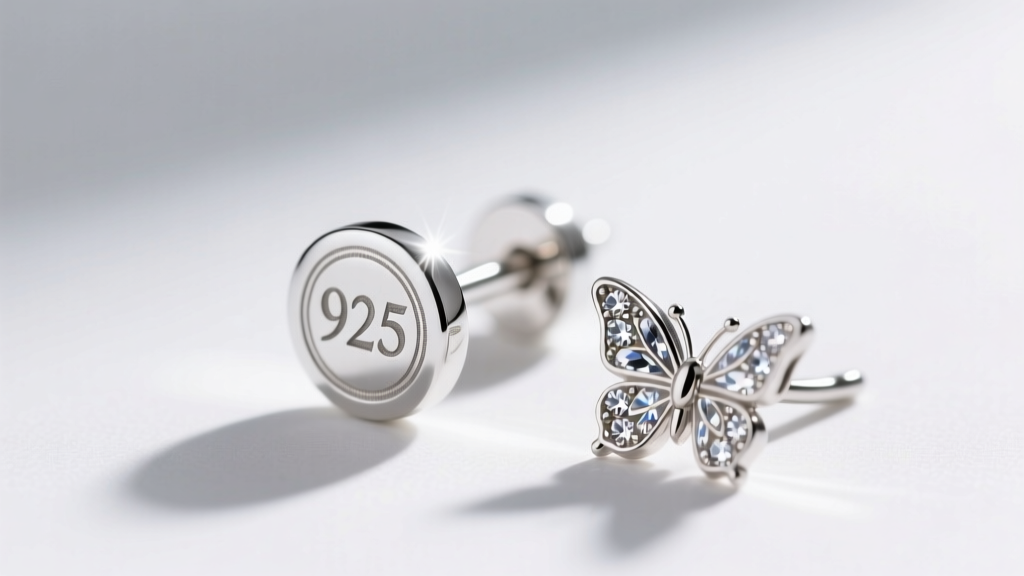
When evaluating fine jewelry for daily wear, earrings 925 sterling silver alloys remain the industry benchmark. However, the designation '925' is not merely a stamp of quality; it is a precise metallurgical formula that dictates the structural viability of the earring. Pure silver (Ag999) possesses a Mohs hardness of roughly 2.5 to 3.0, making it far too malleable for functional jewelry. An Ag999 earring post will bend under the minor friction of inserting it through a healed fistula, and a huggie hoop crafted from pure silver will lose its clasp tension within days of wear.
To achieve mechanical rigidity, metallurgists alloy 92.5% pure silver with 7.5% base metals—traditionally copper. This specific ratio approaches the eutectic point of the silver-copper phase diagram, yielding an optimal balance of ductility and tensile strength. The resulting alloy achieves a Mohs hardness of approximately 3.5 to 4.0. While this copper addition provides the necessary structural backbone for secure earring posts and durable hinge mechanisms, it introduces a critical vulnerability: oxidation. According to the Gemological Institute of America (GIA), the copper within the sterling matrix is entirely responsible for the blackening and tarnishing associated with aged silver jewelry, as pure silver itself does not react with oxygen at room temperature.
Advanced Alloys: Argentium and Deox
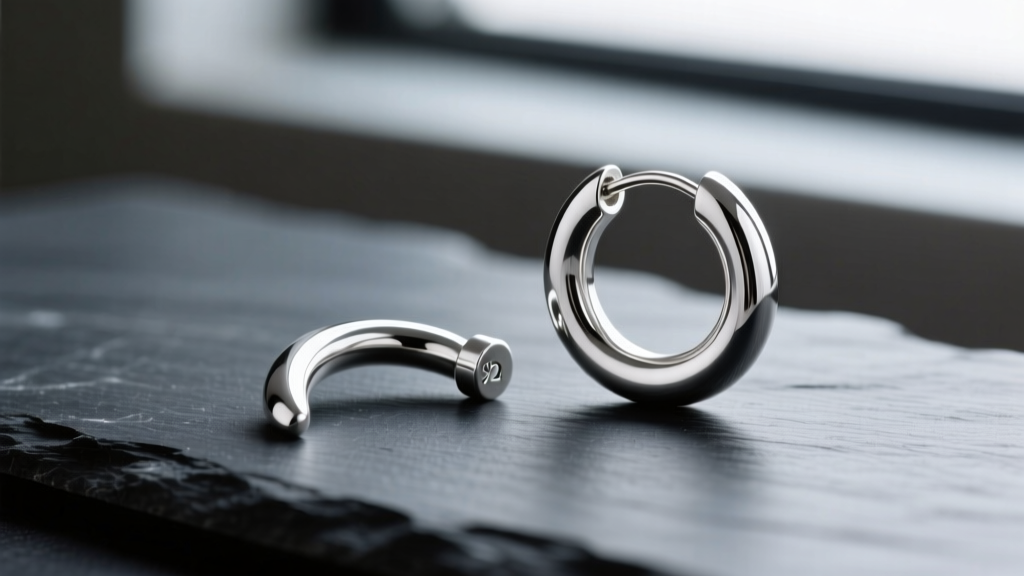
In recent years, master jewelers have begun utilizing advanced sterling formulations like Argentium silver. By replacing a portion of the copper with germanium, the alloy forms a transparent, self-healing germanium dioxide layer on the surface. This drastically slows the formation of silver sulfide (tarnish) and eliminates 'firestain'—the deep cuprous oxide discoloration that occurs during the high-heat soldering of earring posts and clutch pads.
Rhodium Plating vs. Bare Silver: The Tarnish Equation
Tarnish on sterling silver is primarily silver sulfide (Ag2S), which forms when atmospheric hydrogen sulfide reacts with the silver and copper matrix. To combat this, manufacturers apply surface treatments. Understanding these treatments is vital for assessing the longevity and skin-safety of your earrings.
- Flash Rhodium Plating (0.1 - 0.5 microns): A microscopically thin layer of rhodium applied via electroplating. It provides immediate high-shine brilliance but wears through at high-friction points (like post inserts and clutch backs) within weeks, exposing the reactive copper alloy beneath.
- Heavy Mil Rhodium (1.0 - 2.5 microns): A durable, industrial-grade plating that can withstand years of friction. However, rhodium is brittle; if the underlying sterling silver post bends, the heavy rhodium shell can micro-fracture and flake.
- E-Coating (Electrophoretic Deposition): A modern polymer resin applied via electrical current. Unlike rhodium, e-coating is flexible and completely seals the porous metal surface, offering superior tarnish resistance without altering the metal's natural white-grey hue.
Expert Insight: Never use abrasive silver polishing cloths on rhodium-plated 925 sterling silver earrings. The mild abrasives in the cloth will strip the expensive rhodium finish, exposing the raw, easily tarnished alloy underneath and ruining the uniform luster of the piece.
Hypoallergenic Myths and Contact Dermatitis
A pervasive myth in the jewelry industry is that 925 sterling silver is universally hypoallergenic. While pure silver and copper are generally well-tolerated, the manufacturing processes can introduce hidden allergens. The most common culprit is nickel. While nickel is not part of the standard 925 formula, it is frequently used in the 'strike layer'—an initial electroplating bath used to help rhodium adhere to the silver base.
Furthermore, the solder used to attach the earring post to the decorative backing or to weld the hinge on a sterling silver huggie often contains lower-melting-point alloys that may include nickel, zinc, or cadmium. For individuals with Type IV hypersensitivity (allergic contact dermatitis), even trace amounts of nickel leaching from a solder joint can trigger severe localized reactions. The Mayo Clinic notes that nickel allergy is one of the most common causes of allergic contact dermatitis, emphasizing the need for strict material traceability. Always seek earrings that explicitly state 'nickel-free solder' and utilize a palladium strike layer rather than a nickel strike before rhodium plating.
Gauge Sizing and Tension Loss in Sterling Silver
The structural limitations of the 92.5/7.5 alloy become highly apparent when analyzing wire gauges used for earring posts and hoops. Because sterling silver lacks the 'memory' and spring-hardness of metals like titanium or niobium, selecting the correct gauge is critical to prevent permanent deformation.
| Gauge (AWG) | Thickness (mm) | Tensile Behavior in 925 Silver | Best Earring Application |
|---|---|---|---|
| 22G | 0.64mm | Extremely low yield strength; warps under minimal lateral pressure. | Lightweight threadless ends, delicate ear cuffs (non-piercing). |
| 20G | 0.81mm | Standard industry baseline; prone to bending if used in heavy drop styles. | Standard lobe studs, lightweight sleeper hoops. |
| 18G | 1.02mm | Optimal balance of rigidity and comfort; maintains tension in clicker hinges. | Cartilage hoops, tragus clickers, medium-weight lobe drops. |
| 16G | 1.29mm | High structural integrity; requires heavy-duty soldering at stress points. | Daith earrings, conch hoops, heavy statement dangles. |
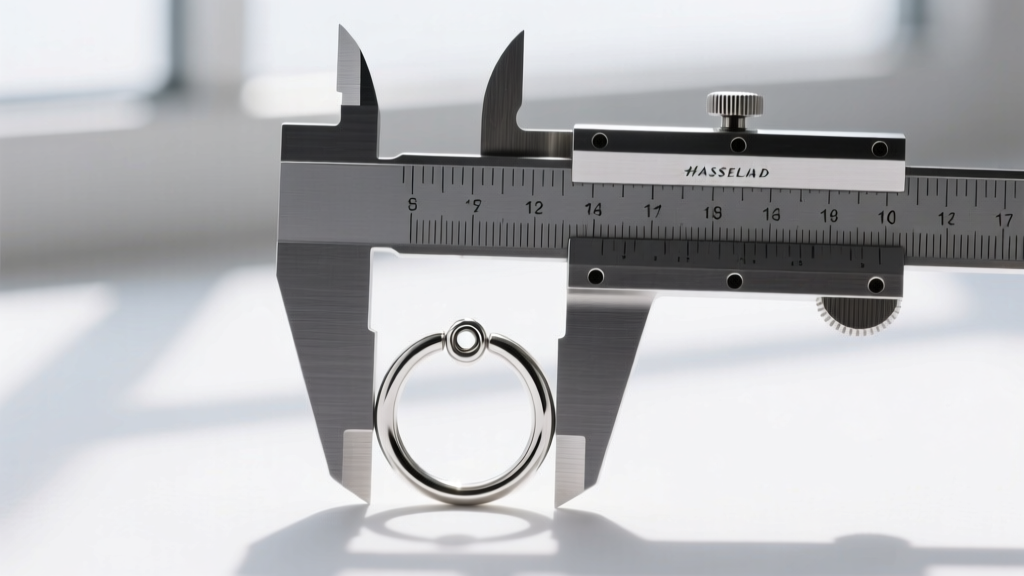
For cartilage piercings, an 18-gauge (1.02mm) wire is the absolute minimum recommended for 925 sterling silver. Thinner wires (20G or 22G) can easily warp when navigating the denser, less pliable tissue of the helix or tragus, leading to a permanently misshapen hoop that will no longer close flush.
Soldering Points and Structural Failure Modes
When auditing the quality of sterling silver earrings, an expert eye immediately gravitates to the solder joints. The most catastrophic failure mode in a sterling silver earring is not the snapping of the wire, but the fatigue failure at the solder joint.
In a sterling silver huggie or clicker hoop, the hinge and the clasp are soldered to the main wire body. Traditional torch soldering introduces intense, localized heat, which can anneal (soften) the surrounding work-hardened sterling silver. This creates a 'soft zone' adjacent to a rigid solder joint. Over months of opening and closing the clasp, mechanical stress concentrates exactly at the boundary of this soft zone, leading to micro-cracking and eventual shear failure. High-end manufacturers now utilize laser welding to attach posts and hinges. Laser welding offers pinpoint thermal control, preserving the work-hardened tensile strength of the surrounding 925 alloy and virtually eliminating fatigue-induced breakage at the joints.
Chemical Exposure and Stress Corrosion Cracking
Finally, wearers must be aware of stress corrosion cracking (SCC). When a 925 sterling silver earring post is under constant mechanical tension (such as a tight butterfly clutch pressing against a slightly bent post) and is simultaneously exposed to ammonia-based cleaners or harsh chlorinated pool water, the combination of stress and corrosive chemicals can cause the post to spontaneously snap. Removing sterling silver earrings before swimming or using household chemicals is not merely a suggestion to prevent tarnish; it is a mechanical necessity to prevent catastrophic structural failure.


