Abalone Drop Earrings: Material Properties & Shell Comparison Guide
Discover the material properties of abalone drop earrings. Compare natural abalone, paua, and mother of pearl for durability and iridescence.

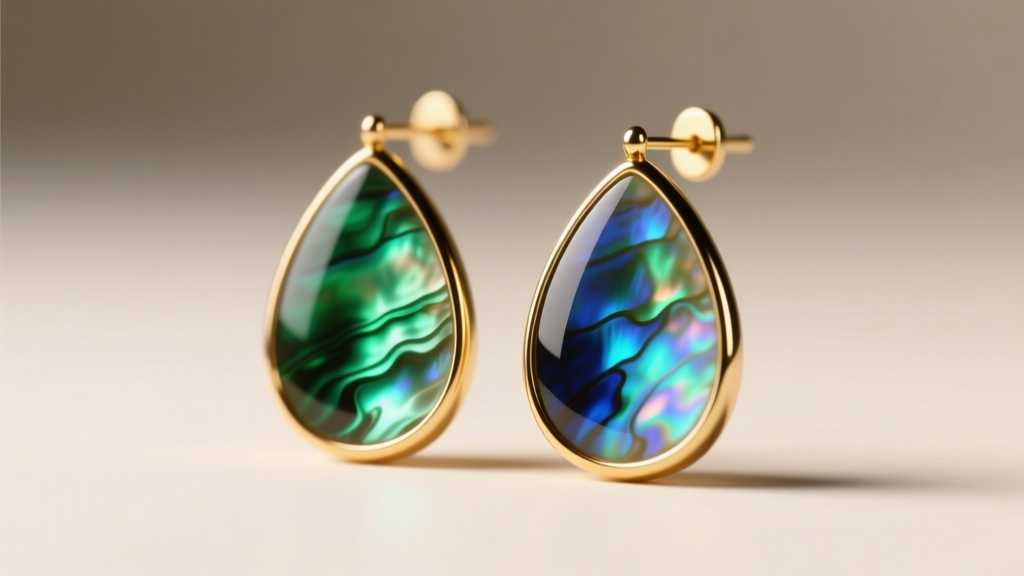
The Anatomy of Abalone: Why It Outshines Standard Shells
When evaluating abalone drop earrings, most consumers focus solely on the vibrant play of color. However, as a material, abalone is a marvel of natural engineering that dictates how the jewelry must be crafted, worn, and maintained. Abalone shell is composed of nacre, an organic-inorganic composite material produced by mollusks. According to mineralogical data from Mindat.org, the inorganic component is aragonite (a crystalline form of calcium carbonate), while the organic component is conchiolin, a flexible biopolymer.
This creates a microscopic 'brick and mortar' structure. The brittle aragonite platelets act as the bricks, and the elastic conchiolin acts as the mortar. While abalone registers a mere 2.5 to 4.0 on the Mohs hardness scale—making it highly susceptible to scratching—its fracture toughness is remarkably high. The biopolymer layers prevent cracks from propagating through the material, meaning high-quality abalone drop earrings can survive minor flexing that would shatter standard glass or synthetic resins.
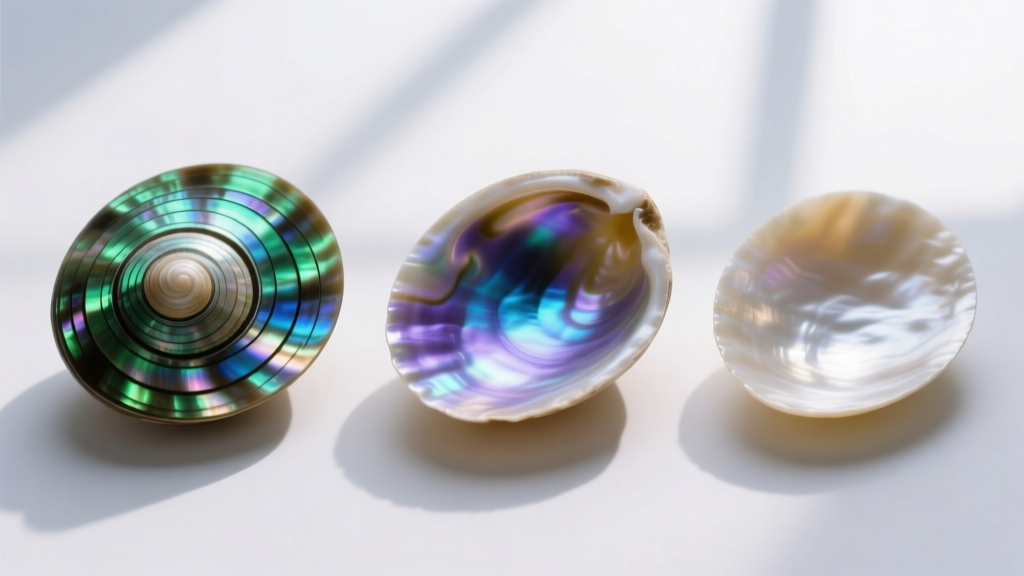
Natural Abalone vs. Paua vs. Mother of Pearl: A Material Showdown
The market is flooded with various shell materials, often mislabeled or conflated by retailers. Understanding the precise material differences is critical when investing in drop earrings, as the pendulum motion of a drop style subjects the material to unique kinetic stresses.
| Material | Mohs Hardness | Avg. Nacre Thickness | Iridescence Quality | Price Range (Drop Pair) |
|---|---|---|---|---|
| Natural Abalone | 2.5 - 4.0 | 1.5 - 3.0 mm | High (Green/Blue/Pink) | $80 - $250 |
| New Zealand Paua | 3.0 - 4.0 | 2.0 - 4.0 mm | Extreme (Deep Blue/Emerald) | $120 - $350 |
| Mother of Pearl (MOP) | 2.5 - 3.0 | 0.5 - 1.5 mm | Low/Medium (White/Silver) | $40 - $120 |
| Synthetic Shell | N/A (Resin) | N/A | Uniform/Artificial | $20 - $60 |
New Zealand Paua is a specific species of abalone (Haliotis iris) renowned for its exceptionally thick nacre and intense, almost electric blue and green hues. Because of its density, Paua is often the preferred choice for intricate carvings in drop earrings. Conversely, standard Mother of Pearl (harvested from pearl oysters rather than abalone) lacks the vibrant chromatic dispersion of abalone and features a much thinner nacre layer, making it less durable for heavy, swinging drop designs.
Metal Pairings: Which Alloys Protect Delicate Shells?
The metal used to set abalone drop earrings is not just an aesthetic choice; it directly impacts the longevity of the organic gem. Because abalone is micro-porous, it can absorb chemicals and react to certain metal oxides.
Sterling Silver & Rhodium Plating
Sterling silver (92.5% silver, 7.5% copper) is a popular, affordable pairing. However, the copper content makes it prone to tarnishing when exposed to sulfur and moisture. If the silver tarnishes against the porous edge of the abalone, copper salts can permanently stain the shell's perimeter. To prevent this, ensure your sterling silver drop earrings are heavily rhodium-plated, creating an inert barrier between the reactive alloy and the organic nacre.
Titanium & Niobium
For those with contact dermatitis or metal sensitivities, Grade 23 titanium (Ti-6Al-4V ELI) or pure niobium are the ultimate choices. These metals are entirely hypoallergenic and highly resistant to corrosion. Furthermore, titanium's high strength-to-weight ratio allows jewelers to create secure, lightweight bezels that won't weigh down the earlobe, a crucial factor for larger abalone drop earrings.
Solid 14k Gold vs. Vermeil
Solid 14k gold (58.5% pure gold alloyed with copper, silver, and zinc) offers the best balance of hardness and chemical inertness. It will not tarnish or stain the abalone. Gold vermeil (a thick layer of gold over sterling silver) is a viable budget alternative, but once the gold layer wears thin at the friction points of the earring hook or setting, the underlying silver will be exposed to the elements.
Structural Vulnerabilities & Failure Modes in Drop Settings
The defining feature of a drop earring is its movement. A 45mm abalone drop earring acts as a pendulum. When you turn your head quickly, the earring swings, generating kinetic energy. If the earring strikes a hard surface—like a smartphone screen, a desk edge, or a car door—that energy transfers directly into the shell.
The Danger of Prong Settings
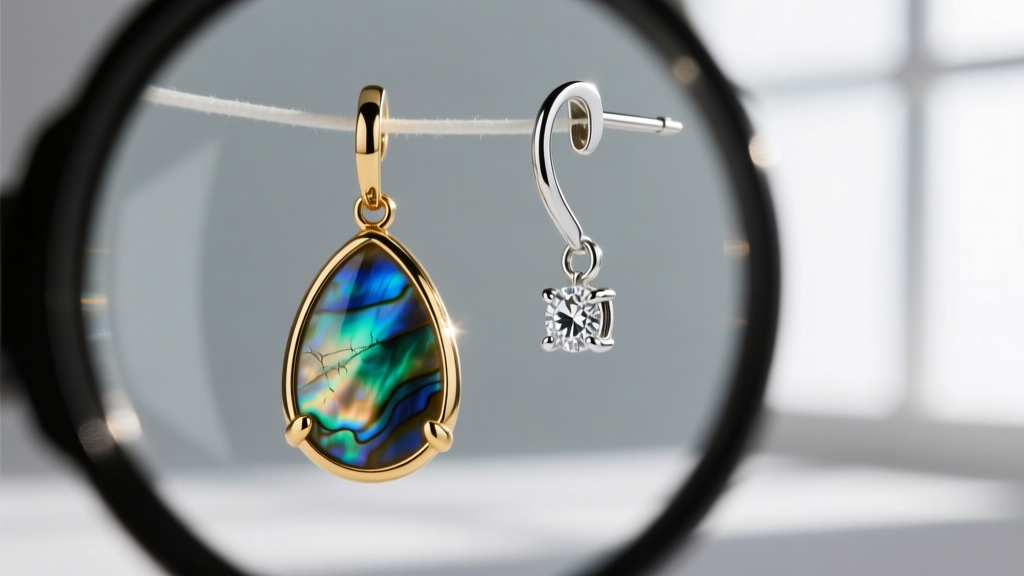
Prong settings are designed to maximize light entry and showcase the entire surface area of a gemstone. However, for organic materials like abalone, prongs are a structural liability. Prongs leave the 'girdle' (the outer edge) of the shell completely exposed. A direct impact to an exposed abalone edge will cause micro-fractures, eventually leading to catastrophic chipping or delamination of the nacre layers.
The Necessity of Bezel and Semi-Bezel Settings
For daily-wear abalone drop earrings, a full or semi-bezel setting is mandatory. A bezel features a continuous metal rim that wraps around the entire perimeter of the shell. Upon impact, the metal rim absorbs and disperses the kinetic shock, protecting the fragile aragonite edges. When shopping, always inspect the inner lip of the bezel; it should overlap the shell by at least 0.75mm to ensure the edge is fully encapsulated.
Care Protocols: Preserving the Nacre Layer
Proper maintenance of abalone requires an understanding of its chemical vulnerabilities. The Gemological Institute of America (GIA) strictly warns against using standard jewelry cleaning methods on organic gems.
- Never Use Ultrasonic Cleaners: The high-frequency sound waves create microscopic cavitation bubbles in the cleaning solution. When these bubbles collapse against the abalone, the localized shockwaves will literally blast the microscopic aragonite platelets off the conchiolin matrix, ruining the iridescence.
- Avoid Ammonia and Acids: Abalone is calcium carbonate. It will effervesce and dissolve when exposed to acidic solutions or harsh alkaline chemicals like ammonia. Keep your earrings away from vinegar, citrus-based cleaners, and harsh window sprays.
- The 'Last On, First Off' Rule: Hairsprays, perfumes, and cosmetics contain alcohols and propellants that can degrade the polished surface of the shell over time, leaving it dull and cloudy. Always apply your cosmetics before putting on your abalone drop earrings.
Final Verdict: Selecting Your Pair
When investing in abalone drop earrings, prioritize material integrity over sheer size. Look for New Zealand Paua or thick natural abalone set in a protective 14k gold or rhodium-plated bezel. By understanding the unique mineralogy and structural needs of nacre, you can select a pair of drop earrings that will maintain their mesmerizing iridescence and structural integrity for decades.


