Amethyst and Gold Earrings: 2026 Trend Forecast & Styling Guide
Discover the top 2026 trends for amethyst and gold earrings. Learn how to style deep Siberian and lavender shades with 14k and 18k gold for any face shape.
The 2026 Resurgence: Why Amethyst and Gold Are Dominating
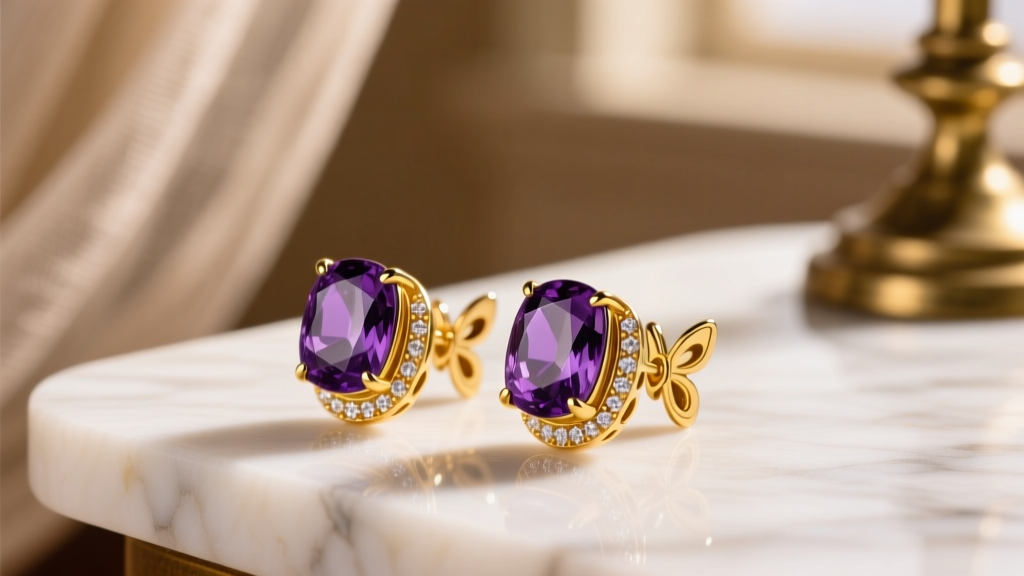
As we navigate the 2026 jewelry landscape, the industry has witnessed a definitive pivot away from the ultra-minimalist 'quiet luxury' of previous years toward a more expressive, heritage-driven aesthetic. At the forefront of this shift are amethyst and gold earrings, which have reclaimed their status as a cornerstone of both fine jewelry collections and high-fashion editorial styling. This resurgence is not merely nostalgic; it is driven by a renewed consumer appetite for colored gemstones that offer deep psychological resonance and striking visual contrast against warm metal tones.
According to recent market analyses, colored gemstone acquisitions have outpaced diamond purchases among millennials and Gen Z buyers for three consecutive quarters. Amethyst, with its rich purple spectrum, perfectly aligns with the 2026 color forecasting that favors moody, romantic jewel tones. When paired with the inherent warmth of yellow or rose gold, amethyst creates a complementary color dynamic that flatters a vast array of skin undertones, making it a highly versatile choice for everyday wear and evening statements alike.
Decoding the Stones: Siberian vs. Uruguayan vs. Rose de France
To truly master the trend, one must understand that 'amethyst' is not a monolith. The visual impact and valuation of your earrings depend entirely on the geographic origin and color saturation of the quartz. As detailed by the Gemological Institute of America (GIA), amethyst is a purple variety of quartz (SiO2) with a Mohs hardness of 7, making it durable enough for earrings but requiring mindful setting choices to prevent chipping at the girdle.
| Amethyst Grade | Color Profile | 2026 Market Price (Per Carat) | Best Earring Style |
|---|---|---|---|
| Siberian | Deep purple with distinct red and blue secondary flashes | $150 - $450 | Statement drops, halos, vintage reproductions |
| Uruguayan | Rich, saturated purple with minimal secondary flashes | $60 - $180 | Geometric dangles, large cabochon studs |
| Rose de France | Pale lavender to soft lilac, highly transparent | $15 - $40 | Delicate huggies, cluster studs, ear cuffs |
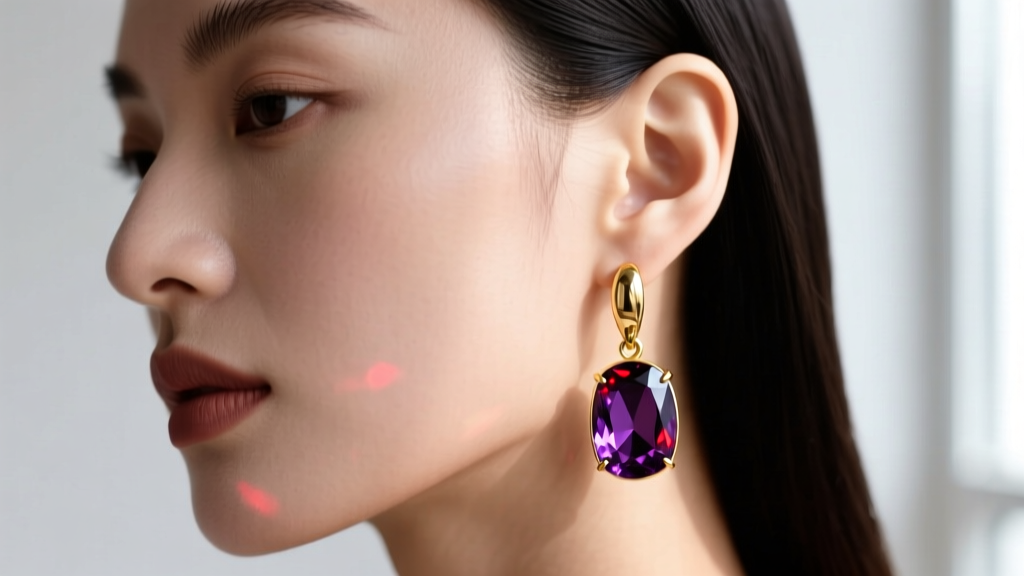
For the most coveted 2026 look, jewelers are heavily favoring untreated Siberian amethysts cut in elongated pear or emerald shapes. The red flashes inherent in top-tier Siberian stones interact beautifully with the warm reflections of high-karat gold, creating a multi-dimensional sparkle that flat, single-tone purple stones simply cannot achieve.
The Metallurgy of Pairing: 14K, 18K, and 22K Gold Dynamics
The choice of gold karat fundamentally alters both the aesthetics and the structural integrity of amethyst earrings. While the GIA notes that pure 24K gold is too soft for functional jewelry, the alloy mixtures used in 14K, 18K, and 22K gold present unique advantages and limitations for gemstone settings.
- 14K Gold (58.5% Pure Gold): The workhorse of secure settings. Alloyed with copper, silver, and zinc, 14K gold offers superior tensile strength. For heavy amethyst drop earrings (which can easily exceed 8 grams per pair), 14K gold prongs will resist bending and snagging far better than higher karats. It is the mandatory choice for intricate pavé halos surrounding a central amethyst.
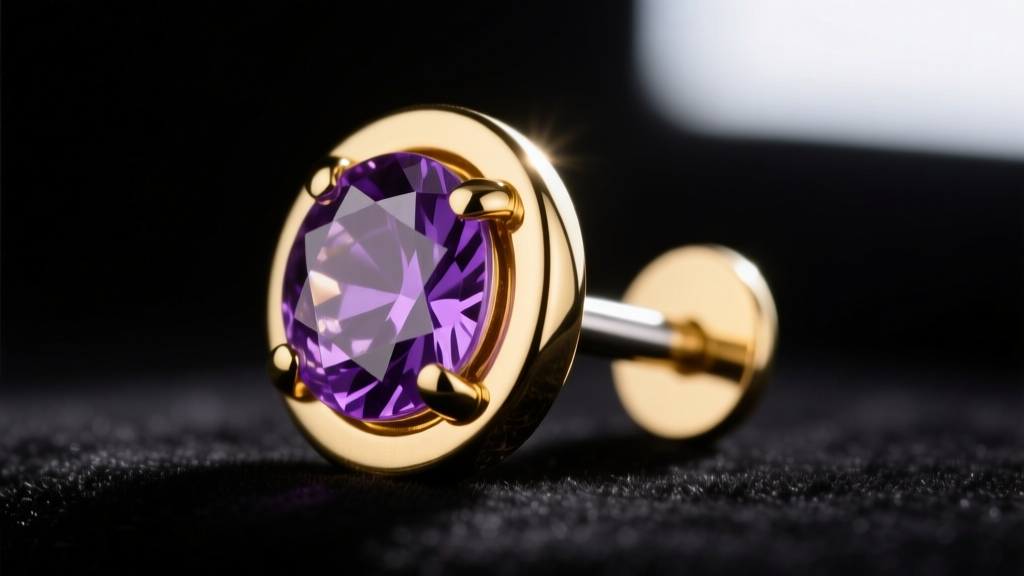
- 18K Gold (75% Pure Gold): The 2026 standard for luxury fine jewelry. 18K yellow gold possesses a rich, buttery hue that perfectly complements deep purple stones. However, its softer nature means that heavy amethysts should be set in bezels, semi-bezels, or reinforced basket settings rather than delicate four-prong crowns to prevent stone loss over time.
- 22K Gold (91.6% Pure Gold): Highly trendy in 2026 for artisanal, hand-hammered designs. Because 22K is exceptionally soft, it is rarely used to hold faceted stones via prongs. Instead, look for 22K gold earrings that utilize tension settings, wire-wrapping techniques, or bezel settings with heavily burnished edges to secure smooth amethyst cabochons.
Gauge and Setting Considerations for Heavy Drops
A critical, often overlooked aspect of earring design is the post gauge. Standard lobe piercings are typically 20-gauge (0.81mm) or 18-gauge (1.02mm). When designing or purchasing substantial amethyst and gold drop earrings, an 18-gauge or even 16-gauge (1.29mm) post is highly recommended. A thicker post prevents the earring from drooping forward—a common issue with heavy quartz stones that causes the decorative face to point toward the floor rather than resting flush against the lobe. Always pair heavy posts with jumbo silicone friction backs or La Pousette locking backs to distribute the weight evenly and protect the earlobe from tearing.
Face Shape Matrix: Styling Amethyst and Gold Earrings
The interplay between the geometric lines of gold and the refractive depth of amethyst can be used to strategically balance facial proportions. Here is a definitive 2026 styling matrix for selecting the ideal silhouette.
- Round Faces: Avoid circular hoops and cluster studs, which emphasize facial width. Instead, opt for elongated, angular geometric dangles featuring emerald-cut amethysts set in 14K gold. The sharp vertical lines create an illusion of length and structure.
- Oval Faces: The most versatile canvas. Oval faces can carry off the season's most dramatic trend: oversized amethyst chandelier earrings. To maintain balance, ensure the widest part of the earring does not extend past the jawline.
- Square Faces: Soften a strong, angular jawline with curved silhouettes. Medium-sized 18K gold hoops featuring pavé amethyst accents, or smooth, rounded amethyst cabochon drops, will introduce necessary curvature and movement to the profile.
- Heart-Shaped Faces: Characterized by a broader forehead and a narrow chin, heart shapes benefit from earrings that add volume at the lower half of the face. Teardrop-shaped amethysts set in wide, inverted-triangle gold galleries perfectly balance the chin area.
Investment & Care: Preserving the Purple Luster
Amethyst is generally a stable and durable gemstone, but it requires specific care protocols to maintain its optical brilliance, especially when set in intricate gold mountings that can trap oils and debris. A major vulnerability of amethyst is its susceptibility to color fading under prolonged exposure to intense ultraviolet (UV) light. While wearing your earrings outdoors for daily activities is perfectly safe, storing them in direct sunlight or wearing them during extended tropical beach vacations can gradually bleach the purple hue to a dull gray or brown over several years.
For routine maintenance, avoid ultrasonic cleaners if your amethyst earrings feature fracture-filled stones or are set alongside softer accent gems like opals or pearls. The safest and most effective cleaning method is a soak in lukewarm water with a few drops of pH-neutral dish soap, followed by gentle agitation with a soft-bristled baby toothbrush. Pay special attention to the pavilion (the underside of the stone), where skin oils and lotions accumulate, blocking light return and making the vibrant purple appear muddy and dark. Dry thoroughly with a lint-free microfiber cloth to prevent water spots on the high-polish gold.
Final Verdict: Building Your 2026 Amethyst Wardrobe
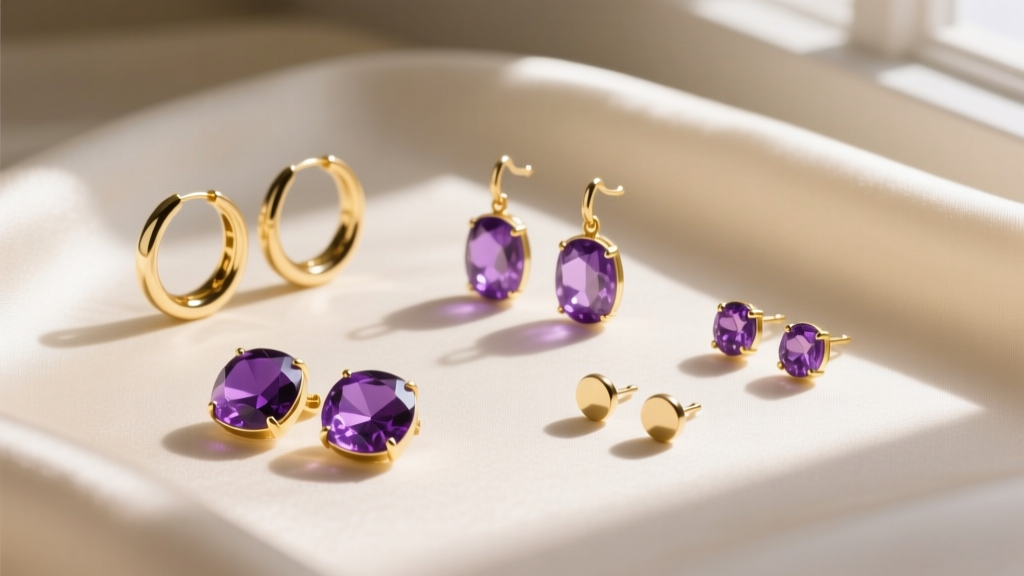
The dominance of amethyst and gold earrings in 2026 is a testament to the modern consumer's desire for jewelry that balances historical romance with wearable versatility. By understanding the nuanced differences between Siberian and lavender stones, respecting the metallurgical limits of various gold karats, and selecting silhouettes that enhance your unique facial structure, you can invest in pieces that transcend fleeting fads. Whether you choose a pair of heavy, 16-gauge Siberian drops for evening wear or delicate 14K Rose de France huggies for the office, this gemstone-metal pairing remains an enduring pillar of sophisticated style.


