Maintenance Tips When You Convert Earrings to Clip On Styles
Learn how to clean, maintain, and store your jewelry when you convert earrings to clip on adapters to prevent tarnish and damage.

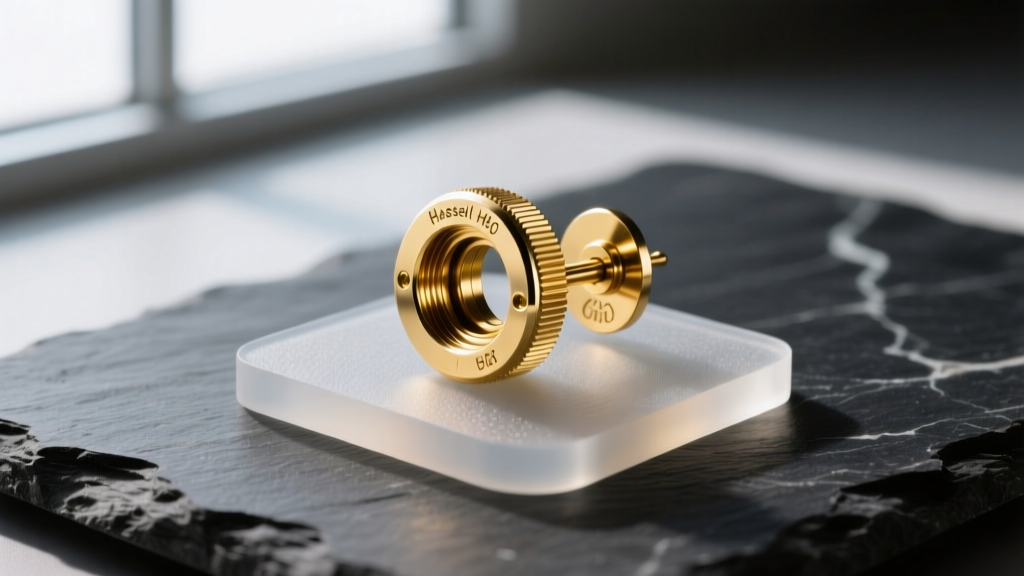
As the jewelry industry continues to embrace inclusive design in 2026, the ability to convert earrings to clip on mechanisms has become a staple for both non-pierced individuals and those managing stretched or healing lobes. However, adding a mechanical adapter to a standard post earring introduces new variables for hygiene, metal fatigue, and structural maintenance. While most style guides focus solely on the aesthetics of the conversion, neglecting the care of the converter itself can lead to contact dermatitis, lost earrings, and degraded tension. This comprehensive guide explores the exact maintenance protocols required to keep your converted clip-ons secure, sanitary, and comfortable for daily wear.
The Anatomy of a Converter: What You Are Actually Cleaning
Before applying any cleaning solutions, it is vital to understand the mechanical anatomy of the adapter. A standard earring converter consists of four distinct components: the tension hinge, the paddle (the flat metal piece that presses against the back of the earlobe), the post receptacle (a hollow tube designed to accept standard 0.8mm to 1.0mm earring posts), and the friction pad (usually made of Shore A 30 durometer silicone or medical-grade rubber). Each of these components reacts differently to moisture, skin oils, and cleaning chemicals. Treating the entire assembly as a single piece of jewelry is the most common mistake consumers make, often resulting in degraded silicone pads or rusted hinges.
Step-by-Step Cleaning Guide for Converted Clip-Ons
1. Separation and Pad Removal
Always detach the earring from the converter before deep cleaning. Leaving the earring post inserted into the receptacle traps moisture and sebum inside the tube, creating a breeding ground for bacteria. If your converter features a removable silicone comfort pad, gently peel it back. Moisture trapped beneath these pads causes brass-based converters to develop verdigris (copper carbonate), a green crust that is highly irritating to the skin and can permanently stain the earlobe.
2. Degreasing the Metal Tension Mechanism
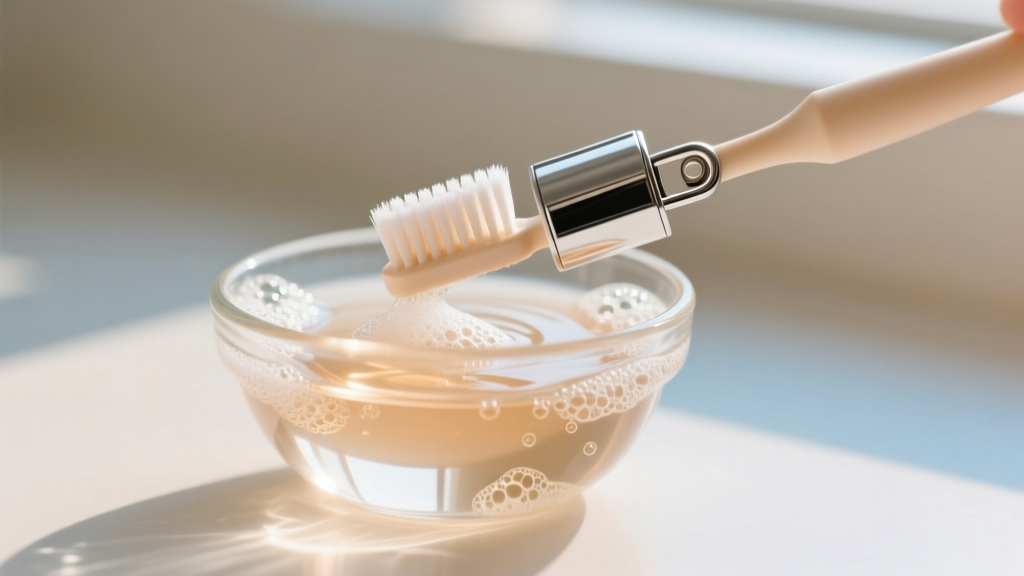
The metal paddle and hinge accumulate a mixture of dead skin cells, cosmetic products, and natural sebum. According to the Gemological Institute of America (GIA), mild liquid dish soap combined with lukewarm water is the safest degreaser for mixed-metal jewelry findings. Place the metal portion of the converter in the solution for three minutes, then use a soft-bristled baby toothbrush to gently agitate the hinge and the inside of the paddle. Avoid harsh chemical dips or ultrasonic cleaners if the silicone pad is permanently glued, as the high-frequency vibrations will shatter the adhesive bond.
3. Sanitizing the Post Receptacle
The hollow tube that holds your earring post is a magnet for debris. To clean the interior, dip a 0.4mm dry interdental brush or a wooden toothpick into 70% isopropyl alcohol and carefully ream the inside of the tube. Do not use 99% alcohol; it evaporates too quickly to effectively break down lipid-based skin oils. The 30% water content in 70% isopropyl alcohol is essential for penetrating the cell walls of bacteria and ensuring a truly sanitary receptacle.
Material Grades and Maintenance Requirements
The longevity of your converter depends heavily on its base metal. Cheap adapters often use nickel-silver alloys beneath a microscopic flash plating, which wears away quickly. Investing in higher-grade metals reduces maintenance frequency and prevents allergic reactions.
| Material Grade | Tarnish Resistance | Recommended Cleaning Agent | Expected Lifespan |
|---|---|---|---|
| Brass w/ Gold Plating | Low (Prone to oxidation) | Mild Dish Soap & Water | 6-12 Months |
| 316L Surgical Steel | High | 70% Isopropyl Alcohol | 2-4 Years |
| Grade 23 Titanium (Ti-6Al-4V) | Exceptional | Ultrasonic (Pad Removed) | 5+ Years |
Tension Calibration: Preventing the Slip and Drop
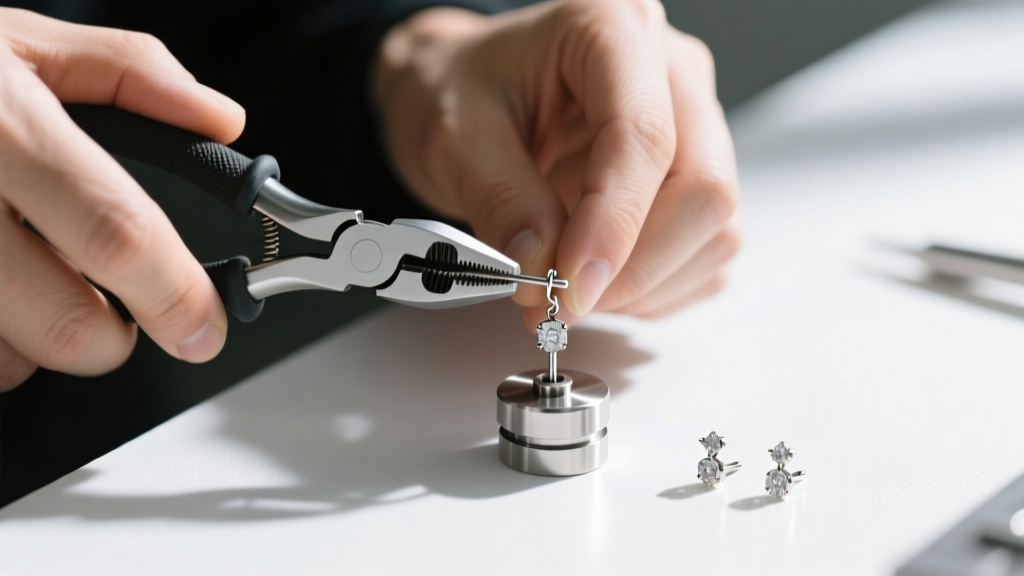
Over time, the repetitive action of opening and closing the converter causes metal fatigue, leading to a loose grip that drops expensive earrings. You can recalibrate the tension at home, but it requires the right tools. Never use standard steel pliers, as the teeth will crush the soft alloy and scratch away protective rhodium or gold plating. Instead, use jeweler's nylon-jaw pliers. To increase the grip strength, gently squeeze the paddle toward the hinge in micro-millimeter increments. To loosen a clip that is causing earlobe pain, gently pull the paddle away from the hinge. Test the tension on a piece of thick felt before wearing it on your ear to ensure the pressure is evenly distributed.
Preventing Contact Dermatitis and Tarnish
When you convert earrings to clip on styles, the adapter sits under constant pressure against the skin, making the area highly susceptible to contact dermatitis. The American Academy of Dermatology (AAD) notes that nickel allergies are frequently triggered by sustained friction and sweat exposure. If you must use a base-metal converter, avoid the outdated 'clear nail polish' trick; it chips rapidly under mechanical pressure and traps moisture against the skin. Instead, apply a flexible silicone barrier cream before wearing, or line the inside of the metal paddle with a custom-cut piece of moleskin fabric. For a permanent solution, upgrade to Grade 23 Titanium converters, which are entirely biocompatible and will not leach allergens regardless of sweat exposure.
Expert Troubleshooting: Common Converter Failures
- Stuck Earring Post: Never use WD-40 or harsh chemical lubricants, which will melt the silicone pad and ruin the earring's finish. Apply a microscopic drop of food-grade mineral oil to the seam of the post tube, wait five minutes, and gently twist the earring post using rubber-tipped pliers.
- Pad Constantly Falling Off: The adhesive on factory pads degrades with exposure to skin oils. Clean the metal paddle surface with alcohol, let it dry completely, and reattach the pad using a tiny dot of flexible jewelry adhesive (like E6000), allowing 24 hours to cure before wearing.
- Squeaky Hinge: A squeaking noise indicates metal-on-metal friction without lubrication. Use a toothpick to apply a minuscule amount of synthetic watch oil to the hinge pin. Wipe away any excess immediately to prevent it from migrating to the silicone pad.
Storage Solutions for Converted Earrings
How you store your converted earrings dictates their lifespan. Do not leave the earring post locked inside the converter receptacle during long-term storage; the constant outward pressure can warp the tube and weaken the hinge spring. Store the converters and the earrings separately in a low-humidity environment. Include a silica gel desiccant packet in your jewelry box to absorb ambient moisture, which is the primary catalyst for tarnish on plated converter mechanisms. By treating your converters with the same meticulous care as your fine jewelry, you ensure a secure, comfortable, and hygienic experience every time you wear them.


