How to Choose the Right Earring 8mm Inner Diameter Size
Learn how to measure, choose, and style an 8mm earring for lobe and cartilage piercings with our step-by-step guide on gauge, materials, and fit.

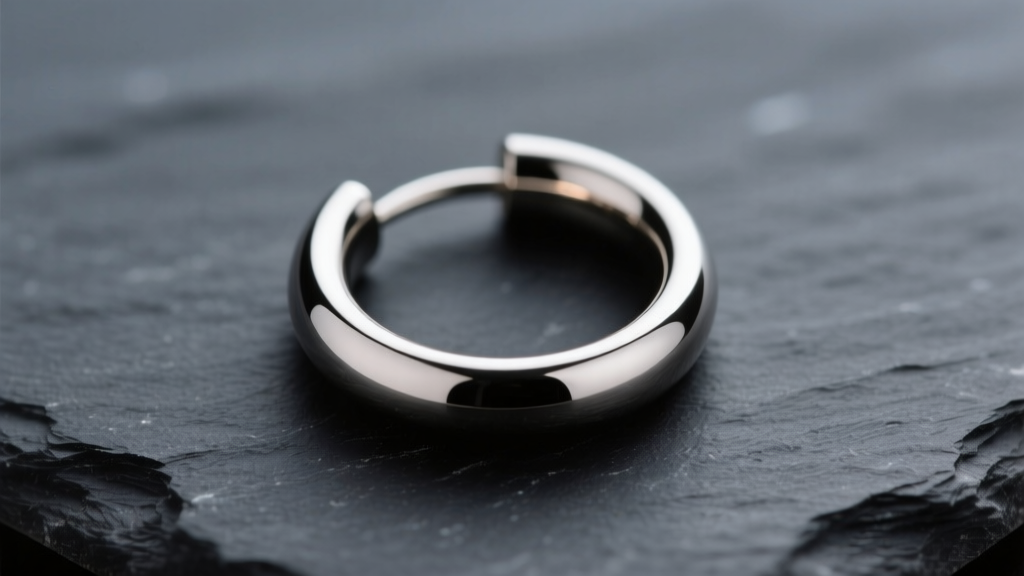
When navigating the world of body jewelry, few measurements are as universally critical as the 8mm (5/16") size. Whether you are shopping for a snug lobe huggie, a delicate tragus ring, or an initial cartilage labret post, understanding the mechanics of an earring 8mm specification is essential for comfort, healing, and aesthetic balance. In 2026, the shift toward threadless and precision-machined body jewelry has made accurate sizing more important than ever.
This step-by-step guide will teach you how to measure, select, and safely insert an 8mm earring for virtually any piercing placement, eliminating the guesswork and preventing common sizing errors.
Why the 8mm (5/16") Measurement Matters
In body jewelry, 8mm represents a versatile threshold. For hoops and rings, it is the standard Inner Diameter (ID) for snug-fitting styles. For flat-back studs and labrets, 8mm represents the Post Length, which is the gold standard for accommodating swelling in fresh cartilage piercings. Confusing these two metrics is the number one reason customers end up with jewelry that either pinches the tissue or sticks out too far.
Expert Insight: Always verify whether a retailer is listing the Inner Diameter (for hoops) or the Wearable Post Length (for studs). A reputable jeweler will explicitly state "8mm ID" or "8mm Length."
Step 1: Differentiate Inner Diameter vs. Outer Diameter
Before purchasing a hoop or huggie, you must understand how the 8mm measurement is applied. The Inner Diameter (ID) is the distance across the inside of the ring. This dictates how much space your earlobe or cartilage has inside the hoop.
The Gauge Thickness Factor
The Outer Diameter (OD) changes depending on the gauge (thickness) of the wire. For example:
- 20G (0.8mm wire): An 8mm ID results in an OD of roughly 9.6mm.
- 16G (1.2mm wire): An 8mm ID results in an OD of roughly 10.4mm.
If you have a thicker earlobe or a highly angled helix piercing, an 8mm ID in a chunky 14G wire might feel too tight, whereas the same ID in a delicate 20G wire will sit perfectly.
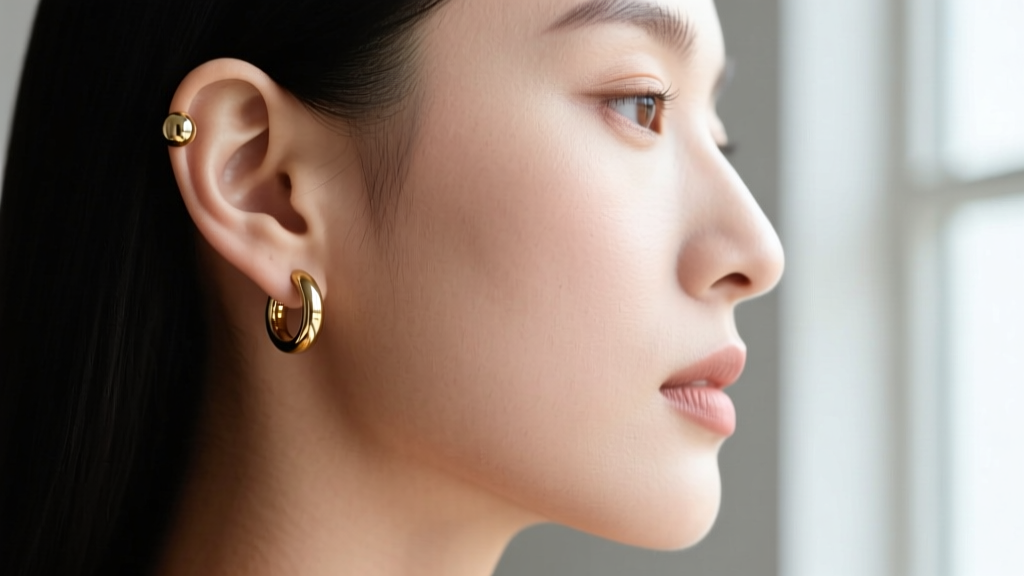
Step 2: Match the 8mm Style to Your Specific Piercing
Not all 8mm earrings are created equal. The anatomy of your piercing dictates the style of jewelry you should select. Below is a decision matrix to help you choose the correct 8mm configuration based on placement.
| Piercing Placement | Ideal 8mm Style | Recommended Gauge | Fit Profile |
|---|---|---|---|
| Standard Earlobe | Huggie Hoop / Clicker | 20G or 18G | Snug, wraps closely to the lobe edge |
| Upper Lobe / Flat | Seamless Hoop / CBR | 18G or 16G | Flush against the flat cartilage ridge |
| Helix | Captive Bead Ring (CBR) | 16G | Allows 1-2mm clearance for swelling |
| Tragus | Threadless Labret Stud | 16G (8mm post) | Post length accommodates tragus thickness |
| Conch | Threadless Labret Stud | 14G or 16G (8mm post) | Standard initial healing length |
Step 3: Select the Correct Material Grade
When dealing with 8mm cartilage hoops or initial healing posts, material biocompatibility is non-negotiable. Cartilage is highly vascular and prone to irritation bumps if subjected to nickel or low-quality alloys.
According to the Association of Professional Piercers (APP), only specific materials should be used for fresh or irritated piercings:
- Implant-Grade Titanium (ASTM F136): The absolute best choice. It is completely nickel-free, lightweight, and can be anodized to different colors.
- Solid 14k or 18k Gold (Nickel-Free): Excellent for healed piercings, but ensure it is alloyed without nickel. Avoid gold-plated or gold-filled options, as the plating can wear off and expose base metals.
- Niobium: A highly biocompatible reactive metal, often used in seamless hoops, though slightly heavier than titanium.
For a comprehensive overview of skin reactions to metals, the American Academy of Dermatology (AAD) strongly advises against using surgical stainless steel in fresh piercings due to its variable nickel content.
Step 4: Navigate Threading and Closure Mechanisms
By 2026, the body jewelry industry has largely standardized around three primary closure types for 8mm earrings. Choosing the right one impacts both security and ease of insertion.
Threadless (Push-Pin) Jewelry
Currently the gold standard for 8mm labret posts. The decorative end features a slightly bent pin that pushes into the hollow post, creating tension-based friction. It is incredibly secure and eliminates the risk of cross-threading.
Internal Threading
For those who prefer screw-on ends, internal threading is mandatory. The screw mechanism is on the decorative end, while the post is hollow and threaded on the inside. This ensures the smooth post passes through your piercing without tearing the fistula (the piercing tunnel).
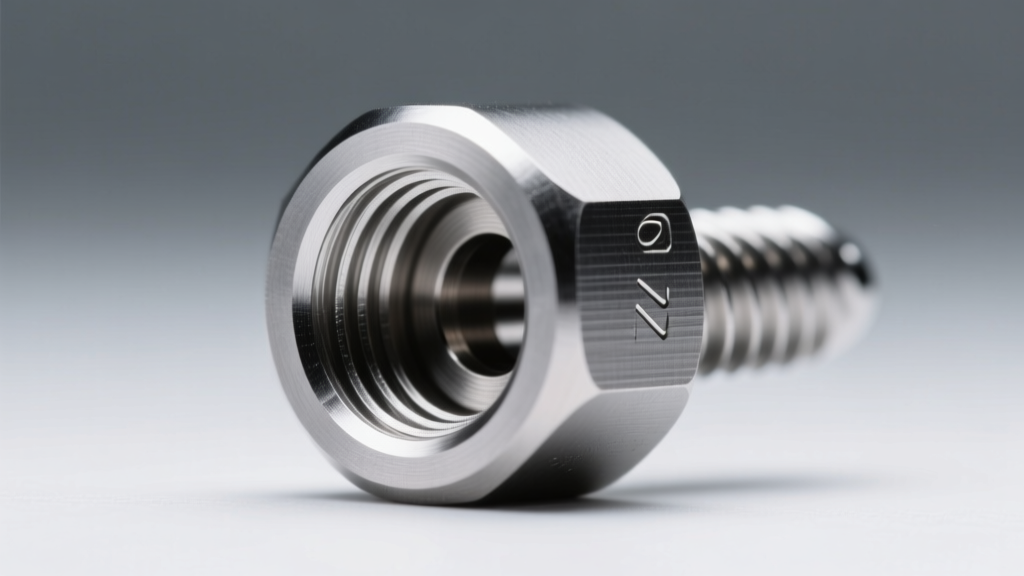
Seamless Hoops and Clickers
For 8mm huggies and cartilage rings, hinged "clickers" feature a segment that snaps shut with an audible click, while seamless hoops require you to twist the ring laterally to open and close it. Avoid Captive Bead Rings (CBRs) if you lack the proper ring-opening pliers, as the tension required to remove the bead can damage the jewelry.
Step 5: Safe Insertion and Sizing Adjustments
Inserting an 8mm earring, particularly in cartilage, requires patience and proper hygiene.
- Prep the Area: Wash your hands thoroughly with antibacterial soap. Cleanse the piercing with sterile saline spray.
- Lubricate (If Healed): For fully healed piercings, a microscopic dab of sterile jojoba oil on the jewelry post or hoop end can ease insertion. Never do this on unhealed piercings.
- Insertion Angle: For threadless labrets, insert the post from the back of the ear forward. Align the angle exactly with the piercing channel to avoid "false exits" through the side of the tissue.
- Secure the End: Push the threadless end in until you feel firm resistance. For clickers, ensure you hear the definitive snap and run your fingernail over the seam to verify it is flush.
Troubleshooting Common 8mm Fit Issues
Even with precise measurements, you may encounter fit issues. Here is how to troubleshoot the most common 8mm earring problems:
- The "Pinch" Effect (Hoops): If an 8mm ID hoop feels like it is biting into your earlobe or helix, your tissue is likely thicker than standard, or the piercing angle is steep. Solution: Size up to a 9mm or 10mm ID, or switch to an oval-shaped hoop which provides more vertical clearance.
- Post Protrusion (Studs): If an 8mm labret post sticks out too far from your tragus or conch, the piercing has fully healed and swelling has subsided. Solution: Downsize to a 6mm or 5mm post to prevent the jewelry from catching on hair and clothing.
- Irritation Bumps: If you develop a localized bump near an 8mm seamless hoop, the ring may be rotating and introducing bacteria into the fistula. Solution: Switch to a flat-back threadless stud to allow the area to heal completely before returning to hoops.
Mastering the nuances of the 8mm measurement transforms your jewelry collection from a source of frustration into a curated, comfortable, and anatomically perfect display. Always prioritize implant-grade materials and respect the unique geometry of your own ear anatomy.


