A Beginner's Guide to Hoop Mens Earrings: Sizing & Styles
Discover everything you need to know about hoop mens earrings. Learn about gauge sizes, diameters, hypoallergenic metals, and the best closure types.


The Modern Renaissance of Men's Hoops
Gone are the days when men's jewelry was limited to a simple wedding band or a basic watch. Today, ear adornments are a cornerstone of modern masculine style, and hoops are leading the charge. Whether you are stepping into the world of ear piercings for the first time or looking to upgrade from basic studs, understanding the mechanics of hoops is crucial. When shopping for hoop mens earrings, the sheer volume of options—ranging from microscopic huggies to oversized statement rings—can be overwhelming. Buying the wrong size or material doesn't just ruin your aesthetic; it can lead to snagging, tearing, or severe allergic reactions.
This beginner-friendly explainer will demystify the terminology, break down the metallurgy, and provide a practical decision framework to help you find the perfect pair. We will cover exact gauge measurements, material grades, and the mechanical failure points of different closure types so you can invest in jewelry that lasts a lifetime.
Decoding the Dimensions: Gauge vs. Diameter
The most common mistake beginners make is confusing gauge (thickness) with diameter (width). If you buy a hoop with the wrong gauge, it simply will not fit through your piercing. If you buy the wrong diameter, it will either choke your earlobe or hang down to your jawline.
Understanding Gauge (Thickness)
Gauge is measured in inverse numbers—the higher the gauge number, the thinner the wire. Standard lobe piercings done with a traditional piercing gun are usually 20G or 18G. However, professional piercers using a needle typically start lobes at 16G or 14G to allow for better healing and stability. Cartilage piercings (like the helix or tragus) are almost universally 16G.
| Gauge Size | Millimeter (mm) | Standard Use Case |
|---|---|---|
| 20G | 0.81mm | Standard mall-kiosk lobe piercings, lightweight fashion jewelry |
| 18G | 1.02mm | Standard lobe piercings, most commercial men's studs and thin hoops |
| 16G | 1.29mm | Professional lobe piercings, cartilage, helix, and tragus hoops |
| 14G | 1.60mm | Thicker lobes, industrial barbells, and some stretched earlobes |
Understanding Diameter (Width)
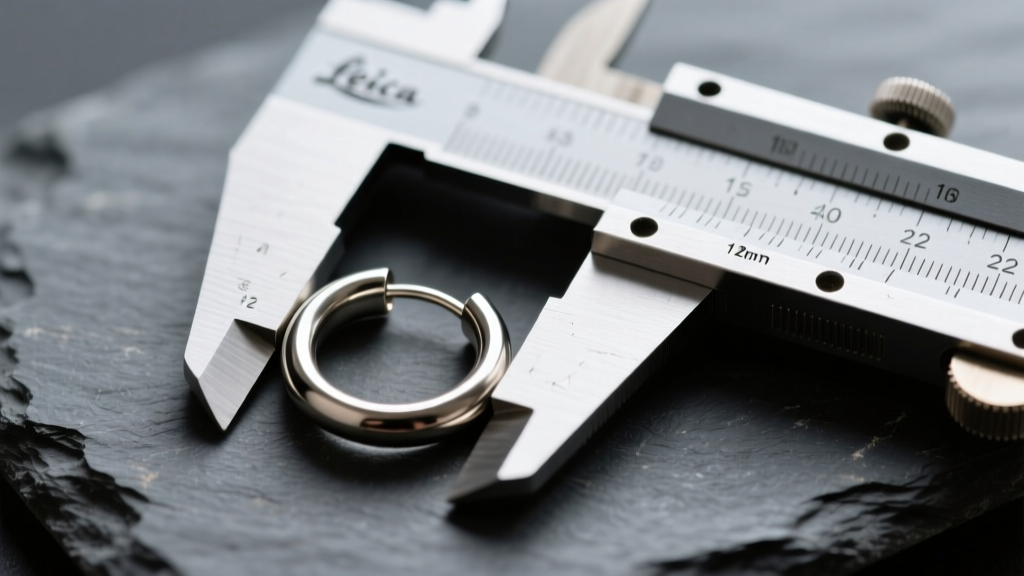
Diameter refers to the inner width of the hoop. For men, the sweet spot usually falls between 8mm and 15mm. An 8mm to 10mm hoop acts as a 'huggie,' wrapping snugly around the earlobe for a subtle, professional look. A 12mm to 15mm hoop offers a classic, visible dangle that catches the eye without getting in the way. Anything above 20mm enters statement territory and requires careful styling to avoid looking disproportionate.
Choosing the Right Metal for Sensitive Skin
The metal you choose dictates both the longevity of the earring and the health of your skin. Cheap metals are the primary culprit behind the dreaded 'green ear' and itchy, inflamed piercings.
Implant-Grade Titanium (ASTM F-136)
If you have sensitive skin or a freshly healed piercing, implant-grade titanium is the undisputed king. According to the Association of Professional Piercers (APP), ASTM F-136 titanium is completely nickel-free, highly polished, and biocompatible. It will not tarnish, rust, or react with your body chemistry. Expect to pay between $30 and $70 for a high-quality titanium hoop.
Solid Gold (14k or 18k)
For a premium, luxury aesthetic, solid gold is the standard. However, you must ensure it is nickel-free. Some lower-quality gold alloys mix nickel into the white gold or rose gold to increase hardness, which can trigger allergic contact dermatitis. According to dermatological research from the Mayo Clinic, nickel allergies are among the most common causes of skin reactions. Always buy 14k or 18k solid gold from reputable jewelers who guarantee nickel-free casting. Pricing typically ranges from $150 to over $500 per hoop.
Surgical Steel (316L)
While often marketed as 'hypoallergenic,' 316L surgical steel contains trace amounts of nickel. For fully healed, non-sensitive lobes, it is perfectly fine and highly affordable ($15 to $30). However, if your ears tend to itch or turn red after a long day of wearing jewelry, avoid steel entirely.
Closure Mechanisms Explained
The way a hoop closes affects its security, ease of use, and comfort while sleeping. Here is a breakdown of the three main mechanisms you will encounter.
- Captive Bead Ring (CBR): The traditional hoop where a small bead is held in place by the tension of the ring. Pros: Extremely secure once closed. Cons: Requires specialized ring-opening pliers to change; the bead frequently falls out and gets lost in carpets or sinks.
- Hinged Segment Ring: Features a hidden hinge and a snap closure. Pros: Easy to open and close with bare hands. Cons: The seam where the hinge meets can sometimes pinch the earlobe or trap dead skin cells if not cleaned properly.
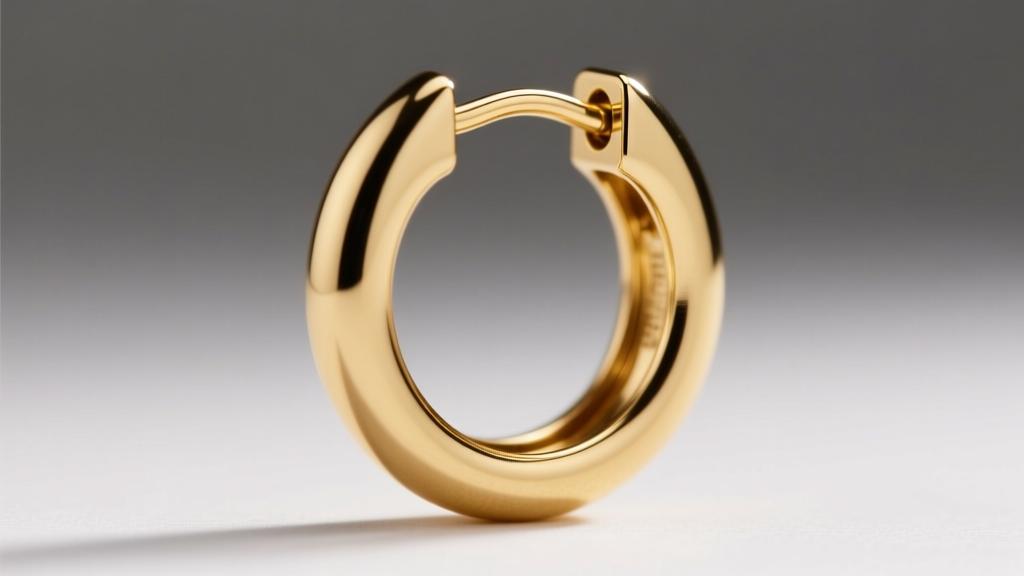
- Clicker Ring: The gold standard for modern hoops. It features a hinged segment that locks into place with an audible, satisfying 'click.' Pros: Incredibly secure, easy to operate, and the seam is usually machined so perfectly that it is virtually invisible and pinch-free. Cons: Slightly more expensive to manufacture.
Styling Framework: Pairing Hoops with Face Shapes
Just like sunglasses or haircuts, the size and shape of your hoop should complement your facial structure.
Square and Angular Jawlines
If you have a strong, angular jaw, you want to soften those features. Opt for perfectly round, medium-sized hoops (12mm - 15mm) in polished metals like yellow gold or silver. The curves of the hoop will contrast beautifully with the sharp lines of your face.
Round and Oval Faces
For rounder faces, adding a bit of structure is key. Slightly thicker gauge hoops (14G or 12G) or hoops with subtle geometric accents (like a flattened bottom or a squared-off 'saddle' design) can add masculine structure and draw the eye vertically, elongating the face.
Troubleshooting Common Hoop Earring Issues
Even with the right size and metal, beginners often run into practical issues. Here is how to solve the most common hoop earring failures.
Issue: The Earring Snags on Towels and Shirts
The Cause: Your hoop diameter is too large for your lobe placement, or you are wearing a CBR with a protruding bead that catches on fabric loops.
The Fix: Downsize to a 10mm huggie or switch to a seamless clicker ring that has no protruding beads or gaps.
Issue: The Piercing Hole is Stretching or Sagging
The Cause: Wearing heavy, thick-gauge hoops (like solid 14k gold in 14G) 24/7. Gravity constantly pulls on the tissue, leading to permanent elongation of the piercing hole.
The Fix: Adopt a rotation strategy. Wear lightweight titanium or hollow-tube hoops for daily use, and save the heavy, solid gold statement hoops for evenings out or special events.
Issue: The Hoop Turns Your Skin Black or Green
The Cause: You are wearing sterling silver or a copper-heavy alloy. Sterling silver contains copper, which oxidizes when exposed to sweat and natural skin oils, leaving a dark residue on the skin.
The Fix: Retire the silver hoop for ear wear (save it for rings or necklaces where it doesn't sit inside a puncture wound) and replace it with implant-grade titanium or solid 18k gold.
Daily Maintenance and Cleaning Routine
Hoops naturally rotate through the piercing, which means they constantly pick up sebum, dead skin cells, and environmental dust, dragging it back into the fistula (the piercing hole). To prevent the notorious 'earring cheese' smell and keep your metals shining, adopt a simple weekly routine. Once a week, remove your hoops and wash them with warm water and a mild, fragrance-free dish soap. Use a soft-bristled toothbrush to gently scrub the inside of the hinge or clicker mechanism where debris hides. Dry them completely with a microfiber cloth before reinserting. Avoid using rubbing alcohol or harsh chemical dips, as these can degrade the polished mirror finish of your titanium or gold over time, leaving them dull and scratched.


