How to Safely Wear and Clean Glass Hoop Earrings for Sensitive Ears
Learn how to safely insert, clean, and maintain glass hoop earrings. Expert tips on borosilicate glass, gauge sizing, and sensitive ear care.

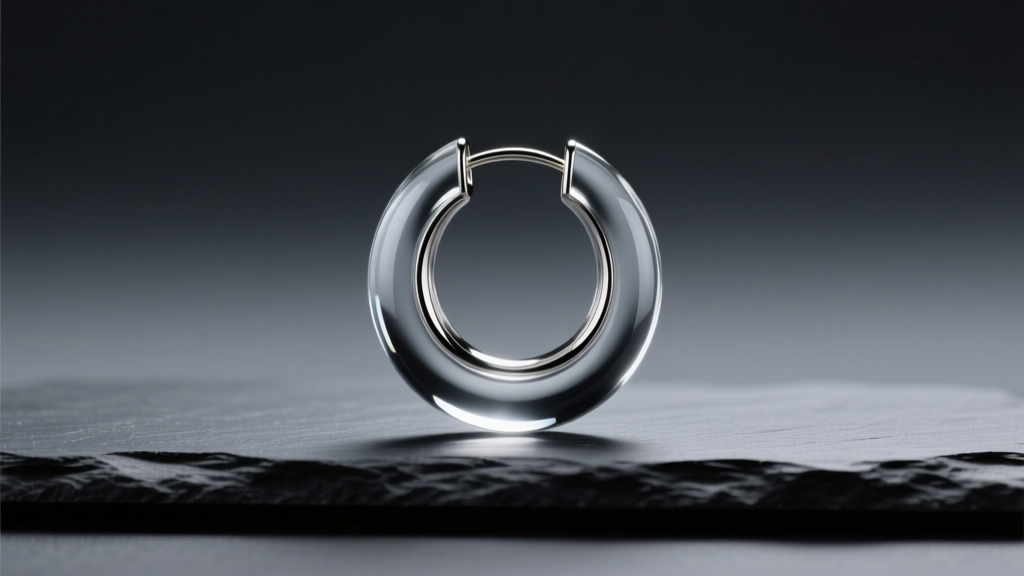
Glass hoop earrings are widely celebrated in the professional piercing community as the gold standard for sensitive ears, allergy-prone skin, and healing fistulas. Unlike even the highest grades of surgical steel or titanium, high-quality glass is completely inert, non-porous, and free of nickel or heavy metal alloys. However, because glass lacks the malleability of metal, inserting, sizing, and maintaining glass hoops requires a fundamentally different approach. Treating glass jewelry like a standard metal clicker or seamless ring is the fastest way to cause micro-fractures, shatter the piece, or damage your piercing tract.
This comprehensive guide breaks down the exact material science, insertion mechanics, and sterilization protocols you need to safely wear glass hoop earrings in 2026 and beyond.
The Anatomy of Glass Hoops: Continuous Rings vs. Segment Rings
Before attempting insertion, it is critical to understand what type of glass hoop you are holding. The term 'glass hoop' generally refers to two entirely different structural designs, each with specific use cases:
1. Solid Continuous Glass Hoops
These are unbroken, rigid circles of glass. Because glass cannot be bent open and snapped shut like a metal seamless ring, continuous glass hoops must be slid entirely through the piercing channel. Due to the rigid diameter required to clear the ear's anatomy, solid continuous glass hoops are almost exclusively manufactured for stretched earlobes (8-gauge to 00-gauge). Attempting to force a rigid continuous glass hoop through a standard 16-gauge or 14-gauge helix or lobe piercing will result in severe tissue trauma or shattered glass.
2. Glass Segment Rings and Captive Beads
For standard gauge piercings (18g, 16g, 14g), 'glass hoops' typically refer to a glass arc or horseshoe that is completed with a separate segment piece, O-ring, or captive bead. The glass component provides the hypoallergenic benefits inside the fistula, while the closure mechanism allows the hoop to be opened and closed safely without stressing the glass.
Material Science: Borosilicate vs. Soda-Lime Glass
Not all glass is safe for the human body. When shopping for glass hoop earrings, you must verify the specific type of glass used. The Association of Professional Piercers (APP) strictly recommends only specific grades of glass for initial piercings and long-term wear.
- Borosilicate Glass (COE 33): Often known by the brand name Pyrex, borosilicate glass has a very low coefficient of thermal expansion. This means it can withstand extreme temperature changes without cracking. It is non-porous, autoclave-safe, and the only type of glass that should be worn in healing or freshly stretched piercings.
- Soda-Lime Glass: This is standard commercial glass. While perfectly safe for fully healed piercings, it is susceptible to thermal shock. If you attempt to boil or autoclave soda-lime glass to sterilize it, the rapid temperature change will cause it to shatter. Furthermore, soda-lime glass can harbor microscopic surface pitting over time, making it less ideal for sensitive ears.
- Fused Quartz: An ultra-high-end option with exceptional biocompatibility and heat resistance, though rarely formed into hoop shapes due to the extreme melting temperatures required for fabrication.
Step-by-Step Guide: Inserting Glass Segment Rings Safely
Because the glass component of a segment ring is rigid, you cannot bend the hoop to pop it into place. Follow this precise protocol to insert your glass hoop without damaging the jewelry or your piercing.
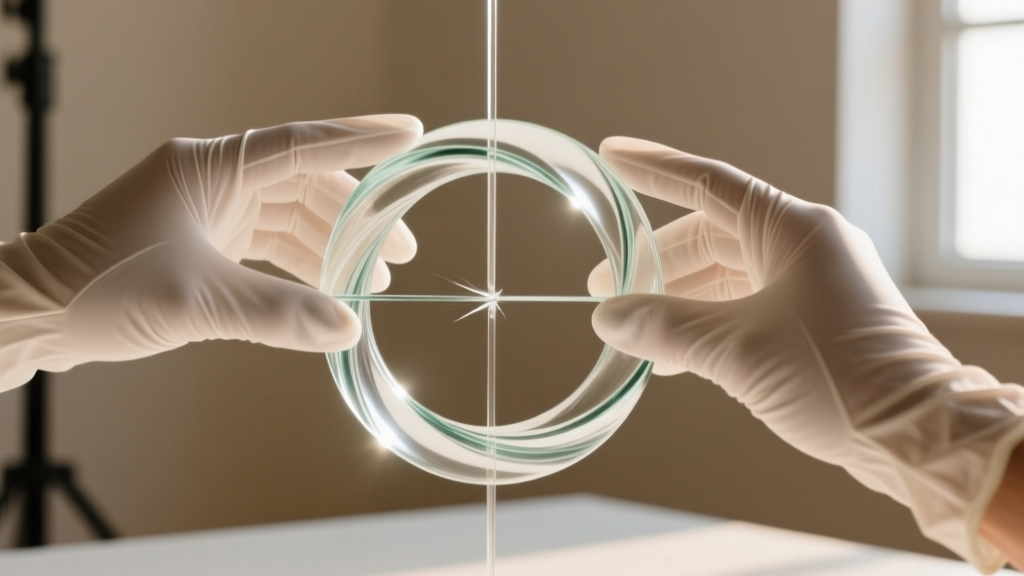
Step 1: Prep and Lubricate
Wash your hands thoroughly and put on disposable nitrile gloves to ensure a firm grip. Apply a microscopic drop of pure, cold-pressed jojoba oil or vitamin E oil to the ends of the glass arc and the piercing channel. This reduces friction and prevents the glass from dragging against the delicate fistula lining.
Step 2: The 'Twist and Glide' Alignment
Never push a glass hoop straight into a piercing. Instead, align one end of the glass arc with the piercing exit hole. Gently rotate the hoop along its natural curvature, allowing the glass to glide through the channel. If you meet resistance, stop immediately. Forcing the glass will cause it to snap under lateral pressure.
Step 3: Securing the Segment
Once the glass arc is fully seated, align the closing segment (usually a small metal or glass bead). If your hoop uses silicone O-rings to hold a glass segment in place, use a pair of specialized O-ring opening pliers. Stretch the O-ring over the segment bead and release it into the groove. Ensure the O-ring is fully seated in the machined groove to prevent the segment from falling out during sleep.
Sizing Matrix: Matching Glass Hoops to Ear Placements
Wearing a hoop with an incorrect inner diameter (ID) will create pressure points, leading to migration or the 'cheese-cutter effect.' Because glass cannot be custom-bent to your ear like metal, purchasing the exact millimeter size is non-negotiable. Use the matrix below to select the correct glass hoop dimensions.
| Piercing Placement | Standard Gauge | Recommended Inner Diameter (mm) | Best Glass Hoop Style |
|---|---|---|---|
| Standard Lobe | 16g (1.2mm) or 14g (1.6mm) | 8mm - 10mm | Glass Captive Bead Ring |
| Helix / Outer Conch | 16g (1.2mm) | 6mm - 8mm | Glass Segment Ring with O-rings |
| Daith | 16g (1.2mm) | 8mm - 10mm | Clicker with Glass Inlay |
| Stretched Lobe (Healed) | 8g (3.2mm) to 2g (6.0mm) | 10mm - 16mm | Solid Continuous Glass Hoop |
| Stretched Lobe (Heavy) | 0g (8.0mm) to 00g (10mm) | 12mm - 20mm+ | Solid Continuous Glass Hoop |
Note: According to material science data on borosilicate glass properties, the structural integrity of a continuous glass ring decreases significantly if the ratio between the glass thickness and the hoop diameter is too extreme. Always buy from reputable glass blowers who understand body jewelry tolerances.
The 3-Step Sterilization and Cleaning Protocol
Glass is non-porous, meaning it will not harbor bacteria inside the material itself. However, surface biofilm and sebum buildup must be managed properly to keep sensitive ears calm.
1. Daily Maintenance (The Wipe-Down)
During your daily shower, lather a mild, fragrance-free glycerin soap in your hands and gently massage it over the glass hoop. Rinse with warm water and pat completely dry with a non-woven gauze pad. Avoid paper towels, as they can leave micro-fibers snagged on the glass segment joints.
2. Deep Cleaning (Ultrasonic Method)
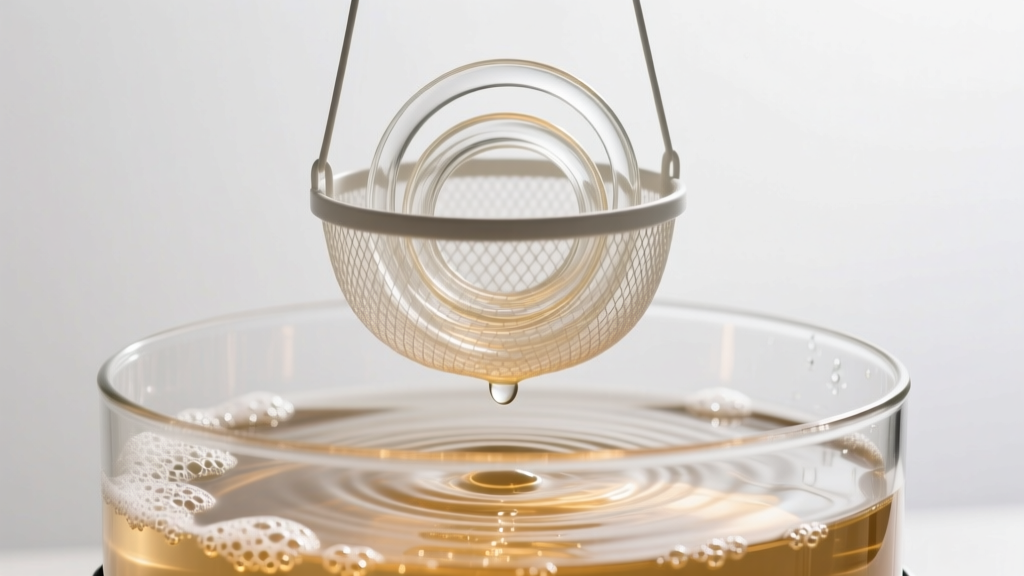
Once a month, or when swapping out jewelry, place your glass hoops in a mesh basket and submerge them in an ultrasonic cleaner filled with warm distilled water and a drop of mild soap. Run the cleaner for 3 to 5 minutes. The high-frequency cavitation bubbles will safely blast away sebum trapped in the O-ring grooves and segment joints without scratching the glass.
3. Full Sterilization (Boiling)
WARNING: Only perform this step if you are 100% certain your jewelry is borosilicate glass. Bring a pot of distilled water to a rolling boil (212°F / 100°C). Using metal tongs, gently lower the glass hoops into the water and boil for 10 minutes. Remove and let them air dry on a clean paper towel. This method achieves near-autoclave levels of sterilization, making it ideal for inserting glass into a freshly healed or irritated piercing.
Troubleshooting: Micro-Fractures and Stuck Segments
Even with meticulous care, issues can arise. Here is how to troubleshoot common glass hoop problems without causing injury.
Expert Piercer Tip: 'Never use rubbing alcohol or harsh chemical solvents to clean glass jewelry that features dichroic or fused color coatings. While the base glass may be impervious, the metallic oxide coatings used for coloring can degrade, pit, or peel when exposed to high-concentration alcohols over time.' - Senior APP-Certified Piercer
Identifying Hairline Fractures
Glass does not bend; it fatigues and snaps. If you drop your glass hoop on a hard tile floor, it may not shatter, but it can develop internal stress fractures. Hold the glass hoop up to a bright LED light and look for tiny, spider-web-like reflections inside the material. If you spot any internal fracturing, retire the jewelry immediately. The body heat and minor lateral pressure of daily wear will eventually cause a fractured hoop to snap inside the ear.
Removing Stuck Silicone O-Rings
Silicone O-rings can shrink, dry out, or become stuck in the grooves of glass segment rings. Do not use metal pliers to pry them off, as the metal will easily gouge and weaken the glass. Instead, take a piece of unflavored dental floss, slide it under the O-ring, and use a sawing motion to gently stretch and roll the silicone up and off the glass bead.
Final Thoughts on Glass Ear Jewelry
Glass hoop earrings offer an unmatched combination of biocompatibility, aesthetic beauty, and comfort for sensitive ears. By respecting the rigid nature of the material, adhering to precise sizing matrices, and utilizing proper thermal sterilization techniques, you can safely enjoy glass jewelry for years. Always prioritize borosilicate glass, invest in proper insertion tools, and listen to your body's feedback to maintain perfectly healthy, happy piercings.


