Green Gold Earrings: Alloy Properties, Durability & Care Guide
Discover the metallurgy behind green gold earrings. Compare 14k and 18k green gold alloys, hardness ratings, and expert care tips for lasting wear.

The Metallurgy of Green Gold: What Makes It Green?
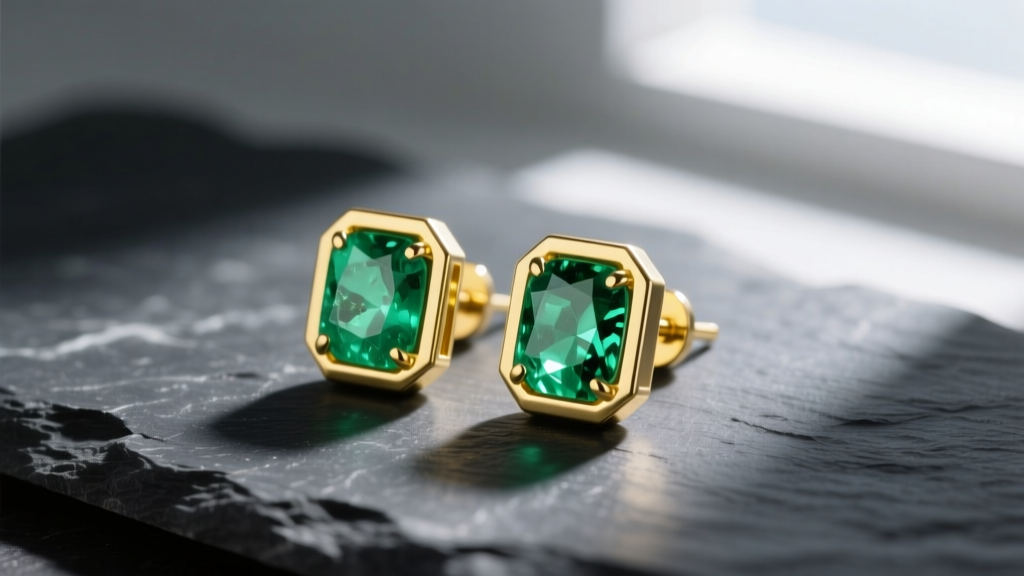
When most consumers think of gold jewelry, they picture the warm tones of yellow gold, the stark brightness of white gold, or the coppery blush of rose gold. However, green gold earrings represent one of the most fascinating and historically significant alloy variations in fine jewelry. To understand how to wear and care for green gold, we must first look at its metallurgical composition.
Green gold is not a surface treatment or a plating; it is a true alloy created by mixing pure gold with silver. Historically, this occurred in nature as electrum, a naturally occurring alloy of gold and silver used by the ancient Lydians to mint the first coins. In modern jewelry manufacturing, green gold is deliberately synthesized. According to the Gemological Institute of America (GIA), the greenish hue is achieved by eliminating copper from the alloy mix and relying heavily on silver. Silver shifts the light absorption spectrum of the gold, muting the yellow and introducing a subtle, olive-green luminescence.
Because modern green gold relies on silver rather than copper, its structural properties differ vastly from traditional yellow or rose gold. This lack of copper is the defining factor in how green gold earrings perform over decades of daily wear.
14k vs. 18k Green Gold: Composition and Wearability
The karatage of your green gold earrings dictates not only their color depth but also their structural integrity. While 18k green gold offers a richer, more pronounced olive tint, 14k green gold provides slightly more durability for high-impact earring styles. Below is a metallurgical breakdown of the two most common grades.
| Property | 18k Green Gold | 14k Green Gold |
|---|---|---|
| Gold Content | 75.0% | 58.3% |
| Silver Content | 25.0% | ~35.0% (with trace copper/zinc) |
| Vickers Hardness (HV) | ~115 - 125 HV | ~135 - 145 HV |
| Color Profile | Deep olive-green, subtle | Pale greenish-yellow |
| Best Earring Style | Studs, bezel-set stones | Huggies, wire hoops, dangles |
As noted by the World Gold Council, alloying metals are chosen to balance color and durability. In 14k green gold, jewelers often introduce a tiny fraction of copper (around 5-7%) to prevent the metal from becoming too soft, which slightly warms the green tone but vastly improves the tensile strength of earring posts and clasps.
Hardness, Failure Modes, and Gauge Sizing
The most critical factor when purchasing green gold earrings is understanding its Vickers hardness (HV) relative to other golds. Pure 24k gold sits at roughly 25-30 HV. Standard 18k yellow gold (alloyed with silver and copper) reaches about 125-135 HV. However, 18k green gold, lacking the structural lattice reinforcement of copper, often maxes out around 115-125 HV.
Real-World Failure Modes
This relative softness leads to specific failure modes in earring designs:
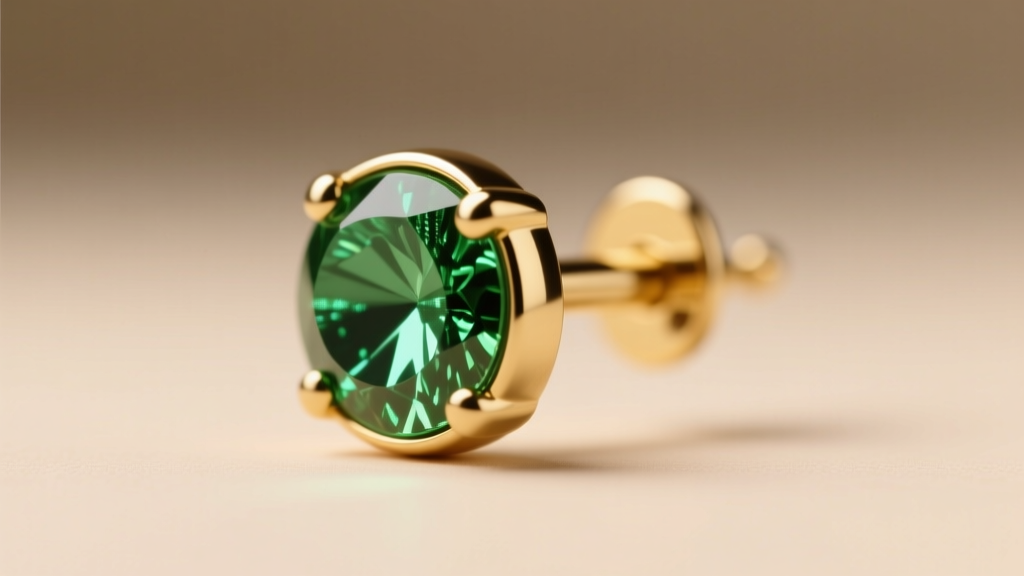
- Prong Wear: If your green gold earrings feature diamond or gemstone prongs, the silver-rich alloy will wear down faster than copper-rich rose gold. We highly recommend bezel settings or flush mounts for green gold to prevent stone loss.
- Post Bending: A standard 20-gauge (0.81mm) earring post made of 18k green gold will bend easily when pushed through a tight or healing lobe piercing. Always insist on 18-gauge (1.0mm) or 16-gauge (1.2mm) posts for green gold studs to ensure the metal can withstand insertion pressure without warping.
- Clasp Fatigue: For huggies and hoops, the hinge mechanisms and click-closures must be engineered with thicker tolerances, as the metal is more prone to micro-denting at the stress points.
Hypoallergenic Properties: A Haven for Sensitive Lobes
One of the most underappreciated benefits of green gold earrings is their biocompatibility. White gold is notoriously problematic for sensitive ears because it is frequently alloyed with nickel to achieve its bright white color. Even when rhodium-plated, the plating eventually wears off, exposing the nickel and triggering contact dermatitis.
Green gold, conversely, relies on silver. According to The Silver Institute, fine silver is inherently hypoallergenic and possesses natural antimicrobial properties. An 18k green gold alloy (75% gold, 25% silver) contains zero nickel and zero copper, making it one of the most biocompatible metals available for fresh piercings or highly reactive earlobes. If you suffer from metal allergies but want the prestige and weight of high-karat gold, green gold is arguably the safest choice on the market.

Pricing, Sourcing, and the Artisan Premium
Because green gold is a niche alloy, it is rarely mass-produced by large commercial casting houses. Most green gold earrings are crafted by independent artisans or specialized boutique jewelers. Consequently, buyers should expect to pay an "artisan premium" of 10% to 20% over the spot price of equivalent yellow gold pieces.
Furthermore, casting a silver-rich gold alloy requires precise temperature control. Silver lowers the melting point of the gold but changes the fluidity of the molten metal. Jewelers must use specialized investment powders and slower cooling processes to prevent porosity (tiny air bubbles) in the final cast. When shopping, look for jewelers who explicitly detail their casting process or offer a lifetime structural warranty against porosity defects.
Expert Verdict: Which Earring Styles Suit Green Gold Best?
Based on the metallurgical data and wearability factors, here is our decision framework for selecting green gold earring styles:
Highly Recommended
- Bezel-Set Studs: The ultimate choice for 18k green gold. The bezel protects the stone while the thick metal backing provides a secure, hypoallergenic fit for the lobe.
- Thick Huggies (14k):strong> Utilizing 14k green gold for 3mm-5mm wide huggie hoops ensures the hinge mechanism remains robust while showcasing the beautiful olive tone against the skin.
- Ear Cuffs: Because ear cuffs do not require posts or high-tension clasps, the softer 18k green gold can be easily molded and adjusted to fit the cartilage without risking structural failure.
Proceed with Caution
- Prong-Set Dangles: The swinging motion of dangle earrings increases the risk of prong wear and stone loss in softer green gold alloys.
- Thin Wire Hoops: Any continuous hoop thinner than 1.2mm (16-gauge) will quickly lose its perfect circular shape due to the low Vickers hardness of the silver-gold lattice.
Maintenance: Embracing the Patina
Unlike white gold, green gold does not require rhodium plating. However, the high silver content means that 14k green gold can develop a subtle, antique patina over time when exposed to sulfur compounds in the air and skin oils. While some collectors prize this vintage oxidation, you can easily restore the original bright olive shine using a gentle, non-abrasive jewelry polishing cloth. Avoid ultrasonic cleaners if your green gold earrings feature porous stones like emeralds or opals, as the vibrations can fracture the gems, and stick to mild dish soap and a soft-bristled brush for routine cleaning.


