Mens White Gold Hoop Earrings: Material Guide & Metal Comparison
Discover the metallurgy behind mens white gold hoop earrings. Compare 14k vs 18k alloys, rhodium plating, and alternative white metals for daily wear.

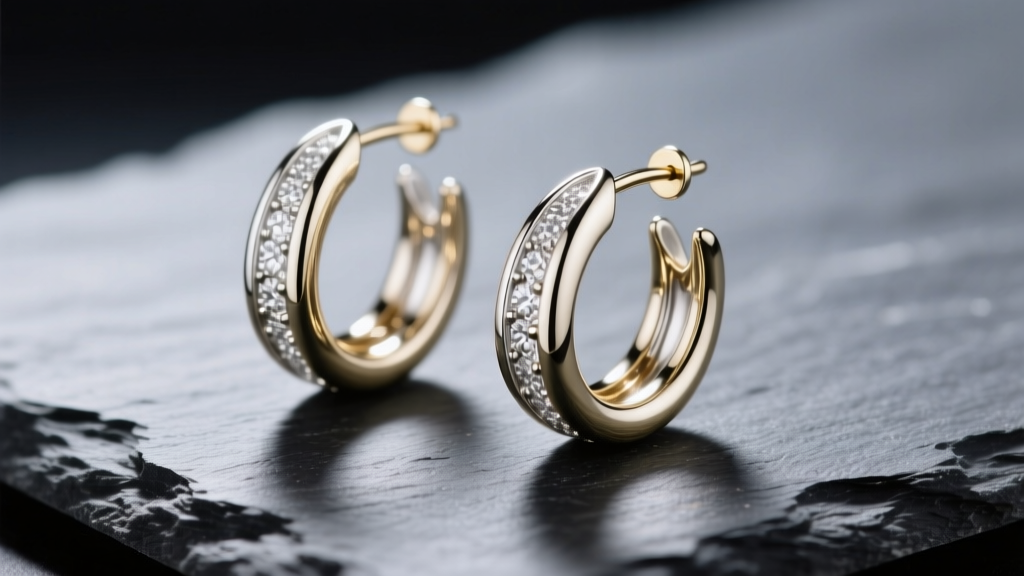
The resurgence of men's jewelry has firmly established hoops as a foundational staple in modern masculine styling. However, when shopping for mens white gold hoop earrings, consumers are often met with a confusing array of karat options, price discrepancies, and maintenance warnings. White gold is not a naturally occurring metal; it is a sophisticated metallurgical achievement. Understanding the exact alloy compositions, structural durability, and long-term maintenance requirements is critical before investing in a pair of premium hoops.
The Metallurgy of White Gold: What Are You Actually Wearing?
Pure gold (24K) is inherently yellow and far too soft for functional jewelry. To create white gold, refiners alloy pure gold with 'bleaching' metals such as nickel, palladium, silver, and zinc. According to the Gemological Institute of America (GIA), the specific ratio of these bleaching agents dictates not only the final color but also the metal's hardness, malleability, and allergenic potential.
14K vs. 18K White Gold: The Alloy Breakdown
For men's hoop earrings, which are subject to frequent handling, accidental snags, and friction from clothing, the choice between 14K and 18K is primarily a question of structural integrity versus purity.
- 14K White Gold (58.5% Pure Gold): Typically alloyed with nickel, copper, and zinc. This combination yields a Vickers hardness of approximately 135-150 HV. It is highly resistant to deformation, making it the superior choice for thinner hoop profiles or active lifestyles. However, nickel alloys are a primary trigger for contact dermatitis in sensitive ears.
- 18K White Gold (75% Pure Gold): To achieve a white color with higher gold content, refiners must use palladium or silver. Palladium white gold is hypoallergenic and possesses a richer, slightly warmer underlying tone. It is softer (around 110-125 HV) and more prone to micro-scratches, but it offers superior prestige and skin compatibility.
Rhodium Plating: The Hidden Maintenance Factor
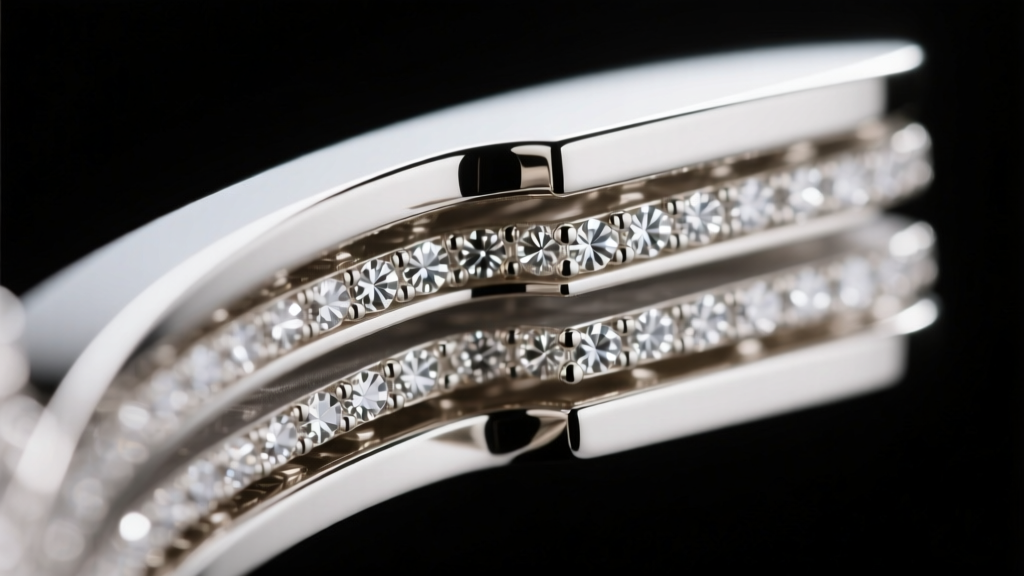
No white gold alloy is perfectly white; most exhibit a faint yellowish or grayish undertone. To achieve the brilliant, mirror-like chrome finish associated with premium white gold, manufacturers electroplate the jewelry with rhodium, a rare platinum-group metal.
For mens white gold hoop earrings, the thickness of this plating is crucial. High-quality manufacturers apply between 0.75 and 1.0 microns of rhodium. Because hoops rest against the neck and are frequently touched, friction and the natural acidity of your skin's microbiome will gradually wear this plating away. Depending on your body chemistry and wear habits, expect to have your hoops re-plated every 18 to 36 months to maintain their optical whiteness. Re-plating typically costs between $35 and $75 at a local bench jeweler.
Material Showdown: White Gold vs. Alternative White Metals
If the maintenance of rhodium plating or the price volatility of gold is a concern, it is vital to compare white gold against other popular white metals used in men's hoops.
| Metal | Composition / Purity | Durability & Hardness | Maintenance Required | Approx. Price Tier |
|---|---|---|---|---|
| 14K White Gold | 58.5% Gold, Nickel/Zinc | High (140 HV), resists bending | Rhodium re-plating every 2-3 years | $$$ |
| Platinum (950) | 95% Platinum, 5% Ruthenium | Very High density, develops patina | Polishing to remove patina (no plating) | $$$$ |
| Titanium (Grade 5) | Ti-6Al-4V Alloy | Extreme hardness, lightweight | Zero maintenance, cannot be resized | $ |
| Sterling Silver | 92.5% Silver, 7.5% Copper | Low (25 HV), bends easily | Frequent polishing to remove tarnish | $ |
Expert Insight: While Titanium is virtually indestructible and hypoallergenic, it cannot be easily cut off in a medical emergency or resized by a standard jeweler. For a lifelong, heirloom-quality piece that can be repaired and modified, 14K or 18K white gold remains the industry standard.
Sizing, Gauge, and Structural Integrity for Men's Hoops
The physical dimensions of your hoops dictate both their aesthetic proportion and their mechanical failure points. Men's hoops generally range from 12mm to 20mm in outer diameter. A 15mm hoop sits flush against the earlobe, while a 20mm hoop provides a more pronounced, streetwear-oriented drop.
Understanding Wire Gauge
The thickness of the wire passing through the ear is measured in gauge (G). Choosing the correct gauge prevents lobe tearing and ensures the closure mechanism functions properly.
- 18-Gauge (1.0mm): Common in lightweight, minimalist huggies. Not recommended for heavy, large-diameter white gold hoops as the thin wire can bend under the metal's own weight.
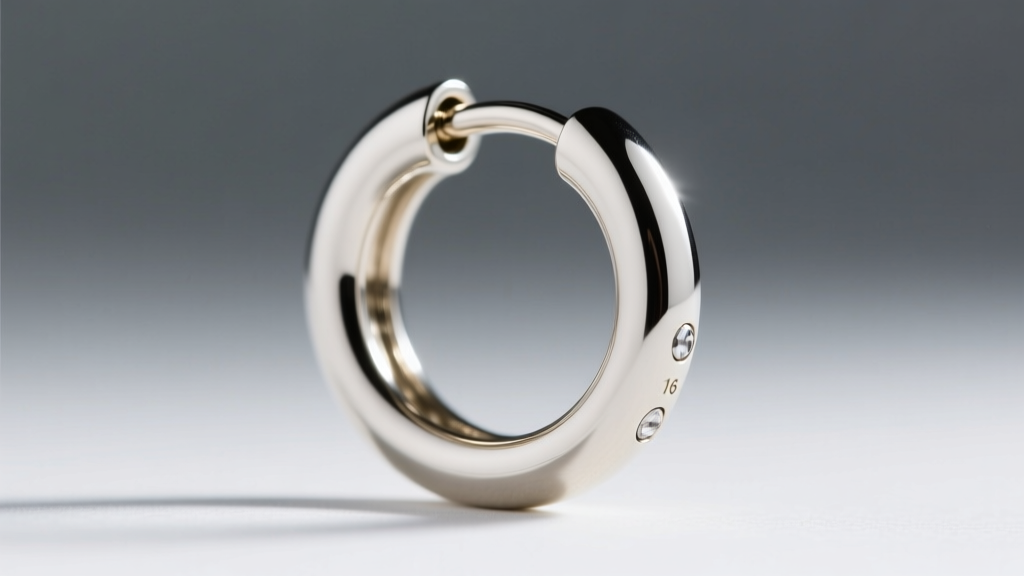
- 16-Gauge (1.2mm): The optimal sweet spot for mens white gold hoop earrings. It provides enough structural rigidity to support a secure clicker closure without stretching a standard earlobe piercing.
- 14-Gauge (1.4mm): Used for heavier, statement hoops or stretched lobes. Requires a robust hinge mechanism to accommodate the thicker wire.
Common Failure Modes in Hoop Closures
The most frequent point of failure in white gold hoops is the closure mechanism. Understanding these mechanics will save you from losing an expensive piece of jewelry.
- Continuous (Endless) Hoops: These rely on a thin wire post that snaps into a hollow tubing catch. Failure Mode: Repeated bending of the white gold wire to open and close the hoop causes metal fatigue, eventually leading to a clean snap near the solder joint.
- Hinge and Snap (Clicker): Features a machined barrel hinge and a tension-fit snap closure. Failure Mode: Lint and skin oils can accumulate in the snap groove, reducing tension over time. This requires occasional ultrasonic cleaning to maintain a secure 'click'.
Pricing Tiers and Investment Strategy
When budgeting for mens white gold hoop earrings in 2026, expect pricing to scale heavily with weight (grammage) and brand markup rather than just karat purity. A standard pair of 15mm, 16-gauge 14K white gold hoops (weighing approximately 3.5 to 4.5 grams) should retail between $350 and $600 from a direct-to-consumer fine jewelry brand. Luxury designer markups can push identical specifications well past $1,200.
For the best return on investment, prioritize purchasing from jewelers who offer complimentary lifetime rhodium plating and use nickel-free palladium alloys, ensuring your hoops remain both visually striking and dermatologically safe for decades of daily wear.


