Gold Star Hoop Earrings: Metal Alloys & Durability Guide
Discover the best metal alloys for gold star hoop earrings. Compare 14k vs 18k gold, vermeil, and gold-filled options for durability and sensitive ears.

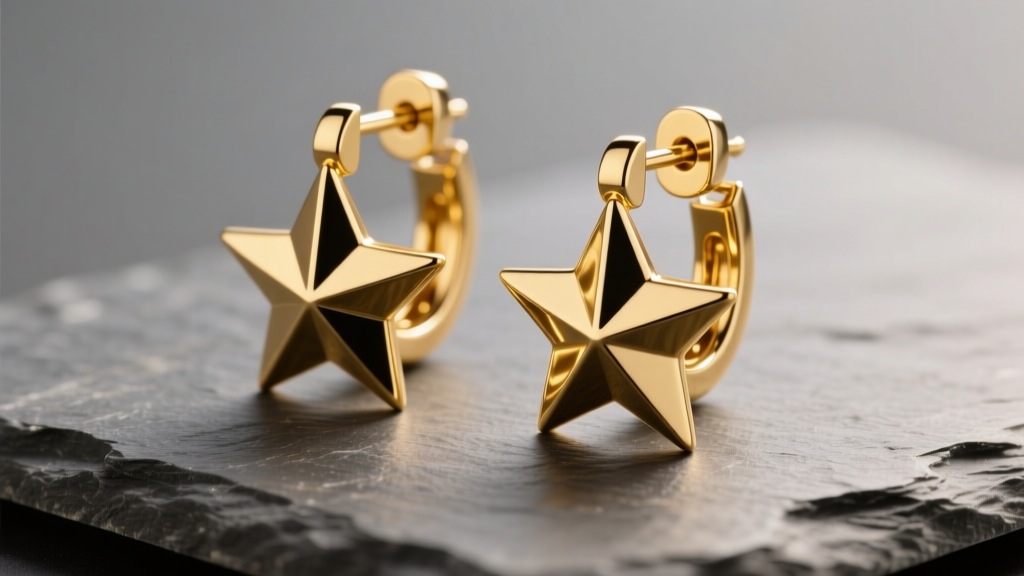
The Anatomy of Celestial Jewelry: Why Material Matters
Gold star hoop earrings have cemented their place as a staple in modern jewelry boxes, blending celestial whimsy with everyday geometric wearability. As we move through 2026, the trend has evolved from delicate, barely-there charms to bold, architectural star motifs integrated directly into the hoop's wire. However, the intersection of a circular hoop and a star shape introduces unique structural vulnerabilities. The sharp points of a star act as stress concentrators and snag hazards, meaning the metallurgical properties of your chosen gold alloy dictate not just the color, but the lifespan of the earrings. This guide breaks down the exact material grades, hardness metrics, and structural requirements you need to consider before investing in your next pair.
The Metallurgy of Solid Gold: 14k vs. 18k
Pure 24k gold is far too malleable for jewelry; it would bend under the weight of its own clasp. Therefore, gold is alloyed with metals like copper, silver, and zinc to increase durability. When shopping for solid gold star hoops, you will primarily encounter 14k and 18k options, each with distinct physical properties.
14k Gold: The Structural Champion
Comprising 58.3% pure gold, 14k gold is the industry standard for durable hoop earrings. According to the Gemological Institute of America (GIA), the alloy metals in 14k gold increase its Vickers Hardness (HV) to approximately 140-160 HV. This rigidity is crucial for star-shaped hoops. If a sharp star point catches on a knit sweater or hairbrush, 14k gold is highly resistant to bending. Furthermore, the solder joints where the star motif meets the circular hoop are significantly less prone to fracturing under tension.
18k Gold: The Luxury Liability
With 75% pure gold, 18k gold offers a richer, deeper yellow hue and a higher intrinsic value. However, its Vickers Hardness drops to roughly 120-130 HV. While perfectly suitable for smooth, continuous huggies or simple studs, 18k gold is a liability for star hoops. The extended points of the star act as levers; a sudden snag can easily bend an 18k star point or snap it entirely at the base. If you prefer 18k gold, opt for designs where the star is flush-cast into a thick, continuous wire rather than soldered on as a separate charm.
Plated Alternatives: Vermeil vs. Gold-Filled
For those seeking the look of gold without the solid gold price tag, plated alternatives are abundant. However, not all plating is created equal, especially when subjected to the friction of a hoop clasp.
Gold Vermeil (The Charm Standard)
Gold vermeil requires a sterling silver (.925) base metal plated with a minimum of 2.5 microns of gold. Vermeil is excellent for 3D cast star charms that dangle from a hoop, as the sterling silver core provides a smooth, hypoallergenic foundation. However, vermeil should be avoided for the hoop wire itself, particularly near the clasp mechanism, as repeated opening and closing will quickly wear through the 2.5-micron gold layer, exposing the tarnish-prone silver beneath.
Gold-Filled (The Wire Standard)
Gold-filled jewelry consists of a brass core that is mechanically bonded with a thick layer of karat gold, which must constitute at least 5% of the item's total weight. This mechanical bonding makes gold-filled wire incredibly resilient. For gold star hoop earrings, a gold-filled wire is vastly superior to vermeil because it can withstand the mechanical stress of a hinged clicker clasp without flaking or peeling over time.
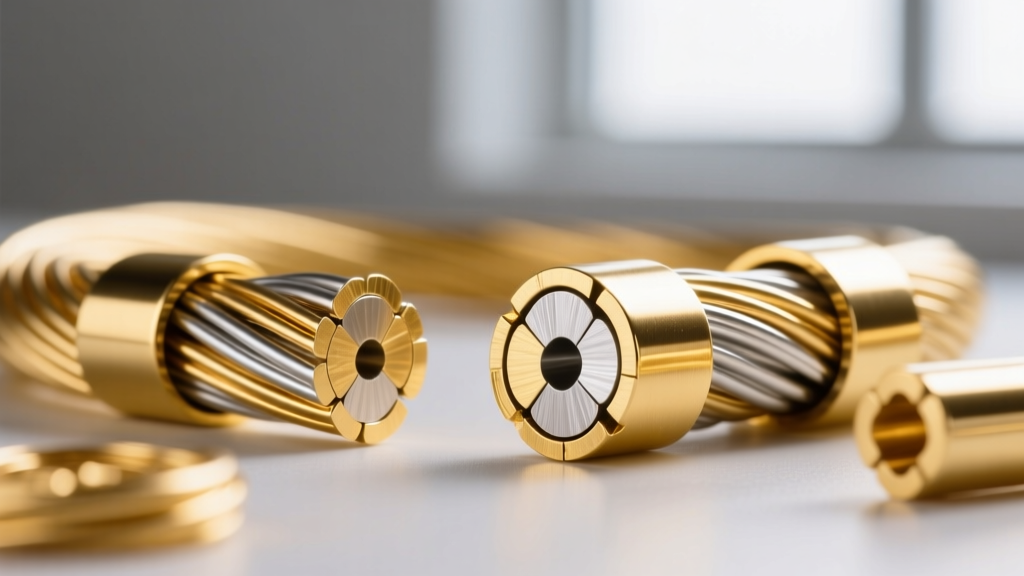
Material Comparison & Pricing Matrix
Understanding the trade-offs between cost, durability, and composition is essential for making an informed purchase. The table below outlines the 2026 market data for standard 20mm star hoop earrings across different material grades.
| Material Grade | Gold Purity / Thickness | Base Metal | Hardness (HV) | Avg. Price Range (20mm) | Best Application |
|---|---|---|---|---|---|
| 14k Solid Gold | 58.3% Pure Gold | None (Alloyed) | ~145 HV | $250 - $450 | Everyday wear, snag-prone environments |
| 18k Solid Gold | 75.0% Pure Gold | None (Alloyed) | ~125 HV | $400 - $700 | Occasional wear, flush-cast designs |
| Gold Vermeil | Min. 2.5 Microns | Sterling Silver | ~65 HV (Silver) | $60 - $120 | Dangling star charms, low-friction areas |
| Gold-Filled | Min. 5% Gold by Weight | Jeweler's Brass | ~110 HV (Brass) | $45 - $95 | Hoop wire, clicker clasp mechanisms |
Hypoallergenic Properties and Ear Lobe Health
Metal allergies are a primary concern for hoop wearers, as the continuous movement of the hoop wire through the piercing fistula can cause micro-abrasions, allowing allergens to enter the bloodstream. The National Center for Biotechnology Information (NCBI) notes that nickel is the most common culprit for allergic contact dermatitis in jewelry.
Expert Warning: Avoid white gold star hoop earrings unless they are explicitly certified as nickel-free or rhodium-plated with a verified barrier layer. Many 14k and 18k white gold alloys rely on nickel to achieve their bright, silvery color, which can trigger severe reactions in sensitive ear lobes.
For the most biocompatible option, look for 14k yellow gold alloyed with copper and silver, or high-quality titanium hoops with gold PVD (Physical Vapor Deposition) coating. Rose gold, which relies heavily on copper for its pink hue, is generally safe but can cause localized green oxidation on the skin if the wearer has a highly acidic sweat profile.
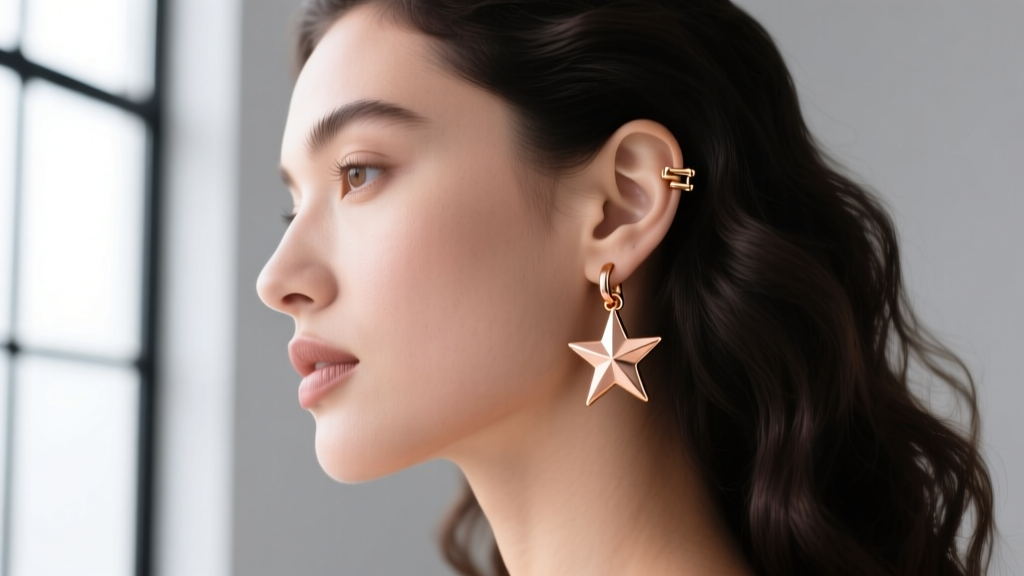
Structural Integrity: Wire Gauges and Clasp Mechanics
The visual weight of star motifs requires careful consideration of the hoop's wire gauge. Standard lightweight hoops are typically crafted in 20-gauge (0.81mm) wire. However, if the gold star hoops feature solid cast metal stars rather than hollow or die-stamped ones, the pendulum effect of the heavy charms will pull on the earlobe. For heavier star designs, the wire must be upgraded to 18-gauge (1.02mm) or even 16-gauge (1.29mm) to prevent the earlobe from tearing or stretching over time.
Equally important is the clasp mechanism. Traditional latch-back clasps leave a small, protruding hook that frequently catches on the points of star motifs when stored or worn. Hinged clicker clasps are vastly superior for star hoops. A clicker snaps shut flush against the wire, creating a continuous, seamless circle that eliminates snag points and ensures the heavy star charms remain securely anchored to the ear.
Care and Maintenance for Star Motifs
Maintaining the brilliance of your gold star hoops requires specific care protocols. While ultrasonic jewelry cleaners are highly effective for removing sebum and dead skin cells from solid gold, the high-frequency vibrations can weaken the microscopic solder joints where delicate star points attach to the hoop wire. For routine cleaning, use a few drops of mild, phosphate-free dish soap in warm water and gently agitate the earrings with a soft-bristled baby toothbrush. This manual method safely dislodges debris from the intricate crevices of the star motif without compromising the structural integrity of the metal.


