How to Clean and Maintain Gold Heart Dangle Earrings
Learn expert cleaning and maintenance tips for gold heart dangle earrings. Protect your 14k or 18k gold jewelry from tarnish, scratches, and damage.

The Unique Anatomy of Heart Dangle Earrings
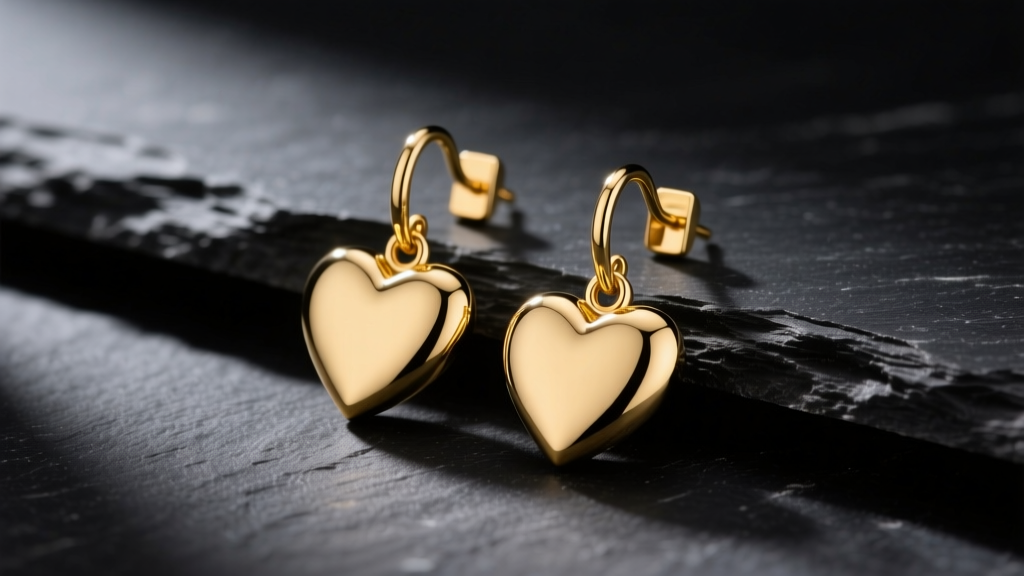
Gold heart dangle earrings are a timeless staple in any jewelry collection, but their specific structural design makes them uniquely prone to dirt accumulation and mechanical wear. Unlike simple studs or continuous hoops, dangle earrings rely on a series of moving parts—typically a fishhook or leverback ear wire connected to a jump ring, which then suspends the heart motif. This articulation is what gives the earring its signature movement, but it also creates microscopic crevices where sebum (skin oils), cosmetic residue, and environmental dust collect.
Furthermore, the geometry of the heart shape itself presents a cleaning challenge. The deep cleft at the top of the heart and the sharp point at the bottom act as natural traps for debris. When cleaning gold heart dangle earrings, you cannot simply wipe the surface; you must address the bail (the loop connecting the heart to the jump ring) and the interior curves where tarnish-causing compounds love to hide. Understanding this anatomy is the first step toward preserving the brilliance and structural integrity of your favorite pieces.
Karat Differences: How Gold Purity Dictates Care
Not all gold is created equal. The karat weight of your earrings determines not only their color and value but also how they react to cleaning agents and daily wear. Pure 24k gold is entirely too soft for dangle earrings, as the weight of the heart motif would quickly bend the ear wire. Therefore, jewelers alloy gold with metals like copper, silver, and zinc. As of 2026, modern metallurgical standards dictate specific care routines based on these alloy ratios.
| Gold Karat | Gold Purity | Primary Alloy Metals | Durability & Scratch Resistance | Cleaning Frequency & Tarnish Risk |
|---|---|---|---|---|
| 10k Gold | 41.7% | Copper, Silver, Zinc | Highest durability; resists bending. | High tarnish risk; requires monthly polishing. |
| 14k Gold | 58.3% | Copper, Silver | Excellent balance of strength and luster. | Moderate tarnish risk; clean every 3-4 weeks. |
| 18k Gold | 75.0% | Copper, Silver, Palladium | Softer; prone to micro-scratches. | Low tarnish risk; gentle cleaning every 2 months. |
According to the Federal Trade Commission's Jewelry Guides, any item stamped with a karat quality mark must accurately reflect its gold content. Knowing whether your heart dangles are 14k or 18k is crucial because 18k gold requires a much gentler touch to avoid buffing away the rich yellow hue, while 10k and 14k gold can withstand slightly more rigorous polishing to remove alloy oxidation.
White, Yellow, and Rose Gold: Specific Maintenance Needs
The color of your gold heart dangle earrings introduces another layer of maintenance complexity. Yellow gold is the most straightforward, requiring only standard degreasing and occasional polishing. However, white gold and rose gold demand specialized attention.
- White Gold: White gold is naturally a pale, slightly yellowish-gray alloy. To achieve a brilliant silver-white finish, it is plated with rhodium, a rare platinum-group metal. Harsh chemicals, ultrasonic cleaners, and abrasive polishing cloths will strip this rhodium plating prematurely, revealing the dull alloy beneath. If your white gold heart dangles look yellowish, they need professional re-plating, not aggressive scrubbing.
- Rose Gold: The pink hue of rose gold comes from a high copper content. Copper is highly reactive to sulfur and oxygen. If you live in a humid environment or frequently expose your earrings to sulfur-rich foods (like eggs or onions) while wearing them, the copper will oxidize, creating a dark, stubborn patina. Rose gold requires more frequent washing with mild surfactants to prevent this chemical reaction.
The 5-Step Deep Cleaning Protocol
Forget expensive commercial jewelry dips, which often contain thiourea—a toxic chemical that can pit the surface of gold alloys if left on too long. The Gemological Institute of America (GIA) consistently recommends a mild, mechanical approach for cleaning gold jewelry at home. Follow this precise protocol to safely restore your gold heart dangle earrings.
- Secure the Workspace: Always plug your sink drain or work over a rubber mat. Dangle earrings are notoriously slippery when wet, and losing one down the drain is a common and preventable tragedy.
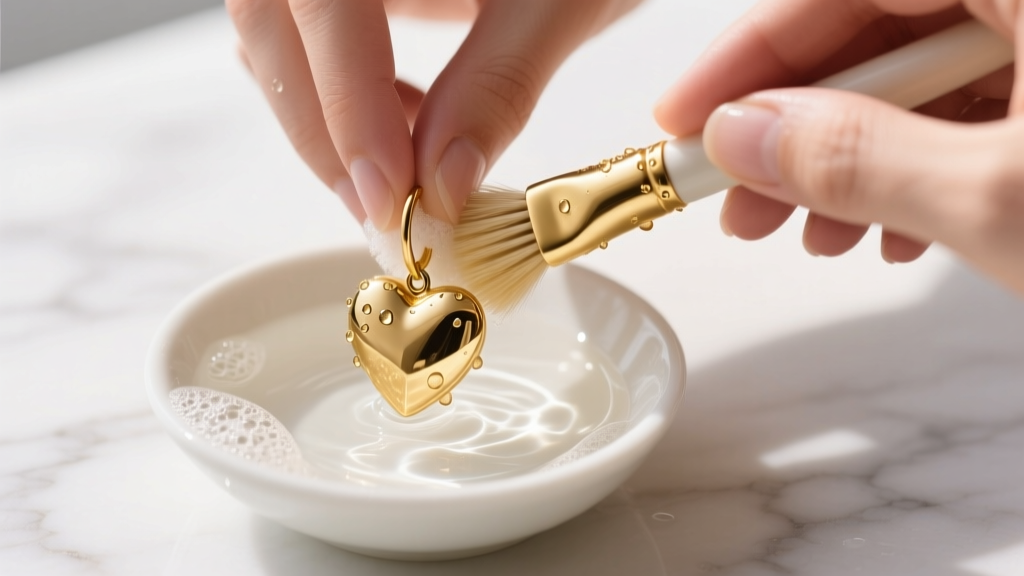
- Prepare the Solution: Fill a small glass bowl with warm (not hot) distilled water. Add three drops of a phosphate-free, mild dish soap (like Dawn Original). Avoid soaps with heavy moisturizers or citrus extracts, as these leave a cloudy film on the gold.
- Soak and Loosen: Submerge the earrings for exactly 15 minutes. This allows the surfactant to break down the sebum and cosmetic buildup trapped in the heart's cleft and the jump ring.
- Agitate Gently: Using an extra-soft baby toothbrush (with bristles no thicker than 0.05mm), gently brush the earring. Focus on the back of the heart motif, the bail, and the ear wire. Never use a standard adult toothbrush, as the stiff nylon bristles will inflict micro-scratches on 14k and 18k gold.
- Rinse and Dry: Rinse thoroughly under a gentle stream of distilled water to prevent hard water spots. Pat dry with a lint-free microfiber cloth. Never use paper towels, as the wood pulp fibers will scratch the polished gold surface.
Troubleshooting Common Dangle Earring Failures
Cleaning is only half the battle; structural maintenance is what keeps your gold heart dangle earrings wearable. Because dangles swing freely, they endure lateral tension that static earrings do not. Here are the most common mechanical failures and how to address them.
1. Jump Ring Separation
The jump ring is the tiny circle of wire connecting the ear hook to the heart. In most lightweight dangles, jewelers use 22-gauge or 20-gauge wire for this component. Over time, the swinging motion can pull the jump ring open, creating a gap where the heart can slip off and be lost. The Fix: Inspect the jump ring monthly. If you see a gap, use two pairs of flat-nose pliers to twist the ring closed (never pull it apart laterally, which weakens the metal). For a permanent solution, ask a jeweler to solder the jump ring shut.
2. Fishhook Ear Wire Deformation
The French wire (fishhook) is the most common finding for dangle earrings. Many people remove their earrings by pulling the hook through the earlobe, which bends the 20-gauge wire out of its precise curve. Once bent, the wire loses its tension and can easily fall out of the ear. The Fix: Always remove fishhook earrings by pushing the wire forward and up, following the natural curve of the hook. If bent, a jeweler can easily re-shape and anneal the wire to restore its spring temper.
3. Gemstone Loosening (If Applicable)
If your gold heart features micro-pavé diamonds or a glued-in center stone (like onyx or mother-of-pearl), you must never use an ultrasonic cleaner. The high-frequency vibrations will shatter the adhesive and shake the stones out of their delicate prongs. Stick strictly to the manual soaking method outlined above.
Chemical Enemies: What Destroys Gold Alloys
While pure gold is virtually indestructible, the alloy metals mixed into 10k, 14k, and 18k gold are highly vulnerable to specific household and environmental chemicals. Understanding these threats is vital for preserving your jewelry.
'Chlorine is the absolute worst enemy of gold alloys. It causes a metallurgical reaction known as stress corrosion cracking, which can cause a gold prong or jump ring to snap cleanly in half with zero warning.' - Master Jeweler Bench Notes
Never wear your gold heart dangle earrings in a swimming pool or hot tub. The chlorine will permanently weaken the structural integrity of the ear wire and jump ring. Similarly, household bleach will cause immediate, irreversible pitting on the surface of the gold. Finally, apply all hairsprays, perfumes, and lotions before putting on your earrings. The alcohol and aerosolized polymers in cosmetics will create a stubborn, dull film on the gold that requires professional polishing to remove.
Proper Storage to Prevent Tangling and Bending
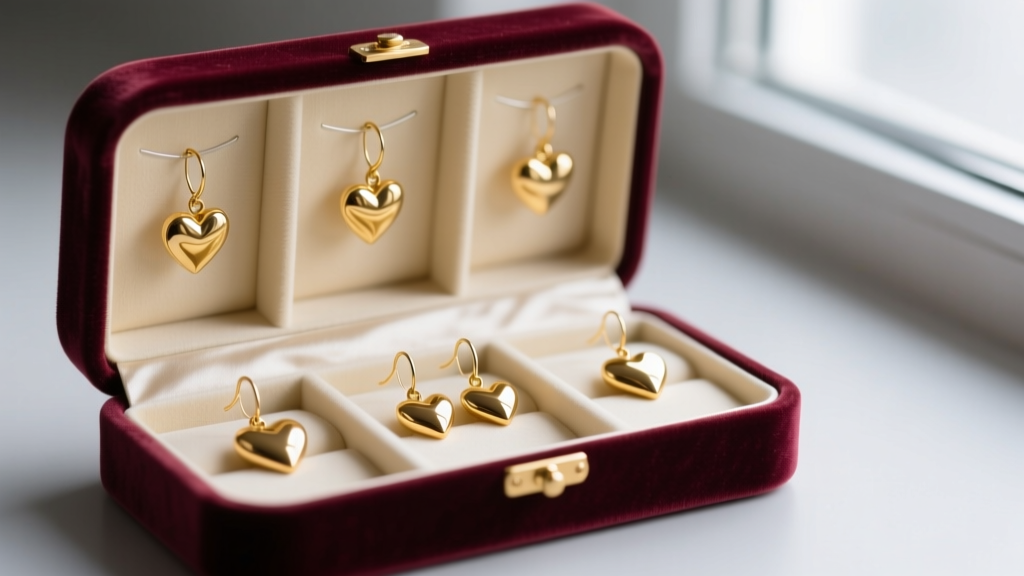
How you store your gold heart dangle earrings when they are off your ears is just as important as how you clean them. Dangle earrings are notorious for tangling with chains and other jewelry, which can bend the delicate fishhook wires and scratch the polished surface of the heart motif.
Always store your dangles individually. Use a jewelry box with dedicated, deep compartments that allow the earrings to hang or lay flat without the heart resting on top of the ear wire. If you are traveling, thread the ear wires through a small piece of foam or a specialized earring travel card to keep them immobilized. For long-term storage, place the earrings in an airtight anti-tarnish polybag with a 3M anti-tarnish strip. This strip absorbs ambient sulfur and hydrogen sulfide in the air, preventing the copper alloys in your gold from oxidizing and turning dull. By combining meticulous cleaning with intelligent storage, your gold heart dangle earrings will remain a brilliant, structurally sound centerpiece of your collection for decades to come.


