How to Clean Dolce and Gabbana Earrings Cross Styles Safely
Master the care and maintenance of your Dolce and Gabbana earrings cross designs. Expert cleaning tips for gold plating, crystals, and enamel.

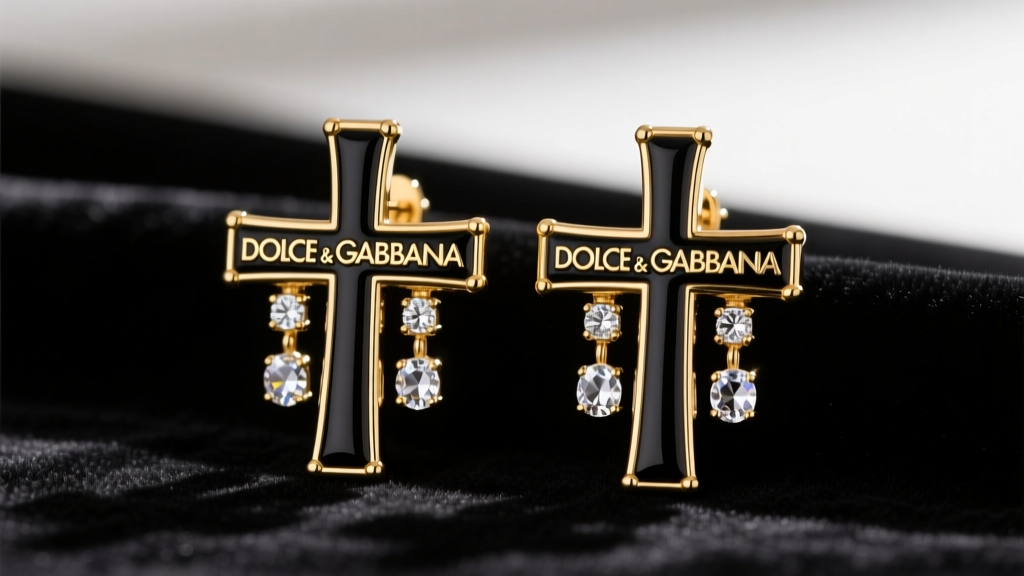
Owning a pair of statement luxury fashion jewelry pieces is an investment in personal style, but maintaining their runway-ready brilliance requires specific, deliberate care. When it comes to the iconic Dolce and Gabbana earrings cross designs, you are dealing with a complex matrix of materials. From the brand's signature Sicilian baroque crosses to their modern minimalist metallic styles, these earrings typically feature gold-plated brass bases, intricate enamel work, epoxy-set Swarovski crystals, and sometimes faux pearls or acrylic inlays. Because luxury fashion jewelry relies on surface treatments rather than solid precious metals, standard fine jewelry cleaning methods can permanently ruin them. In this comprehensive 2026 guide, we break down the exact chemical and mechanical protocols required to clean, preserve, and store your designer cross earrings without stripping the plating or clouding the stones.
Understanding the Material Vulnerabilities
Before applying any liquid or cloth to your earrings, you must understand what you are actually cleaning. According to conservation guidelines outlined by the Gemological Institute of America (GIA), plated jewelry and composite gem materials require drastically different care than solid gold or natural diamonds.
- Gold-Plated Brass: Designer fashion earrings usually feature 1.5 to 3.0 microns of gold plating over a brass or bronze base. If the plating is compromised by harsh chemicals, the underlying brass will oxidize, creating a greenish-black tarnish that pushes through the gold.
- Epoxy-Set Crystals: The pavé crystals on D&G cross earrings are typically secured with industrial epoxy resin, not metal prongs. Solvents like alcohol or acetone will dissolve this adhesive, causing stones to fall out.
- Enamel and Resin: The vibrant black, red, or white enamel details are essentially glass powder fused to metal, or cold enamel (resin). Both can chip upon impact or dull when exposed to acidic cleaners.
The Step-by-Step Cleaning Protocol
To safely remove daily accumulations of sebum, dead skin cells, and cosmetic residue, follow this exact protocol. Never skip the preparation phase.
Phase 1: Preparation and Dry Dusting
Always start dry. Use a brand-new, ultra-soft makeup brush or a clean, dry microfiber cloth to gently sweep away loose dust and dried skin from the intricate filigree of the cross. This prevents you from rubbing abrasive particulate matter into the gold plating during the wet wash, which causes micro-scratches.
Phase 2: The Wet Wash (For Metal and Enamel Only)
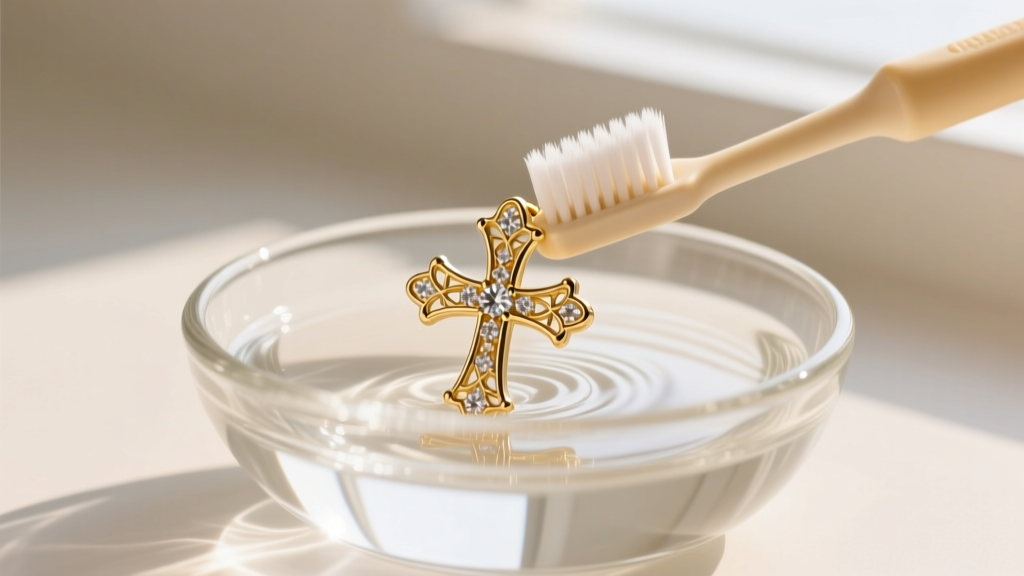
Mix three drops of pH-neutral, lotion-free dish soap (like original blue Dawn) into a bowl of distilled water. Tap water contains chlorine and trace minerals that can leave hard water spots on high-polish gold plating. Dip a soft baby toothbrush into the solution, shake off the excess liquid so it is only damp, and gently brush the metal and enamel areas of the cross earring. Do not submerge the earrings. Keep the brush away from any crystal clusters or faux pearl settings to protect the epoxy adhesives.
Phase 3: Rinsing and Drying
Dampen a clean microfiber cloth with pure distilled water and wipe away any soap residue. Immediately pat the earrings completely dry with a second, dry microfiber cloth. Allow them to air-dry on a paper towel in a low-humidity room for an additional 30 minutes before storing. Moisture trapped in the earring post hinge or butterfly back is the primary cause of metal seizing.
Material-Specific Care Matrix
Not every part of your Dolce and Gabbana earrings cross piece can be treated the same way. Use this decision matrix to avoid catastrophic damage to delicate components.
| Material Component | Primary Vulnerability | Safe Cleaning Agent | Drying Method |
|---|---|---|---|
| Gold-Plated Brass | Plating wear, brass oxidation | pH-neutral soap + distilled water | Air dry + microfiber pat |
| Swarovski / Crystal | Epoxy degradation, foil backing damage | Dry microfiber cloth only | N/A (Keep away from water) |
| Cold Enamel / Resin | Chemical dulling, chipping | Damp cloth (no soaking) | Immediate towel dry |
| Faux Pearl | Coating peeling, loss of luster | Dry soft brush only | N/A |
| Acrylic Inlays | Clouding from solvents | Mild soap suds only | Air dry |
Fatal Mistakes: What to Strictly Avoid
Many well-intentioned jewelry owners ruin their designer pieces by applying fine jewelry habits to fashion jewelry. Avoid these common pitfalls at all costs:
1. The Ultrasonic Cleaner Trap
Never place plated or crystal-set earrings in an ultrasonic cleaner. The high-frequency sound waves create microscopic cavitation bubbles that will literally shake the epoxy glue loose from the crystal pavé and can strip thin layers of gold plating right off the brass base.
2. Chemical Solvents and Polishes
Commercial silver dips, brass polishes, and rubbing alcohol are strictly forbidden. As noted by experts at Jewelers Mutual, harsh chemicals strip the protective clear-coat lacquer that many luxury brands apply over their gold plating to prevent tarnishing. Once that lacquer is gone, the plating will wear off rapidly.
3. The Perfume and Hairspray Rule
Ethanol and aerosol propellants found in perfumes and hairsprays act as mild solvents. Always apply your cosmetics, fragrances, and hairspray at least 10 minutes before putting on your earrings. Spraying fragrance directly onto the crystals will cause them to cloud permanently and degrade the adhesive over time.
Long-Term Storage and Preservation
Proper storage is just as critical as proper cleaning. The brass base metal used in luxury fashion earrings is highly reactive to sulfur and humidity in the air, which accelerates tarnishing. When the brass tarnishes, it expands microscopically and can cause the gold plating on the surface to flake or crack.
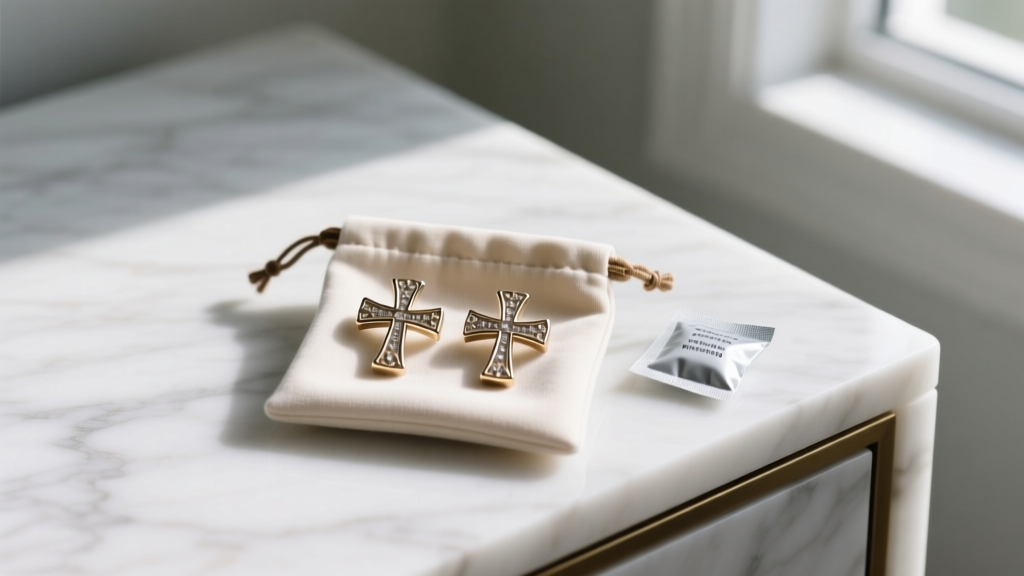
- Anti-Tarnish Pouches: Store each earring individually in a treated anti-tarnish microfiber pouch. Do not let the two earrings rub against each other, as the friction will scratch the high-polish surfaces.
- Humidity Control: Place a small, jewelry-safe silica gel desiccant packet inside your storage box or drawer to maintain a relative humidity below 40%.
- Post Maintenance: If the earring post becomes difficult to push through the butterfly clutch, do not use oil or Vaseline, which will attract dirt and turn into a black sludge. Instead, rub the post lightly against a piece of standard beeswax or a specialized jewelry lubricant stick to ensure a smooth glide.
Troubleshooting Common Issues
Loose Crystal: If you notice a crystal rattling or sitting crooked in the cross design, stop wearing the earring immediately. Do not attempt to glue it back yourself with Super Glue (cyanoacrylate), as it will frost the crystal and ruin the foil backing. Take it to a professional jeweler who specializes in fashion jewelry repair and uses specialized UV-cured jewelry adhesives.
Stuck Butterfly Back: If the earring backing is stuck due to oxidized skin oils and debris, soak only the metal post and backing (avoiding the earring face entirely) in a tiny cap of warm distilled water and a drop of dish soap for 5 minutes to soften the debris, then gently twist and pull.
By treating your Dolce and Gabbana earrings cross pieces with this level of meticulous, material-specific care, you ensure that the gold retains its brilliant luster, the crystals maintain their fiery refraction, and the structural integrity of the piece lasts for years of continuous wear.


