Types of Earring Backs: The Ultimate Security Guide
Discover the best types of earring backs for secure, comfortable wear. Compare push backs, screw backs, and lock backs in our expert buying guide.

The Anatomy of Earring Security: Why the Back Matters
Losing a fine jewelry earring is a costly and frustrating experience, yet the mechanism that prevents this loss is often an afterthought. When investing in diamond studs, gold hoops, or heirloom gemstones, understanding the different types of earring backs is just as critical as evaluating the metal purity or gemstone carat weight. The earring back dictates not only the physical security of the piece but also the long-term health of your piercing fistula.
Many consumers default to the standard friction back provided by the manufacturer, unaware that metal fatigue, hair snagging, and improper gauge sizing can compromise its grip. In this comprehensive buying guide, we break down the engineering, material grades, and failure modes of every major earring backing system available on the market today, helping you make an informed decision for both lobe and cartilage piercings.
Comprehensive Breakdown of Earring Back Types
1. Friction Push Backs (Butterfly Clutches)
The most ubiquitous of all types of earring backs, the friction push back (commonly called a butterfly clutch) relies on the tensile memory of stamped metal tabs to grip a notched or smooth post. While inexpensive and easy to use, they are prone to failure. Over time, the metal tabs lose their elasticity, resulting in a loose fit. Furthermore, the hollow cavities of butterfly backs trap sebum, dead skin cells, and bacteria, requiring rigorous cleaning. They are best suited for lightweight, everyday studs in 20-gauge (0.81mm) or 18-gauge (1.02mm) sizes.
2. Screw Backs
Screw backs offer a significant upgrade in security by utilizing a threaded post and a internally tapped backing. This mechanical lock prevents the earring from being pulled off by hair or clothing. However, buyers must understand the difference between external and internal threading. The Association of Professional Piercers (APP) strongly advises against externally threaded jewelry for fresh piercings, as the sharp threads can tear the healing fistula. For fully healed lobes, however, externally threaded 18k gold screw backs remain a premium, secure choice in fine jewelry.
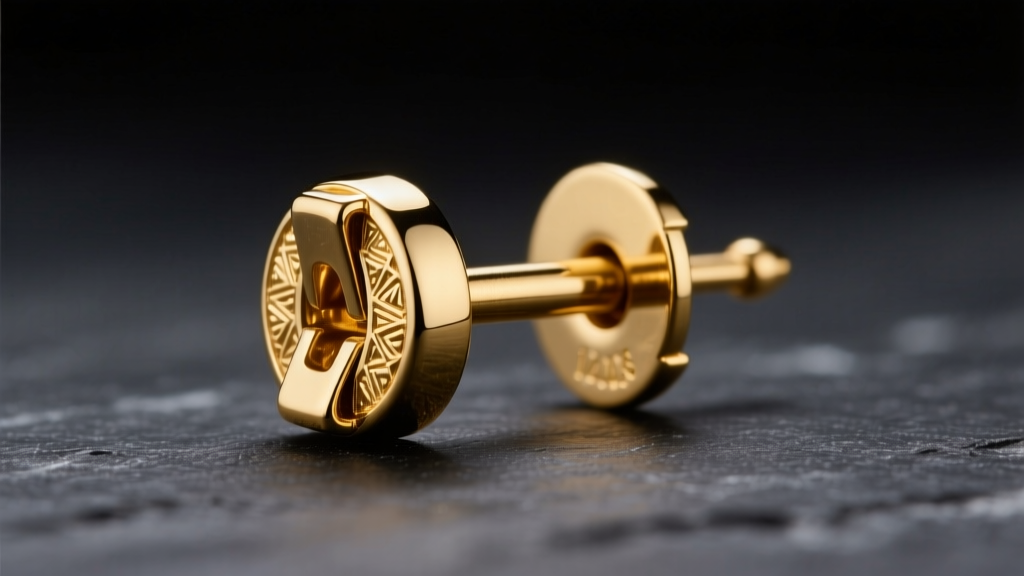
3. Secure Lock Backs (La Pousette Style)
Originally patented as the La Pousette back, this mechanism functions like a tiny mechanical lock. The post features a distinct groove, and the backing contains a dual-spring-loaded clutch. When pushed onto the post, the internal springs snap into the groove, creating an audible click. To remove it, you must pinch the side tabs to retract the springs. Lock backs are the gold standard for high-value diamond studs, virtually eliminating the risk of accidental loss. Expect to pay a premium, with replacement lock backs typically costing between $40 and $85 per pair in 14k or 18k gold.
4. Threadless Push-Pin Backs
A favorite in the professional piercing community, threadless jewelry uses tension rather than threads or notches. The decorative end features a slightly bent pin that inserts into a hollow flat-back post. The bend in the pin creates outward pressure against the inner wall of the post, locking it securely in place. Made almost exclusively from ASTM F136 implant-grade titanium, these are the safest option for sensitive skin and cartilage piercings.
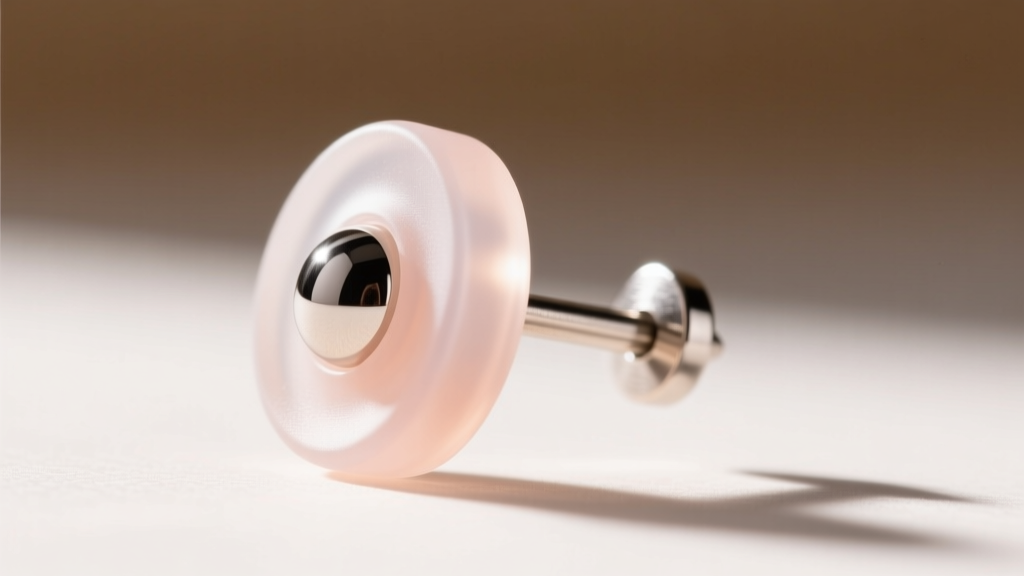
5. Silicone O-Rings and Comfort Discs
For athletes, side-sleepers, or those with severe nickel allergies, medical-grade silicone backs offer a flexible, skin-safe alternative. While they do not possess the mechanical lock of a screw back, the high friction coefficient of silicone grips the post tightly. They are also significantly cheaper, usually retailing for $5 to $12 for a multi-pack, though they must be replaced every few months as the silicone stretches out.
Material Grades and Gauge Compatibility Matrix
Matching the correct metal and gauge to your earring back is vital for preventing allergic contact dermatitis and ensuring a snug fit. According to GIA's Gem Encyclopedia, base metals in cheap earring backs are a leading cause of localized skin reactions. Below is a decision matrix to guide your purchase.
| Back Type | Recommended Materials | Standard Gauge Sizes | Security Level | Avg. Price Range (per pair) |
|---|---|---|---|---|
| Friction Push Back | 14k Gold, 316L Steel, Platinum | 20G (0.8mm), 18G (1.0mm) | Moderate | $10 - $25 |
| Screw Back | 18k Gold, Platinum | 18G (1.0mm), 16G (1.2mm) | High | $30 - $60 |
| Lock Back | 14k/18k Gold, Platinum | 18G (1.0mm) | Very High | $45 - $90 |
| Threadless Flat Back | ASTM F136 Titanium, Niobium | 18G (1.0mm), 16G (1.2mm), 14G (1.6mm) | High | $15 - $40 |
| Silicone Disc | Medical-Grade Silicone | Fits 20G to 16G posts | Low-Moderate | $5 - $12 |
Matching the Back to the Piercing Location
The anatomy of your piercing heavily influences which of the various types of earring backs will perform best. Standard earlobe piercings are generally forgiving, accommodating everything from lightweight butterfly clutches to heavy screw backs. However, the angle of the lobe piercing can sometimes cause rigid metal backs to dig into the neck or behind the ear, making silicone comfort discs a superior choice for sensitive sleepers.
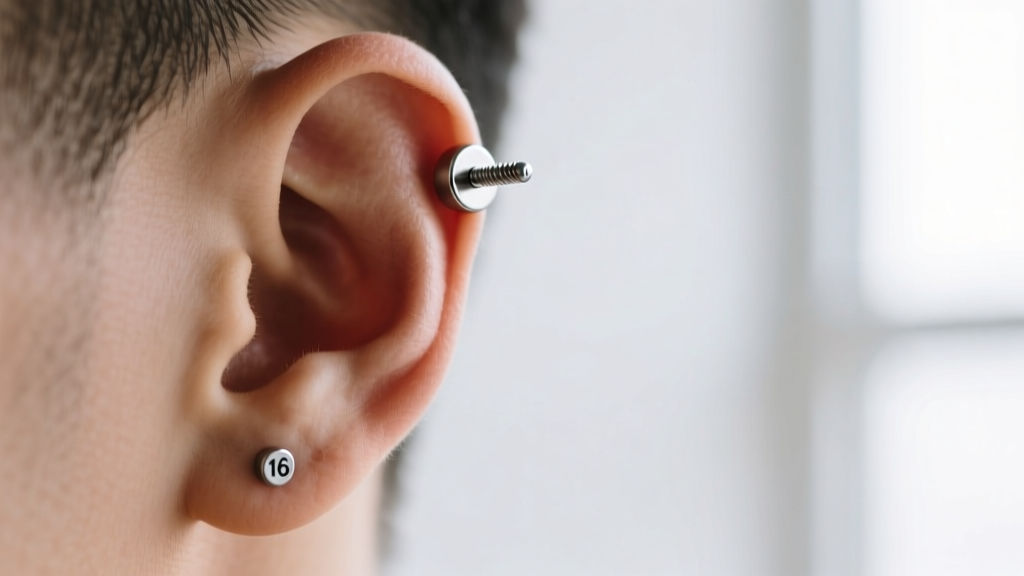
Cartilage piercings—such as the helix, tragus, conch, or rook—require an entirely different approach. The tissue in these areas is dense, and the piercing channels are often shorter and more angular. Traditional push backs and bulky lock backs are entirely unsuitable for cartilage; they create uneven pressure and can lead to migration or hypertrophic scarring. For cartilage, Blue Nile's Earring Education Guide and professional piercers universally recommend flat-back labret studs. These sit flush against the back of the ear, eliminating the "poke" factor and allowing the cartilage to rest without interference.
Troubleshooting Common Back Failures
Even the most expensive earring backs can fail if not maintained properly. Here is a troubleshooting framework for the most common issues encountered by jewelry wearers:
- Cross-Threading Screw Backs: If a screw back feels stuck or grinds when turning, stop immediately. You are likely cross-threading it, which will strip the microscopic threads on the post. Always align the back perfectly straight before twisting, and use a magnifying mirror if necessary.
- Loss of Tension in Butterfly Backs: If your push backs are sliding off, do not discard them immediately. You can use a pair of clean jewelry pliers to gently squeeze the side tabs of the butterfly clutch inward, restoring the original tension. Replace them if the metal shows visible stress fractures.
- Threadless Pins Slipping Out: If a push-pin end falls out, the internal pin is not bent enough. Remove the decorative end, insert the pin about halfway into the post, and bend it slightly (about 5 to 10 degrees) before pushing it all the way in. The tighter the bend, the stronger the grip.
- Silicone Swelling: Silicone O-rings can absorb oils and expand slightly over time, losing their grip. Wash them weekly with mild, fragrance-free soap and replace them every 3 to 4 months.
Expert Verdict: Which Should You Buy?
There is no single "best" option among the different types of earring backs; the ideal choice depends entirely on your lifestyle, piercing location, and the value of the jewelry. For high-value diamond studs worn daily, lock backs are an indispensable investment that will pay for themselves the first time they prevent a lost stone. For cartilage piercings and those with metal sensitivities, threadless titanium flat backs remain the undisputed champion of comfort and biocompatibility. Finally, for lightweight, casual wear, upgrading your standard push backs to silicone comfort discs or 18k gold screw backs will dramatically improve your daily wearing experience.
"The back of the earring is the foundation of the wear. If the foundation is compromised by poor metallurgy or failing tension, the beauty of the front-facing gemstone becomes a liability rather than an asset." — Senior Bench Jeweler


