Latina Hoop Earrings: Troubleshooting Weight, Fit & Tarnish
Struggling with heavy, tarnishing, or uncomfortable Latina hoop earrings? Discover expert fixes for lobe sagging, metal allergies, and clasp issues.

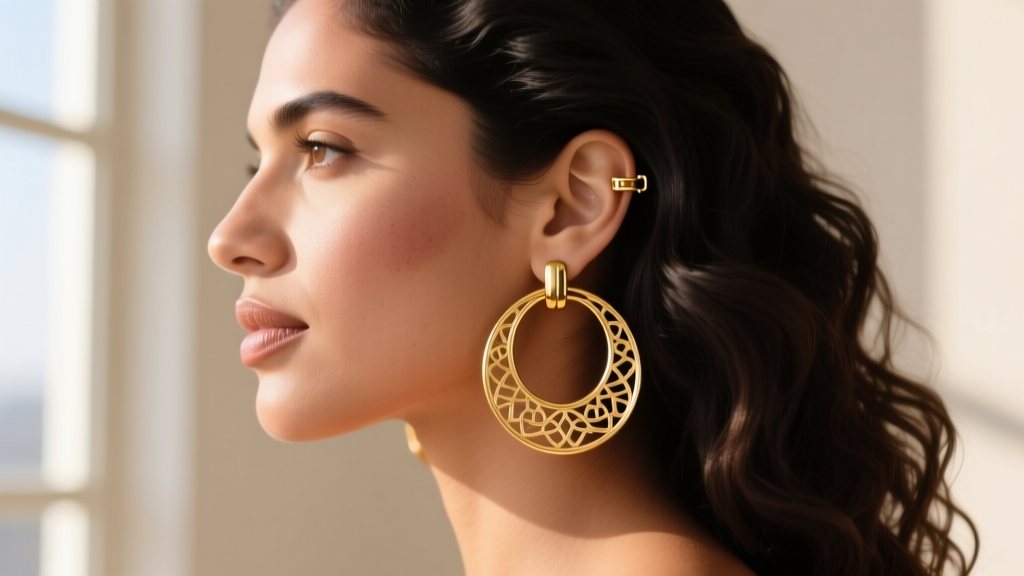
The Cultural Staple Meets Modern Metallurgy
The classic Latina hoop earring is far more than a simple jewelry choice; it is a cultural cornerstone, a rite of passage, and a definitive style signifier. Traditionally ranging from 30mm to over 60mm in diameter, these hoops are designed to command attention, frame the face, and move dynamically with the wearer. However, as jewelry trends evolve and we move through 2026, the demand for larger, bolder hoops has collided with the physical limitations of human anatomy and the chemical realities of mass-produced metals.
At Jewel Style Radar, we receive hundreds of queries annually regarding earlobe tearing, severe contact dermatitis, and frustrating clasp failures associated with statement hoops. Troubleshooting these issues requires moving beyond generic jewelry advice and diving into the physics of torque, the chemistry of galvanic reactions, and the micro-mechanics of hinge tension. Below is your comprehensive, expert-level troubleshooting guide to mastering your hoop rotation.
Problem 1: The Physics of the Pendulum and Lobe Sagging
The most common complaint with oversized Latina hoop earrings is earlobe fatigue and eventual tearing. Even if a hoop is technically 'lightweight' (e.g., 4 to 6 grams), a 50mm diameter creates a pendulum effect. Every time you turn your head, the kinetic energy transfers to the piercing hole, creating micro-tears in the tissue over time. This is exacerbated by standard 20-gauge (0.81mm) posts, which act like a cheese wire against the lobe.
The Gauge and Torque Matrix
To solve lobe sagging, you must redistribute the weight. Upgrading the wire thickness is the first line of defense, but it must be matched to the hoop's overall mass.
| Hoop Diameter | Average Weight | Recommended Gauge | Support Required? |
|---|---|---|---|
| 25mm - 35mm | 2.5g - 4.0g | 20G (0.81mm) or 18G (1.02mm) | No |
| 40mm - 50mm | 4.5g - 7.0g | 18G (1.02mm) minimum | Recommended for active days |
| 55mm - 70mm | 7.5g - 12.0g | 16G (1.29mm) or 14G (1.63mm) | Mandatory (Silicone patches) |
Advanced Support Hacks
If you already own a pair of heavy 14k solid gold hoops and refuse to retire them, you must use mechanical support. Invisible earlobe support patches (often made from 0.15mm medical-grade polyethylene) adhere directly to the back of the lobe. Pro Tip: Do not simply poke the post through the patch. Use a sterilized 18-gauge needle to pre-puncture the hole exactly where your piercing sits, align the patch, and then insert the earring. This prevents the patch from pulling and bunching around the post, which causes localized skin irritation.
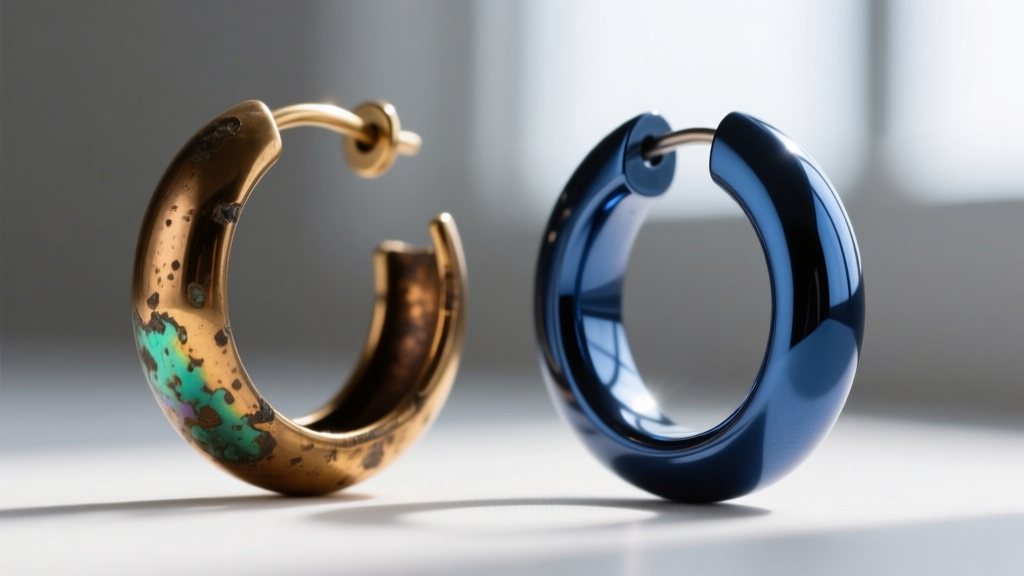
Problem 2: The Green Ear Epidemic and Contact Dermatitis
There is nothing more frustrating than removing your favorite hoops after a long day only to find a green or black ring around your piercing, accompanied by intense itching. This is not a sign of 'bad hygiene'; it is a predictable chemical reaction.
Decoding the Base Metals
According to the American Academy of Dermatology, nickel and copper are the primary culprits behind jewelry-induced contact dermatitis. Many affordable Latina-style hoops are crafted from brass or copper alloys and electroplated with a microscopic layer of gold. When the lactic acid and salts in your sweat breach this porous plating, a galvanic reaction occurs, oxidizing the copper and leaving a green residue on your skin.
To troubleshoot this, you must understand modern plating standards, as outlined by the Federal Trade Commission Jewelry Guides:
- Flash Plating: Less than 0.03 microns of gold. Will wear off in weeks. Avoid for daily-wear hoops.
- Gold Vermeil: A minimum of 2.5 microns of gold over a sterling silver base. Excellent for sensitive skin, but silver can still tarnish if exposed to high sulfur environments.
- PVD Coating (Physical Vapor Deposition): The 2026 industry standard for durable, hypoallergenic jewelry. PVD bonds 18k gold at a molecular level to a 316L surgical steel or titanium base. It is sweat-proof, waterproof, and entirely eliminates the 'green ear' phenomenon.
Expert Troubleshooting: If you have a beloved pair of vintage brass hoops that cause reactions, take them to a local jeweler to be 'dipped' or re-plated in rhodium or thick 14k gold. Alternatively, coat the post and the inner curve of the hoop with a micro-thin layer of clear, flexible nail polish or a specialized jewelry barrier coating like Eurotool's Jewelry Shield.
Problem 3: Mechanical Failures and Hinge Tension
Large hoops require secure clasps to prevent loss, but the mechanical stress of a swinging hoop often leads to clasp failure. The most common style used on medium-to-large Latina hoops is the hinged snapback (or saddleback) clasp.
Troubleshooting a Loose 'Click'
The satisfying 'click' of a snapback clasp relies on a male post with a slight taper snapping into a female tension housing. Over time, the repeated impact of closing the clasp, combined with the outward pull of the hoop's weight, causes the female housing to stretch and widen. When the hoop starts popping open unexpectedly, do not discard it.
- Inspect the Joint: Use a 10x jeweler's loupe to look at the female hinge housing. Check for debris or compacted skin cells that might be preventing the post from seating fully.
- Re-Tension the Housing: Using a pair of nylon-jawed flat-nose pliers (never bare steel pliers, which will mar the gold), gently squeeze the sides of the female housing together. Apply pressure in micro-increments, testing the click after every squeeze.
- File the Male Post: If the housing cannot be tightened further, a jeweler can use a laser welder to add a microscopic bead of gold to the male post, restoring the original friction fit.
- Petite/Short Neck-Jaw Distance (Under 40mm): Opt for 25mm to 35mm huggies or small hoops. Larger sizes will rest on your collarbone and restrict neck movement.
- Average Distance (40mm - 55mm): The sweet spot for the classic 40mm to 50mm statement hoop. This size perfectly frames the cheekbones without dragging the features downward.
- Long/Deep Jaw Distance (Over 55mm): You can effortlessly carry the dramatic 60mm to 80mm oversized hoops. To prevent these from looking too heavy, choose tubular, hollow-core designs rather than solid wire.
The Endless Hoop Alternative
If hinge failures are a chronic issue for your lifestyle, transition to 'endless' or 'continuous' hoops. These feature a seamless design where a slightly curved, hardened wire post threads directly into the hollow tubular opposite end. They eliminate hinges entirely, though they require a specific twisting motion to open and close without warping the circle.
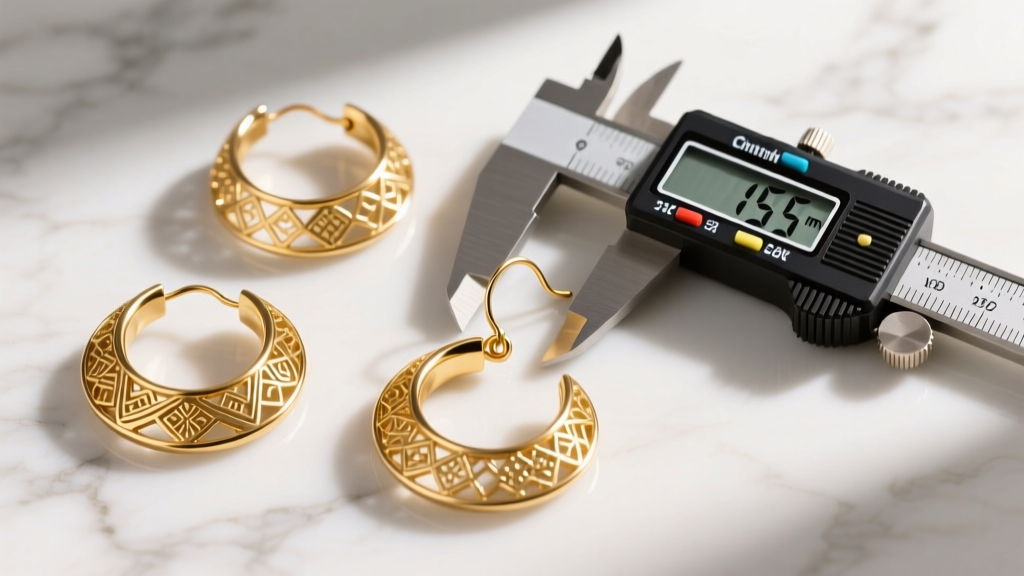
Problem 4: Proportion Troubleshooting and Face Framing
A frequent styling issue is selecting a hoop diameter that overwhelms the wearer's features or gets lost in their hair. The 'Latina hoop' aesthetic relies on bold presence, but proportion is dictated by the distance between your earlobe and your jawline.
The Jawline Clearance Rule
For maximum visual impact without looking costumey, the bottom of the hoop should ideally graze or sit just above the jawline. Measure the distance from your earlobe piercing to your jawbone.
Final Verdict: Building a Sustainable Hoop Rotation
Troubleshooting your Latina hoop earrings is ultimately about respecting both the cultural weight and the physical mass of the jewelry. By upgrading to 18-gauge or 16-gauge posts for larger diameters, insisting on PVD-coated or solid 14k gold constructions to eliminate galvanic skin reactions, and performing micro-maintenance on your hinge clasps, you can ensure your hoops remain a lifelong staple. Stop fighting the physics of your jewelry, and start engineering your accessory rotation for enduring comfort and flawless style.


