Clover Diamond Earrings: Anatomy, Settings & Buying Guide
Master the technical details of clover diamond earrings. Explore melee grading, setting styles, metal choices, and pricing tiers for informed buying.

The clover motif has long transcended its origins as a simple symbol of luck to become a masterclass in geometric jewelry design. When executed with diamonds, the clover shape presents unique structural and optical challenges. Unlike linear or circular designs, the multi-lobed anatomy of a clover requires precise symmetry, advanced stone-setting techniques, and a deep understanding of light return. For collectors and enthusiasts, evaluating clover diamond earrings goes far beyond the total carat weight; it demands a forensic look at melee quality, setting architecture, and metallurgical integrity.
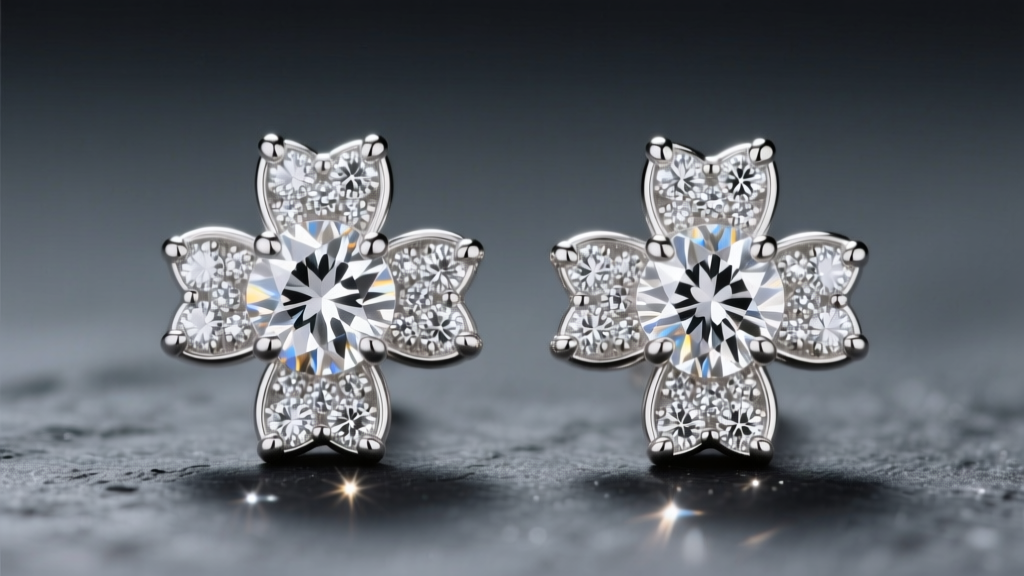
The Architecture of the Clover Motif
A technically superior clover earring relies on exact proportional ratios. The depth of the cleft—the indentation between each lobe—must be precisely calculated. If the cleft is too shallow, the clover reads as a misshapen circle or a cushion-cut halo from a distance. If it is too deep, the structural integrity of the metal framework is compromised, creating weak points prone to snapping under lateral stress. High-end manufacturers utilize CAD (Computer-Aided Design) modeling to ensure that the four or five lobes are mathematically identical, with tolerances held to within 0.05 millimeters. Furthermore, the gallery (the underside of the earring) should feature openwork honeycomb or scalloped cutouts to allow ambient light to enter the pavilions of the diamonds, a critical factor in maximizing brilliance.
Diamond Melee vs. Center Stones: Grading the Clover
Most clover diamond earrings rely heavily on melee diamonds—stones weighing less than 0.18 carats each—to outline the petals or create a fully pavé surface. According to the Gemological Institute of America (GIA), the cut quality of melee is frequently overlooked by consumers, yet it dictates the overall scintillation of the piece.
Single-Cut vs. Full-Cut Melee
Manufacturers often use single-cut melee (featuring 17 or 18 facets) for smaller stones to reduce labor costs. However, in a clover design where the curved lobes require stones to catch light from multiple angles, single-cut diamonds can appear glassy or dead. Expert jewelers insist on full-cut melee (57 or 58 facets) for all stones larger than 0.01 carats. The additional facets create the complex light dispersion necessary to define the clover's curved edges against the skin.
Color and Clarity Parameters
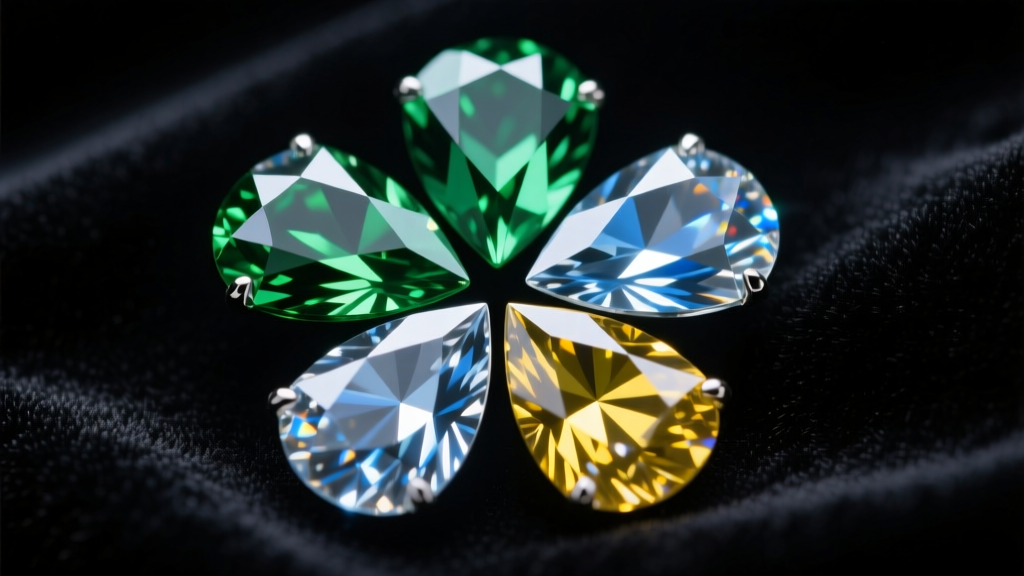
Because melee stones are set in dense clusters, color inconsistencies are immediately visible. Top-tier clover earrings utilize melee in the G-H color range. Stones graded I-J will exhibit a noticeable yellowish tint when placed next to the bright white rhodium plating typically applied to white gold settings. Clarity should be strictly VS2 to SI1; while inclusions in melee are expected, they must not be surface-reaching, as the pressure of the setting prongs can cause included stones to fracture during assembly or daily wear.
Setting Techniques: Prong, Bezel, and Illusion
The method used to secure the diamonds fundamentally alters the visual weight and durability of the clover earrings. As detailed in the GIA Gem Encyclopedia, each setting style interacts with light and metal differently.
| Setting Type | Visual Impact | Durability & Maintenance | Best For |
|---|---|---|---|
| Micro-Pavé Prong | Maximum brilliance; metal is nearly invisible. | Low; prongs can catch on fabrics and require annual retipping. | High jewelry pieces; evening wear. |
| Shared Bezel | Sleek, modern lines with distinct metal borders. | High; metal completely protects the diamond girdles. | Everyday wear; active lifestyles. |
| Illusion Setting | Creates the illusion of a larger single stone using patterned metal. | Moderate; metal can scratch, dulling the optical illusion over time. | Budget-conscious buyers seeking maximum visual spread. |
Metal Alloys and Structural Integrity
The intricate curves of a clover motif demand specific metallurgical properties. While 18-karat gold is prized for its rich color and higher pure gold content, its relative softness makes it less ideal for the micro-prongs required in pavé clover designs. 14-karat gold, alloyed with copper, silver, and zinc, offers superior tensile strength, ensuring that the tiny prongs holding the melee diamonds do not bend or lift during daily wear. For white gold, the rhodium plating process is crucial. In complex clover designs with deep clefts, poor electroplating can lead to uneven rhodium distribution, resulting in yellowish shadows in the crevices within months of wear.
Post Gauges and Earring Backs
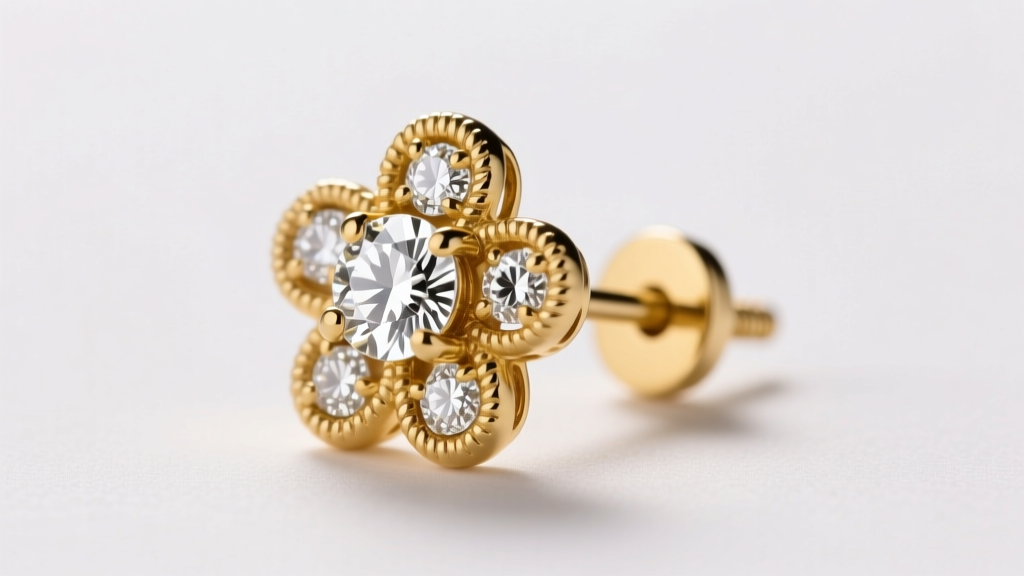
A heavily diamond-set clover earring can easily weigh between 3 and 6 grams per ear. Standard 20-gauge (0.81mm) friction posts are insufficient for this weight, leading to the 'drooping' effect where the earring tilts forward on the lobe. Expert manufacturers utilize 19-gauge (0.91mm) or even 18-gauge (1.02mm) posts for structural support. Furthermore, pairing these thicker posts with secure screw-backs or jumbo silicone clutches with wide friction discs is non-negotiable. The wide disc distributes the weight across a larger surface area of the earlobe, preventing tearing and ensuring the clover motif sits perfectly flush and upright.
Pricing Frameworks and Market Tiers
Understanding the pricing architecture of clover diamond earrings requires breaking down the cost by manufacturing tier, diamond quality, and brand premium.
- Commercial Tier ($800 - $2,500): Typically features 0.50 to 1.00 carats total weight (ctw) of single-cut, I-J color melee set in 10k or 14k gold. Often utilizes cast-in-place settings or illusion heads to maximize perceived size.
- Fine Jewelry Tier ($3,000 - $8,500): Features 1.50 to 3.00 ctw of full-cut, G-H color, VS clarity melee. Set in 14k or 18k gold with precision hand-cut micro-pavé. Includes upgraded posts and screw-backs.
- High Jewelry / Designer Tier ($12,000 - $45,000+): Incorporates large, GIA-graded center stones within the clover lobes, surrounded by D-F color, VVS melee. Platinum or 18k gold settings with bespoke, articulated galleries for light performance.
Maintenance and Prone Failure Points
The deep clefts and dense pavé settings of clover earrings make them magnets for skin oils, lotions, and environmental debris, which rapidly dull diamond brilliance. While ultrasonic cleaners are effective for solid metal jewelry, they pose a severe risk to pavé clover earrings. The high-frequency vibrations can loosen the microscopic prongs or shatter melee diamonds that possess hidden feather inclusions. The safest maintenance protocol involves weekly soaking in a solution of warm water and a few drops of ammonia-free dish soap, followed by gentle agitation with an extra-soft baby toothbrush. Pay special attention to the underside gallery, as buildup here blocks light from entering the pavilion, effectively killing the diamond's fire.


