2026 Gift Guide: Moroccan Earrings for Every Occasion
Discover the perfect Moroccan earrings for every occasion in our 2026 gift guide. Explore Berber silver, Fassi gold, and Meknes enamel styles.

The Allure of North African Craftsmanship
In 2026, the jewelry gifting landscape has decisively pivoted away from mass-produced luxury toward heritage-rich, culturally significant artifacts. Moroccan earrings represent one of the most vibrant and technically complex categories in global jewelry design. Rooted in centuries of Amazigh (Berber), Moorish, and Jewish artisan traditions, these pieces are not merely accessories; they are wearable history. However, gifting Moroccan earrings requires a nuanced understanding of their regional styles, metallurgical compositions, and structural weights. A heavy pair of Tiznit dangles might be a breathtaking gift for a bohemian festival-goer, but a practical nightmare for someone with delicate earlobes. This comprehensive guide decodes the distinct styles of Moroccan earrings, matching them to specific occasions while providing the technical depth necessary to purchase authentic, high-quality pieces.
Decoding the Big Three: Berber, Fassi, and Meknes Styles
To gift Moroccan earrings confidently, you must first understand the triumvirate of regional styles. According to the Victoria and Albert Museum, North African jewelry is deeply tied to tribal identity and regional trade routes, resulting in highly localized techniques. Below is a breakdown of the three primary styles you will encounter from reputable dealers and artisan cooperatives.
| Style | Origin Region | Primary Material | Key Technique | Best Occasion | 2026 Price Range |
|---|---|---|---|---|---|
| Amazigh (Berber) | Anti-Atlas / Tiznit | 900-925 Silver | Repoussé, Niello, Granulation | Festivals, Boho, Statement | $80 - $350 |
| Fassi | Fez | 18k-21k Gold | Filigree, Pierced Openwork | Weddings, Heirlooms, Milestones | $900 - $4,500 |
| Meknes Enamel | Meknes | Silver / Gold Base | Cloisonné Enameling | Office, Subtle Elegance, Anniversaries | $120 - $600 |
Occasion Matching: The Ultimate Gifting Matrix
Weddings & Milestone Anniversaries: The Fassi Gold Tradition
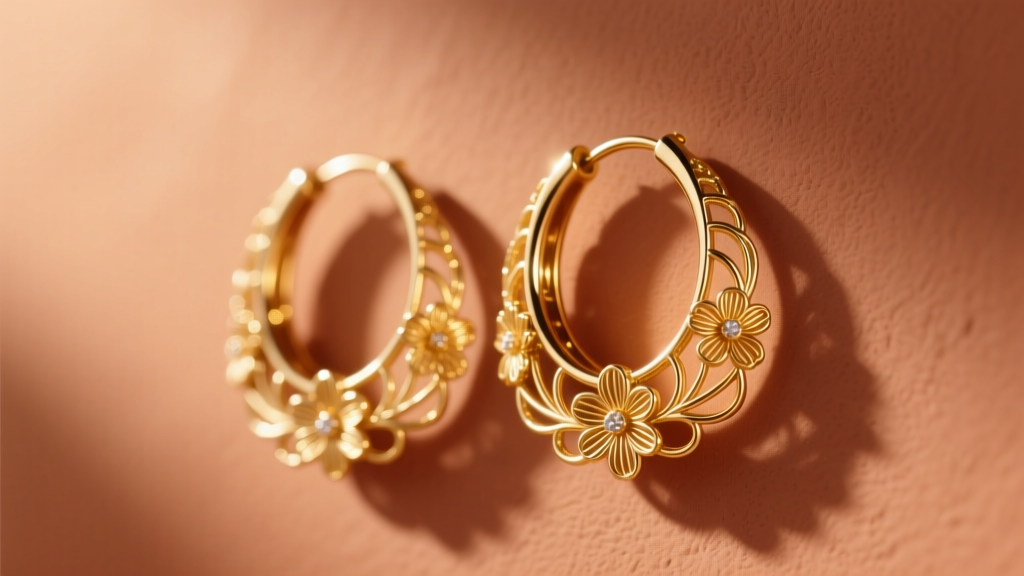
For milestone events such as 25th anniversaries or weddings, Fassi gold earrings are the undisputed pinnacle of Moroccan gifting. Originating from the imperial city of Fez, these pieces are characterized by their gossamer-thin gold filigree and intricate floral motifs, heavily influenced by Andalusian refugees who settled in the region centuries ago. Unlike the heavy, solid silver of the rural south, Fassi earrings are remarkably lightweight despite their large surface area, achieved through masterful pierced openwork. When gifting Fassi gold, look for 18-karat or 21-karat purity, which provides the necessary malleability for fine wire drawing. Expect to pay between $900 and $4,500 for authentic, handcrafted pairs from established Fez ateliers.
Festival & Bohemian Everyday Wear: Amazigh Silver Dangles
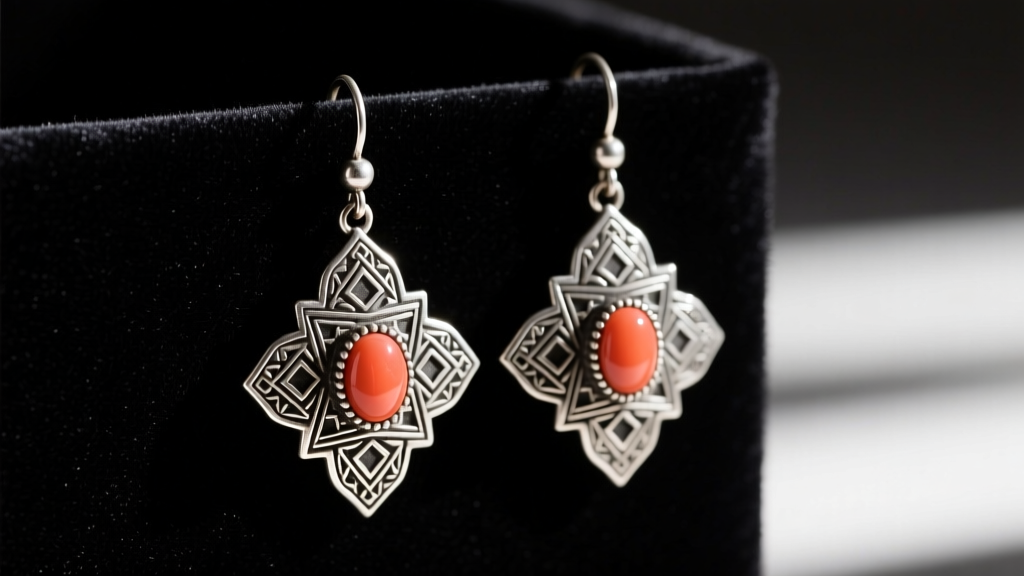
If the recipient favors a bohemian aesthetic, attends music festivals, or collects statement tribal jewelry, authentic Amazigh silver dangles from the Tiznit or Essaouira regions are the perfect gift. These earrings are unapologetically bold, often featuring large cabochons of Mediterranean red coral, Amazon River pearls, or yellow amber. The silver is typically treated with niello—a black mixture of copper, silver, lead, and sulfur used as an inlay to create striking contrast against the bright silver repoussé work. The Gemological Institute of America (GIA) notes that while modern silver jewelry is usually 925 sterling, vintage and traditional rural Moroccan pieces often utilize 900 coin silver, which is slightly softer and takes on a beautiful, organic patina over time.
Professional & Subtle Elegance: Meknes Cloisonné Drops
For the corporate professional or someone who prefers refined, colorful accents over heavy metals, Meknes enamel earrings are an exceptional choice. Meknes artisans specialize in cloisonné, a technique where fine silver wires are soldered onto a base to form tiny cells, which are then filled with vitreous enamel powder and fired in a kiln. The result is a vibrant, glass-like finish in traditional Moroccan hues: cobalt blue, emerald green, and saffron yellow. A pair of modestly sized Meknes enamel drop earrings (weighing under 8 grams) provides a sophisticated pop of color suitable for boardroom meetings and evening dinners alike.
The Weight Factor: Engineering Comfort for Heavy Dangles
The most common mistake buyers make when gifting traditional Berber earrings is ignoring the physics of the earlobe. Authentic, vintage-style Amazigh dangles can weigh anywhere from 25 to 45 grams per earring. For context, a standard US quarter weighs 5.6 grams. The human earlobe can comfortably support about 15 grams long-term before experiencing fatigue, stretching, or pain.
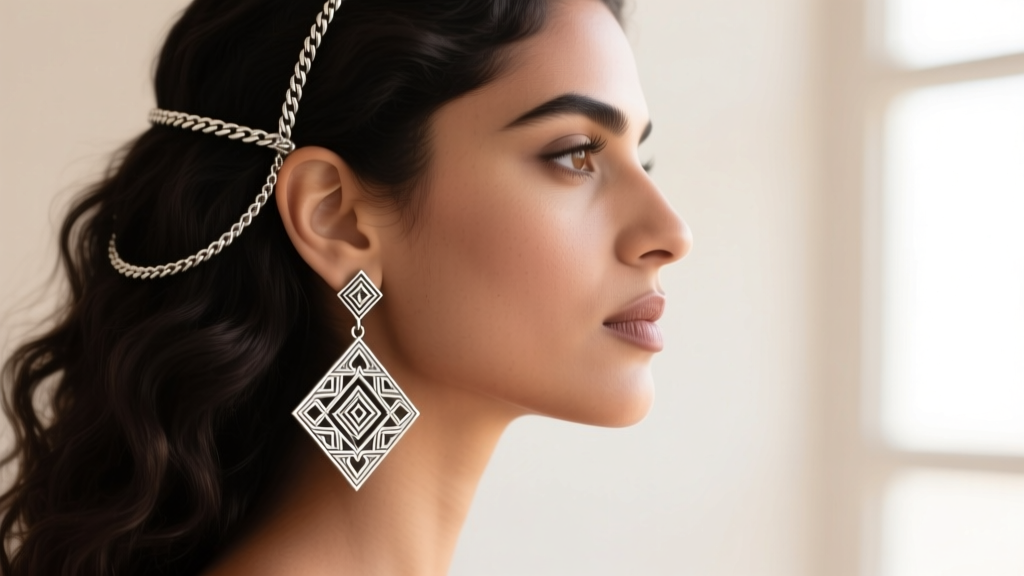
To solve this, traditional Moroccan jewelers engineer a structural support system known as a selsela (chain). This is a delicate, braided silver chain attached to the top of the earring hook. The wearer loops the chain over the helix (the upper cartilage ridge of the ear) and hooks it back onto the wire. This transfers 80% of the earring's weight from the soft lobe to the sturdy upper ear cartilage. Gifting Rule: If you are purchasing heavy Tiznit dangles (anything over 15g per earring), you must ensure the selsela chain is included, intact, and properly sized for the recipient's ear. Gifting heavy earrings without this chain renders them unwearable.
2026 Buyer’s Checklist: Spotting Authentic Artisan Pieces
The global demand for bohemian and heritage jewelry has flooded the market with machine-stamped, mass-produced knockoffs originating from overseas factories. To ensure your gift carries genuine cultural and material value, use this authentication checklist:
- Examine the Repoussé Work: True hand-hammered repoussé will feature microscopic asymmetries. If the floral or geometric patterns on both earrings are mathematically identical under a jeweler's loupe, they are likely machine-stamped.
- Check the Niello Inlay: Authentic niello is fused into engraved grooves and polished flush with the metal. It should feel completely smooth to the touch. If the black inlay feels raised, chalky, or looks like painted resin, it is a modern imitation.
- Verify the Enamel Quality: In genuine Meknes cloisonné, the enamel should be perfectly level with the silver dividing wires. Run your fingernail lightly across the surface; if you feel ridges or if the color appears cloudy and plasticky, it is cold enamel (epoxy), not fired vitreous glass.
- Look for the Maker’s Mark: While older vintage pieces may lack hallmarks, contemporary artisan cooperatives in Tiznit and Fez stamp their pieces with a registered maker's mark and a silver purity stamp (often a ram or a star for 925 silver).
- Avoid "Antiqued" Plating: Mass-produced tourist pieces are often made of brass or copper and plated with a thin layer of silver that is chemically oxidized to look "old." A magnet test or a check of the wear points (where the metal appears yellowish or reddish) will reveal the base metal.
Conclusion: Gifting with Intention
Moroccan earrings are far more than decorative accents; they are masterclasses in metallurgy, geometry, and cultural storytelling. By understanding the distinct differences between the bold, niello-inlaid silver of the Anti-Atlas, the gossamer gold filigree of Fez, and the vibrant cloisonné of Meknes, you can select a gift that perfectly aligns with the recipient's lifestyle and aesthetic. Whether you are navigating the weight distribution of a traditional selsela chain or verifying the vitreous firing of an enamel drop, applying these technical insights ensures your 2026 gift is not only breathtakingly beautiful but structurally sound and authentically crafted.


