Square Beaded Earrings: 2026 Geometric Trend Guide
Discover the 2026 trend of square beaded earrings. Explore styling tips, material guides, and face-shape pairings for geometric beadwork jewelry.

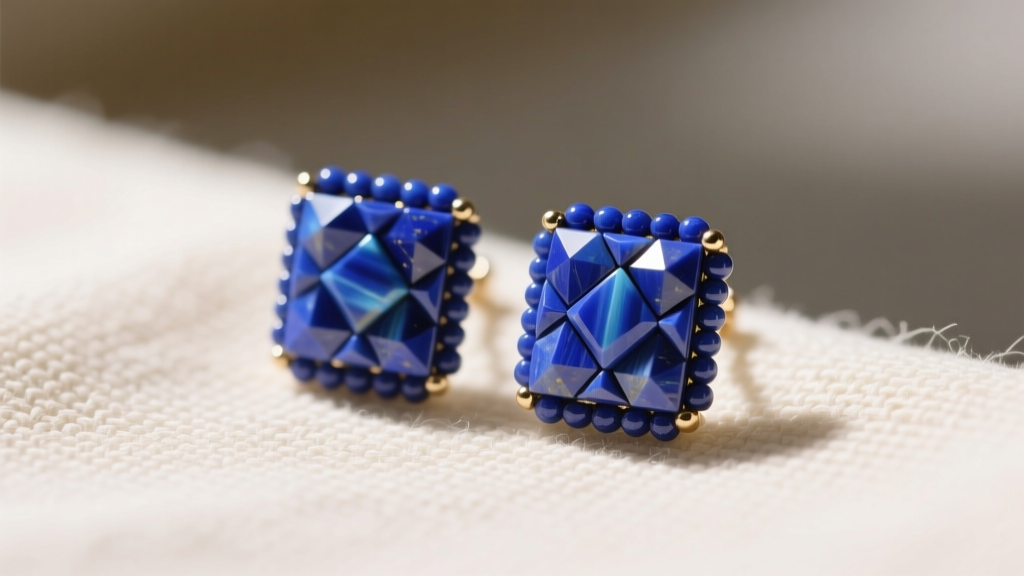
The jewelry landscape of 2026 has decisively pivoted away from the fluid, organic, and asymmetrical silhouettes that defined the early 2020s. In their place, a bold, architectural revival has taken root, and at the forefront of this movement are square beaded earrings. Far from the simple craft-project aesthetics of the past, today's geometric beadwork represents a sophisticated intersection of artisanal craftsmanship, structural engineering, and high-fashion styling. Whether constructed from precision-cut gemstones, uniform seed beads, or vibrant Czech glass, the square silhouette demands attention through its strict adherence to grid-like perfection.
As consumers increasingly seek out pieces that offer a sense of order and structured nostalgia, square beaded earrings have transitioned from niche artisan markets to mainstream luxury runways. This comprehensive guide breaks down the materials, construction techniques, and styling matrices you need to master this defining jewelry trend of the year.
The Geometry of Beadwork: Why Square Silhouettes Are Dominating
The resurgence of the square shape in earring design is deeply tied to the broader 'Art Deco Revival' and 'Structured Nostalgia' trends documented by industry authorities like JCK Online. Unlike circular hoops or teardrop dangles that move fluidly with the wearer, a square beaded earring acts as a miniature, wearable canvas. It projects confidence, precision, and a deliberate styling choice.
Designers are leveraging the four equal sides and four right angles of the square to create optical illusions, color-blocked grids, and intricate brick-stitch patterns that would be impossible to execute with the same clarity on a curved surface. The rigidity of the shape also allows for heavier, more substantial statement pieces that maintain their silhouette rather than collapsing or folding against the neck.
Material Breakdown: Glass, Seed, and Gemstone Beads
Not all beads are created equal when it comes to holding a strict geometric shape. The success of a square beaded earring relies entirely on the uniformity of its constituent materials. Below is a comparative analysis of the three dominant materials driving the 2026 market.
| Material Type | Weave/Setting Technique | Avg. Weight (Pair) | Price Range (USD) | Durability & Notes |
|---|---|---|---|---|
| Miyuki Delica Seed Beads | Brick Stitch / Peyote | 8 - 14 grams | $85 - $250 | High. Cylindrical shape locks into a perfect grid. Vulnerable to thread snapping if dropped. |
| Czech Glass Cubes | Wire Wrapping / Linking | 18 - 30 grams | $45 - $120 | Medium. Prone to chipping at the corners if struck against hard surfaces. |
| Lapis & Turquoise Cubes | Bead Weaving / Inlay | 25 - 45 grams | $150 - $400+ | Variable. Natural stones may have internal fissures; requires protective bezel or careful tension setting. |
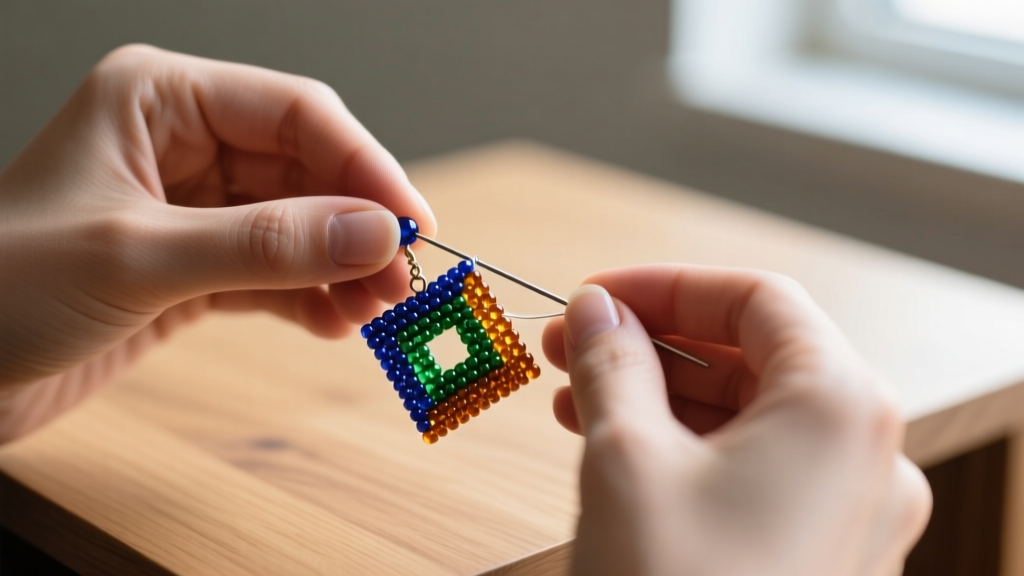
For the purist, Japanese cylinder beads (like Miyuki Delicas or Toho Treasures) are the gold standard. Their flat edges and uniform diameters allow for a seamless, fabric-like drape that still holds a rigid square perimeter when pulled taut. Conversely, natural gemstone cubes offer a heavier, more luxurious weight, though they require advanced wire-wrapping techniques to maintain the 90-degree angles without the wire slipping.
Face Shape & Proportion Matrix
Wearing square beaded earrings requires an understanding of facial geometry. Because the square is a 'stop' shape—it halts the eye rather than guiding it downward like a teardrop—pairing it with the right face shape is critical for visual harmony.
- Round Faces: Opt for elongated rectangular variations of the square (e.g., a 2x4 grid of beads). The vertical lines will help elongate the jawline and cheekbones, providing a slimming, structured contrast to soft facial curves.
- Square Faces: Avoid strict 1:1 ratio square earrings that sit directly on the jawline, as this will exaggerate angular features. Instead, choose square beaded drops that hang below the chin, or wear square studs positioned higher on the ear cartilage to draw the eye upward.
- Oval & Heart Faces: You have the versatility to pull off wide, chandelier-style square bead grids. A large, 40mm square beaded earring will beautifully balance a narrow chin or prominent forehead.
The Hardware: Wire Wrapping vs. Bead Weaving Tension
A common failure point in mass-produced geometric earrings is the hardware. A 30mm square beaded earring constructed from glass or stone can easily weigh 20 to 35 grams per ear. Standard 22-gauge ear wires will bend under this weight, causing the earring to droop and lose its geometric alignment.
When sourcing or designing square beaded earrings, insist on 20-gauge or 18-gauge ear wires made from hardened sterling silver, titanium, or 14k gold. For bead-woven squares, the internal tension is just as critical. Artisans should be using 6lb or 8lb test Fireline (a gel-spun polyethylene thread) rather than standard nylon, which stretches over time and causes the square's corners to pucker and warp.

Styling the Grid: Wardrobe Pairings
The architectural nature of square beaded earrings demands a considered approach to wardrobe styling. Because the earrings introduce strong horizontal and vertical lines, they pair best with clothing that echoes or deliberately contrasts those lines.
The Ideal Necklines: Boat necks, sharp collared button-downs, and high-neck turtlenecks provide a structured base that frames the earrings perfectly. A crisp white poplin shirt with a sharp collar creates a striking, modernist contrast against vibrant, multi-colored seed bead grids.
What to Avoid: Plunging V-necks and chaotic, ruffled necklines. A V-neck creates competing diagonal lines that clash with the strict 90-degree angles of the earrings, resulting in a visually messy silhouette. Furthermore, avoid wearing other geometric statement jewelry; let the square earrings serve as the sole focal point of your styling.
Sourcing & Authenticity: Spotting Artisan vs. Mass-Produced
As the trend accelerates, the market is being flooded with cheap, machine-strung imitations. Knowing how to evaluate the quality of square beaded earrings is essential for building a lasting collection.
Expert Tip: Hold the earring up to the light and examine the corners. In a poorly constructed brick-stitch square, the corner beads will pull inward, creating a 'pinched' look due to uneven thread tension. A true artisan piece will have corners that meet at a flawless, unyielding 90-degree angle.
Additionally, be wary of dyed stones. The Gemological Institute of America (GIA) frequently notes that porous stones like howlite and magnesite are routinely dyed to imitate turquoise and lapis lazuli in geometric beadwork. If the color is overly uniform and pools in the micro-crevices of the bead, it is likely dyed. Authentic high-grade gemstone beads will feature natural matrix veining and slight color variations that add depth to the grid pattern.
Ultimately, square beaded earrings in 2026 are more than just a passing fad; they are a celebration of precision, color theory, and structural design. By understanding the materials, respecting the hardware requirements, and styling them with intentional geometry, you can master one of the most striking earring trends of the decade.


