Small Earrings of Gold: 2026 Value & Pricing Guide
Discover the true value of small earrings of gold in our 2026 pricing guide. Compare 10k, 14k, and 18k solid gold costs, weights, and everyday durability.

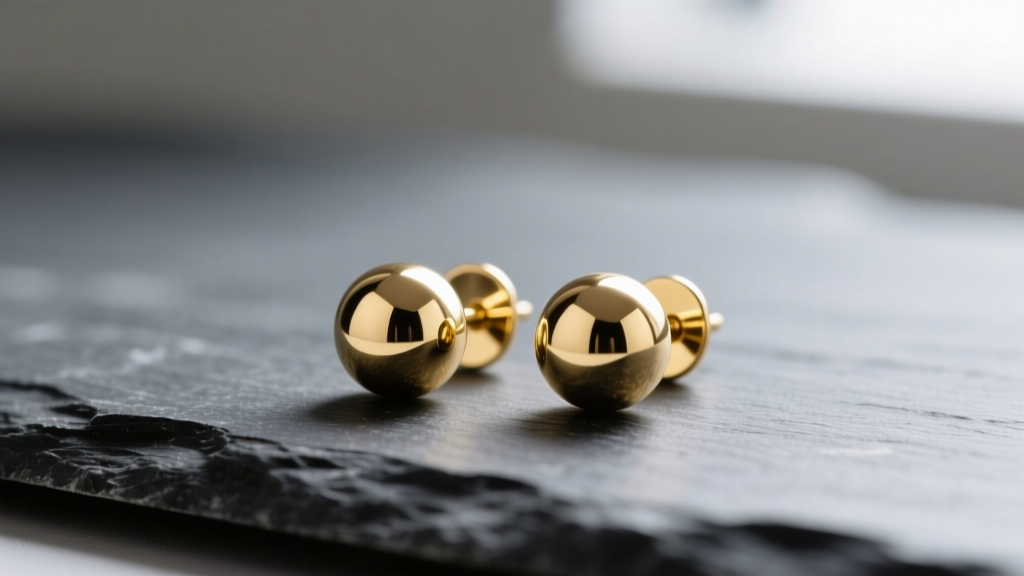
The Real Cost of Small Earrings of Gold in 2026
As we navigate the jewelry market in 2026, historic fluctuations in precious metal commodities have fundamentally redefined the entry-level fine jewelry sector. When consumers begin searching for small earrings of gold—typically encompassing 3mm to 6mm studs, micro-huggies, and tiny sleepers—they are often caught in a tug-of-war between inflated luxury brand markups and deceptive, fast-fashion plating. To make a financially sound decision, you must look past the display case lighting and understand the underlying metallurgy, gram-weight economics, and manufacturing methods that dictate true value.
According to data from the World Gold Council, the sustained high spot price of gold means that the raw material cost of even a lightweight, 1.5-gram pair of solid gold studs is no longer negligible. Consequently, the 'budget' category has shifted. Today, true value isn't about finding the absolute cheapest option; it is about maximizing the ratio of precious metal content to retail markup, ensuring your small earrings of gold last a lifetime without the base metal bleeding through.
Solid vs. Plated: Assessing Long-Term Value
Before evaluating karats, we must establish a baseline: for small, everyday earrings, solid gold is the only mathematically sound investment. Small earrings endure disproportionate physical trauma compared to a pendant or ring. They are constantly subjected to friction from hair, the pressure of over-ear headphones, and the abrasion of cotton pillows.
- Gold Vermeil: The Federal Trade Commission (FTC) mandates that vermeil must have a sterling silver base with a minimum gold thickness of 2.5 microns. While 2.5 microns is sufficient for a necklace, the friction on a 12mm huggie hoop will wear through this layer in 6 to 12 months, leaving you with tarnished silver.
- Gold-Filled: Comprising a brass core with a gold layer making up at least 5% of the total weight. It is more durable than vermeil but cannot be cast into intricate, seamless small hoops without exposing the brass core at the solder joints.
- Solid Gold: An alloy of pure gold and strengthening metals. It will never wear away, tarnish, or expose a base metal, making it the ultimate value proposition for daily-wear small earrings.
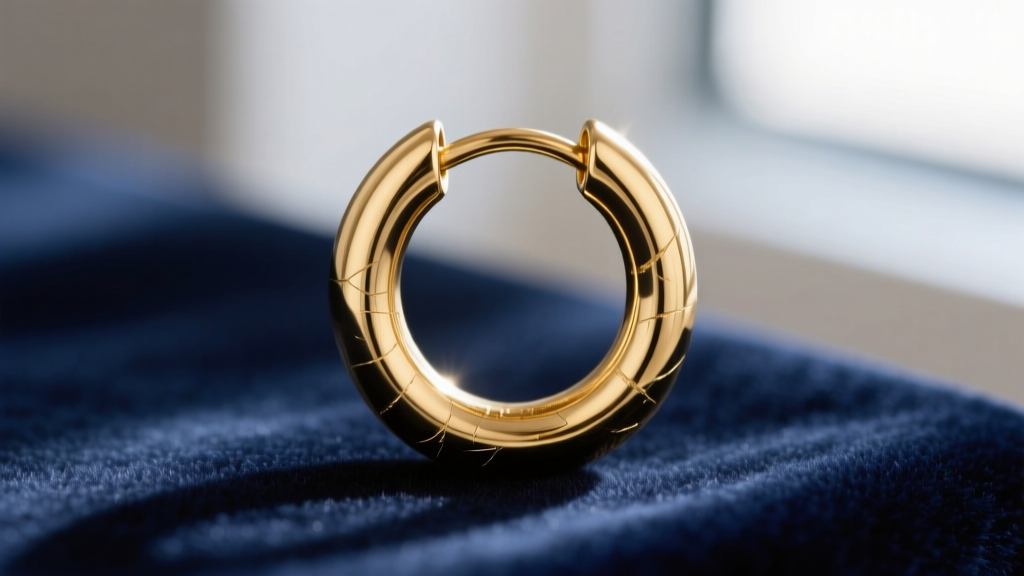
Karat Breakdown: 10K, 14K, and 18K Pricing Matrix
The karat weight determines the purity of the gold and heavily influences both the price and the structural integrity of small earrings of gold. Below is a 2026 value assessment matrix based on a standard 1.5-gram pair of small, solid gold hoop or stud earrings.
| Karat | Stamp | Gold Content | Est. Melt Value (1.5g) | Fair Retail Range | Durability & Best Use |
|---|---|---|---|---|---|
| 10K | 417 | 41.7% | $38 - $42 | $85 - $130 | Extremely hard; best for active lifestyles and cartilage piercings. |
| 14K | 585 | 58.5% | $55 - $60 | $120 - $220 | The optimal balance of rich color, strength, and budget value. |
| 18K | 750 | 75.0% | $72 - $78 | $250 - $450 | Softer, richer yellow hue; prone to scratching on high-friction hoops. |
For the majority of buyers, 14K gold offers the highest utility-to-cost ratio. It contains enough pure gold to resist tarnish and hypoallergenic reactions, while the 41.5% alloy content (usually copper, silver, and zinc) provides the tensile strength necessary for the thin wire used in small huggies and the delicate posts of micro-studs.
Weight, Manufacturing, and the Gram-Weight Trap
When assessing the budget of small earrings of gold, retail price alone is a misleading metric. You must calculate the price per gram and understand the manufacturing technique used.
The Hollow vs. Solid Dilemma
Many mass-market jewelers sell 'large' small earrings (like 15mm hoops) that are hollow-tubed to save on gold weight. While this keeps the sticker price low, hollow gold dents easily and is nearly impossible for a jeweler to repair if crushed. For small earrings under 12mm, always insist on solid cast or solid wire construction. A 1.2-gram solid pair of 10mm huggies holds vastly more long-term value than a 1.2-gram hollow pair of 15mm hoops.
Die-Struck vs. Cast
According to the Gemological Institute of America (GIA), the manufacturing method affects the metal's density. Small gold studs and hoops made via die-striking are compressed under immense pressure, aligning the grain structure of the alloy. This makes die-struck small earrings significantly more resistant to bending and scratching than their cast counterparts, which can suffer from microscopic porosity. If a vendor specifies 'die-struck' for their small gold studs, the slight premium in price is entirely justified by the extended lifespan of the piece.
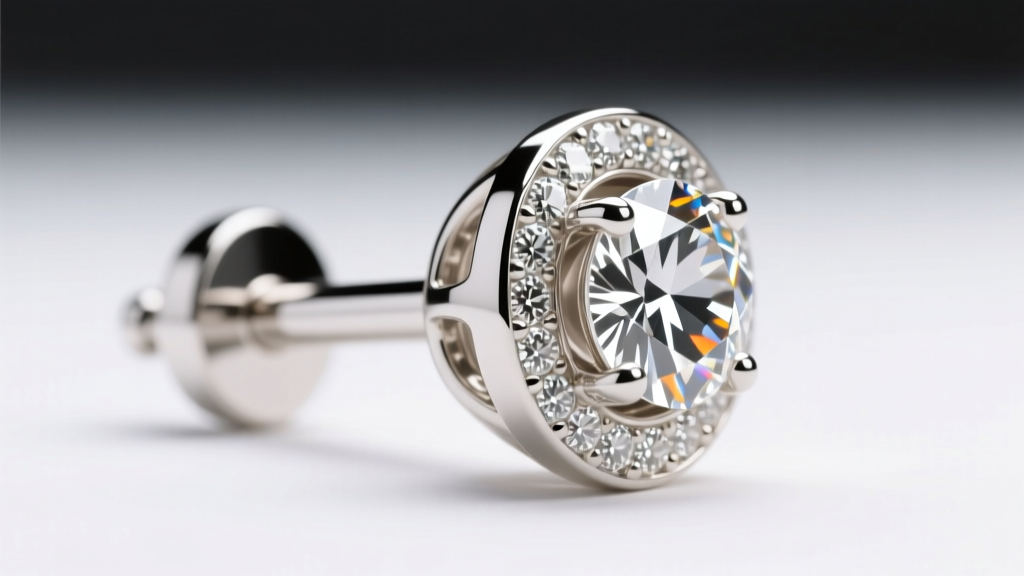
Alloy Metals and Skin Sensitivities
Budget assessments must also factor in the 'cost' of physical discomfort. Small earrings sit directly inside the fistula (the piercing hole), making alloy composition critical.
If you are purchasing white gold small earrings, be wary of budget-priced options that use nickel as the primary whitening alloy. Nickel allergies can develop over time, turning a budget-friendly purchase into a medical nuisance. Higher-value 14K and 18K white gold earrings use palladium or silver as the whitening agent. While palladium white gold commands a 10% to 15% premium over nickel white gold, it is a mandatory investment for anyone with sensitive lobes or cartilage piercings. Always ask the jeweler for the specific alloy breakdown if the earrings are intended for 24/7 wear.
Brand Markups vs. Independent Value
The final variable in your budget assessment is the retail channel. The markup on small earrings of gold varies wildly depending on the brand's prestige.
- Luxury Heritage Brands: Expect markups of 10x to 20x the melt value. A 1-gram pair of 18K gold micro-studs can easily retail for $600 to $900. You are paying for the blue box, not the metallurgical value.
- Mid-Tier Mall Jewelers: Markups typically range from 5x to 8x melt value. They offer convenience and standardized return policies, but their small gold earrings are often mass-cast with high porosity and standardized, flimsy friction backs.
- Independent Bench Jewelers & Direct-to-Consumer Specialists: Markups generally sit between 2.5x and 4x melt value. This is the sweet spot for budget-conscious buyers seeking high-quality, solid gold small earrings. Independent jewelers often use superior die-struck components and provide custom-fitted, heavy-duty friction backs or secure screw-backs that prevent loss.
Actionable Framework for Maximizing Your Budget
To ensure you extract the maximum value from your purchase in 2026, apply this checklist before checking out:
- Verify the Stamp: Ensure the earring post or hoop interior is laser-engraved with 417, 585, or 750. Avoid pieces stamped only with '14K' without the numeric equivalent, as they are harder to authenticate internationally.
- Calculate Price-Per-Gram: Divide the retail price by the total gram weight. If the price-per-gram exceeds $150 for 14K gold, you are overpaying for basic small studs or hoops.
- Inspect the Hardware: For small hoops, look for a 'clicker' hinge with a satisfying snap. For studs, ensure the post is at least 0.8mm thick (20-gauge) to prevent bending during insertion.
- Prioritize Solid over Size: A 4mm solid 14K gold ball stud will outlast and retain more resale value than an 8mm hollow gold sphere.
By focusing on gram-weight transparency, manufacturing density, and fair retail markups, you can confidently navigate the market for small earrings of gold, securing pieces that offer both enduring beauty and uncompromising financial value.


