The Complete Care and Cleaning Guide for Half Circle Earrings
Learn how to properly clean, maintain, and store half circle earrings. Expert tips for polishing metals, cleaning hinges, and protecting gemstones.

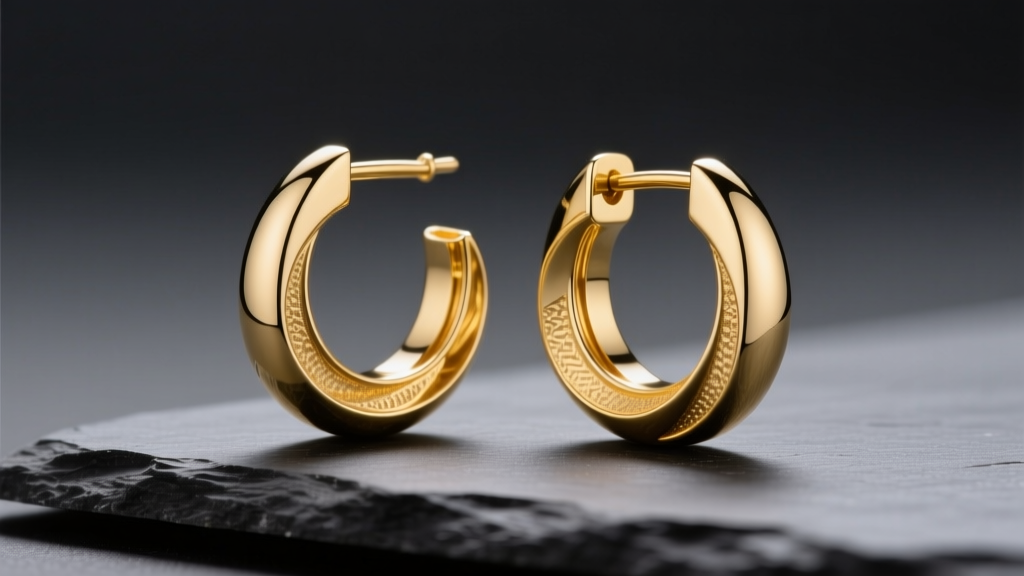
Half circle earrings—often referred to as half-moons, semi-circles, or half-hoops—are a sophisticated staple in modern jewelry wardrobes. Their architectural geometry offers a bold, contemporary look that bridges the gap between a classic stud and a statement hoop. However, their unique structural design, particularly the flat interior wall and specialized hinge mechanisms, makes them uniquely susceptible to trapped debris, sebum buildup, and mechanical wear. If you want to preserve the luster and structural integrity of your favorite pairs, a generic jewelry cleaning approach simply will not suffice.
In this comprehensive guide, we break down the exact protocols for maintaining half circle earrings, addressing the specific vulnerabilities of their D-shaped cross-sections and delicate clasps. Whether your pair is crafted from solid 14k gold, sterling silver, or features delicate gemstone inlays, these expert-level care routines will keep them looking pristine.
The Unique Anatomy of Half Circle Earrings
To understand how to clean half circle earrings, you must first understand their anatomy. Unlike full hoops made from rounded wire, many half circle earrings feature a "D-shape" cross-section. This means the exterior is domed and polished, while the interior wall resting against your earlobe is completely flat. This flat surface acts as a magnet for liquid foundations, dead skin cells, and natural sebum. Furthermore, because the earring does not complete a full 360-degree rotation, the hinge and clasp bear 100% of the structural tension when worn, making the mechanical joints highly sensitive to microscopic debris.
Daily Maintenance vs. Deep Cleaning Routines
Establishing a bifurcated care routine is critical for longevity. Daily maintenance prevents the compounding of oils, while deep cleaning restores the metal's optical reflectivity.
The Daily Wipe-Down
After every wear, gently wipe the flat interior wall and the post with a clean, dry microfiber cloth. This takes less than ten seconds and removes the acidic sweat and cosmetic residues that accelerate metal oxidation. Never use tissue paper or cotton balls, as the loose fibers will snag on the clasp mechanism and leave behind lint that attracts more dirt.
The Bi-Weekly Deep Clean
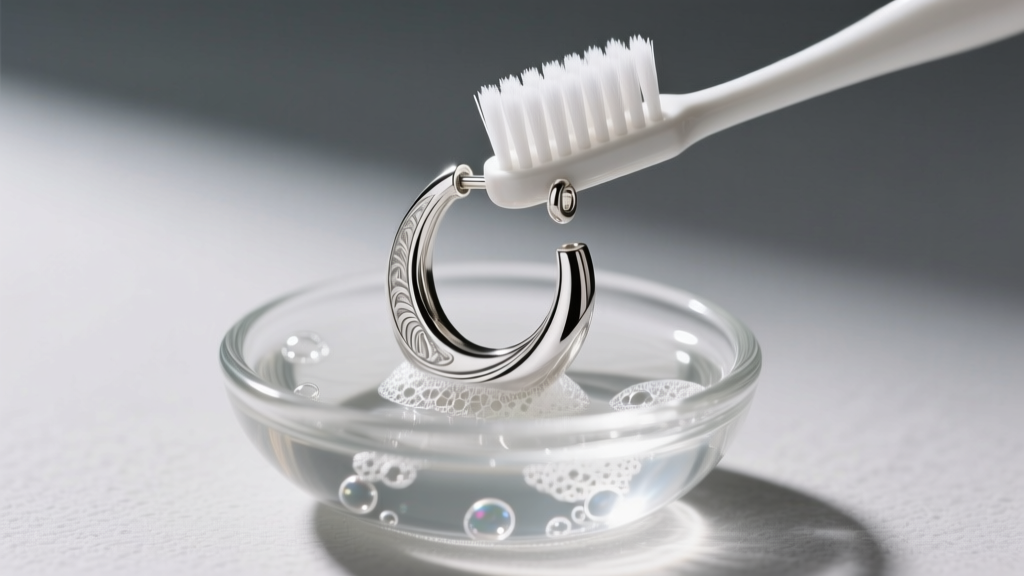
Every two to three weeks, your half circle earrings require a deep clean. This involves a warm water bath, a specialized surfactant, and targeted mechanical agitation to clear the hinge joints. The exact cleaning agents you use must be strictly matched to your earring's material composition.
Material-Specific Cleaning Protocols
Using the wrong chemical agent can permanently strip plating or pit solid metals. Below is a definitive matrix for cleaning the most common materials used in half-moon earring designs.
| Material Grade | Safe Cleaning Agents | Strictly Avoid | Drying Method |
|---|---|---|---|
| 14k / 18k Solid Gold | Warm water, mild dish soap (e.g., Dawn), ammonia-free jewelry dip | Bleach, chlorine, toothpaste | Microfiber cloth, air dry |
| Sterling Silver (925) | Specialized silver polish, baking soda paste (for heavy tarnish only) | Salt water, rubber bands, hard bristles | Anti-tarnish polishing cloth |
| Gold Vermeil / Plated | Damp microfiber cloth, mild soapy water (brief exposure only) | Ultrasonic cleaners, liquid dips, alcohol | Air dry, gentle patting |
| Platinum | Mild dish soap, warm water, commercial platinum cleaners | Abrasive polishing pads | Lint-free cloth |
According to the Jewelers of America, gold vermeil (a thick layer of gold over sterling silver) requires exceptional care. Submerging vermeil half circle earrings in liquid solutions for more than a few minutes can cause the underlying silver to oxidize, leading to blistering or flaking of the gold layer. Always limit liquid exposure for plated pieces to a quick, damp wipe.
Tackling the Hinge and Flat-Back Debris Trap
The most common point of failure in half circle earrings is the clasp. Many designs utilize a "hinged snap" or "saddle" clasp. Over time, the microscopic groove that receives the post becomes packed with hardened sebum and cosmetic powders. When this happens, the earring loses its satisfying "click" and the post may slip out during wear, leading to lost jewelry.
Step-by-Step Hinge Cleaning
- Step 1: Mix a solution of warm water and a single drop of mild dish soap.
- Step 2: Dip a soft-bristled baby toothbrush into the solution and gently agitate the hinge joint.
- Step 3: To clean the receiving groove of the snap clasp, use a wooden toothpick or a 0.4mm interdental brush. Never use a metal pin or sewing needle, as this will scratch the interior of the groove, creating micro-abrasions that trap even more dirt in the future.
- Step 4: Rinse under a gentle stream of lukewarm water, ensuring the drain is securely plugged.
Expert Warning on Gauge Sizes: Most half circle earrings feature an 18-gauge (1.0mm) or 20-gauge (0.8mm) post. These are relatively thin wires. When cleaning the post or snapping the clasp shut, never apply lateral bending pressure. Repeated bending to "clean" the wire will cause metal fatigue, eventually snapping the post cleanly off at the hinge base.
Gemstone Inlays and Channel Setting Care
Many half circle earrings feature diamonds, sapphires, or cubic zirconia set into a curved channel along the dome. These channel settings are notorious for accumulating hand lotion and soap scum beneath the girdle of the stones, which severely diminishes their light return and sparkle.
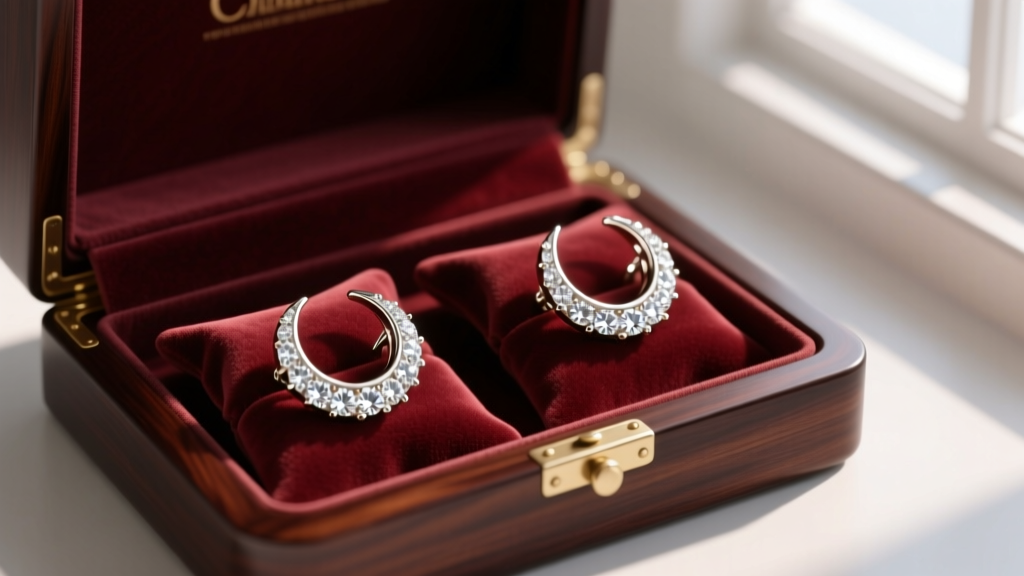
For diamond and sapphire half-moon earrings, you can safely use a soft brush to clean beneath the stones. However, the Gemological Institute of America (GIA) strongly warns against using ultrasonic cleaners or harsh chemicals on porous or fracture-filled gemstones. If your half circle earrings feature opals, pearls, emeralds, or turquoise inlays, avoid liquid submersion entirely. Instead, use a slightly damp, lint-free cotton swab to carefully trace the edges of the gemstone settings, immediately drying the area with a separate dry swab.
Proper Storage to Prevent Warping and Scratching
How you store your half circle earrings is just as important as how you clean them. Because of their asymmetrical weight distribution and flat interior walls, improper storage can lead to severe cosmetic and structural damage.
- Avoid Face-Down Storage: Never toss half circle earrings face-down onto a hard dresser or into a communal jewelry dish. The domed exterior is highly prone to scratching, and the weight of the earring pressing against a hard surface can dull the high-polish finish.
- Use Individual Pouches: Store each pair in a soft, anti-tarnish flannel or velvet pouch. This prevents the sharp post of one earring from scratching the dome of another.
- Hang When Possible: If your jewelry box features a hanging rack, hang half circle earrings by their post or hinge. This prevents them from being crushed by heavier items and keeps the clasp mechanism free from dust accumulation.
Common Mistakes That Ruin Half-Moon Designs
Even well-intentioned jewelry owners make critical errors when caring for their pieces. Avoid these three common pitfalls:
- Wearing Them in the Shower: While solid gold can survive water, the hard water minerals and harsh sulfates in shampoos will create a cloudy, irreversible film on the flat interior wall of the earring, dulling the metal and irritating sensitive earlobes.
- Using Toothpaste for Polishing: Toothpaste contains hydrated silica, an abrasive that is harder than gold and silver. Scrubbing your half circle earrings with toothpaste will leave thousands of micro-scratches, permanently destroying the mirror finish.
- Forcing a Stuck Clasp: If the snap clasp refuses to close, do not squeeze it with pliers or force it with excessive thumb pressure. The hinge is likely obstructed by debris. Return to the interdental brush cleaning method outlined above to clear the obstruction safely.
By respecting the unique geometry and mechanical nuances of half circle earrings, you can ensure they remain a flawless, shining fixture in your collection for decades. Consistent, gentle care is always superior to aggressive, reactive cleaning.


