Green Gemstone Earrings: A Material & Durability Comparison Guide
Compare emerald, tsavorite, peridot, and jade for green gemstone earrings. Discover Mohs hardness, toughness, and the best metals for daily wear.

The Science of Green: Beyond Just Color
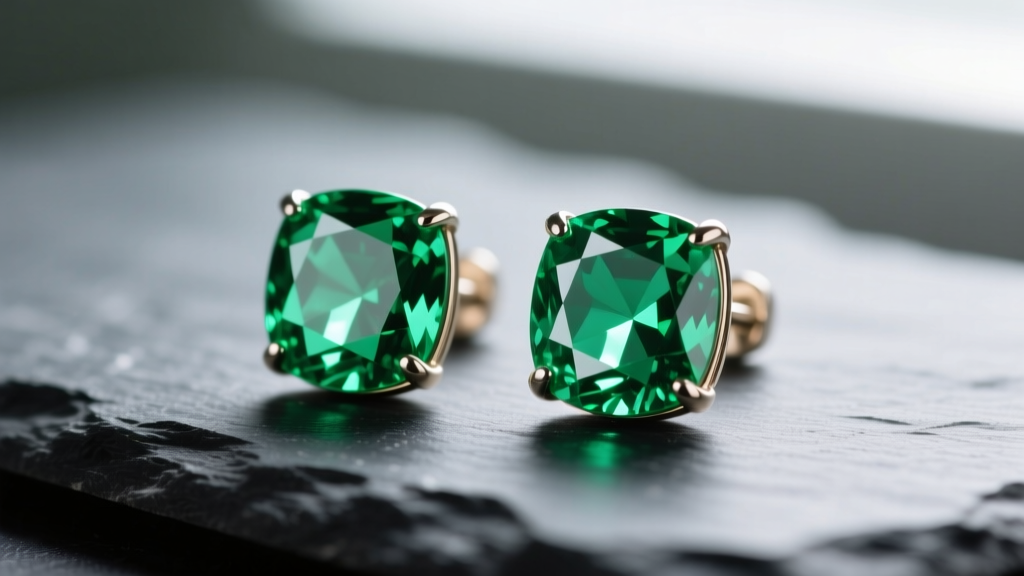
When selecting green gemstone earrings, consumers are often captivated by the vibrant hues but overlook the complex mineralogical properties that dictate how these stones will perform over time. The color green in gemology is primarily driven by three trace elements: chromium, vanadium, and iron. While chromium produces the most saturated and highly valued greens (as seen in emeralds and tsavorites), iron-driven greens (like peridot) offer a more yellowish, earthy tone. Understanding the chemical composition is the first step in evaluating material durability, especially for ear jewelry, which is subject to unique biomechanical stresses, accidental impacts, and constant exposure to hair care chemicals.
According to the Gemological Institute of America (GIA), a gemstone's suitability for daily wear is not determined by a single metric. Instead, it requires a holistic evaluation of hardness, toughness, and stability. For green gemstone earrings, this distinction is critical. A stone might resist scratching but shatter upon impact, or it might be incredibly tough but highly sensitive to the heat of a jeweler's torch during resizing or repair.
Hardness vs. Toughness: The Earring Durability Matrix
It is a common misconception that 'hardness' equates to overall durability. In gemology, hardness (measured on the Mohs scale) refers strictly to a material's resistance to scratching and abrasion. Toughness, conversely, measures a gem's resistance to breaking, chipping, or cleaving when struck. Earrings, particularly dangles and drops, are highly susceptible to impact against hard surfaces, making toughness a paramount consideration.
| Gemstone | Mohs Hardness | Toughness | Cleavage | Treatment Status | Best Earring Style |
|---|---|---|---|---|---|
| Emerald | 7.5 - 8.0 | Poor to Fair | Distinct | Almost always oiled/resin | Protected Studs, Halos |
| Tsavorite Garnet | 7.0 - 7.5 | Good | None | Typically untreated | Bezel Studs, Huggies |
| Peridot | 6.5 - 7.0 | Fair | Poor | Usually untreated | Channel-set Hoops |
| Jadeite | 6.5 - 7.0 | Exceptional | None (interlocking) | Varies (A, B, C jade) | Carved Drops, Hoops |
| Green Sapphire | 9.0 | Excellent | None | Often heat-treated | Prong Studs, Dangles |
Deep Dive: Top Green Gemstones for Ear Jewelry
Emerald (Beryl): The High-Maintenance Royalty
Emeralds are prized for their deep, velvety green, but they are notoriously fragile. The presence of natural inclusions—poetically referred to as 'jardin' (garden)—creates internal stress points. Furthermore, nearly 90% of emeralds on the market are treated with cedar oil or synthetic resins to mask surface-reaching fractures. If you choose emerald green gemstone earrings, avoid ultrasonic and steam cleaners entirely, as the vibrations and heat will force the oils out, leaving the stone looking cloudy and heavily fractured. Opt for secure bezel settings or halo designs that protect the vulnerable corners of the emerald cut.
Tsavorite Garnet: The Untreated Powerhouse
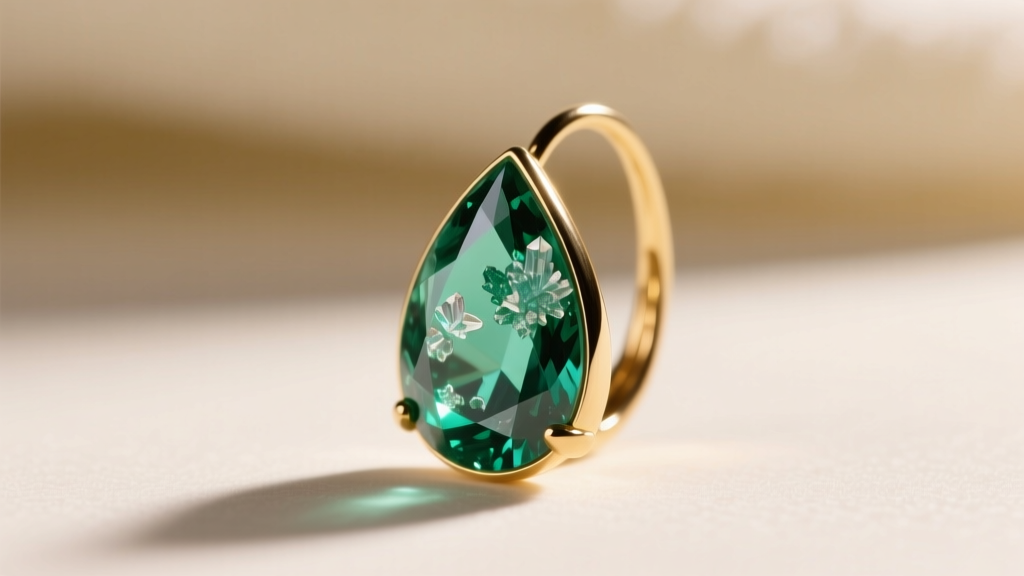
Discovered in the 1960s near the Tsavo National Park, tsavorite garnet offers a vivid, electric green that rivals emerald but without the structural baggage. Tsavorite is almost never treated, meaning its brilliance and color are entirely natural. With a Mohs hardness of 7 to 7.5 and no cleavage planes, it is significantly more resistant to chipping than emerald. Tsavorite's high refractive index also means it sparkles intensely even in low light, making it an exceptional choice for small, everyday stud earrings or pave-set huggie hoops where maximum light return is desired.
Peridot: The Birefringent Beauty
Peridot is one of the few gemstones that occurs in only one color: green. Its distinct olive-to-lime hue is driven by iron. While beautiful, peridot has a Mohs hardness of 6.5 to 7, making it susceptible to scratching from everyday dust (which contains quartz, hardness 7). Additionally, peridot exhibits strong birefringence (double refraction). When looking through a large peridot gem, the back facet edges will appear doubled. For earrings, peridot is best utilized in protective settings like channel-set hoops or low-profile bezels, and it must never be subjected to rapid temperature changes, which can cause thermal shock and fracturing.
Jade (Jadeite and Nephrite): The Indestructible Carving
While its Mohs hardness is relatively low (6.5 to 7), jade possesses exceptional toughness due to its interlocking fibrous crystal structure. This makes jade incredibly resistant to chipping and shattering, ideal for heavy, carved drop earrings or solid jade hoops that might accidentally strike a desk or mirror. When purchasing jade earrings, always verify the treatment grade: 'Type A' is natural and untreated, while 'Type B' (acid-bleached and polymer-impregnated) and 'Type C' (dyed) will degrade over time and lose their luster.
Ear Lobe Biomechanics and Setting Mechanics
The physical weight of green gemstone earrings directly impacts both the comfort of the wearer and the longevity of the piercing. A standard earring post is 20-gauge (0.81mm) or 18-gauge (1.02mm). When setting dense materials like a 4-carat tsavorite or a heavy carved jadeite drop, the center of gravity shifts away from the earlobe. This causes the earring to droop forward, which not only looks unflattering but places uneven stress on the piercing tract, potentially leading to migration or tearing over time.
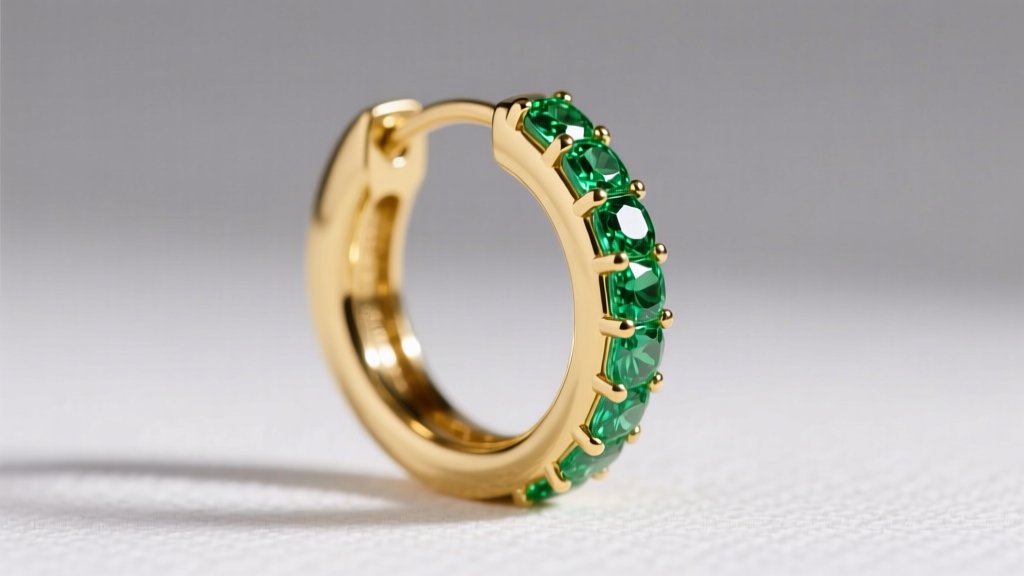
To counteract this, jewelers employ specific mechanical solutions:
- Jumbo Friction Backs or La Pousette Backs: These provide a wider surface area against the back of the earlobe, distributing the weight of heavy green gemstone studs more evenly and preventing droop.
- Omega or Clip-Backs: For heavy emerald or jade dangles, an omega back clips onto the earlobe while the post goes through the piercing, transferring the majority of the weight to the surface of the ear rather than the delicate piercing hole.
- Counterbalancing: In custom drop earrings, designers will often incorporate lighter materials (like hollow gold beads or enamel) at the top of the drop to shift the center of gravity closer to the earlobe.
Metal Pairings and Optical Enhancements
The metal chosen for green gemstone earrings dramatically alters the visual perception of the stone's color. Yellow gold (14k or 18k) enhances the warm, yellowish-green undertones of peridot and lighter emeralds, creating a rich, vintage aesthetic. Conversely, white gold or platinum provides a high-contrast backdrop that makes the cool, bluish-green hues of tsavorite and green sapphire appear more vivid and saturated.
"When setting highly included stones like emeralds, we prefer 18k yellow gold not just for the color synergy, but because 18k gold is slightly softer and more malleable than 14k or platinum. This allows the jeweler to push the bezel or prongs over the stone with less downward pressure, reducing the risk of fracturing the gem during the setting process." — Master Bench Jeweler
Care, Cleaning, and Maintenance Protocols
Maintaining the brilliance of your green gemstone earrings requires strict adherence to material-specific cleaning protocols. The universal safest method for all green gems is a soak in lukewarm water with a few drops of mild, phosphate-free dish soap, followed by gentle agitation with a baby-soft toothbrush. However, specific stones require strict prohibitions:
- Never use Ultrasonic Cleaners on: Emeralds (will strip oils), Peridot (can exacerbate internal stress fractures), or Jade (can damage polymer fillers in Type B/C jade).
- Never use Steam Cleaners on: Emeralds and Peridot, due to extreme thermal shock risks.
- Safe for Ultrasonic/Steam: Green Sapphire and Tsavorite Garnet (provided they do not have significant liquid inclusions or surface-reaching fractures).
For comprehensive data on specific gemstone care and stability, refer to the GIA Emerald Care Guide and the GIA Tsavorite Profile. By understanding the distinct material properties of these gems, you can confidently select green gemstone earrings that offer both breathtaking beauty and lifelong durability.


