Which Earring Is Gay? Debunking the Myth & 2026 Style Guide
Wondering which earring is gay? We trace the history of the right-ear myth and share a 2026 buying guide for modern queer-coded jewelry styles.

The Origins of the 'Gay Earring' Myth
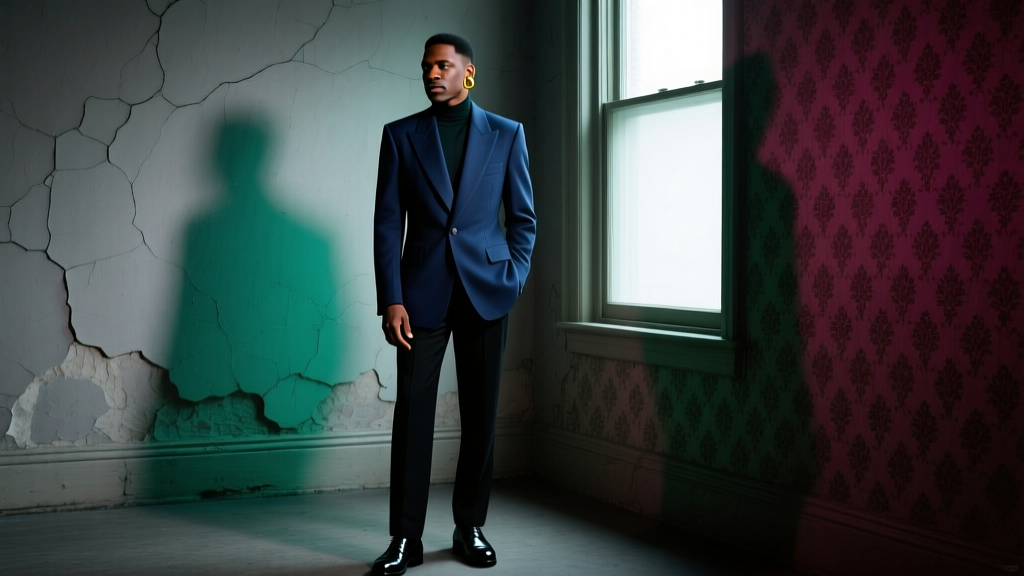
If you have ever found yourself searching 'which earring is gay,' you are tapping into a piece of cultural history that dates back over half a century. The idea that a specific ear piercing signals sexual orientation is a relic of the 1970s and 1980s. During this era, LGBTQ+ individuals faced severe societal marginalization, necessitating subtle, covert ways to identify one another in public spaces. This gave rise to the 'hanky code' and, subsequently, the piercing code.
The popular schoolyard rhyme of the late 20th century—'left is right, and right is wrong'—was a mainstream (and often derogatory) interpretation of a quiet subcultural signal. In the 1970s, a single piercing in the right earlobe was sometimes used by gay men as a subtle nod to their identity, while the left ear was considered the 'straight' default. However, this was never a universal rule. As noted by cultural historians and resources like the GLAAD Media Reference Guide, queer signaling has always been highly regional and subject to rapid evolution. What worked as a signal in 1980s San Francisco meant absolutely nothing in 1980s London or rural Texas.
Why the 'Right Ear' Rule is Dead in 2026
To put it bluntly: in 2026, there is no such thing as a 'gay earring' side. The binary concept of left-versus-right signaling completely collapsed in the late 1990s and early 2000s. Pop culture icons, musicians, and athletes began piercing both ears, or exclusively the right ear, entirely divorced from sexual orientation. Today, gender-fluid fashion and the mainstreaming of body modification have rendered the old codes obsolete. Straight men wear right-ear hoops; queer men wear bilateral studs; non-binary individuals sport complex cartilage curations. The side of your head you choose to pierce now communicates nothing about your sexuality and everything about your personal aesthetic and anatomical preferences.
Modern Queer Coding: What Actually Signals Identity Today
If the 'right ear' myth is dead, how does the LGBTQ+ community express identity through jewelry today? Modern queer coding in jewelry is less about covert signals and more about intentional subversion, gender-fluidity, and community motifs.
Intentional Asymmetry and Curation
Rather than a single lobe piercing, modern queer aesthetics often embrace intentional asymmetry. This might mean a heavily curated left ear featuring an industrial bar, a daith, and a conch, paired with a single, bold statement piece on the right. Asymmetry challenges traditional, symmetrical standards of classic menswear and womenswear, making it a cornerstone of gender-neutral and queer styling.
Motifs and Subversive Materials
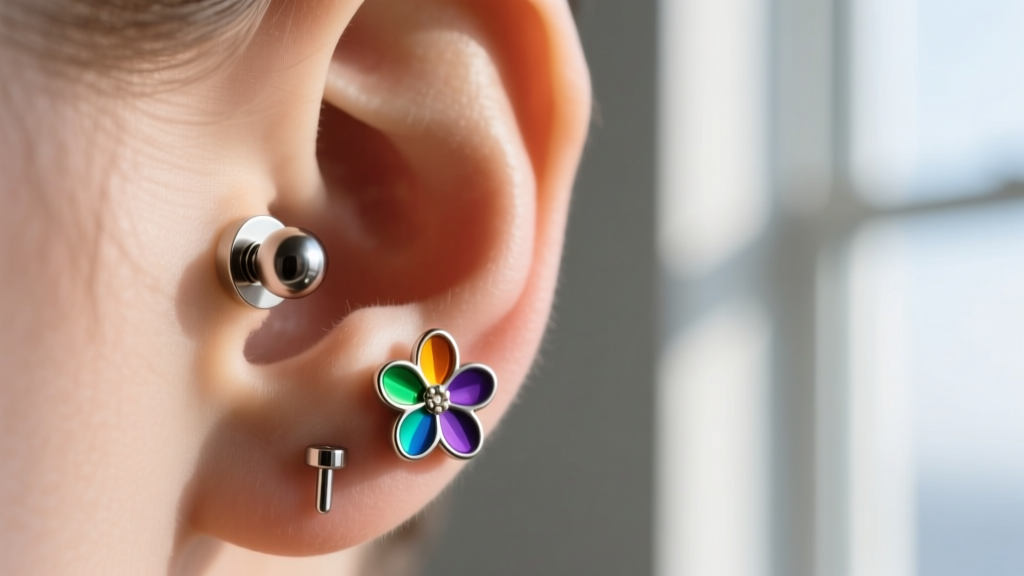
Subtle signifiers have replaced the hanky code. You will often see queer individuals incorporating specific motifs: the lambda symbol, subtle pride flag color palettes, or hardware-inspired pieces that blend industrial grit with delicate gemstones. Mixing traditionally 'masculine' hardware (like thick titanium chains or industrial barbells) with 'feminine' elements (like pear-cut opals or pearl ends) is a hallmark of modern queer jewelry styling.
The 2026 Buying Guide: Materials and Styles for the Modern Ear
When shopping for earrings that align with a modern, gender-fluid, or queer-coded aesthetic, the focus shifts from 'which ear' to 'what quality.' Here is what you need to look for when investing in pieces that will last.
1. Demand Implant-Grade Titanium (ASTM F-136)
The foundation of any good ear curation is the material. Avoid 'surgical steel' or 'stainless steel,' which contain nickel and can cause contact dermatitis. According to the Association of Professional Piercers, the gold standard for body jewelry is ASTM F-136 implant-grade titanium. It is completely nickel-free, lightweight, and biocompatible. For queer individuals who may be exploring body modification as a form of gender expression, starting with high-quality titanium ensures the healing process is safe and comfortable.
2. Understand Threadless (Press-Fit) Mechanics
For curated ears, threadless jewelry is a game-changer. Unlike internally threaded jewelry that screws together, threadless jewelry uses tension. The decorative end has a tiny pin that you slightly bend before inserting it into the hollow post. This tension holds the piece securely in place. Threadless ends are incredibly easy to swap out, allowing you to change your aesthetic from 'minimalist hardware' to 'floral opal' in seconds without removing the post from your piercing.
3. The Magic of Titanium Anodizing
If you want to incorporate pride colors without relying on cheap, easily chipped enamel, look for anodized titanium. Anodizing is an electrochemical process that changes the surface oxide layer of the titanium, altering how light reflects off it to create vibrant, permanent colors. You can find threadless ends anodized in exact shades of the transgender, bisexual, or pansexual pride flags. Because the color is structural and not a plating, it will never flake off into your piercing.
Decoding Modern Queer Ear Aesthetics
Use this framework to decide which styles align with your personal expression.
| Style Category | Aesthetic Vibe | Best Placement | Material Recommendation |
|---|---|---|---|
| Industrial Barbells | Edgy, alternative, punk-adjacent | Upper cartilage (helix to forward helix) | ASTM F-136 Titanium (Black or Gold PVD) |
| Seamless Segment Rings | Minimalist, gender-neutral, clean | Daith, Rook, or Helix | Niobium or High-Polish Titanium |
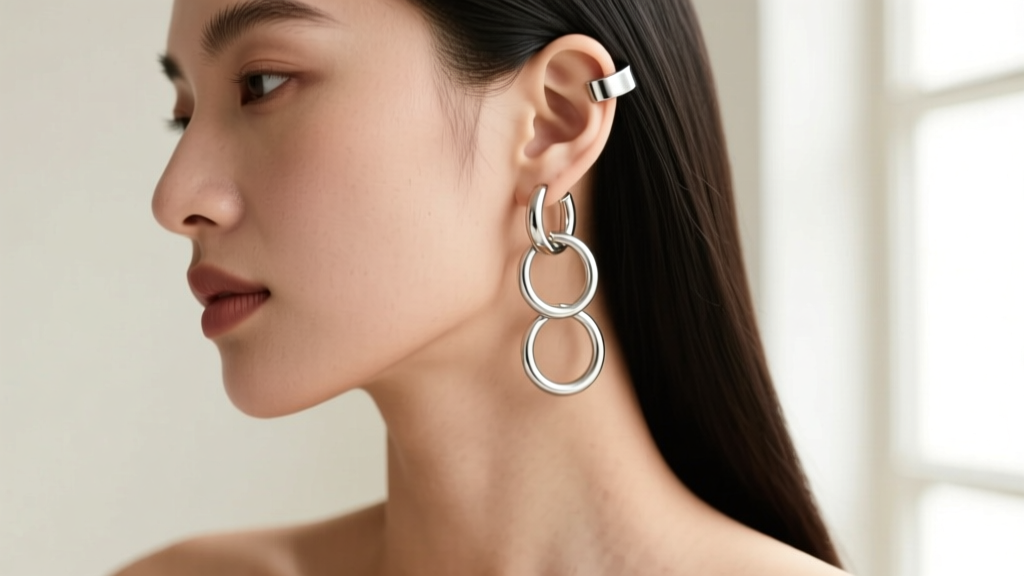
| Ear Cuffs (Non-Pierced) | Temporary, avant-garde, fluid | Mid-ear helix or conch ridge | Sterling Silver or Brass |
| Threadless Gem Ends | Subversive sparkle, high-femme/glam | Lobe, Tragus, or Conch | Anodized Titanium with Lab-Grown Gems |
How to Build a Gender-Fluid Ear Curation
Building a curated ear is a marathon, not a sprint. If you are stepping into a piercing studio to build a look that reflects your queer or gender-fluid identity, follow these steps:
- Map the Anatomy: Not all ears can support every piercing. A reputable piercer will examine your ear's ridges and folds to determine if you have the anatomy for a rook, daith, or industrial. Never force a piercing that your anatomy cannot support.
- Space It Out: Healing multiple cartilage piercings simultaneously can overwhelm your immune system and lead to hypertrophic scarring (irritation bumps). Stick to a maximum of two or three new piercings per session, and wait until they are fully healed (which can take 9 to 12 months for cartilage) before adding more.
- Mix Scales and Textures: A dynamic curation plays with proportions. Pair a chunky 16-gauge huggie hoop in your lobe with a delicate 14-gauge threadless star in your helix. The contrast between heavy hardware and fine jewelry is a staple of modern queer styling.
'Jewelry is the most intimate form of self-expression. When we strip away the archaic rules of the past, we are left with the freedom to adorn our bodies in ways that tell our truest stories.' — Modern Body Modification Aesthetics Journal
Final Thoughts: Wear What You Want
The question 'which earring is gay?' belongs in a museum of 20th-century pop culture, not in your jewelry box. In 2026, the only rule in ear styling is intentionality. Whether you are drawn to the industrial edge of a black titanium barbell, the subtle pride signaling of an anodized conch stud, or the classic elegance of a gold hoop, your earrings are a reflection of your unique identity. Invest in high-quality, implant-grade materials, master the art of threadless jewelry, and curate an ear that makes you feel powerful, authentic, and unapologetically yourself.


