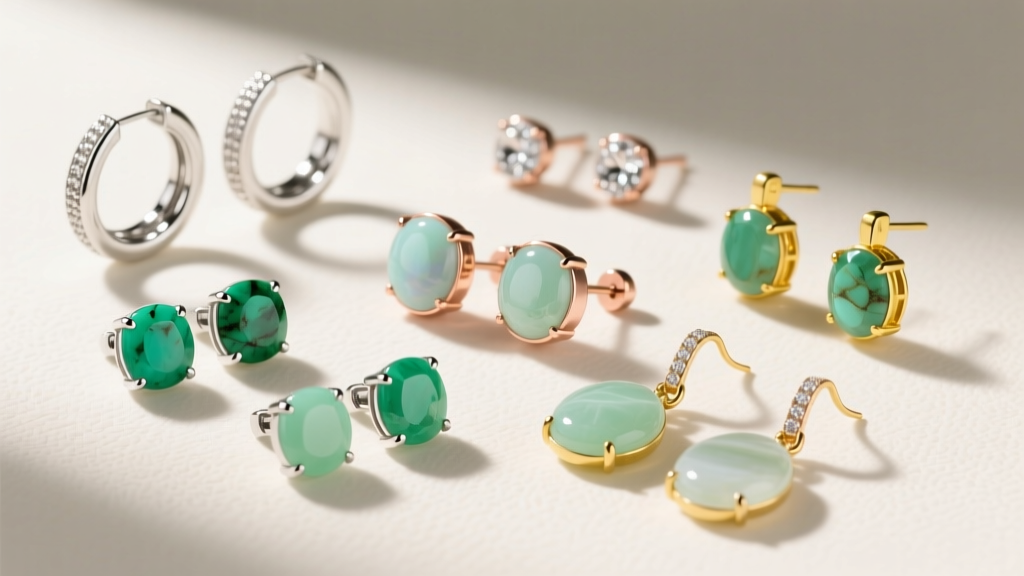
Choosing the Right Earring Display Holder for Fine Jewelry Care
Discover the technical specs of archival-grade earring display holders. Learn how material choices prevent tarnish and protect delicate earring posts.

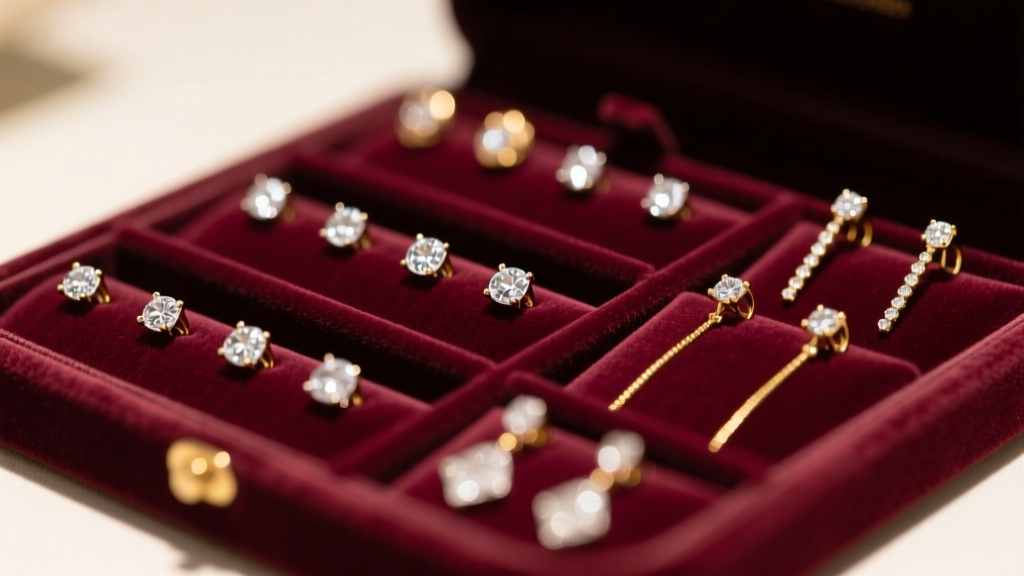
The Hidden Dangers of Improper Earring Storage
Fine jewelry represents a significant material and emotional investment, yet the micro-environment of an earring display holder dictates its long-term structural and chemical stability. While most consumers view an earring display holder merely as an organizational tool or a retail prop, serious collectors and archivists understand it as a critical preservation system. Standard commercial displays often accelerate the very degradation they are meant to prevent.
The most common failure mode in inexpensive displays is chemical off-gassing. Many mass-market holders utilize Polyvinyl Chloride (PVC) or low-grade synthetic velvets treated with formaldehyde-based sizing agents. Over time, these materials release hydrogen chloride gas and acidic vapors. When trapped in a closed jewelry box or display case, these vapors react with the copper alloys in 14k and 18k gold, and rapidly accelerate the formation of silver sulfide on sterling silver pieces. Furthermore, poorly routed acrylic tension slots can easily warp delicate 20-gauge (0.81mm) and 22-gauge (0.64mm) wire posts, leading to metal fatigue and eventual snapping at the solder joint.
Material Science: What Makes an Archival-Grade Earring Display Holder?
To qualify as archival-grade, an earring display holder must be constructed from chemically stable, inert polymers or natural fibers that have been rigorously tested for off-gassing. The Conservation Wiki outlines strict parameters for museum-level storage, which translate directly to high-end jewelry preservation.
Safe Polymers vs. Hazardous Plastics
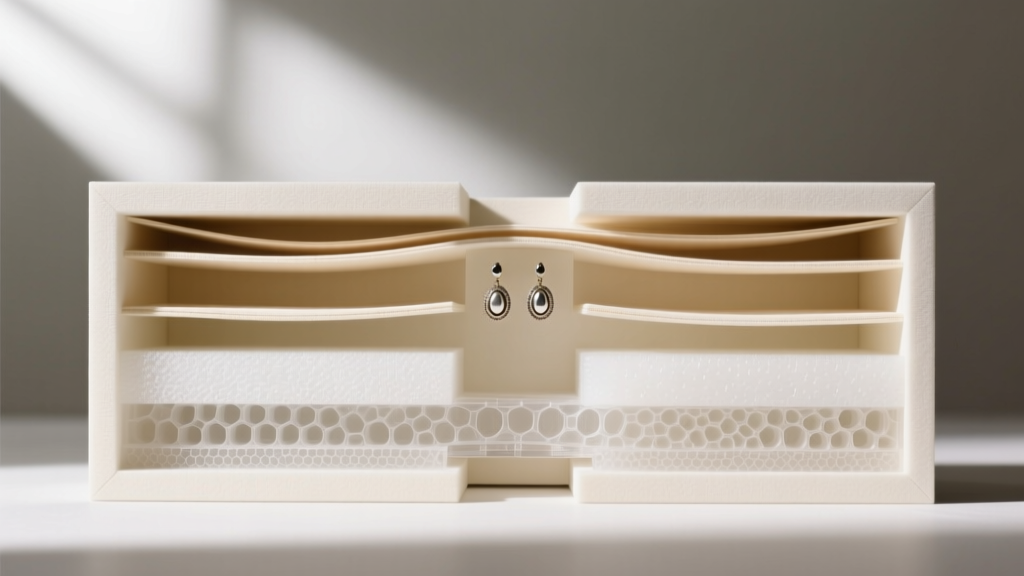
When selecting a clear acrylic earring display holder, you must verify the specific polymer grade. Standard acrylic (Polymethyl Methacrylate or PMMA) is generally safe and chemically stable. However, you must strictly avoid displays made from PVC, polycarbonate (which can release bisphenol-A), or recycled plastics with unknown plasticizers. For opaque or padded holders, the internal foam must be Polyethylene (PE) or Polypropylene (PP), not Polyurethane (PU), which degrades and turns acidic as it ages.
Anti-Tarnish Linings and Sacrificial Anodes
For silver and oxidized metals, the lining of the earring display holder is paramount. Premium holders utilize Pacific Silvercloth or similar tarnish-preventive fabrics. These fabrics are embedded with microscopic silver nanoparticles that act as sacrificial anodes. The hydrogen sulfide and other corrosive gases in the ambient air react with the nanoparticles in the cloth rather than your valuable earrings. According to the Gemological Institute of America (GIA), storing silver in treated, airtight environments is the most effective way to halt the tarnishing process without requiring abrasive polishing that removes microscopic layers of precious metal.
Structural Load-Bearing: Matching the Holder to the Earring Type
An expert-level earring display holder is not one-size-fits-all. The physical architecture of the holder must support the specific gravity, center of mass, and structural vulnerabilities of different earring categories.
Threaders and Fishhooks: Tension vs. Gravity
Threader earrings and long fishhook wires require vertical drop channels rather than horizontal tension slots. Forcing a 22-gauge gold threader through a tight, horizontally routed foam slit creates continuous lateral stress. Over months of storage, this stress causes the wire to adopt a permanent, unnatural curve. Archival holders designed for threaders feature open-top, deep vertical channels (minimum 3 inches deep) that allow the earring to hang via gravity, keeping the post perfectly straight.
Heavy Statement Drops and Chandeliers
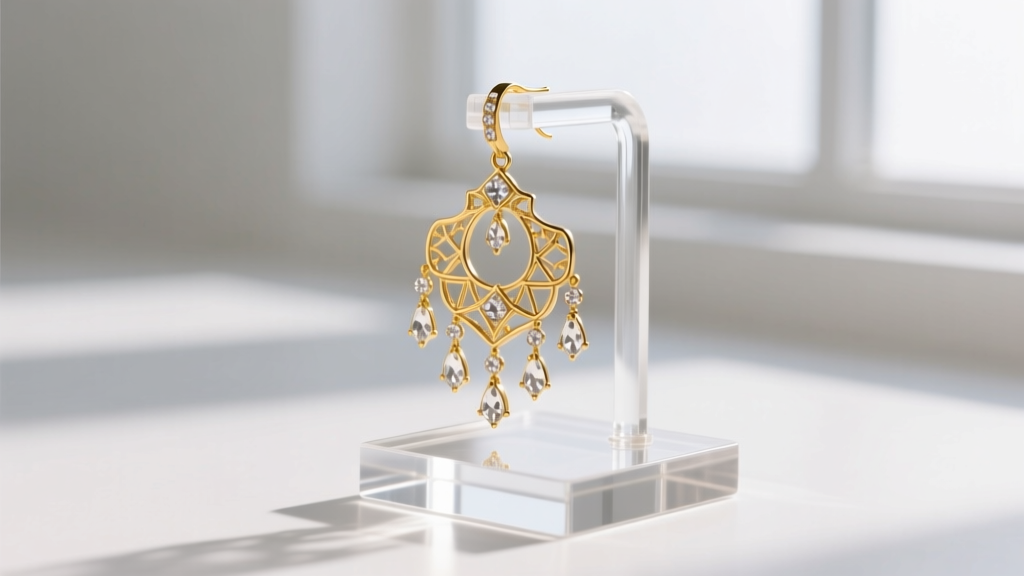
Chandelier earrings and heavy gemstone drops present a unique center-of-gravity challenge. When hung vertically on standard wire trees or thin acrylic cards, the top-heavy weight pulls the post downward, bending the wire at the earring's clutch or backing point. High-end display systems solve this by utilizing horizontal, lay-flat velvet pads with recessed channels for the posts. This distributes the weight of the gemstones across the padded surface, ensuring zero gravitational stress on the metal findings.
Huggies and Cartilage Cuffs: Foam Density Requirements
Huggies and clicker cartilage cuffs rely on precise hinge and clasp mechanisms. If stored loosely in a box, they can crush one another. If forced into a display slot that is too narrow, the continuous outward pressure can weaken the hinge pin or warp the clicker closure, leading to a failure where the earring no longer snaps shut securely. Display holders meant for cuffs must utilize high-density, closed-cell polyethylene foam (typically rated at 2 lbs per cubic foot) with precisely die-cut slots that accommodate the exact millimeter width of the closed hoop without applying lateral tension.
Comparative Analysis: Commercial vs. Collector-Grade Holders
Understanding the market landscape helps in allocating your budget toward preservation rather than mere aesthetics. Below is a technical comparison of common earring display holder materials found in the market.
| Material Type | Archival Safety | Typical Price Range | Best Application | Estimated Lifespan |
|---|---|---|---|---|
| Standard Acrylic (PMMA) | High (Inert) | $15 - $40 | Studs, lightweight hoops | 10+ Years |
| PVC-Coated Velvet | Very Low (Off-gassing) | $10 - $25 | Short-term retail display only | 1 - 2 Years |
| Polyethylene (PE) Foam | High (Inert) | $50 - $120 | Cartilage cuffs, huggies, threaders | 15+ Years |
| Pacific Silvercloth Lined | Excellent (Active Protection) | $150 - $400+ | Sterling silver, oxidized metals | 5 - 7 Years (Cloth replacement) |
Environmental Controls: Humidity and UV Mitigation
The physical holder is only half the equation; the ambient environment within the display case completes the preservation system. For collectors displaying their pieces in open rooms or near windows, UV radiation is a silent destroyer. Prolonged UV exposure can fade porous organic gemstones like turquoise, coral, and pearls, and can degrade the epoxy resins used in some modern jewelry settings.
If your earring display holder is housed within a vitrine or acrylic case, ensure the acrylic is graded OP3 or higher. OP3 UV-filtering acrylic blocks up to 98% of UV light up to 380 nanometers while maintaining optical clarity. Additionally, humidity control is vital. High humidity accelerates galvanic corrosion, especially in earrings featuring mixed metals (e.g., gold prongs set in a silver base). Incorporate indicating silica gel packets (which change color when saturated) into the hidden compartments of your display base to maintain a relative humidity (RH) level between 40% and 50%, the ideal range for mixed-media jewelry preservation.
Expert Maintenance Protocols for Your Display System
Even archival-grade earring display holders require maintenance to prevent the transfer of contaminants to your jewelry. Never use commercial glass cleaners, ammonia, or alcohol-based solvents to clean acrylic or foam holders. These chemicals can cause micro-crazing (tiny surface cracks) in acrylic and break down the cellular structure of PE foam.
- Acrylic Cleaning: Use a dedicated plastic cleaner (like Novus Plastic Clean) and a non-abrasive microfiber cloth. Wipe in straight lines, never in circles, to prevent micro-scratches that cloud the display.
- Foil and Foam Cleaning: Use a soft-bristled brush or a low-suction vacuum with a mesh screen attachment to remove dust and dead skin cells that accumulate in the display slots.
- Silvercloth Recharging: If using a Pacific Silvercloth lined holder, never wash the fabric. Washing removes the embedded silver nanoparticles. When the cloth turns a dark, gunmetal grey, it has reached its absorption capacity and must be replaced to maintain anti-tarnish efficacy.
"The true cost of a jewelry collection is not just the initial purchase price, but the ongoing cost of its preservation. An earring display holder should be viewed as a piece of conservation equipment, not just a decorative accessory."
By prioritizing inert materials, structural load distribution, and active environmental controls, you transform a simple earring display holder into a professional-grade archival system. This ensures that every stud, hoop, and chandelier remains in pristine, wearable condition for decades to come.