Troubleshooting Square Cubic Zirconia Earrings Issues
Learn how to fix cloudy stones, loose prongs, and bent posts on your square cubic zirconia earrings with our expert troubleshooting guide.

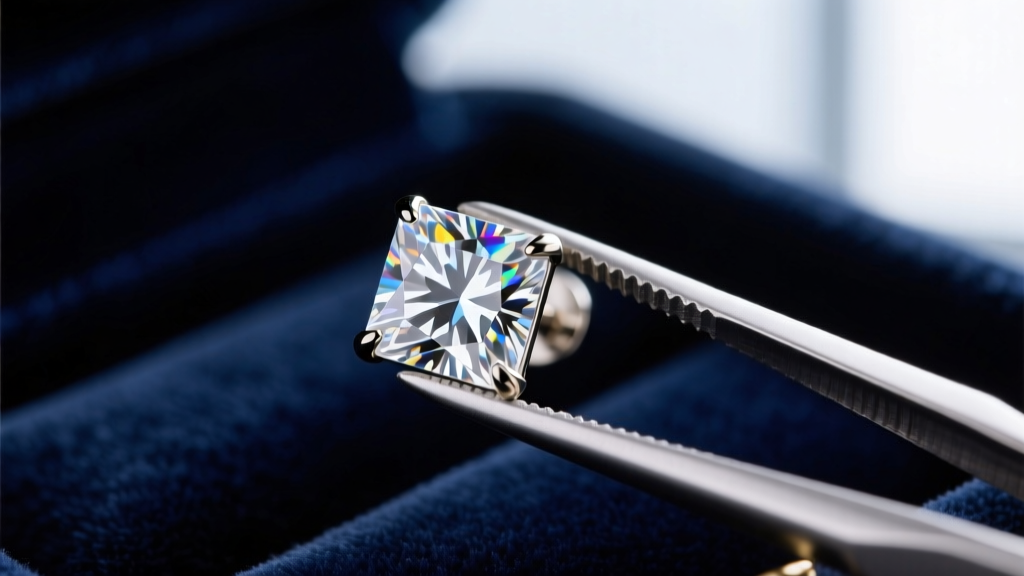
Square cubic zirconia earrings—encompassing princess, asscher, cushion, and radiant cuts—offer the geometric brilliance of high-end diamonds at a fraction of the cost. However, their sharp corners and the physical properties of CZ make them uniquely prone to specific failure modes. Whether your stones are turning cloudy, the prongs are snagging on your hair, or the posts are bending, this expert troubleshooting guide will help you diagnose and fix the most common issues.
The Geometry Problem: Why Square Cuts Snag and Chip
Unlike round brilliant cuts, square cuts feature 90-degree corners. These sharp points are the most vulnerable areas of any gemstone. According to the Gemological Institute of America (GIA), while cubic zirconia ranks at 8 to 8.5 on the Mohs hardness scale, it can still chip or fracture if subjected to sharp impacts on its corners.
V-Prongs vs. Standard Prongs
The most common manufacturing flaw in budget-friendly square CZ earrings is the use of standard round prongs on sharp corners. Round prongs fail to protect the 90-degree tips, leaving them exposed to catching on knitwear and hair. If your earrings constantly snag, inspect the setting. A properly engineered princess-cut earring should utilize V-prongs (or chevron prongs) that wrap around the corner, shielding the point and distributing pressure evenly. If your current pair uses standard prongs and the stone is loose, a jeweler can often re-tip the prongs or, ideally, swap the setting to a bezel or V-prong head.
Diagnosing and Fixing Cloudy or Foggy Stones
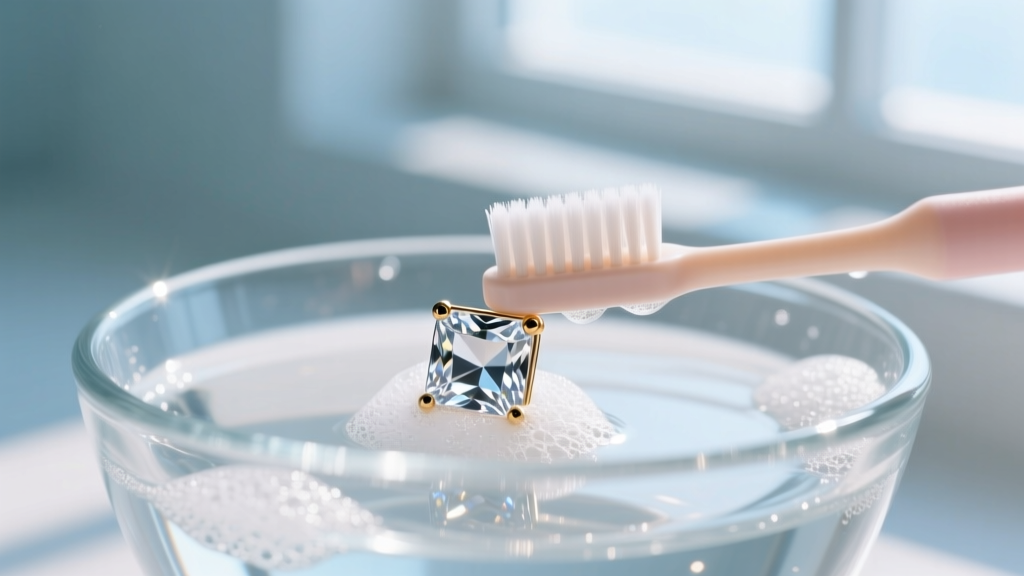
Cubic zirconia is highly oleophilic, meaning it attracts and holds onto oils, lotions, and sebum much faster than a natural diamond. Over time, this creates a stubborn, foggy film on the pavilion (bottom) of the stone, killing its light return and making it look dull and milky.
The Safe Cleaning Protocol
Avoid ultrasonic cleaners for CZ earrings. The high-frequency vibrations can easily shake loose the adhesives or weaken the prongs holding the square stone. Instead, follow this protocol recommended by Jewelers of America:
- Mix warm water with a few drops of ammonia-free, mild dish soap.
- Soak the earrings for 10-15 minutes to break down the lipid film.
- Use a soft-bristled baby toothbrush to gently scrub the pavilion and the gallery (the underside of the setting).
- Rinse thoroughly with distilled water to prevent hard water spots.
- Dry with a lint-free microfiber cloth, ensuring no fibers catch on the corner prongs.
Pro Tip for Stubborn Hard Water Stains: If your tap water leaves a chalky residue on the CZ, create a 50/50 mixture of distilled white vinegar and water. Soak the stone for exactly 3 minutes, then rinse with distilled water. Do not leave it longer, as prolonged acid exposure can degrade certain base metal alloys used in the setting.
Metal Fatigue: Bent Posts and Rotational Stress
Square stud earrings are inherently top-heavy and asymmetrical relative to the earlobe's natural curve. This causes them to rotate and droop, placing uneven lateral stress on the earring post. If your posts are constantly bending, you are likely dealing with a gauge and alloy mismatch.
- 20-Gauge (0.81mm) Posts: Standard for most fashion jewelry. Too thin for a 6mm or larger square CZ, leading to immediate bending.
- 18-Gauge (1.02mm) Posts: The minimum recommended thickness for medium-to-large square studs to resist lateral torque.
- Alloy Softness: High-karat gold (18k, 22k) and pure silver are too soft. For durable posts, look for 316L surgical steel, ASTM F136 titanium, or 14k gold alloys.
The Fix: If your post is bent, do not repeatedly bend it back; metal fatigue will cause it to snap. Take it to a jeweler to have the post re-soldered or replaced with an 18-gauge titanium post. To prevent rotation, swap standard friction backs for locking la pousette backs or silicone O-rings that grip the post tightly against the earlobe.
Troubleshooting Matrix: Quick Diagnostics
| Symptom | Root Cause | Actionable Fix |
|---|---|---|
| Stone rattles or clicks | Worn prong notches or bent V-prong | Stop wearing immediately; have a jeweler tighten and re-notch the prong. |
| Earlobe turns green/itchy | Copper/nickel in base metal reacting to sweat | Coat post in clear nail polish (temporary) or upgrade to ASTM F136 titanium. |
| Stone looks milky/yellow | Sebum and lotion buildup on pavilion | Soak in mild dish soap and scrub underside with a baby toothbrush. |
| Earring droops forward | Post too thin (20G) or friction back too loose | Upgrade to 18G post and use silicone earlifters or locking backs. |
| Stone pops out entirely | Adhesive failure or extreme prong wear | Do not use superglue; take to a jeweler for a proper bezel or prong reset. |
Skin Irritation and Contact Dermatitis
Because square earrings have a larger surface area resting against the skin compared to round studs, they trap more heat and moisture. This accelerates the oxidation of base metals and increases the likelihood of contact dermatitis.
Expert Insight: If you love the look of square CZ but suffer from metal allergies, avoid "silver-plated" or "gold-vermeil" options for daily wear. The plating will wear off at the friction points, exposing the brass or copper core. Always opt for solid 14k gold, platinum, or implant-grade titanium settings.
Adhesive Failure in Tension and Bezel Settings
Many modern square CZ earrings use bezel or tension-style settings that rely heavily on industrial jewelry adhesives (like epoxy) to keep the stone seated, rather than traditional prong pressure. Over time, exposure to hot water, saunas, or harsh chemicals breaks down this adhesive bond.
If your stone slides or rotates within a bezel frame, the adhesive has failed. Never attempt to glue it back yourself with household cyanoacrylate (Super Glue). Household glues dry brittle, fog the CZ stone permanently, and make it impossible for a professional jeweler to clean up later. A jeweler will use a two-part jeweler's epoxy or a UV-cured resin, ensuring the stone is perfectly leveled before curing.
Preventative Maintenance for Longevity
To maximize the lifespan of your square cubic zirconia earrings, adopt a strict "last on, first off" rule. Put your earrings on after applying hairspray, perfumes, and lotions, and remove them before showering or exercising. Store them in a lined jewelry box with individual compartments to prevent the sharp corners of the square cuts from scratching adjacent pieces. With proper diagnostic care and setting maintenance, your geometric CZ earrings can maintain their brilliance and structural integrity for years.


