How to Clean Coloring Earrings Without Fading the Finish
Learn how to safely clean coloring earrings, including anodized titanium and enamel, without stripping the vibrant finishes or damaging the metal.

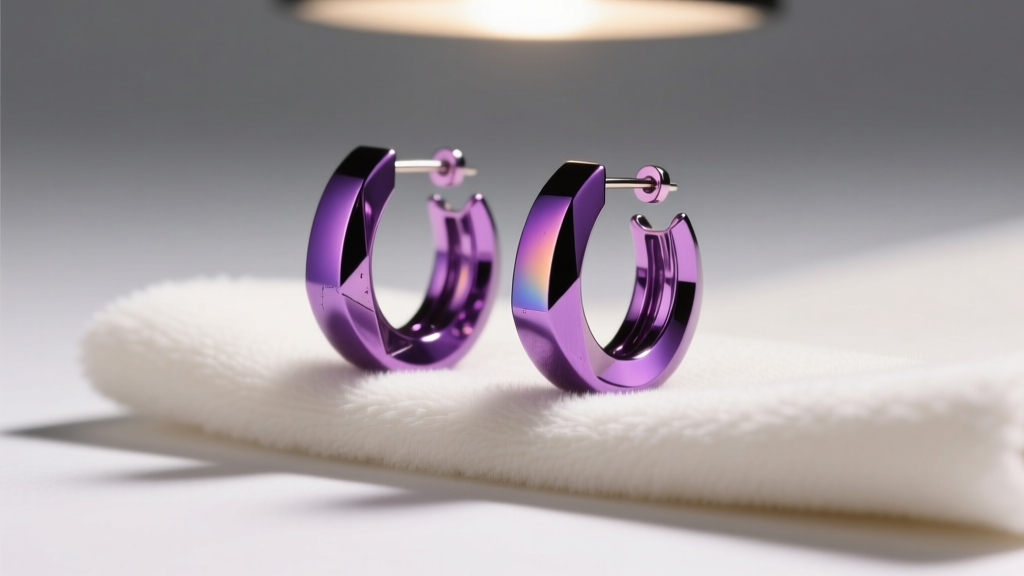
The Science Behind Coloring Earrings: Why They Fade
When building a vibrant jewelry collection, "coloring earrings" are a staple. However, unlike solid yellow gold or sterling silver, the vivid hues in modern earrings are often the result of complex surface treatments. To properly maintain these pieces, you must first understand the science of their coloration. The three most common methods for creating colored metal earrings are anodization, vitreous enameling, and Physical Vapor Deposition (PVD).
Anodized titanium and niobium earrings derive their color not from dyes, but from light interference. By applying a specific electrical voltage to the metal in an electrolytic bath, a transparent oxide layer (TiO2) is grown on the surface. The thickness of this oxide layer dictates the color you see. For example, 15 volts produces a bronze/gold hue, while 90 volts creates a vibrant purple. Because the color is essentially a microscopic layer of crystal, abrasive cleaning physically strips the oxide layer, instantly reverting the metal to its raw, dull grey state.
Enamel earrings, on the other hand, utilize finely ground glass powder fused to a metal base at temperatures exceeding 1,400°F. While highly durable, enamel is susceptible to thermal shock and micro-fractures. Meanwhile, PVD coatings (often used for rose gold or black titanium finishes) involve vaporizing a metal like titanium nitride in a vacuum chamber. PVD is incredibly hard but can be chemically degraded by harsh chlorides.
The Golden Rules of Cleaning Anodized and Enamel Jewelry
Maintaining the brilliance of your coloring earrings requires a departure from traditional jewelry cleaning methods. The goal is to remove sebum, dead skin cells, and cosmetic residue without altering the surface topography or chemical integrity of the finish.
What to Avoid: The Finish Killers
- Ultrasonic Cleaners: The cavitation bubbles created by ultrasonic frequencies implode with enough localized force to shatter vitreous enamel and strip the delicate oxide layer right off anodized titanium.
- Silver Polishing Cloths: These cloths are embedded with microscopic abrasives (like jeweler's rouge). Rubbing an anodized earring with a polishing cloth will scratch the oxide layer, altering how light refracts and effectively "erasing" the color.
- Isopropyl Alcohol & Acetone: While safe for raw diamonds and platinum, alcohol will cloud cold-enamel (epoxy resin) finishes and can degrade the binding agents in lower-grade PVD coatings.
- Chlorine & Bleach: Swimming in chlorinated pools or cleaning with bleach will cause rapid oxidation and pitting on PVD-coated coloring earrings, leading to irreversible flaking.
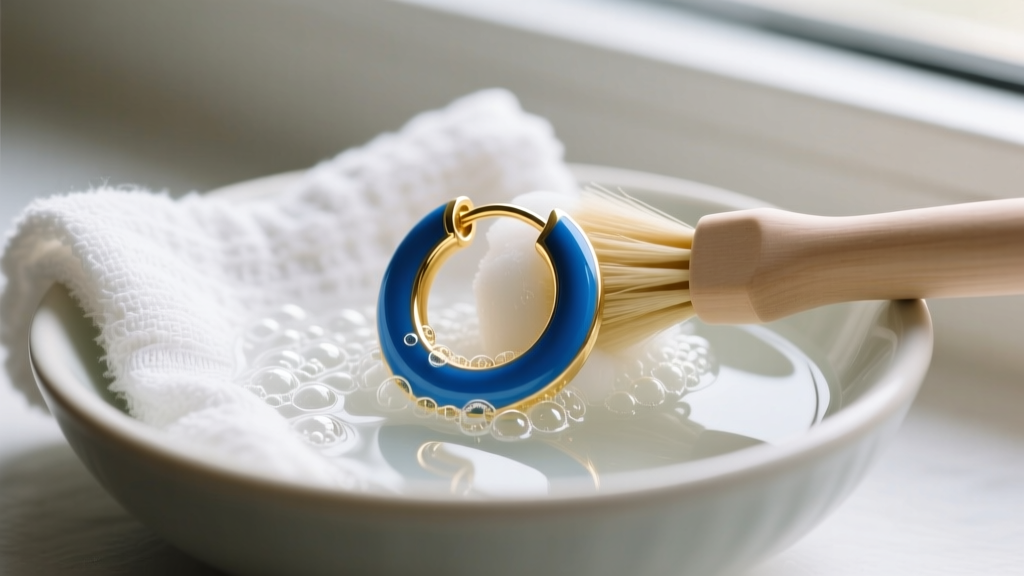
Step-by-Step Cleaning Guide for Vibrant Earrings
For routine maintenance of anodized, enameled, and PVD coloring earrings, follow this dermatologist and jeweler-approved protocol. This method safely lifts oils without compromising the structural integrity of the finish.
- Prepare a pH-Neutral Bath: Fill a small glass bowl with lukewarm distilled water. Add two drops of a pH-neutral, lotion-free dish soap (such as original blue Dawn). Avoid hot water, which can cause thermal shock to enamel.
- Soak Briefly: Submerge the earrings for exactly 3 to 5 minutes. This softens sebum and hairspray buildup without allowing water to penetrate microscopic enamel fissures.
- Agitate Gently: Using an extra-soft baby toothbrush (never a standard firm-bristled brush), gently sweep the bristles over the earring. Pay special attention to the post, clutch, and hinge mechanisms where debris accumulates.
- Rinse with Distilled Water: Rinse the earrings under a gentle stream of distilled water. Tap water contains trace minerals and chlorine that can leave water spots or react with PVD coatings over time.
- Pat Dry: Use a lint-free microfiber cloth to gently pat the earrings dry. Do not rub aggressively. Allow them to air dry completely on a paper towel before storing.
Material-Specific Maintenance: A Troubleshooting Matrix
Different coloring techniques require vastly different care protocols. Use the matrix below to identify your earring's material and avoid catastrophic cleaning failures.
| Material / Finish | Color Method | Safe Cleaning Agents | Fatal Mistakes | Expected Finish Lifespan |
|---|---|---|---|---|
| Anodized Titanium | Electrolytic Oxide Layer | Mild soap, distilled water | Polishing cloths, ultrasonic, acids | Indefinite (if unscratched) |
| Vitreous Enamel | Fused Glass Powder | Mild soap, soft brush | Thermal shock, dropping, ultrasonic | Lifetime (prone to chipping) |
| Cold Enamel (Resin) | Epoxy / Polyurethane | Damp cloth only | Alcohol, acetone, prolonged soaking | 2 to 5 years (will yellow) |
| PVD Coated Steel | Physical Vapor Deposition | Mild soap, microfiber | Chlorine, abrasive pastes, bleach | 5 to 10 years (daily wear) |
According to gemological experts at the Gemological Institute of America (GIA), understanding the distinction between vitreous and cold enamel is critical for collectors. Vitreous enamel is essentially glass and will shatter if dropped on tile, while cold enamel is a plastic resin that will melt or cloud upon contact with hand sanitizer.
Storage Solutions to Prevent Color Oxidation and Scratching
How you store your coloring earrings is just as important as how you clean them. Anodized titanium does not tarnish like sterling silver, so anti-tarnish strips are unnecessary and, in some cases, the chemicals in the strips can react poorly with certain resin dyes. However, scratch prevention is paramount.
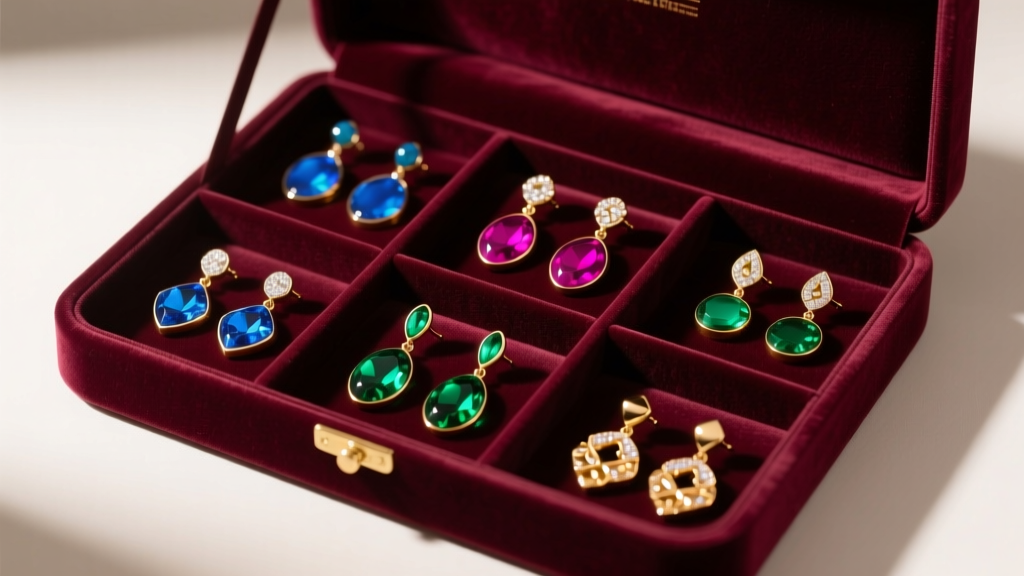
Because the color of an anodized earring is a surface-level optical illusion created by light refracting through the oxide layer, even a micro-scratch from a diamond stud resting against it in a jewelry box will scatter the light, creating a dull, grey streak. Always store coloring earrings in individual soft pouches or a jewelry box with dedicated, fabric-lined compartments. For enamel pieces, ensure they are not stacked, as the metal edges of one earring can easily chip the glass enamel of another.
When to Retire or Re-Anodize Your Favorite Pieces
Despite your best efforts, accidents happen. If your anodized titanium earrings have lost their color due to friction or accidental polishing, the metal is not ruined. According to metallurgical guidelines highlighted by the Jewelers of America, titanium can be re-anodized. A professional jeweler can lightly sandblast the piece to remove the old, scratched oxide layer and submerge it in an electrolytic bath to grow a brand new color. Note that you can only anodize "up" the voltage spectrum; you cannot turn a purple (90V) earring into a gold (15V) one without completely stripping the metal first.
For chipped vitreous enamel, restoration is a specialized art requiring a kiln and exact color-matching of glass frit. If the underlying metal (usually copper or gold) is exposed and begins to oxidize, it is time to consult a master enamelist or retire the piece to a display box. By respecting the unique chemistry of your coloring earrings and abandoning harsh, traditional cleaning methods, you can preserve their vibrant, light-catching finishes for decades.


