A Beginner's Guide to Wearing Silver Big Earrings Safely
Learn how to choose, style, and wear silver big earrings comfortably. Discover gauge sizes, weight limits, and face-shape tips for heavy sterling hoops.


Statement jewelry has a unique ability to transform an outfit, and few pieces accomplish this as effortlessly as silver big earrings. However, for beginners, stepping into the world of oversized hoops, heavy drop earrings, and dramatic shoulder-dusters can be intimidating. The sheer weight of large metal pieces introduces physical challenges that standard jewelry guides often ignore. If you have ever experienced sore earlobes, stretched piercings, or tarnished metal after a night out, you are not alone.
This beginner-friendly explainer will decode the science, ergonomics, and styling rules behind heavy silver jewelry. We will explore the exact metallurgy required to support large designs, the physics of earlobe stress, and the specific hardware you need to wear your favorite pieces comfortably all day long.
The Metallurgy of Statement Silver: Why Purity is a Trap
When shopping for silver big earrings, the first instinct for many beginners is to seek out the highest purity possible. However, in the realm of heavy jewelry, extreme purity is actually a structural liability. According to the Gemological Institute of America (GIA), fine silver (99.9% pure) is exceptionally soft and malleable. While this makes it ideal for intricate casting or bezel setting, it lacks the tensile strength required to support its own weight in large, structural formats.
If a large hoop or heavy drop earring is crafted from 999 fine silver, the ear wire will inevitably bend, warp, and stretch under the constant pull of gravity. This is why the global standard for wearable statement silver is 925 Sterling Silver. By alloying 92.5% pure silver with 7.5% copper (or sometimes zinc), jewelers dramatically increase the metal's hardness and structural integrity.
The Argentium Advantage for Large Pieces
For those who love the look of massive silver earrings but despise the upkeep, look for pieces stamped with Argentium Silver. This modern alloy replaces some of the traditional copper with germanium. Because large earrings have a massive surface area exposed to the air, they are highly susceptible to tarnishing. Argentium's germanium content creates a transparent, self-healing oxide layer that makes these big earrings highly resistant to the sulfur compounds in the air that cause standard sterling silver to turn black.
The Physics of the Piercing: Gauge Sizes and Tissue Stress
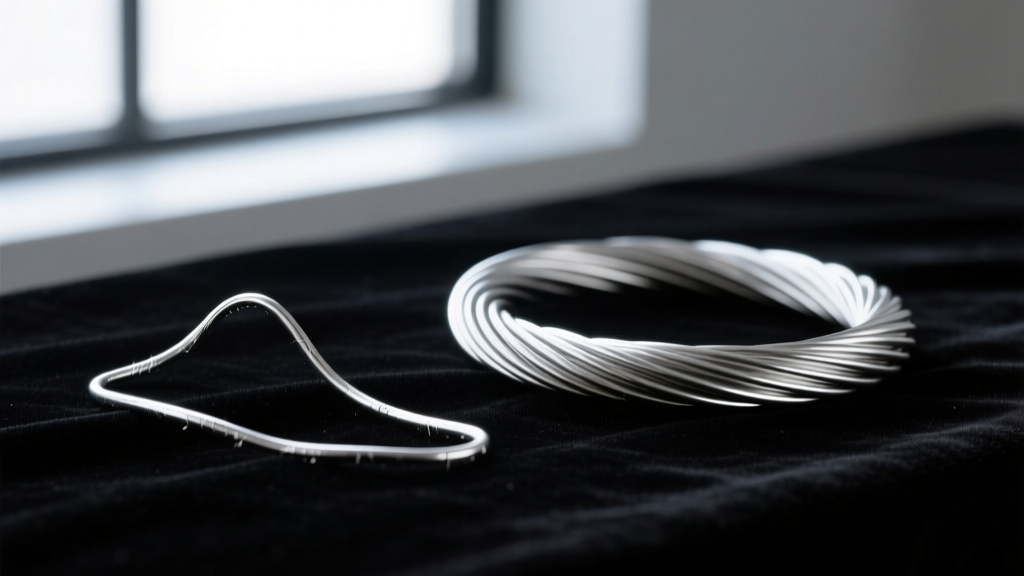
The most common mistake beginners make when buying silver big earrings is ignoring the thickness of the ear wire. In jewelry, wire thickness is measured in 'gauge'. The higher the gauge number, the thinner the wire. Most lightweight, commercial fashion earrings are crafted at 20-gauge (0.81mm) or 18-gauge (1.02mm).
When you hang a heavy, oversized silver earring on a thin 20-gauge wire, you create what professional piercers call the "Cheese Cutter Effect." The downward force of the heavy silver concentrates onto a microscopic surface area of your earlobe tissue. Over time, this constant pressure restricts blood flow and slowly slices through the skin, leading to permanent lobe stretching or tearing. The Association of Professional Piercers (APP) frequently warns against wearing heavy jewelry on thin wires for this exact reason.
The Ideal Gauge Chart for Heavy Silver
- Under 10 grams: 18-gauge (1.02mm) is perfectly safe for standard lobes.
- 10 to 20 grams: Upgrade to 16-gauge (1.29mm) to distribute the weight safely.
- Over 20 grams: You must seek out 14-gauge (1.63mm) or 12-gauge (2.05mm) ear wires. If your piercing cannot accommodate this thickness, you must use specialized support patches (like silicone lobe stabilizers) to spread the load across the back of the ear.
Hardware and Backings: Securing the Statement
The front of the earring gets all the glory, but the backing mechanism dictates whether your silver big earrings will stay secure or end up lost in a taxi cab. Heavy earrings require specialized hardware that goes beyond the standard friction post and butterfly clutch.
Expert Troubleshooting: If your heavy silver drop earrings constantly droop forward, pointing at the floor instead of hanging straight, your backing is failing to provide a counter-lever. Swap standard metal butterfly backs for wide, flat silicone discs. The increased surface area against the back of your lobe creates the necessary leverage to keep heavy silver drops facing forward.
For large silver hoops and heavy chandeliers, look for Omega Backs or Screw Backs. Omega backs feature a hinged, curved wire that snaps securely into a catch, hugging the earlobe and providing immense structural support for heavy silver designs. Screw backs, which thread onto a specialized post, are virtually impossible to lose and are highly recommended for expensive, heavy statement pieces.
Proportion and Geometry: Matching Big Earrings to Face Shapes
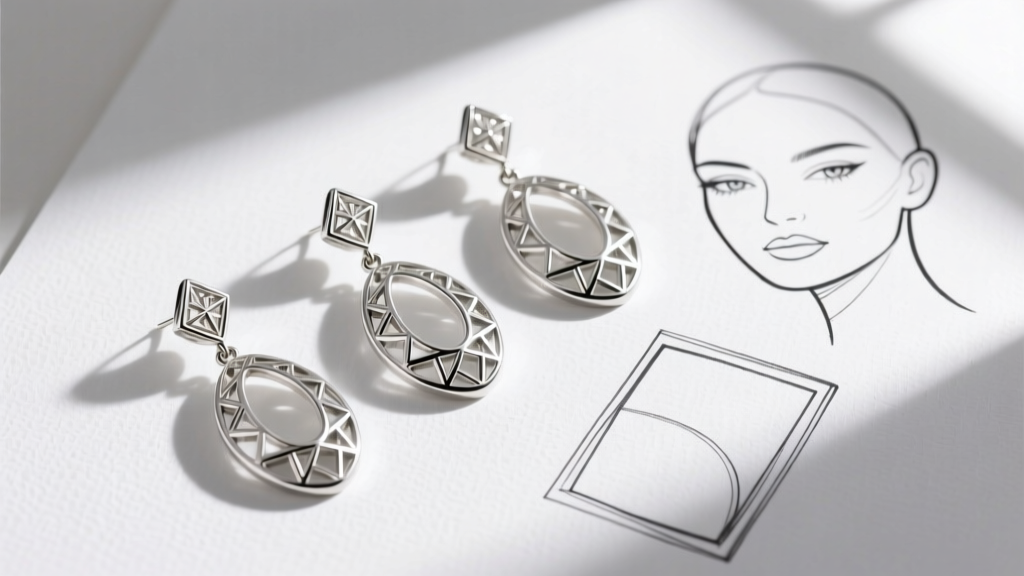
Wearing silver big earrings is an exercise in visual geometry. Because silver is a highly reflective, cool-toned metal, it draws the eye immediately. The silhouette of the earring should be used to balance, rather than exaggerate, your natural facial proportions. Below is a structural framework for matching heavy silver silhouettes to your bone structure.
| Face Shape | Characteristics | Ideal Big Silver Silhouette | Styles to Avoid |
|---|---|---|---|
| Round | Equal width and length, soft jawline | Long, angular silver drops, rectangular tubes, narrow shoulder-dusters | Large, perfectly round silver hoops or wide circular studs |
| Oval | Balanced proportions, slightly longer than wide | Almost any style; geometric silver hoops, chunky chain drops | Earrings that extend far past the collarbone, disrupting natural balance |
| Square | Strong, wide jawline, broad forehead | Curved silver hoops, teardrop shapes, organic molten silver designs | Sharp, boxy silver drops that end exactly at the jawline |
| Heart | Wide forehead, narrow pointed chin | Bottom-heavy silver chandeliers, wide teardrops that add volume near the jaw | Inverted triangles or top-heavy silver clusters |
Maintenance: Preserving Large Surface Areas
The final hurdle for beginners is maintenance. Silver reacts with hydrogen sulfide in the atmosphere to form silver sulfide, the black tarnish that dulls your jewelry. Because silver big earrings possess a massive surface area, they tarnish much faster and more noticeably than small studs.
Never use abrasive silver dips or harsh chemical baths on large, textured silver earrings. These chemicals can strip the intentional oxidation (the dark patina jewelers leave in the crevices to highlight the design's depth) and leave your massive hoops looking flat and chalky. Instead, adopt a gentle, mechanical cleaning routine:
- Daily Wipe: After wearing, wipe your large earrings with a clean, lint-free microfiber cloth to remove skin oils and environmental sulfur.
- Deep Cleaning: For heavy buildup, use a few drops of mild, phosphate-free dish soap in warm water. Use an extra-soft baby toothbrush to gently agitate the crevices of textured silver.
- Targeted Polishing: Use a treated jeweler's cloth (such as a Sunshine cloth) only on the raised, high-polish areas of the earring, carefully avoiding the recessed, oxidized details.
- Storage: Store large silver pieces in individual anti-tarnish flannel bags with a silica gel packet to control humidity, which accelerates the tarnishing process.
By understanding the structural limits of sterling silver, respecting the physics of your earlobe tissue, and choosing the correct geometric silhouettes, you can confidently wear silver big earrings that are as comfortable as they are captivating.


