Earrings Malcom Todd Style: Technical Guide To Indie Ear Stacks
Master the earrings Malcom Todd aesthetic. Our technical guide covers gauge sizes, ASTM F136 titanium, threadless mechanics, and indie ear stacks.

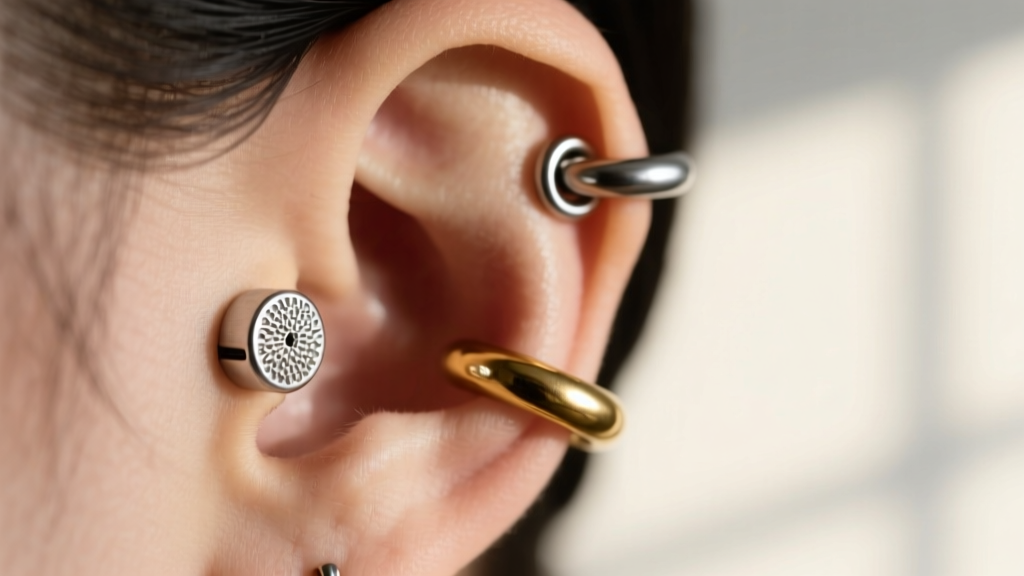
When fans and style enthusiasts search for earrings malcom todd, they are rarely looking for a single, off-the-shelf product. Instead, they are chasing a specific aesthetic: the relaxed, asymmetrical, and effortlessly cool indie-pop ear curation popularized by the artist. This signature look relies heavily on mixed metals, delicate cartilage placements, and a deliberate lack of symmetry that feels both vintage and distinctly modern.
However, achieving this "effortless" indie ear stack requires rigorous technical execution. Cartilage piercings are notoriously unforgiving, and mixing lobe staples with helix or tragus pieces demands a deep understanding of metallurgy, gauge sizing, and threading mechanics. In this 2026 expert deep dive, we deconstruct the technical anatomy of the indie ear stack, providing actionable frameworks for curating, sizing, and maintaining a Malcom Todd-inspired setup without triggering irritation or migration.
The Anatomy of the Indie-Pop Ear Stack
The core of this aesthetic is the "three-point anchor" system. Unlike heavily curated constellation piercings that pack a dozen micro-studs into the flat area, the indie approach relies on negative space and distinct focal points.
- Anchor 1 (Primary Lobe): Usually a textured stud, a vintage signet-style sleeper, or a slightly chunky 14g-12g piece that grounds the ear.
- Anchor 2 (Secondary Lobe): A minimalist huggie or a seamless clicker ring, typically in a contrasting metal to Anchor 1.
- Anchor 3 (Helix or Forward Helix): A delicate 16-gauge flat-back labret or a snug-fitting hoop that catches the light without overwhelming the ear's natural architecture.
"The secret to the indie aesthetic isn't the volume of jewelry; it's the tension between heavy, grounded lobe pieces and impossibly delicate cartilage hardware."
Metallurgy: Why Your Cartilage Rejects Cheap Alloys
To maintain a healthy, long-term ear stack, you must understand the biocompatibility of your materials. The cartilage is avascular (lacking direct blood supply), meaning it heals slowly and is highly susceptible to contact dermatitis and galvanic corrosion. If you are mixing gold and silver tones to achieve that signature mixed-metal look, material grade is non-negotiable.
| Material | Grade / Standard | Biocompatibility | Best Use Case | Price Range (2026) |
|---|---|---|---|---|
| Implant-Grade Titanium | ASTM F136 | Excellent (Nickel-Free) | Fresh piercings, helix, tragus | $35 - $85 |
| Solid Gold | 14k or 18k (Nickel-Free Alloy) | Excellent | Fully healed lobes and cartilage | $90 - $300+ |
| Surgical Steel | 316L | Poor (Contains 8-10% Nickel) | Fully healed lobes only | $15 - $40 |
| Niobium | Commercially Pure | Excellent (Hypoallergenic) | Color-anodized cartilage hoops | $25 - $60 |
According to the Association of Professional Piercers (APP), 316L surgical steel should never be used in healing cartilage due to its nickel content. For the Malcom Todd aesthetic—where delicate helix hoops are a staple—opting for ASTM F136 titanium or high-purity 14k gold ensures the tissue remains calm, preventing the dreaded "irritation bumps" that ruin the clean lines of the stack.
Threading Mechanics: The Case for Threadless Jewelry
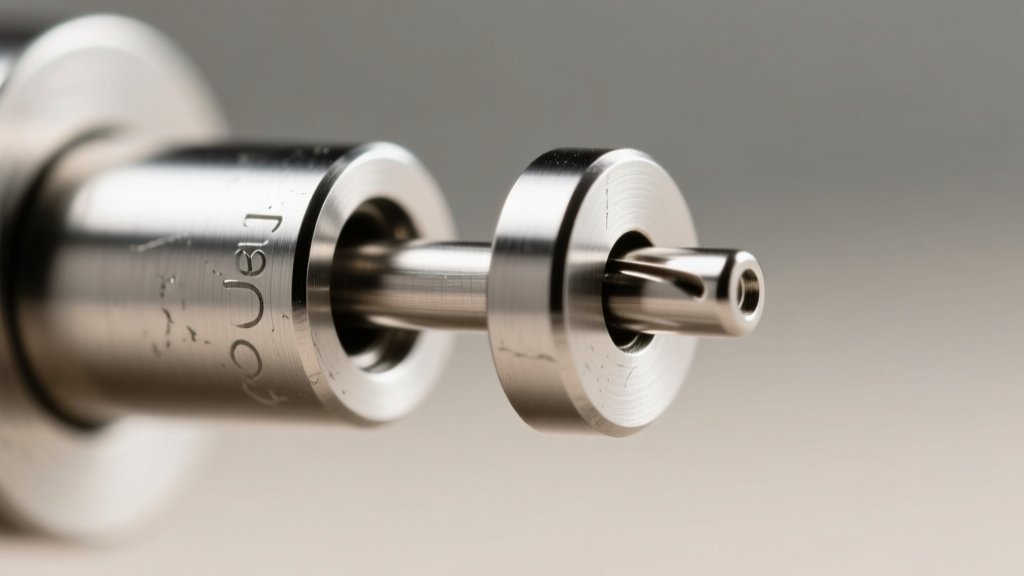
When curating delicate cartilage placements, the hardware mechanics matter just as much as the visual design. Traditional externally threaded jewelry features screw threads on the post itself, which tear through the fistula (the piercing channel) upon insertion. Internally threaded jewelry improves on this, but the absolute gold standard for the indie ear stack is threadless (push-pin) technology.
How Threadless Mechanics Work
Threadless jewelry utilizes a hollow post and a decorative end with a slightly bent pin. When you push the end into the post, the tension of the bent pin against the inner wall of the post creates a secure, friction-based lock. This offers three distinct technical advantages for your ear stack:
- Seamless Insertion: The smooth, unthreaded post glides through 18g or 16g cartilage without micro-tearing the tissue.
- Customizable Tension: You can adjust how tightly the end fits by slightly increasing or decreasing the bend on the pin.
- Low-Profile Aesthetics: Threadless ends sit perfectly flush against the post, eliminating the visible "gap" or bulky threading collar that ruins the minimalist indie vibe.
Sizing Framework: The "Snug Fit" Hoop Rule
A common failure mode in replicating celebrity ear stacks is purchasing hoops with the wrong Inner Diameter (ID). A hoop that is too large will stick out perpendicularly, catching on hair and headphones, while a hoop that is too small will compress the tissue, causing localized necrosis and migration.
For the standard 16-gauge helix or tragus piercing, precise ID selection is critical:
- 5/16" (8mm): The industry standard for a "snug" helix hoop. Ideal for standard ear anatomy where the piercing sits roughly 8mm from the outer edge of the helix rim.
- 3/8" (10mm): Required for thicker helix rims or forward helix placements. Provides enough clearance for swelling and prevents the "cheese-cutter" effect.
- 1/4" (6mm): Strictly reserved for snug or tragus piercings, or extremely shallow helix placements.
Always measure your specific anatomy with digital calipers before ordering seamless rings or clickers. The relaxed vibe of the Malcom Todd style relies on the jewelry looking custom-fitted to the ear's unique topography.
Asymmetry and the Heavy-Light Balancing Rule
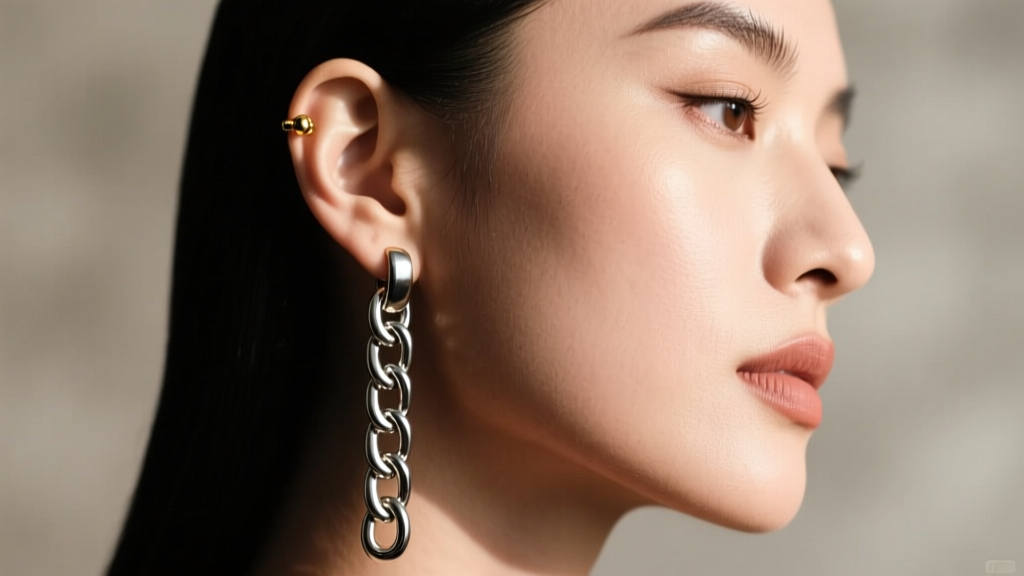
The final pillar of this aesthetic is deliberate asymmetry. Symmetrical ear stacks often read as formal or traditional, whereas the indie-pop look thrives on imbalance. However, random asymmetry looks messy; calculated asymmetry looks curated.
Employ the Heavy-Light Balancing Rule:
If your left ear features a "heavy" primary lobe piece (e.g., a thick silver sleeper or a dangling chain earring), your right ear should counterbalance with "light" elements (e.g., three minimalist 18k gold flat-back studs). This ensures the overall visual weight of your face remains balanced, even though the individual ears are completely different. Research published in the National Library of Medicine regarding facial symmetry and aesthetic perception notes that controlled asymmetry draws the eye and creates a dynamic, approachable visual profile, which is exactly the psychological effect the indie-pop aesthetic aims to achieve.
Troubleshooting: Hypertrophic Scarring and Migration
Even with perfect jewelry, cartilage piercings can develop hypertrophic scars (commonly, and incorrectly, called keloids) due to mechanical trauma. If you notice a small, fleshy bump forming next to your helix hoop, do not swap to tea tree oil or aspirin pastes—these are outdated, caustic remedies that cause chemical burns.
The Expert Protocol for Irritation Bumps:
- Downsize or Switch to a Flat-Back: If a hoop is causing the bump, the angle is likely wrong. Switch to a threadless titanium flat-back labret to eliminate rotational movement.
- Sterile Saline Only: Spray with 0.9% sterile wound wash twice daily. Do not twist or rotate the jewelry.
- The T-Shirt Trick: Sleep with a travel pillow or a rolled-up t-shirt around your neck to prevent direct pressure on the healing cartilage.
By mastering the technical nuances of gauge sizing, push-pin mechanics, and biocompatible metallurgy, you can build an ear stack that not only captures the effortless indie spirit of your favorite artists but also maintains the long-term structural health of your piercings.


