Stop Hoop Cross Earrings From Flipping: A Troubleshooting Guide
Stop your hoop cross earrings from flipping upside down or stretching your lobes. Expert troubleshooting tips on clasps, weights, and gauge sizes.

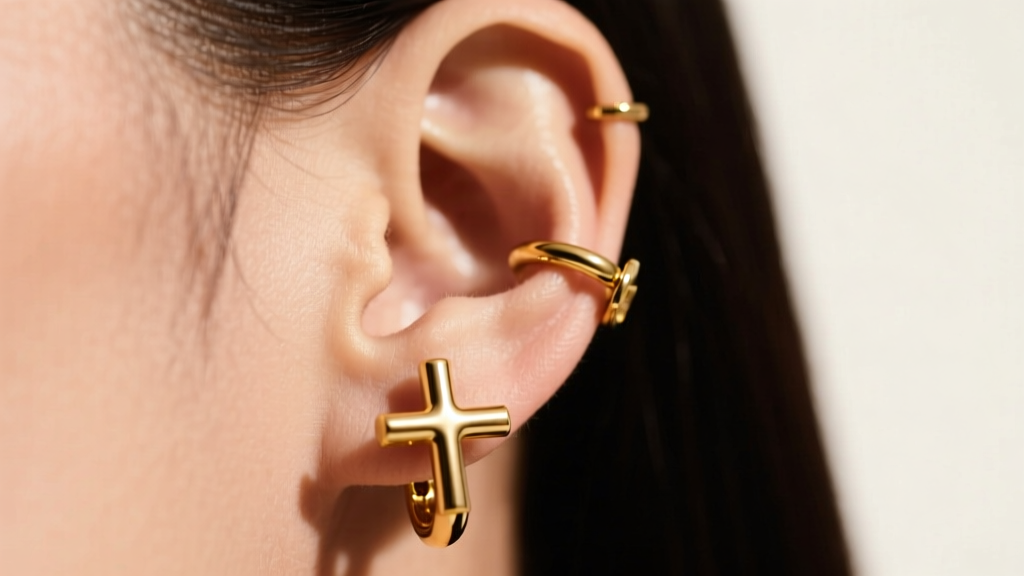
Hoop cross earrings are a timeless fusion of edge and elegance, blending the continuous line of a classic hoop with the bold symbolism of a cross charm. However, anyone who has worn them for more than a few hours knows the frustrating reality: the cross flips upside down, the hoop loses its perfect circle, or the thin wire begins to painfully pull on your earlobe. These are not just minor annoyances; they are structural failures rooted in physics, material science, and poor jewelry engineering.
As a jewelry troubleshooter, I see these issues daily. The good news is that almost every problem with hoop cross earrings can be diagnosed and fixed. Whether you are dealing with a spinning charm, a stretching piercing, or a stubborn clasp, this guide will walk you through the exact mechanics of why your earrings fail and how to solve the problem permanently.
The Anatomy of a Hoop Cross Earring: Why They Fail
To troubleshoot effectively, you must first understand the three critical components of a hoop cross earring:
- The Wire/Hoop: Defined by its diameter (usually 12mm to 20mm) and its gauge (thickness). Standard fashion hoops are often 20-gauge (0.81mm) or 22-gauge (0.64mm), which are notoriously weak.
- The Charm Integration: The cross is either fixed (soldered directly into the hoop), sliding (a dangling charm threaded onto the wire), or hinged.
- The Clasp Mechanism: The closure type—typically a latch-back, a hinged clicker, or a saddle clasp—dictates the earring's security and center of gravity.
When manufacturers prioritize aesthetics over structural integrity, they create a piece of jewelry that is doomed to fail. Thin wires bend under the weight of solid metal crosses, and poorly calibrated clasps allow the hoop to rotate freely in your fistula (the piercing channel). Let us break down the solutions to the most common complaints.
Troubleshooting the 'Upside-Down Cross' Flip
There is nothing more annoying than looking in the mirror and realizing your cross charm is resting sideways or completely upside down. This happens due to a clash between the earring's center of gravity and the rotational friction inside your piercing.
The Center of Gravity Problem
If your hoop cross earrings feature a sliding charm, gravity will naturally pull the heaviest part of the earring downward. However, if the clasp mechanism (which is often bulky and heavy) is located at the top of the hoop, it will constantly fight the charm for the bottom position. As you move, the hoop rotates in your earlobe, causing the cross to flip.
The Fix: You need to introduce rotational friction. If your piercing is fully healed, you can use tiny, 1mm-thick silicone O-rings (often sold as earring backs) on the wire just behind the earlobe. This creates a physical stopper that prevents the hoop from spinning freely. Alternatively, look for 'fixed-cross' designs where the cross is soldered seamlessly into the bottom curve of the hoop, completely eliminating the sliding variable.
Friction and Gauge Sizing
Thinner wires spin more easily. A 22-gauge (0.64mm) wire has very little surface area touching the inside of your piercing, allowing it to rotate with almost zero resistance. Upgrading to a thicker wire creates more surface contact, naturally stabilizing the earring.
Expert Tip: If you are buying new hoop cross earrings, always opt for an 18-gauge (1.02mm) or 16-gauge (1.29mm) wire. The slight increase in thickness provides the necessary friction to keep the cross facing forward without causing discomfort in a standard lobe piercing.
Preventing Lobe Stretching and the 'Cheese-Wire' Effect
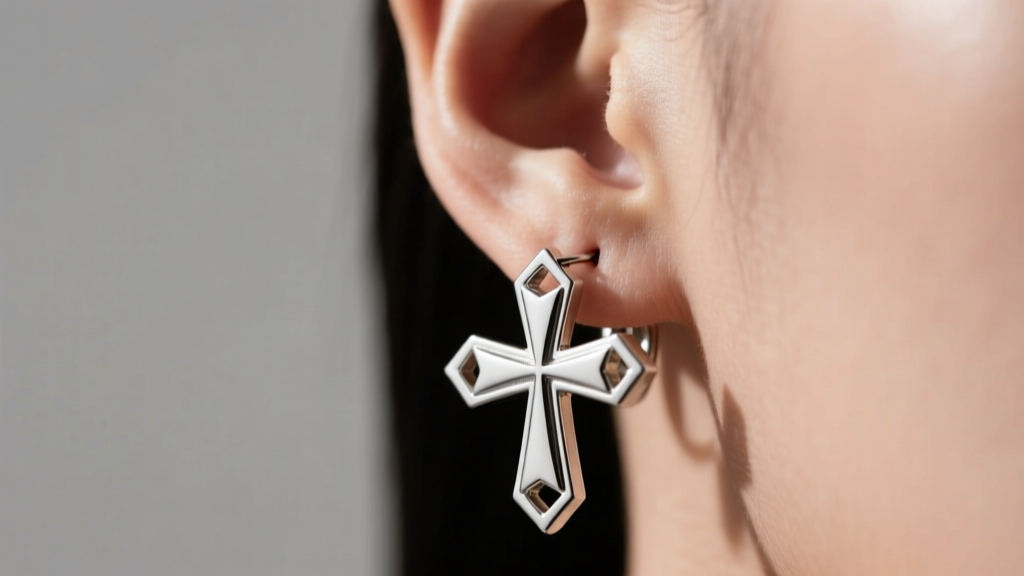
Cross charms made from solid sterling silver or brass add significant weight to a hoop. When this weight is suspended on a thin 20-gauge or 22-gauge wire, it creates a 'cheese-wire' effect. The thin metal slices downward into the tissue of your earlobe, causing micro-tears, inflammation, and eventual permanent stretching of the fistula.
According to the Association of Professional Piercers (APP), maintaining appropriate jewelry thickness relative to weight is crucial for tissue health. To protect your lobes, you must match the earring's total weight to the correct wire gauge.
Weight vs. Gauge Size Recommendations
| Total Earring Weight | Minimum Safe Gauge | Wire Thickness (mm) | Best Use Case |
|---|---|---|---|
| Under 3 grams | 20-Gauge | 0.81mm | Lightweight, hollow charms, daily wear |
| 3 to 6 grams | 18-Gauge | 1.02mm | Solid small crosses, standard hoops |
| 6 to 10 grams | 16-Gauge | 1.29mm | Thick hoops, large solid metal crosses |
| Over 10 grams | 14-Gauge or 12-Gauge | 1.63mm+ | Heavy statement pieces, stretched lobes |
The Fix: Weigh your current hoop cross earrings on a digital kitchen or jewelry scale. If a pair weighs 8 grams but the wire is 20-gauge, you are actively damaging your earlobe. Switch to a 16-gauge hoop or reserve those heavy earrings for only a few hours of wear, using a supportive silicone earlobe patch (like LobeWonder) to distribute the weight across a wider surface area.
Solving Metal Allergies and Tarnish Issues
If your earlobes become itchy, red, or flaky after wearing your earrings, or if the metal leaves a dark green or black smudge on your skin, you are experiencing a chemical reaction. Many mass-produced hoop cross earrings are cast from brass or copper alloys and merely plated with a microscopic layer of gold or silver.
The American Academy of Dermatology (AAD) notes that nickel contact dermatitis is one of the most common causes of jewelry-related skin reactions. Cheap alloys often contain high levels of nickel to increase hardness, while copper bases oxidize rapidly when exposed to the natural acids and salts in your sweat.
Material Grades You Should Demand
- ASTM F136 Implant-Grade Titanium: The absolute gold standard for sensitive ears. It contains zero nickel, will never tarnish, and is lightweight, reducing the risk of lobe stretching.
- Solid 14k or 18k Gold: Ensure it is solid, not plated. 14k gold offers the best balance of durability and hypoallergenic properties for heavy hoop structures.
- Niobium: An excellent, affordable alternative to titanium that is highly biocompatible and can be anodized into various colors without using reactive paints or platings.
The Fix: Discard any 'gold-plated' or 'gold-filled' brass hoop cross earrings if you experience itching. The plating will inevitably wear off at the friction points (especially near the clasp), exposing the reactive base metal directly to your bloodstream. Invest in solid metals or verified implant-grade titanium.
Quick Fixes for Broken Hinges and Lost Tension
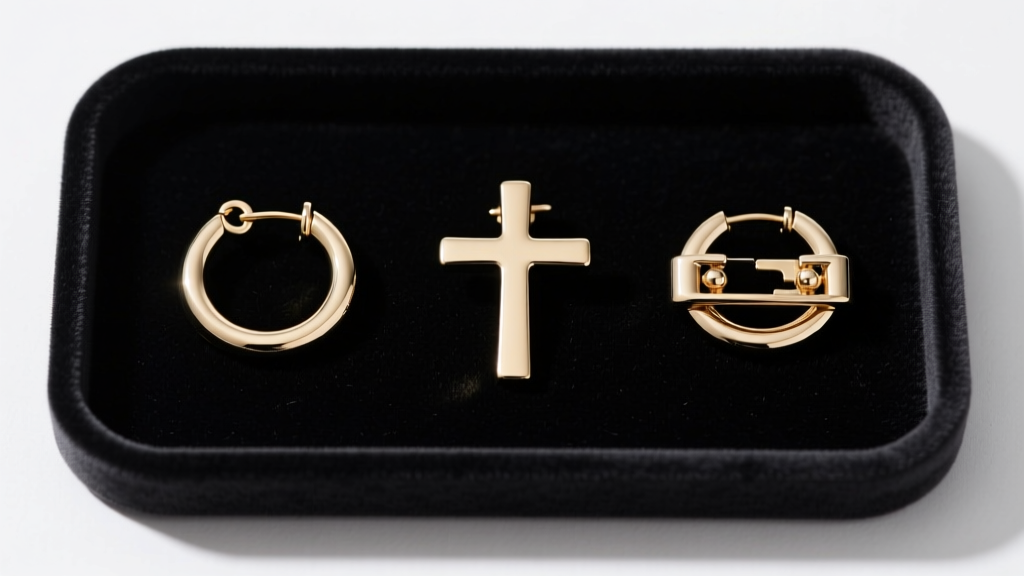
The clasp is the weakest mechanical link on any hoop earring. Over time, latch-backs bend outward, failing to snap into the groove, while hinged clickers lose their satisfying 'click' and pop open unexpectedly.
Fixing a Loose Latch-Back
A latch-back relies on the tension of the thin wire post snapping into a tiny forked catch. If it pulls open too easily, the post has bent slightly outward. Do not use standard metal jewelry pliers, as they will scratch and mar the finish of your earrings. Instead, use nylon-jaw pliers. Gently grip the post and apply a minuscule amount of inward pressure toward the center of the hoop. Test the closure after every millimeter of adjustment.
Reviving a Dead Hinged Clicker
Hinged clickers (often used in cartilage and septum piercings, but increasingly common in lobe hoops) rely on a tiny internal metal tab that catches on a ridge. If your clicker won't stay closed, it is usually not broken; it is clogged. Dead skin cells, sebum, and soap scum build up inside the hinge mechanism, preventing the tab from seating fully.
The Fix: Submerge the clasp end of the earring in a small cup of 91% isopropyl alcohol for 10 minutes. Use a soft-bristled baby toothbrush to gently scrub the seam of the hinge. Rinse with distilled water and let it dry completely. In 90% of cases, the clicker will snap shut perfectly again.
Final Verdict: Buying Better Hoops
Troubleshooting your current jewelry is a valuable skill, but the ultimate solution to flipping, stretching, and breaking is purchasing better-engineered pieces from the start. When shopping for hoop cross earrings, prioritize structural integrity over fleeting trends. Look for 18-gauge or 16-gauge thicknesses, demand solid or implant-grade materials, and choose fixed-charm designs or hinged clickers over flimsy latch-backs.
By understanding the physics of how your earrings interact with your anatomy, you can transform a frustrating jewelry box full of broken hoops into a curated collection of pieces that sit perfectly, comfortably, and securely every single time you wear them.


