A Beginner's Guide to Wearing Oversized Gold Earrings
Learn how to choose, style, and comfortably wear oversized gold earrings. Discover weight limits, karat differences, and lobe-saving tips.


Oversized gold earrings are a definitive staple in modern jewelry, offering an instant elevation to any outfit. Whether you are drawn to the sculptural, molten gold trends dominating 2026 runways or the timeless appeal of massive vintage hoops, making the jump to larger silhouettes requires more than just an eye for fashion. For beginners, the transition to heavy, statement-making jewelry often comes with a steep learning curve regarding earlobe health, metal purity, and structural support.
If you have ever experienced the dreaded "cheese cutter" effect—where a heavy earring slowly slices through your piercing—or wondered why some massive hoops feel weightless while others drag your lobes down, this guide is for you. We will break down the exact science of gold alloys, gauge thicknesses, and weight distribution so you can wear oversized gold earrings with absolute confidence and zero damage.
The Appeal and Anatomy of Statement Gold
The allure of oversized gold earrings lies in their ability to act as a focal point without requiring additional accessories. A single pair of 50mm gold hoops or dramatic shoulder-duster drops can replace an entire stack of necklaces and bracelets. However, scaling up the size of your earrings exponentially increases their physical mass, which directly impacts your earlobe tissue.
The human earlobe is composed of areolar connective tissue and adipose (fat) tissue, lacking the rigid cartilage found in the upper ear. While this makes the lobe highly flexible and easy to pierce, it also means the tissue is incredibly susceptible to stretching and tearing under sustained gravitational stress. Understanding the anatomy of your jewelry is the first step in preventing irreversible lobe elongation.
Understanding Gold: Karats, Alloys, and Weight
Not all gold is created equal, especially when it comes to large-scale jewelry. Pure gold (24k) is exceptionally soft and malleable. If an oversized earring were crafted from 24k gold, the sheer weight of the piece would cause the post to bend and the hook to warp within days. Therefore, jewelers alloy gold with metals like copper, silver, and zinc to increase durability.
According to the Gemological Institute of America (GIA), the most common standards for fine jewelry are 14k and 18k gold. Here is how they compare when applied to oversized designs:
| Karat | Gold Purity | Durability | Best For |
|---|---|---|---|
| 24k | 99.9% | Very Low (Soft) | Investment pieces, lightweight ear cuffs |
| 22k | 91.6% | Low | Small studs, cultural bridal jewelry |
| 18k | 75.0% | High | Medium hoops, fine drop earrings |
| 14k | 58.3% | Very High | Oversized hoops, heavy sculptural drops |
Solid vs. Hollow: The Weight Factor
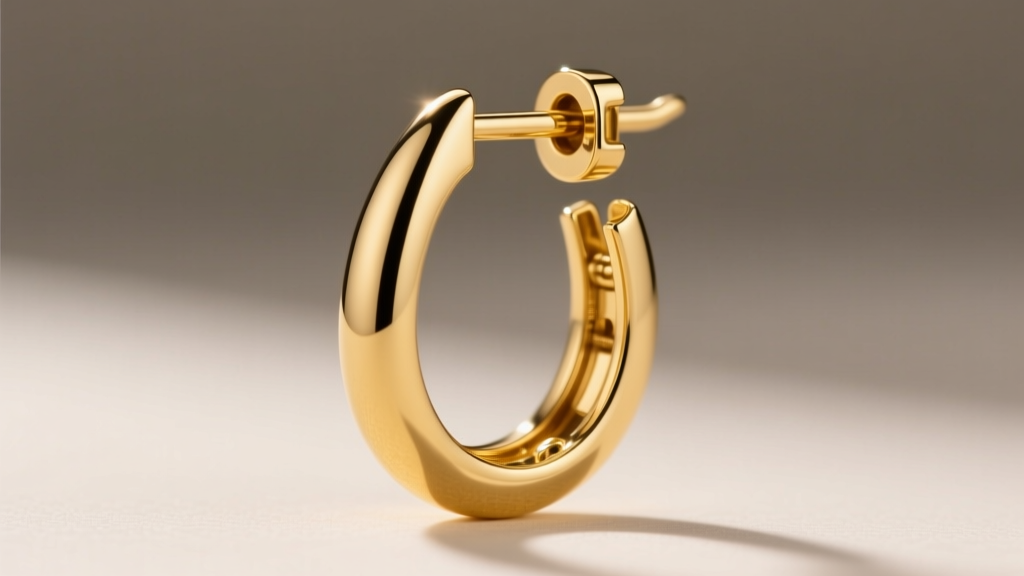
When shopping for oversized gold earrings, the most critical distinction is whether the piece is solid or hollow. A solid 14k gold hoop with a 60mm diameter and a 4mm tube thickness can easily weigh upwards of 25 grams per earring. Wearing 50 grams of total weight on your earlobes will cause immediate fatigue and long-term stretching.
To combat this, expert jewelers use techniques like electroforming or hollow tubing. Hollow gold earrings maintain the exact same exterior dimensions and karat purity but are completely empty inside, reducing the weight by up to 70%. A hollow 60mm hoop might weigh only 6 to 8 grams, making it perfectly comfortable for all-day wear while retaining the bold visual impact of an oversized silhouette.
Preventing Earlobe Damage: Gauges and Support Systems
The Association of Professional Piercers (APP) frequently warns against the dangers of wearing heavy jewelry on thin posts. The "cheese cutter" effect occurs when a thin wire bearing heavy weight exerts excessive pressure on a small surface area of the piercing hole, slowly migrating downward through the tissue.
Choosing the Right Gauge
Standard earrings are typically crafted at 20-gauge (0.81mm) or 18-gauge (1.02mm). While fine for lightweight studs, these gauges are entirely inappropriate for oversized gold earrings. If your statement piece weighs more than 10 grams, you must ensure the post or wire is at least 16-gauge (1.29mm) or even 14-gauge (1.63mm). The thicker the metal passing through your piercing, the wider the surface area distributing the weight, drastically reducing the risk of tissue tearing.
Essential Support Mechanisms
Beyond gauge thickness, the backing of your earring dictates how the weight is managed. Standard friction backs (butterfly backs) are notorious for failing under heavy loads, allowing the earring to droop forward and pull on the bottom of the piercing hole. Instead, look for these beginner-friendly support systems:
- Omega Backs: These feature a hinged, curved wire that snaps securely over a notched post. The wide, curved backing rests flush against the back of the earlobe, distributing the weight across a much larger area of skin rather than just the piercing hole.
- Ear Chains and Lobe Patches: If you already own heavy oversized gold earrings with standard posts, you can purchase gold ear chains. These delicate chains hook onto your earring post and wrap over the top of your ear, transferring the weight from your lobe to the sturdy upper cartilage.
- Silicone O-Rings and Sliders: For hook-style oversized earrings, adding a small silicone slider behind the lobe prevents the heavy gold from swinging forward and pulling the piercing downward.
Styling Oversized Gold Earrings for Your Face Shape
Because oversized gold earrings command so much visual real estate, selecting a shape that complements your natural facial structure is crucial for a harmonious look. Here is a quick framework for beginners:
- Round Faces: Avoid perfectly circular, wide hoops which can exaggerate facial width. Instead, opt for elongated, oversized gold drop earrings or angular geometric shapes that draw the eye vertically and create a lengthening illusion.
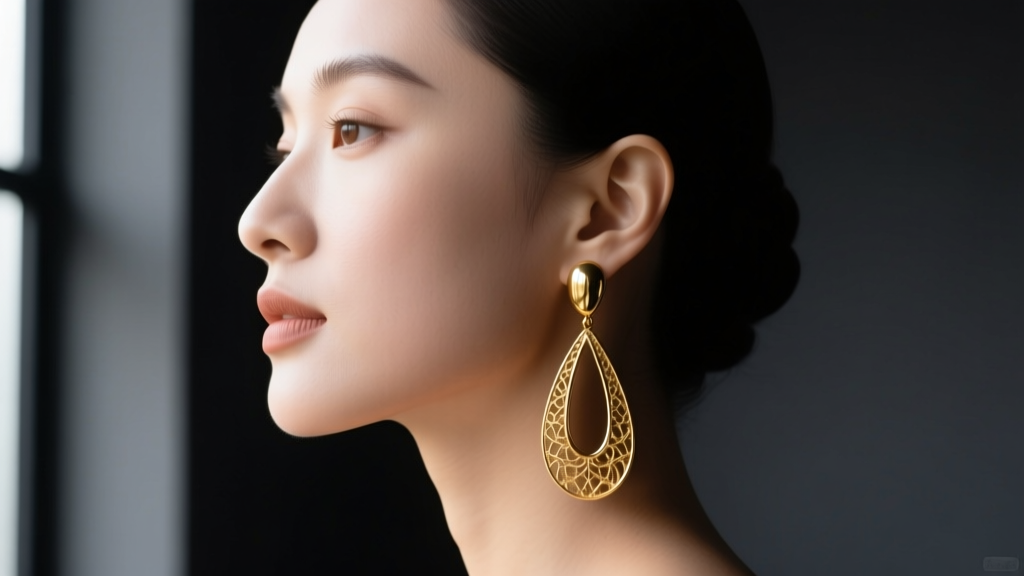
- Square Faces: Soften a strong, angular jawline by choosing oversized gold earrings with curved lines. Molten gold styles, teardrops, and rounded J-hoops provide a beautiful contrast to sharp bone structure.
- Oval Faces: This balanced face shape can pull off virtually any oversized silhouette, from massive chunky tube hoops to dramatic, shoulder-grazing chandeliers.
- Heart-Shaped Faces: To balance a narrower chin and wider forehead, choose oversized gold earrings that are wider at the bottom. Teardrops and chandelier styles add visual weight to the lower half of the face.
Caring for Heavy Gold Jewelry
Oversized gold earrings require specific maintenance to preserve their structural integrity and brilliant shine. Because gold is a relatively soft metal, large pieces are highly susceptible to scratching, denting, and warping if mishandled.
Never sleep in oversized gold earrings. The pressure of your head against a pillow can easily bend a thick 14k gold post or crush a hollow-formed hoop. Always remove them before showering or swimming; while pure gold does not tarnish, the alloyed metals in 14k and 18k gold can react with chlorine and hard water minerals, leading to a dull, cloudy film over time.
To clean your statement pieces, use a few drops of mild, phosphate-free dish soap mixed with warm water. Soak the earrings for five minutes, then gently brush them with an ultra-soft baby toothbrush to remove trapped sebum and skincare residue from the intricate crevices. Rinse thoroughly and dry with a lint-free microfiber cloth. Store your oversized gold earrings flat in a lined jewelry box or a soft pouch to prevent them from tangling or scratching against harder gemstones like diamonds or sapphires.
Final Thoughts on Sizing Up
Transitioning to oversized gold earrings is a thrilling style upgrade that instantly injects glamour and personality into your wardrobe. By prioritizing hollow constructions for massive hoops, insisting on 14k or 18k gold for durability, and utilizing omega backs or ear chains to protect your piercings, you can enjoy the bold aesthetic of heavy jewelry without the physical toll. Remember that your earlobes are delicate tissue; treat them with care, respect the physics of weight distribution, and your favorite statement pieces will remain comfortable and secure for years to come.


