The Ultimate Guide to Buying Moissanite Cluster Earrings
Discover what to look for when buying moissanite cluster earrings. Expert tips on stone cuts, metal settings, clarity, and pricing for the perfect pair.

The Rise of Moissanite Cluster Earrings
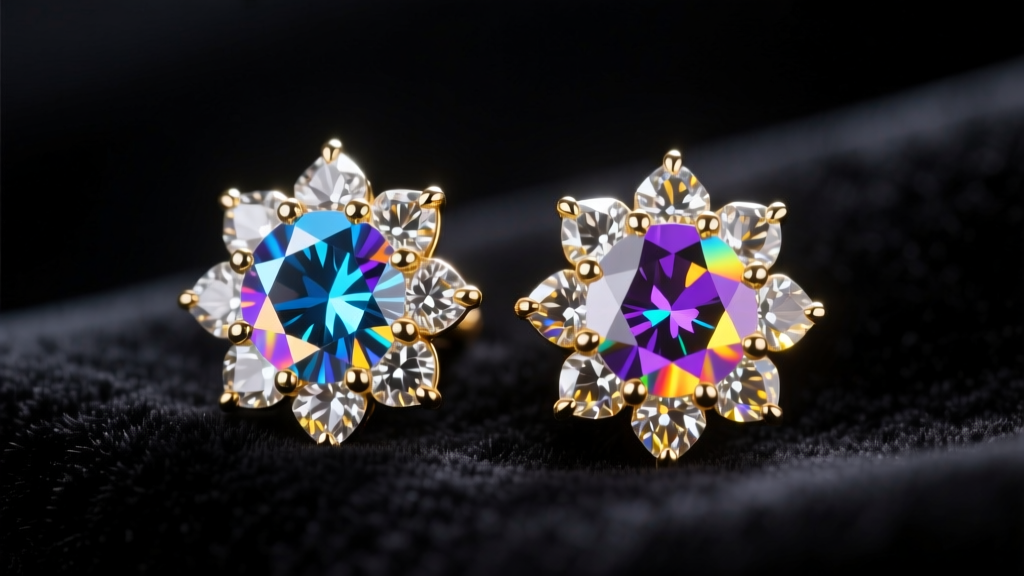
When it comes to maximizing brilliance and visual footprint without the exorbitant price tag of natural diamonds, moissanite cluster earrings have become a dominant force in fine jewelry. A cluster setting groups multiple smaller stones—known as melee—around a central gem or arranges them in a specific geometric pattern to mimic the look of a single, massive solitaire. According to the Gemological Institute of America (GIA), moissanite boasts a refractive index of 2.65 to 2.69, significantly higher than a diamond's 2.42. This means that when light hits a tightly packed cluster of moissanite stones, the resulting fire and scintillation are unparalleled. However, buying a cluster design requires a much more critical eye than buying a simple solitaire. From micro-prong durability to deceptive carat weight marketing, this guide breaks down exactly what to look for when investing in moissanite cluster earrings.
Decoding the Specs: DEW vs. Actual Millimeter Sizing
The most common pitfall for buyers entering the moissanite market is the reliance on "Diamond Equivalent Weight" (DEW) or "Carat Total Weight" (CTW). Because moissanite is roughly 10% lighter than diamond by volume, a 6.5mm round moissanite weighs about 0.88 carats, whereas a 6.5mm diamond weighs 1.00 carat. In cluster earrings, sellers often add the DEW of the center stone and the surrounding melee to market a "2.00 Carat" earring. This obscures the actual physical size of the piece.
As an informed buyer, you must demand the exact millimeter (mm) dimensions of both the center stone and the melee stones. A high-quality cluster will specify the precise stone counts and sizes. Below is a benchmark table to help you understand standard cluster configurations and their true visual impact.
| Cluster Style | Center Stone (mm) | Melee Count & Size | Approx. Total DEW | Visual Footprint |
|---|---|---|---|---|
| Classic Halo | 5.0mm (0.50ct DEW) | 14 x 1.5mm | 0.95ct DEW | 7.5mm (Looks like a 1.5ct solitaire) |
| Floral / Sunburst | 4.0mm (0.25ct DEW) | 6 x 2.5mm | 1.05ct DEW | 9.0mm (Highly textured, vintage) |
| Pave Cluster Stud | No center (All melee) | 19 x 2.0mm | 1.50ct DEW | 8.5mm (Solid wall of brilliance) |
Metal Selection and Micro-Prong Durability
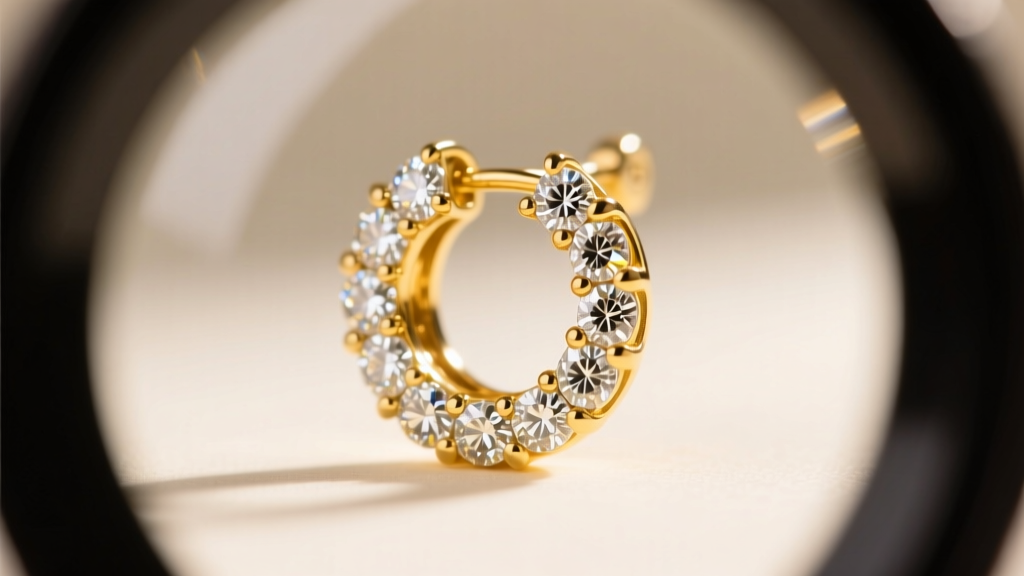
Cluster earrings rely heavily on micro-prongs—tiny metal claws that hold 1.0mm to 2.0mm melee stones in place. The metal you choose is not just about color; it is a structural necessity.
- 14K Gold (White, Yellow, or Rose): With a Vickers hardness of approximately 140, 14K gold is the industry standard for cluster settings. It is stiff enough to hold micro-prongs securely during daily wear while resisting bending.
- 18K Gold: Softer and more malleable (Vickers ~125). While it offers a richer color, 18K gold prongs are more prone to snagging on clothing and releasing tiny melee stones over time.
- Platinum: Extremely durable and dense. Platinum prongs tend to bend rather than snap, making it a premium choice for securing expensive melee layouts, though it commands a higher price.
- Sterling Silver (925): Avoid for fine clusters. Silver is too soft for micro-prongs. Tarnish can also build up in the tight crevices of a cluster, dulling the moissanite's fire and weakening the setting.
Color Grades and the "Crushed Ice" Effect
Moissanite is predominantly lab-created in the D-E-F (colorless) and G-H-I (near-colorless) ranges. For cluster earrings, it is vital that the melee stones match the center stone perfectly. A D-color center stone surrounded by H-color melee will look visibly disjointed, with the outer ring appearing slightly warm or yellowish under natural light.
Expert Tip: Pay close attention to the cut of the melee stones. Many manufacturers use "crushed ice" cut melee for the halo to save on production costs. Crushed ice moissanite can look splintery and glassy compared to the sharp, crisp facets of a brilliant-cut center stone. Always request images or videos of the earrings under direct sunlight to ensure the halo stones exhibit the same sharp scintillation as the center.
Furthermore, the Federal Trade Commission (FTC) Jewelry Guides mandate that sellers must clearly disclose the origin and nature of lab-created stones. Ensure your retailer explicitly states "moissanite" rather than using misleading terms like "simulated diamond" or "lab-grown diamond," which refer to entirely different materials.
Setting Styles: Halo, Floral, and Geometric
The architecture of the cluster dramatically affects both the aesthetic and the maintenance requirements of the earrings.
The Halo Cluster
A single row of melee surrounding a round or cushion center stone. Halos are excellent for protecting the girdle of the center stone, acting as a bumper against accidental impacts. However, the gap between the center and the halo can trap lotion and cosmetics, requiring frequent cleaning.
The Floral and Sunburst Cluster
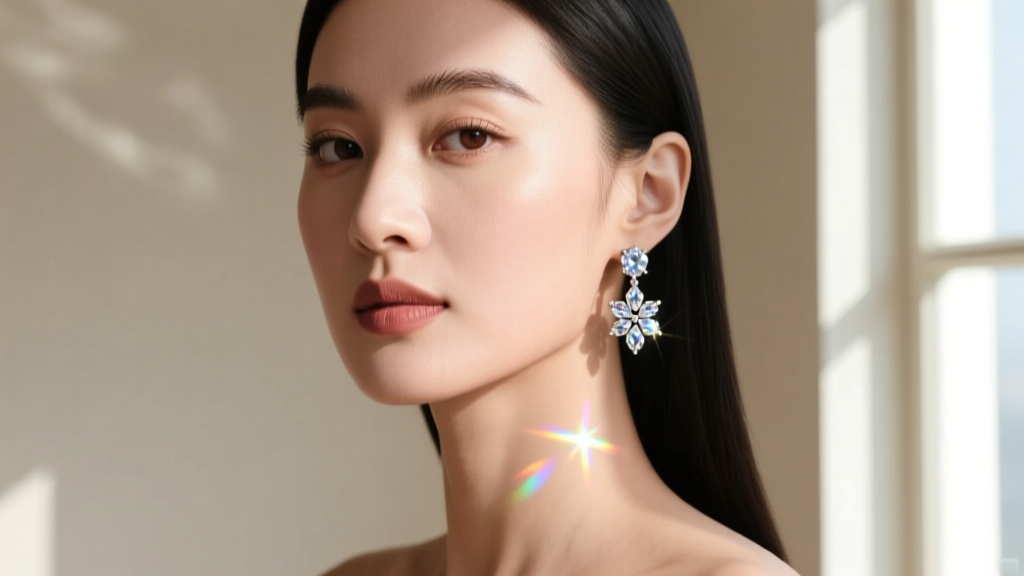
These designs use marquise, pear, or round melee stones arranged in organic, petal-like patterns. They offer a larger visual spread (often exceeding 10mm in diameter) without requiring massive center stones. They are ideal for those with larger earlobes or those who prefer statement pieces.
Geometric and Art Deco Clusters
Featuring baguette or princess-cut melee arranged in hexagons or squares. These require bezel or channel settings, which are much more secure than prong settings but reduce the light return of the moissanite by covering more of the stone's surface area.
2026 Pricing Benchmarks
Pricing for moissanite cluster earrings varies based on the brand, the precision of the cut, and the metal weight. As of 2026, you can expect the following market ranges for a pair of stud earrings (not per earring, but for the set):
- Entry-Level (Sterling Silver or 10K Gold, Standard Cut): $80 - $150. Expect lower clarity melee and potential mismatched color grades.
- Mid-Tier (14K Gold, D-E-F Color, Brilliant Cut): $250 - $600. This is the sweet spot for quality, featuring precise micro-prong work and excellent light return.
- Premium / Designer (18K Gold or Platinum, Custom Faceting, Branded Moissanite): $700 - $1,500+. These pieces feature heavy metal castings, hand-set melee, and premium warranties.
Maintenance: Protecting the Micro-Prongs
While moissanite itself is a 9.25 on the Mohs hardness scale and is virtually scratch-proof, the setting is the vulnerable component. Cluster earrings feature dozens of tiny prongs.
Ultrasonic Cleaners: While moissanite can easily withstand the heat and chemicals of an ultrasonic cleaner, the high-frequency vibrations can loosen micro-prongs over time. If your cluster earrings have shared prongs (where one metal claw holds two adjacent melee stones), ultrasonic cleaning is highly discouraged.
Safe Cleaning Method: The safest way to maintain the blinding fire of a moissanite cluster is to soak the earrings in warm water with a few drops of mild dish soap for 10 minutes. Use a soft-bristled baby toothbrush to gently agitate the dirt from the pavilion (the underside) of the cluster, where skin oils and cosmetics accumulate and block light. Dry with a lint-free microfiber cloth.
Final Verdict
Moissanite cluster earrings are a masterclass in optical illusion and luxury design, offering the massive visual impact of a high-carat diamond piece at a fraction of the cost. By ignoring deceptive DEW marketing, insisting on 14K gold or platinum for micro-prong security, and verifying the color uniformity of the melee stones, you can secure a pair of earrings that will remain brilliant and structurally sound for decades. Whether you opt for a tight, classic halo or a sprawling floral sunburst, the fiery dispersion of a well-crafted moissanite cluster is guaranteed to turn heads.


