How to Choose and Style Flattering Earrings in the 50s
Learn how to choose and style earrings in the 50s. Our step-by-step guide covers lobe elasticity, lightweight metals, and face-shape styling.

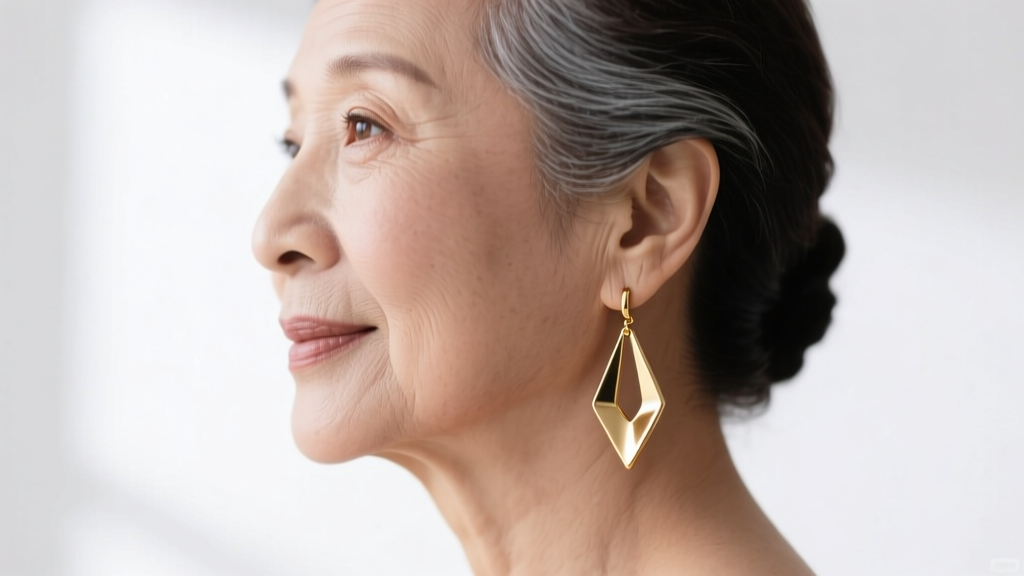
Entering your fifth decade is a milestone of elegance, confidence, and refined personal style. However, the physiological shifts that accompany this stage of life mean that your jewelry strategy must evolve. Choosing the right earrings in the 50s is no longer just about matching an outfit; it is about understanding changes in skin elasticity, facial bone structure, and even metal sensitivities. In this comprehensive 2026 step-by-step guide, we will walk you through the exact mechanics of selecting, fitting, and styling earrings that flatter and support your changing anatomy, ensuring your jewelry remains as vibrant and resilient as you are.
Step 1: Assessing Earlobe Elasticity and Gauge Needs
The most immediate physical change affecting how earrings sit is the natural depletion of collagen and elastin in the earlobes. As skin thins, the piercing hole can stretch, leading to the dreaded "cheese-cutter effect," where thin wires slowly slice downward through the lobe tissue. Standard fashion earrings are typically strung on 20-gauge (0.81mm) wires, which are far too thin for aging lobes.
Actionable Fix: Transition your daily wear to thicker gauges. Look for 18-gauge (1.02mm) or 16-gauge (1.29mm) hooks and posts. The wider surface area distributes the weight of the earring more evenly, preventing downward drag. If you already have stretched piercings, utilize silicone earlobe support patches (such as LobeWonder) which adhere to the back of the ear and provide a reinforced barrier for the earring post to rest against.
Step 2: Selecting the Right Metal Grade for Shifting Sensitivities
Hormonal fluctuations during and after menopause can alter your skin's pH levels and immune responses. It is incredibly common for women to suddenly develop contact dermatitis to metals they have worn their entire lives. According to the American Academy of Dermatology, nickel is the most common culprit in jewelry allergies, frequently hidden in sterling silver alloys and white gold.
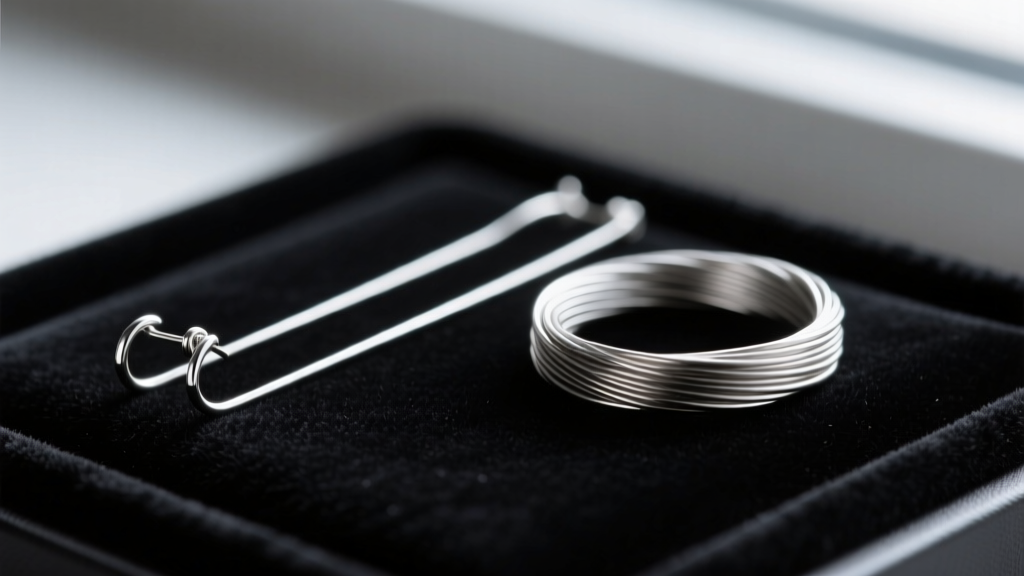
Actionable Fix: Audit your jewelry box and eliminate brass, copper, and unverified white gold. Instead, invest in hypoallergenic, biocompatible metals. Implant-grade titanium (ASTM F-136) is the gold standard for sensitive skin, offering extreme durability at a fraction of the weight of steel. For a warmer tone, opt for solid 14k or 18k yellow gold that is explicitly certified nickel-free. Niobium is another excellent, lightweight alternative for statement pieces.
Step 3: Matching Earring Styles to Shifting Facial Volume
Research published by the National Center for Biotechnology Information (NCBI) highlights that facial aging is not just about skin sagging; it involves significant bone resorption, particularly in the midface (the cheeks and under-eye area). As midface volume decreases, the lower face and jawline can appear heavier or wider by comparison. Your earrings should act as a visual counterbalance to this structural shift.
Actionable Fix: Avoid long, heavy teardrop earrings that terminate exactly at the jawline, as they draw the eye downward and emphasize lower-face heaviness. Instead, choose styles that add width and volume to the upper face and cheekbones.
| Earring Style | Visual Effect | Best For |
|---|---|---|
| Geometric Drops (1-2 inches) | Draws eye up and out, adding angularity to softening features. | Round or square face shapes experiencing midface volume loss. |
| Medium Hoops (20mm-30mm) | Frames the cheekbones, adding lateral width to balance the jaw. | Heart-shaped or elongated faces needing horizontal balance. |
| Oversized Studs / Clusters | Provides a focal point high on the ear, lifting the visual center. | All face shapes; ideal for severe lobe stretching where drops are painful. |
Step 4: Managing Earring Weight and Backing Mechanics
Gravity is the enemy of aging earlobes. While you may love the look of heavy, chandelier-style earrings, wearing pieces that exceed 4 to 5 grams per ear on a daily basis will accelerate lobe elongation. Furthermore, the type of earring backing you use is just as critical as the weight of the front piece.
Actionable Fix: Reserve heavy statement pieces (10+ grams) for short-term evening wear. For daily styling, prioritize Omega-back or clip-on earrings with silicone cushions. Unlike standard butterfly push-backs or French wires that rely entirely on the piercing hole for support, Omega backs hug the entire rear surface of the earlobe, distributing the weight across a wider area of skin and providing a natural "lift" to the lobe itself.

Step 5: Adapting to Hair and Neckline Changes
Many women in their 50s transition to shorter hairstyles, such as bobs, lobs, or pixie cuts, and may favor higher necklines or structured collars. When the ears and neck are fully exposed, earrings become the primary focal point of your profile.
- For Pixie Cuts and Updos: Your ears are entirely visible, making intricate details shine. Opt for diamond or moissanite huggies, or structured geometric studs that catch the light without tangling in short layers.
- For Bobs and Lobs: Choose drop earrings that sit just below the jawline but above the collarbone (approx. 1.5 to 2 inches long). This creates a seamless visual bridge between the hair and the neck, elongating the silhouette.
- For High Collars and Turtlenecks: Avoid long dangles that will snag on fabrics. Instead, wear bold, oversized studs or ear cuffs that sit high on the cartilage, keeping the jewelry clear of your clothing while maintaining high visual impact.
Troubleshooting Common Earring Issues in Your 50s
Even with the right strategy, you may encounter specific fit issues. Here is how to troubleshoot them like a professional jeweler:
- Problem: Post earrings constantly droop forward, pointing toward the floor.
Solution: The post is too thin for your stretched piercing, or the backing is too loose. Switch to a 14-gauge (1.6mm) post with a secure screw-back or jumbo silicone friction back to hold the earring flush against the lobe. - Problem: The top of the earlobe folds over the front of the earring when wearing drops.
Solution: This indicates a loss of structural cartilage support in the lobe. Use an invisible earlobe support patch on the back of the ear, or switch to a leverback design that hooks over the top of the ear rather than resting solely inside the hole. - Problem: Cartilage piercings (helix/tragus) become easily irritated.
Solution: Cartilage thins and loses blood flow as we age, making healing slower. Ensure all cartilage jewelry is internally threaded or threadless ASTM F-136 titanium to prevent micro-tears during insertion.
Mastering the art of selecting earrings in the 50s is about marrying aesthetic beauty with anatomical intelligence. By upgrading your wire gauges, choosing biocompatible metals, and strategically placing visual weight to complement your evolving bone structure, you can ensure your earrings remain a source of joy, comfort, and undeniable sophistication.


