Anarchy Earrings: The Beginner's Guide to Punk Ear Styling
Discover everything about anarchy earrings. Learn about safe metals, gauge sizes, and styling tips for punk ear curations in this beginner-friendly guide.

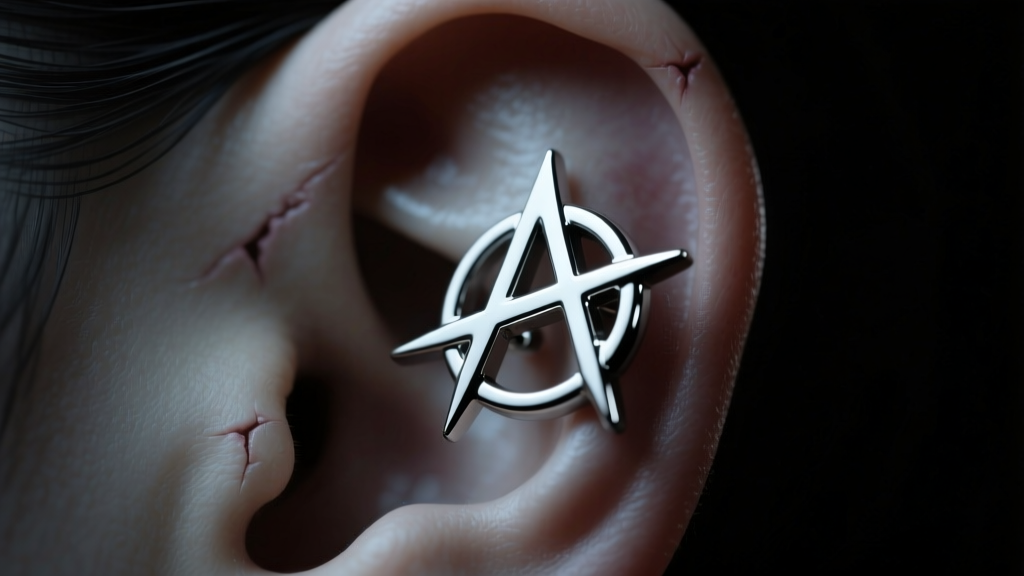
When you think of punk rock, grunge, and alternative fashion, few symbols are as instantly recognizable as the Circle-A. As we navigate the alternative ear curation trends of 2026, the punk revival has brought anarchy earrings back to the forefront of jewelry styling. But moving beyond cheap, mass-produced mall kiosk accessories requires a solid understanding of metallurgy, piercing anatomy, and proper aftercare. Whether you are looking to add a subtle rebellious stud to your lobe or curate a full cartilage constellation, this beginner-friendly explainer will teach you exactly how to choose, wear, and maintain anarchy earrings safely and stylishly.
What Exactly Are Anarchy Earrings?
Anarchy earrings are any ear jewelry that incorporates the traditional anarchy symbol—a capital 'A' enclosed within a circle. Historically popularized in the 1970s London punk scene by bands like the Sex Pistols, the symbol has evolved from a purely political statement into a staple of alternative aesthetic fashion. Today, you will find the Circle-A rendered in various styles, from minimalist flat-back labret studs and intricate dangle earrings to non-pierced ear cuffs. The defining characteristic is the motif, but the quality, safety, and longevity of the piece depend entirely on the materials and construction methods used by the jeweler.
The Critical Guide to Metals and Material Safety
The most common mistake beginners make when buying alternative jewelry is prioritizing the design over the metal composition. The skin on your ears, particularly in fresh or irritated piercings, is highly reactive to certain alloys. Understanding what your anarchy earrings are made of is non-negotiable for avoiding infections and allergic reactions.
Understanding Implant-Grade vs. Surgical Steel
Many cheap anarchy earrings are marketed as "surgical steel," but this is largely a marketing term. True body-safe steel is 316L stainless steel, which is acceptable for fully healed piercings but still contains trace amounts of nickel. For fresh piercings or sensitive ears, the Association of Professional Piercers (APP) strictly recommends implant-grade titanium (ASTM F136). Titanium is completely nickel-free, lightweight, and biocompatible, meaning your body will not reject it or react with green discoloration.
The Nickel Allergy Factor
If you have ever experienced itching, redness, or flaking skin around your piercings, you likely have a nickel allergy. According to the American Academy of Dermatology, nickel allergy is one of the most common causes of allergic contact dermatitis. Many inexpensive, mass-produced anarchy symbols are cast from "pot metal" or low-grade brass and then plated with a thin layer of silver or black paint. Once that plating chips, the nickel-heavy base metal is exposed directly to your skin. Always invest in solid metals or high-quality PVD-coated titanium.
| Metal Type | Grade / Standard | Best Used For | Estimated Price Range |
|---|---|---|---|
| Implant-Grade Titanium | ASTM F136 | Fresh piercings, highly sensitive ears | $25 - $60+ |
| Surgical Steel | 316L | Fully healed lobes and cartilage | $10 - $25 |
| Sterling Silver | 925 | Healed lobes only (avoid in cartilage) | $20 - $45 |
| Solid Gold | 14k or 18k | All healed piercings, luxury curations | $60 - $150+ |
Decoding Gauge Sizes: Avoiding the Cheese-Cutter Effect
Gauge refers to the thickness of the earring post or wire. Getting the gauge right is crucial for both comfort and the structural integrity of your piercing. Standard lobe piercings are typically done at 20g (0.8mm) or 18g (1.0mm). However, professional cartilage piercings (like the helix, tragus, or conch) are usually pierced at 16g (1.2mm) or 14g (1.6mm) to accommodate swelling and provide stability.
If you wear a thin 20g anarchy dangle earring in a 16g cartilage piercing, you risk the "cheese-cutter effect." Because the wire is so thin, the weight of the dangling anarchy symbol acts like a wire cheese slicer, slowly migrating through the tissue and permanently damaging the piercing channel. Always match your jewelry gauge to your piercing gauge. If you want a delicate look, opt for a small, lightweight 16g flat-back stud rather than a thin, heavy wire.
Popular Styles and Cartilage Placement
Anarchy earrings are no longer limited to heavy, swinging dangles. Modern jewelers have adapted the Circle-A to fit almost any piercing placement, allowing for highly customized ear curations.
Flat-Back Labret Studs
For helix, tragus, and conch piercings, flat-back labrets are the gold standard. They feature a flat disc that sits flush against the back of the ear, eliminating the painful pokes associated with traditional butterfly backs. You can easily find anarchy symbols cast into the front face of a titanium labret. These are perfect for sleeping in and provide a sleek, minimalist punk aesthetic.
Dangle and Drop Earrings
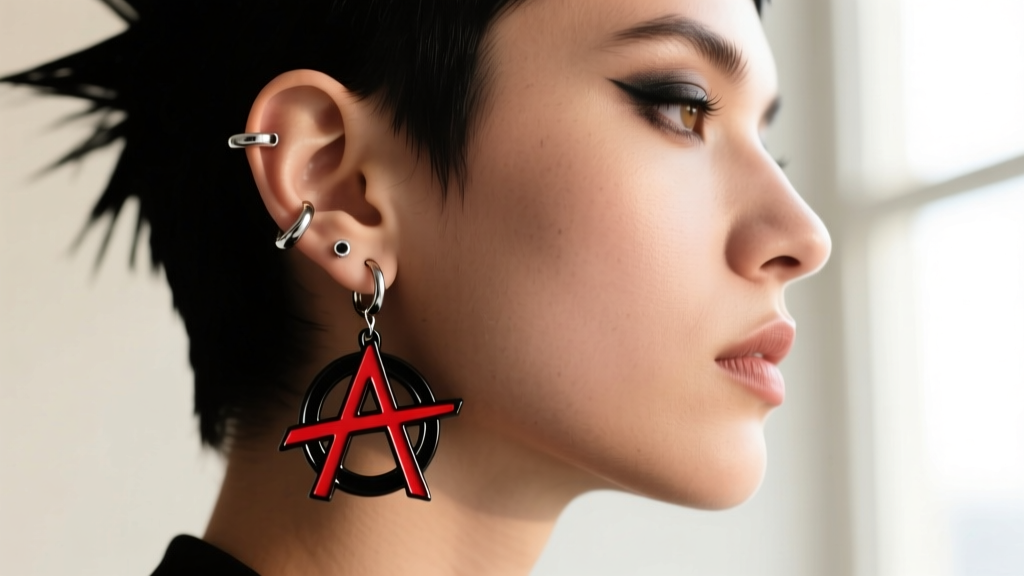
Dangle anarchy earrings are best reserved for standard lobe piercings or stretched earlobes. Because the symbol carries some visual and physical weight, a dangle style draws the eye downward, making it an excellent choice for balancing round or square face shapes. Look for dangles that attach via a seamless clicker ring or a secure lever-back closure to prevent losing the piece in a mosh pit or crowded venue.
Non-Pierced Ear Cuffs
If you are not ready to commit to a new cartilage piercing, anarchy ear cuffs are a brilliant alternative. These wrap around the outer helix of the ear and require no puncture. When shopping for cuffs, ensure the metal is adjustable but retains its tension; cheap alloys will bend out of shape after a few wears, while high-quality sterling silver or titanium can be gently adjusted by a jeweler to grip your ear securely.
Cleaning and Maintaining Black PVD and Silver Finishes
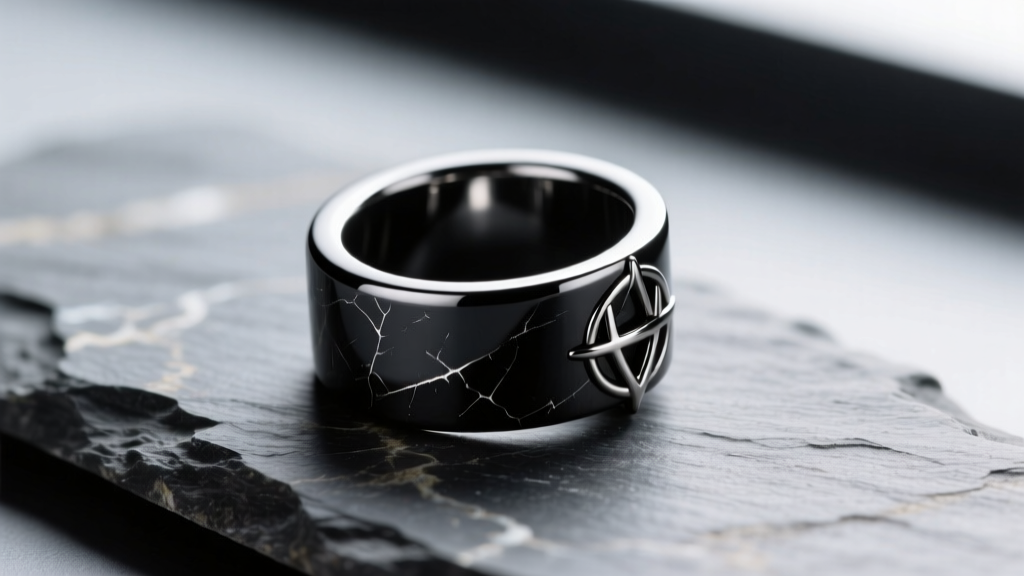
Many anarchy earrings feature a black finish to give the symbol a gritty, oxidized, or matte appearance. In modern, high-end jewelry, this is achieved through PVD (Physical Vapor Deposition) coating, which bonds the color to the titanium at a molecular level. However, older or cheaper pieces may simply be painted or chemically oxidized.
- For PVD Coated Titanium: Clean with sterile 0.9% saline spray and a soft, lint-free cloth. Never use ultrasonic cleaners or harsh chemicals like rubbing alcohol, as these can degrade the coating over time.
- For Oxidized Sterling Silver: The black crevices in the anarchy symbol are intentionally oxidized to make the design pop. Do not use silver dip liquids, as they will strip the black oxidation and leave you with a flat, shiny, and less defined symbol. Use a polishing cloth only on the raised, high-friction areas.
- For Surgical Steel: Wash with mild, fragrance-free antibacterial soap and warm water. Dry completely before storing to prevent water spots and minor surface rust.
Final Thoughts on Building Your Punk Ear Curation
Anarchy earrings are a powerful way to express individuality and edge, but they require the same respect and care as any other fine body jewelry. By prioritizing implant-grade materials, respecting your piercing's gauge requirements, and maintaining your finishes properly, you ensure that your punk aesthetic remains safe, comfortable, and visually striking for years to come. Start with a high-quality titanium flat-back stud, and let your rebellion grow from there.


