The Anatomy of Earrings Types: A Technical Guide to Fit and Function
Explore the biomechanics of different earrings types. This expert guide covers gauge physics, backing tensile strength, and metallurgical standards.

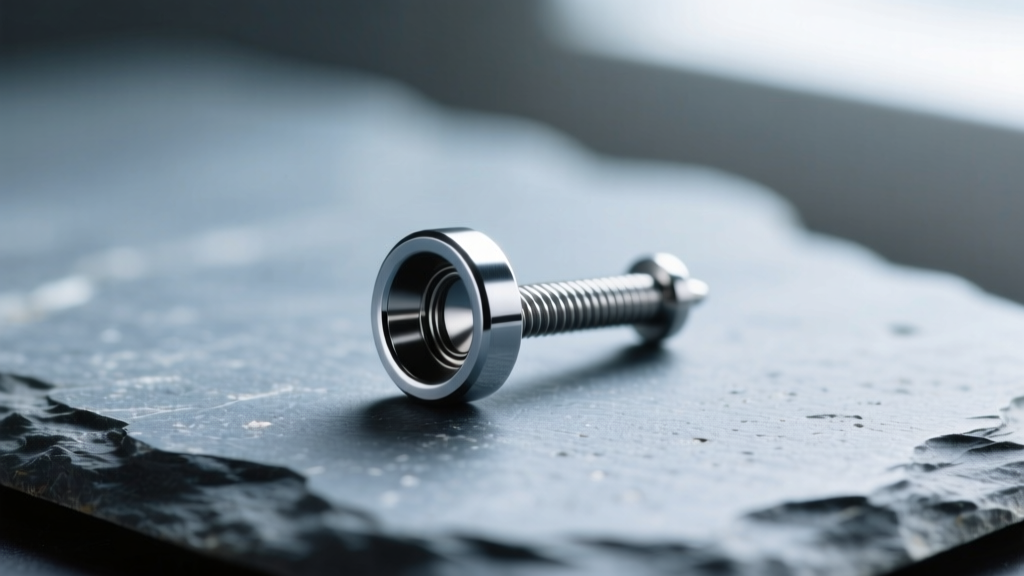
Beyond Aesthetics: The Biomechanics of Ear Adornment
When most consumers and stylists discuss different earrings types, the conversation revolves around aesthetics, face shapes, and current fashion trends. However, from a structural and dermatological perspective, earrings are essentially biomedical implants that interact dynamically with human tissue. Understanding the engineering behind various earrings types is critical for preventing tissue migration, contact dermatitis, and mechanical failure. This expert deep dive bypasses the superficial styling advice to examine the physics, metallurgy, and anatomical constraints that dictate how different earrings types perform over time.
Gauge Thickness and the Physics of Tissue Stress
The most common point of failure in lightweight and dangle earrings types is the misunderstanding of gauge thickness relative to weight distribution. In physics, pressure is defined as force divided by area. A standard 20-gauge (0.81mm) wire has roughly 60% less surface area than a 14-gauge (1.6mm) wire. When a heavy chandelier or drop earring is suspended from a 20-gauge post, the localized pressure on the fistula (the piercing channel) increases exponentially.
This phenomenon is known in the professional piercing community as the 'cheese cutter effect.' The thin wire exerts enough shear stress to slowly slice through the earlobe tissue, leading to irreversible elongation and eventual tearing. According to the Association of Professional Piercers (APP), selecting the correct gauge is not just about the initial piercing size, but about matching the structural integrity of the jewelry to the kinetic load it will bear during daily wear.
Standard Gauge Metrics and Load Limits
| Gauge (AWG) | Diameter (mm) | Common Earrings Types | Max Safe Weight (Lobe) | Failure Mode Risk |
|---|---|---|---|---|
| 22G - 20G | 0.64 - 0.81 | Lightweight studs, thin wire hoops | < 2 grams | High (Cheese cutter effect) |
| 18G | 1.02 | Standard huggies, small dangles | 2 - 4 grams | Moderate (Bending/Warping) |
| 16G | 1.29 | Cartilage hoops, medium drops | 4 - 7 grams | Low (Optimal for most styles) |
| 14G | 1.60 | Heavy statement pieces, ear weights | 7 - 15+ grams | Minimal (Highly stable) |
Tensile Stress and Backing Mechanisms
The backing mechanism is the unsung hero of jewelry engineering. Different earrings types utilize distinct locking systems, each with specific tensile strengths and mechanical failure points. Friction backs (commonly known as butterfly clutches) rely on the spring tension of folded metal. Over time, the grooves on the earring post wear down, and the metal fatigues, leading to a catastrophic loss of tension and lost jewelry.
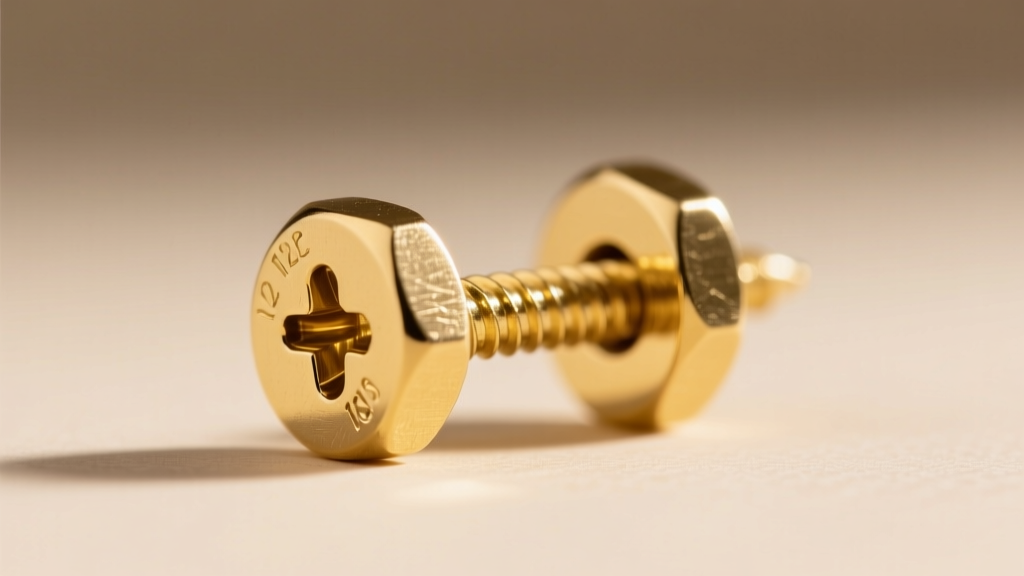
For high-value or heavy earrings types, mechanical threading or positive-locking systems are vastly superior. Internally threaded jewelry features a machined screw pitch that locks into the backing, distributing rotational force evenly. Threadless (press-fit) systems utilize a slightly bent pin that creates outward tension against the inside of a hollow shaft, offering a secure lock that is highly resistant to accidental pulling.
- Friction/Butterfly Backs: High failure rate due to metal fatigue; accumulates sebum and debris in the clutch crevices.
- Screw Backs: Excellent security, but vulnerable to cross-threading if forced at an improper angle.
- La Lobe / Silicone O-Rings: Provides high friction and comfort, but silicone degrades when exposed to certain oils and alcohols.
- Threadless (Press-Fit): Superior for cartilage; relies on internal spring tension rather than external grooves.
Load-Bearing Constraints: Lobe vs. Cartilage
Not all ear tissue is created equal. Earlobes are composed of soft, vascularized connective tissue that can stretch and accommodate various angles and weights. Cartilage, conversely, is a rigid, avascular structure encased in a tight perichondrium. The earrings types you select must respect these anatomical differences.
Attempting to force a rigid circular hoop into a freshly pierced or slightly angled helix fistula introduces continuous rotational torque. This micro-movement prevents the formation of a stable epithelial tube, almost guaranteeing the development of hypertrophic scarring, commonly known as an irritation bump.
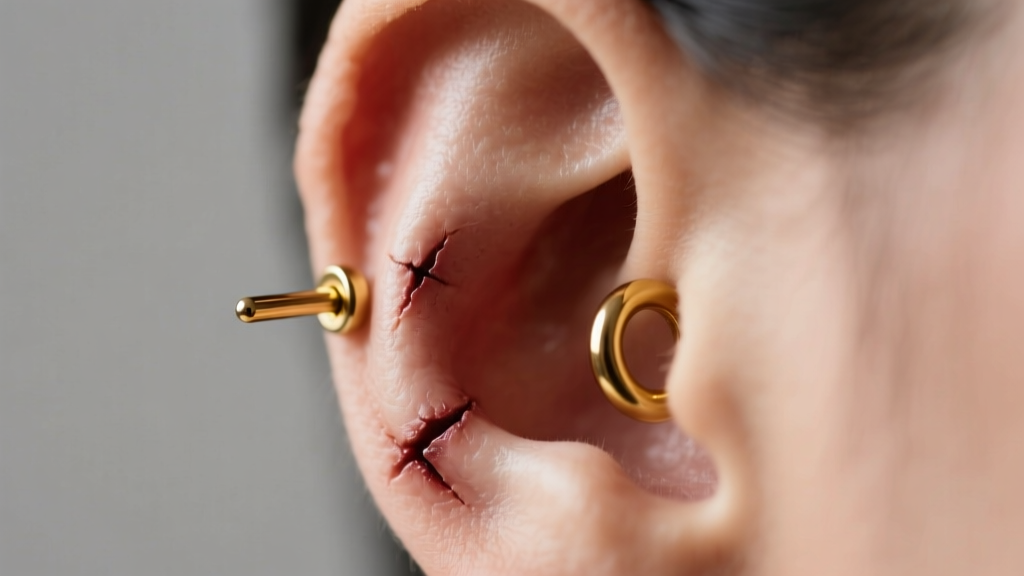
For cartilage piercings, flat-back labrets are mechanically superior to hoops or butterfly-backed studs. The flat disc sits flush against the inner ear, eliminating the pressure points caused by pointed posts and preventing the jewelry from catching on hair or clothing. When evaluating cartilage-compatible earrings types, always prioritize internally threaded or threadless flat-back labrets crafted from implant-grade materials.
Metallurgical Standards for Long-Term Wear
The material composition of your jewelry dictates its biocompatibility. Many commercial earrings types are manufactured from 316L or 316LVM surgical stainless steel. While durable and affordable, these alloys contain between 8% and 10.5% nickel. In the presence of saline (sweat and sebum), nickel ions can leach from the alloy, triggering allergic contact dermatitis in sensitized individuals. The American Academy of Dermatology identifies nickel as the most common cause of metal allergy, affecting millions of adults globally.
For long-term wear, especially in body jewelry and cartilage earrings types, ASTM F136 Titanium (Ti-6Al-4V ELI) is the gold standard. This implant-grade alloy contains zero nickel and boasts a modulus of elasticity that closely mimics human bone. This flexibility reduces the micro-trauma caused by the jewelry shifting within the fistula during sleep or physical activity. Niobium (ASTM F39) is another excellent, highly malleable alternative that is completely nickel-free and can be anodized to produce vibrant, non-toxic surface colors without the use of chemical plating.
Final Technical Recommendations
Selecting the right earrings types requires looking past the display case and examining the structural engineering of the piece. Always verify the gauge thickness to ensure it can support the weight of the design without inducing the cheese cutter effect. Demand internally threaded or threadless mechanisms for any high-value or cartilage jewelry to prevent mechanical failure and tissue trauma. Finally, insist on verifiable implant-grade materials like ASTM F136 Titanium to eliminate the risk of heavy metal leaching. By treating jewelry selection as an exercise in biomechanics and metallurgy, you ensure both the longevity of the piece and the health of the tissue it adorns.


