Antique Jade Earrings: A Beginner's Authentication Guide
Discover how to identify, authenticate, and care for antique jade earrings. Learn the differences between jadeite, nephrite, and treated stones.

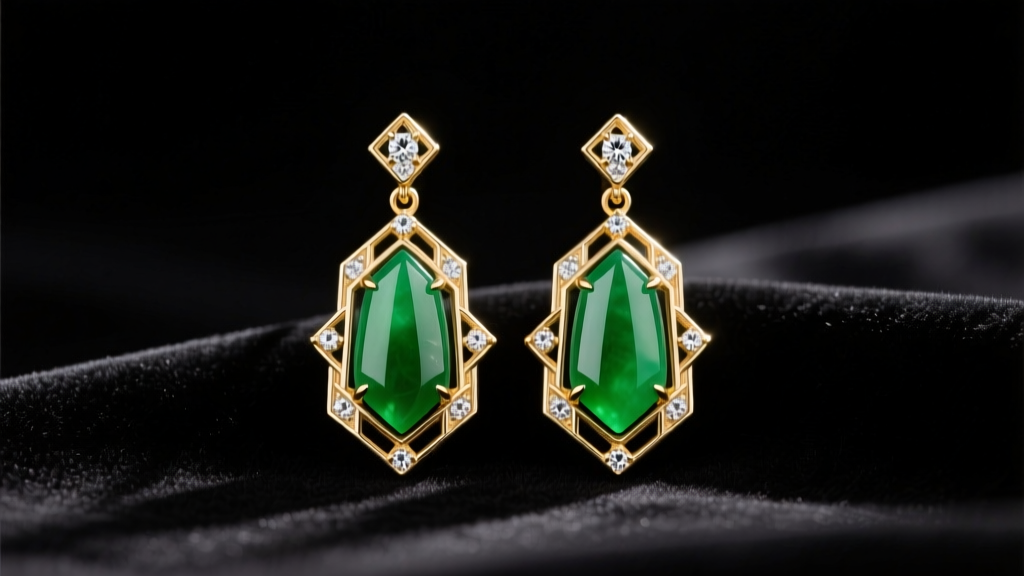
The Allure and Complexity of Antique Jade
Entering the world of antique jade earrings is like stepping into a centuries-old narrative of art, culture, and geology. For millennia, jade has been revered as a symbol of purity, moral integrity, and protection. However, for a modern collector or a first-time buyer, the antique jewelry market can be a daunting landscape. Unlike diamonds, which are evaluated on the universally standardized 4Cs (Cut, Color, Clarity, Carat), jade is assessed through a highly nuanced matrix of mineralogy, translucency, texture, and treatment history.
When you are hunting for genuine antique jade earrings, you are not just buying a gemstone; you are acquiring a historical artifact. The challenge lies in the fact that 'jade' is not a single mineral, and the antique market is unfortunately saturated with sophisticated reproductions and chemically treated stones passed off as natural. This beginner-friendly explainer will equip you with the gemological frameworks and historical knowledge necessary to authenticate, evaluate, and care for vintage and antique jade pieces with absolute confidence.
Jadeite vs. Nephrite: Understanding the Mineralogy
The most critical mistake beginners make is assuming all jade is the same. In gemology, 'jade' is an umbrella term that encompasses two distinct metamorphic minerals: Nephrite and Jadeite. Understanding the difference is paramount when evaluating antique pieces, as their historical usage and market values differ drastically.
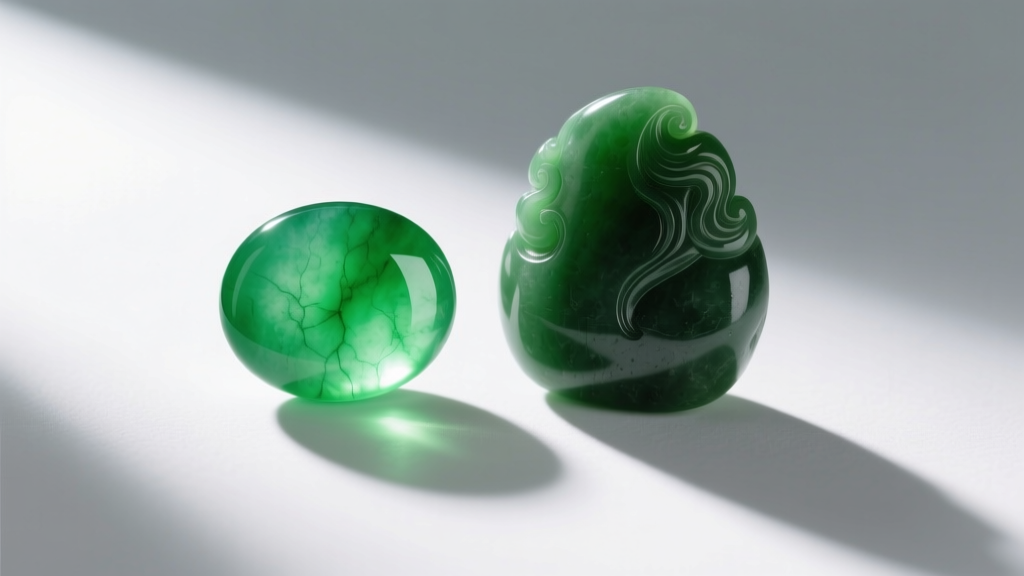
Nephrite: The Ancient Standard
Nephrite is a calcium and magnesium-rich amphibole mineral. It has a fibrous, interlocking crystalline structure that makes it incredibly tough—historically used for tools and weapons before it was carved into ornaments. Nephrite is typically found in opaque to semi-translucent shades of spinach green, mutton fat white, and earthy browns. According to the Gemological Institute of America (GIA), nephrite has a specific gravity of 2.90 to 3.03 and a refractive index of 1.60 to 1.63. Most ancient Chinese jade artifacts, as well as early Victorian jewelry incorporating imported Eastern carvings, feature nephrite.
Jadeite: The Imperial Favorite
Jadeite is a sodium and aluminum-rich pyroxene. It has a granular, interlocking crystalline structure that allows for a higher polish and greater translucency. Jadeite entered the Chinese market from Burma (Myanmar) in the 18th century and quickly became the preferred stone for high-end jewelry due to its vibrant, glassy colors—most notably 'Imperial Green.' Jadeite is denser, with a specific gravity of 3.30 to 3.38 and a refractive index of 1.66. When you encounter high-end Art Deco or Retro-era antique jade earrings featuring vivid, translucent green stones, you are almost certainly looking at jadeite.
| Feature | Nephrite | Jadeite |
|---|---|---|
| Mineral Class | Amphibole | Pyroxene |
| Specific Gravity | 2.90 - 3.03 | 3.30 - 3.38 |
| Visual Texture | Opaque, fibrous, waxy luster | Translucent, granular, glassy luster |
| Antique Era Prevalence | Pre-19th Century, Early Victorian | Late Victorian, Art Deco, Retro |
The ABCs of Jade Treatments: A Buyer's Warning
The most significant financial risk when buying antique jade earrings is inadvertently purchasing a treated stone. In the late 20th century, gemologists developed a grading system to categorize jade treatments. As a buyer, you must be fluent in this terminology to avoid overpaying for chemically altered stones.
- Type A (Natural): This jade is completely untreated, save for a traditional surface waxing or plum polish used to enhance luster. Type A jade is the only category that holds and appreciates in antique market value. It will feel cool to the touch and exhibit a natural, unbroken internal crystalline structure under magnification.
- Type B (Bleached and Polymer-Impregnated): Lower-quality, stained jadeite is soaked in hydrochloric acid to remove brown or yellow impurities. This process destroys the stone's internal structure, leaving it porous. It is then vacuum-impregnated with polymer resin to restore translucency. Over decades, this resin degrades, yellows, and becomes brittle. Under a 10x jeweler's loupe, Type B jade often reveals a 'spiderweb' surface texture where the acid etched the grain boundaries.
- Type C (Dyed): The jade is artificially dyed to mimic the highly prized Imperial Green or lavender hues. The dye concentrates in the microscopic fractures of the stone, which can be easily spotted under magnification as glowing green veins. Type C jade fades significantly when exposed to prolonged sunlight or heat.
- Type B+C: A combination of acid-bleaching, polymer-impregnation, and dyeing. These stones are essentially ruined from a collector's standpoint and hold virtually no antique premium.
When evaluating antique jade earrings, always request a condition report or a recent gemological certificate from a reputable lab confirming the stones are Type A. If a seller cannot provide this, assume the stones have been treated.
Dating Antique Earrings by Their Findings and Settings
Authenticating the jade is only half the battle; you must also verify that the setting is genuinely antique. Jewelry findings—the clasps, hinges, and posts—have evolved significantly over the last 150 years. Examining these mechanical details is a highly reliable way to date a piece.
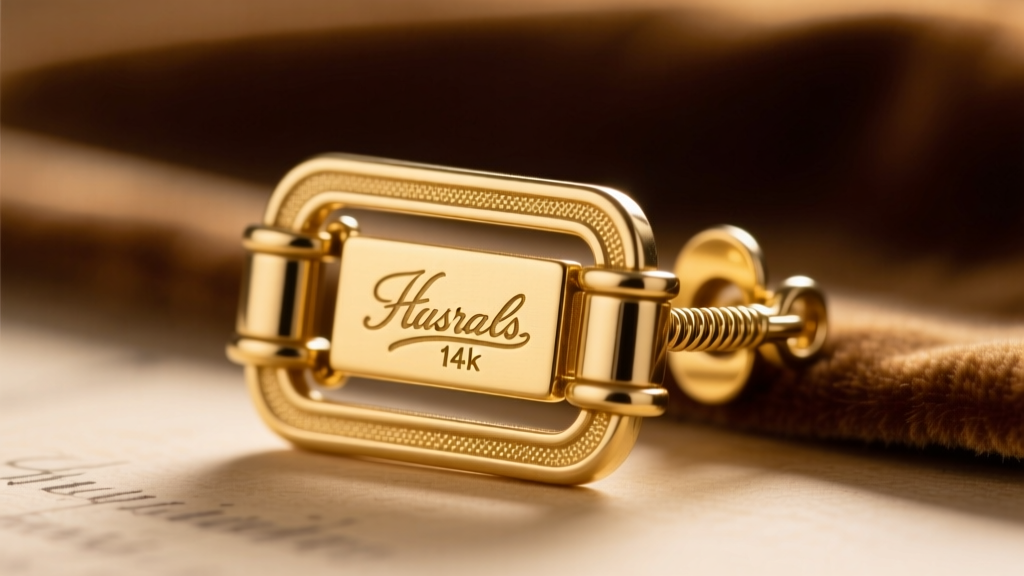
Victorian and Edwardian Eras (1837–1910)
Earrings from the mid-to-late 19th century often feature lever-back closures or simple shepherd's hook wires. If the earrings are studs, they may utilize a threaded post and screw-back mechanism, which was patented in 1894. Settings from this era are frequently crafted in 14k or 15k yellow gold, or silver-topped gold. Look for intricate, hand-engraved bezels or milgrain detailing that shows signs of hand-tooling rather than machine-casting.
Art Deco Period (1920–1935)
The Art Deco era saw a massive surge in the popularity of carved jadeite, heavily influenced by the discovery of Tutankhamun's tomb and a Western fascination with 'Chinoiserie.' Jewelers like Cartier and Boucheron paired vibrant green jade with stark black onyx, platinum, and diamond pavé. Earrings from this period are often long, geometric drops or clip-ons. The Lang Antiques University notes that early clip-on mechanisms (like the trombone clasp or simple spring clips) were prevalent before the modern hinged clip was perfected in the late 1930s.
Retro and Mid-Century (1935–1960)
Retro-era jade earrings often feature bold, three-dimensional 14k or 18k rose and yellow gold settings, sometimes accented with rubies or sapphires. By the 1950s, the modern friction post and 'butterfly' push-back became the industry standard. If an earring marketed as 'Victorian' features a modern, thin friction post with a butterfly back, the original setting has been altered, or the piece is a modern reproduction utilizing an older stone.
2026 Pricing Guide: What Should You Expect to Pay?
The market for antique jade jewelry has matured significantly, driven by a renewed appreciation for sustainable, historical luxury and the dwindling supply of high-quality, untreated Burmese jadeite. Below is a realistic pricing framework for the current market, assuming the stones are verified Type A and the settings are original.
| Era & Style | Jade Type & Quality | Estimated Market Value (USD) |
|---|---|---|
| Victorian Nephrite Studs | Opaque, spinach green, 14k gold | $400 - $900 |
| Art Deco Jadeite Drops | Translucent, vibrant green, platinum/diamond | $3,500 - $15,000+ |
| Retro Carved Jade Clips | Semi-translucent, lavender or pale green, 14k gold | $1,200 - $4,500 |
| Mid-Century Jadeite Hoops | Highly translucent, icy white/green, 18k gold | $2,000 - $8,000 |
Note: Pieces with documented provenance from heritage houses (e.g., Cartier, Van Cleef & Arpels) or featuring 'Imperial Green' Type A jadeite can easily command prices well into the tens of thousands at auction.
Care and Maintenance for Vintage Jade
Jade is renowned for its toughness, but antique settings and treated stones require specialized care. The most important rule for maintaining antique jade earrings is to never use ultrasonic or steam cleaners. Ultrasonic vibrations can easily fracture stones that have internal stress lines or hidden historical repairs. Furthermore, steam and harsh chemical dips will strip the natural wax coating from Type A jade, leaving it dull, and will rapidly degrade the polymer resin in Type B stones.
To clean your antique jade earrings at home, use a solution of lukewarm water and a few drops of mild, phosphate-free dish soap. Gently agitate the water and use a soft-bristled baby toothbrush to carefully clean behind the stones and along the filigree of the setting. Rinse under a gentle stream of lukewarm water and pat dry with a microfiber cloth. Store your earrings in a soft pouch away from harder gemstones like diamonds or sapphires, which can scratch the polished surface of the jade.
Final Thoughts on Building Your Collection
Collecting antique jade earrings is a deeply rewarding pursuit that bridges the gap between Eastern gemological heritage and Western jewelry design. By understanding the fundamental differences between nephrite and jadeite, rigorously questioning the treatment history of the stones, and closely examining the mechanical findings of the settings, you can navigate the market with an expert's eye. Always prioritize pieces that come with gemological verification, and remember that in the world of antique jade, patience and provenance are your most valuable assets.


