Aquamarine and Diamond Earrings: A Gemologist's Technical Buying Guide
Discover expert insights on aquamarine and diamond earrings. Learn about beryl grading, pavé settings, metal choices, and pricing for fine jewelry.

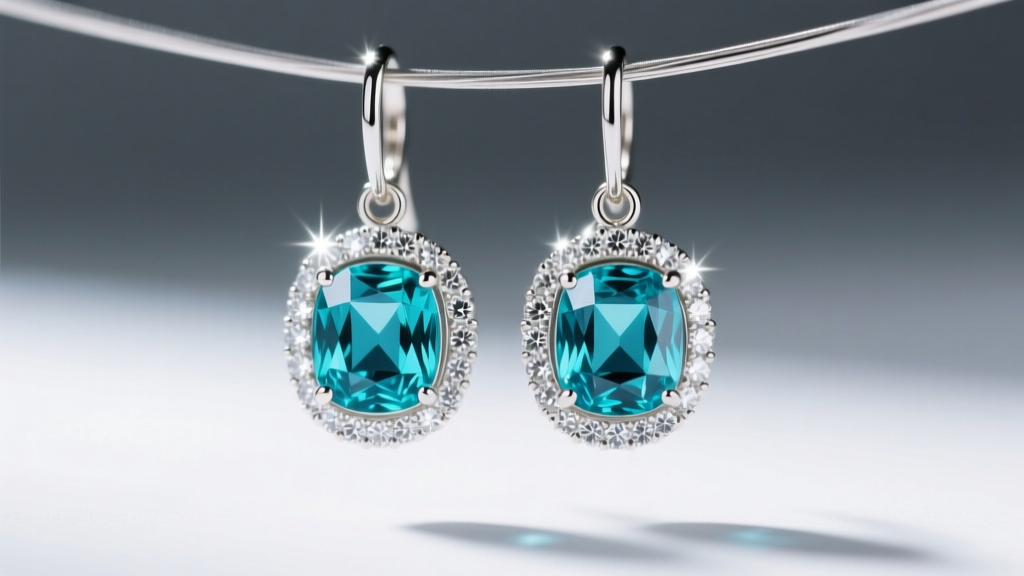
When evaluating fine jewelry, the combination of beryl and carbon creates a striking optical contrast that few other gemstone pairings can achieve. Aquamarine and diamond earrings represent a masterclass in complementary design, marrying the cool, vitreous luster of aquamarine with the adamantine brilliance of diamonds. However, designing and purchasing these earrings requires a deep understanding of gemological properties, structural setting mechanics, and metal alloy behaviors. This technical guide breaks down the precise specifications you need to know to evaluate, select, and maintain high-quality aquamarine and diamond earrings in today's market.
The Gemological Profile: Beryl vs. Carbon
Aquamarine is a variety of the mineral beryl (Be3Al2Si6O18), characterized by a hexagonal crystal system and a Mohs hardness of 7.5 to 8. Its refractive index (RI) ranges from 1.577 to 1.583, yielding a bright, glassy luster. Diamonds, conversely, are pure carbon with an isometric crystal structure, a Mohs hardness of 10, and an exceptionally high RI of 2.417. This massive disparity in hardness is the primary technical challenge when setting aquamarine and diamond earrings together. If the diamond melee is set too high or improperly aligned, the sharp girdles of the diamonds can abrade and scratch the polished table or crown facets of the aquamarine over time. Expert jewelers mitigate this by utilizing precision micro-pavé techniques, ensuring the diamond tables sit flush or slightly below the protective metal gallery.
Color Grading: Santa Maria vs. Espirito Santo
The value of the aquamarine in your earrings is heavily dictated by its color saturation and tone. According to the Gemological Institute of America (GIA), the most prized aquamarines exhibit a pure, moderately strong blue to slightly greenish-blue hue. The trade term "Santa Maria" refers to stones with a deep, highly saturated blue originally mined in Brazil's Santa Maria de Itabira mine. Today, similar hues from Africa are often labeled "Santa Maria Africana." Lighter, pastel stones are typically classified under the "Espirito Santo" designation. For drop earrings, a matched pair of Santa Maria aquamarines weighing over 2.00 carats each commands a significant premium due to the rarity of finding identical rough crystals with matching dichroic properties.
Diamond Melee Specifications
The diamonds used as accents in aquamarine and diamond earrings are typically "melee"—stones weighing less than 0.15 carats each. To maintain optical harmony, the melee should be graded in the G-H color range with VS2-SI1 clarity. Using D-F colorless diamonds can sometimes create a harsh visual contrast that overpowers the delicate blue of the aquamarine, while lower-color melee (J-M) can introduce unwanted yellowish reflections that muddy the cool tones of the primary gemstone.
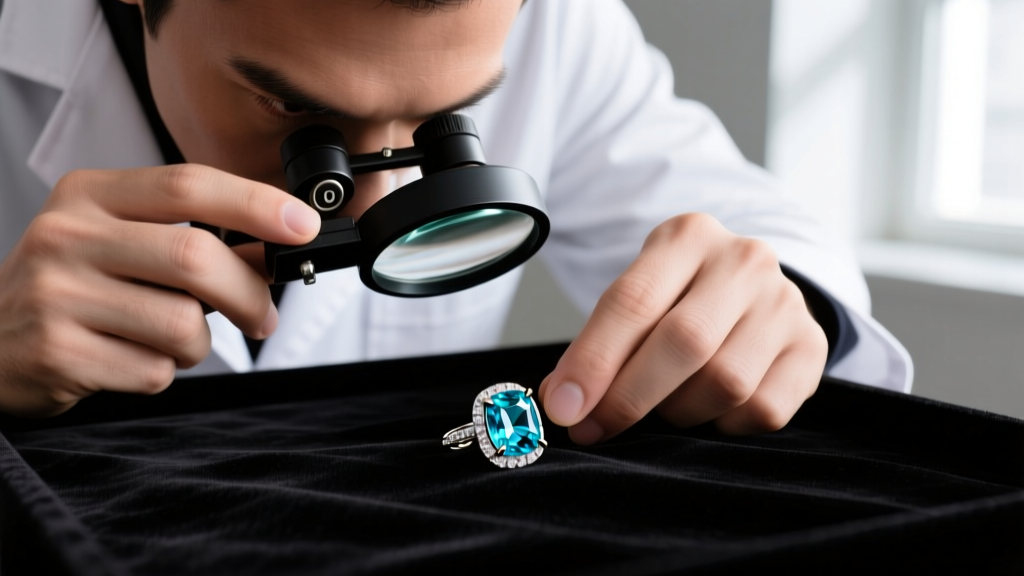
Structural Integrity and Setting Mechanics
Aquamarine possesses distinct basal cleavage and a degree of brittleness, making it susceptible to chipping if subjected to uneven pressure during the setting process. The choice of setting for aquamarine and diamond earrings must balance security with light performance.
| Setting Type | Security Level | Light Performance | Best Application |
|---|---|---|---|
| V-Prong (4 or 6) | High (if V-tips are used on corners) | Excellent (maximizes pavilion light return) | Emerald or Pear-cut aquamarine drops |
| Full Bezel | Maximum (protects entire girdle) | Moderate (restricts side light entry) | Active lifestyle stud earrings |
| Micro-Pavé Halo | Moderate (requires prong maintenance) | High (adds peripheral brilliance) | Round or Oval aquamarine center stones |
| Friction / Tension | Low (high risk of stone loss) | Maximum (unobstructed light) | Not recommended for beryl |
For chandelier or dangle styles, the center of gravity is critical. Aquamarine is a relatively low-density gemstone (specific gravity 2.68-2.74) compared to diamonds (3.52). A top-heavy diamond halo on a lightweight aquamarine drop will cause the earring to tilt forward on the earlobe. Master jewelers counterbalance this by using tapered diamond accents that increase in size toward the bottom of the drop, or by incorporating a weighted 18k gold backing plate.
Metal Alloy Selection and Color Theory
The metal alloy serves as the structural chassis and the optical reflector for aquamarine and diamond earrings. In 2026, the market favors three primary alloys:
- Platinum 950: With a Vickers hardness of roughly 125, platinum is dense, hypoallergenic, and naturally white. It provides the highest structural security for heavy aquamarine drops, though its malleability means prongs may require occasional re-tipping.
- 18k White Gold: Alloyed with palladium or nickel and plated with rhodium, 18k white gold offers a brighter initial reflectivity than platinum. However, the rhodium plating will wear off the earring posts and backs within 12 to 18 months of daily wear, requiring re-plating to prevent the yellowish undertone of the gold alloy from reflecting into the aquamarine.
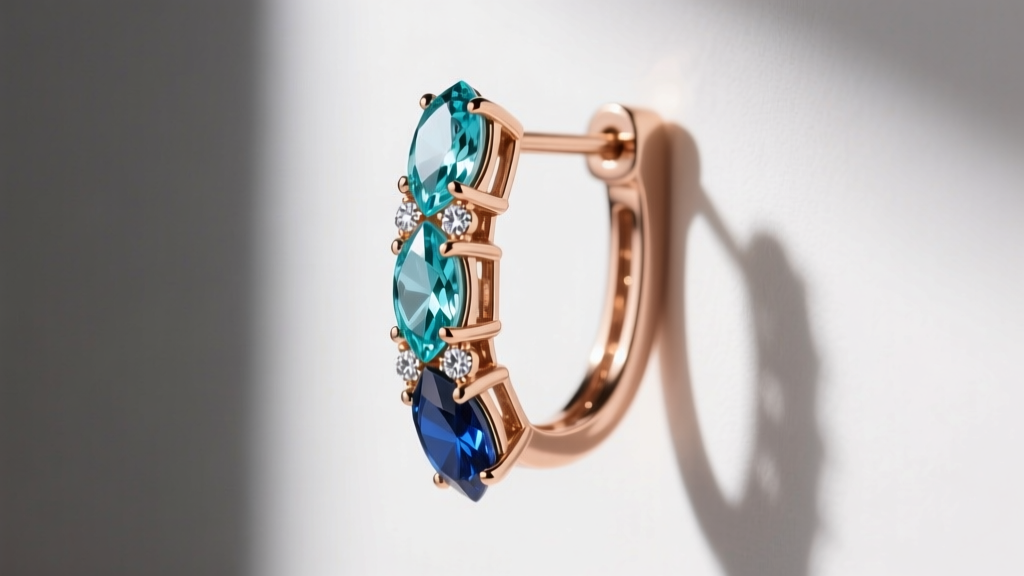
- 14k Rose Gold: An increasingly popular choice for modern aquamarine and diamond earrings. The copper content in rose gold provides a warm, pinkish-orange hue that sits opposite blue on the color wheel. This complementary contrast forces the aquamarine to appear significantly more saturated and vibrant than it would in a white metal setting.
Pricing Matrix and Valuation Metrics
Understanding the wholesale and retail pricing architecture is essential when investing in fine aquamarine and diamond earrings. Prices fluctuate based on origin, treatment, and melee quality. The following matrix outlines expected retail price ranges for a standard pair of 14k or 18k gold earrings featuring 2.00 total carat weight (TCW) aquamarines and 0.50 TCW diamond melee.
Market Valuations (Per Pair)
- Commercial Grade (Espirito Santo color, SI melee, 14k gold): $800 - $1,400
- Fine Grade (Medium-light blue, VS melee, 18k white gold): $1,800 - $3,200
- Extra-Fine Grade (Santa Maria blue, VVS melee, Platinum 950): $4,500 - $8,500+
Note that unheated, naturally saturated blue aquamarines from legacy mines carry a 30% to 50% premium over standard heat-treated stones. As detailed by the GIA's diamond grading frameworks, the precision of the diamond cut in the halo also heavily influences the final retail markup; ideal-cut melee commands higher labor and material costs.
Ultrasonic Cleaning Risks and Maintenance
Proper maintenance of aquamarine and diamond earrings requires an understanding of beryl's internal characteristics. While diamonds can easily withstand ultrasonic cleaning and steam, aquamarine frequently contains two-phase or three-phase liquid inclusions. Subjecting these inclusions to high-frequency ultrasonic vibrations or sudden thermal shock from a steam cleaner can cause internal stress fractures, effectively shattering the gemstone from the inside out.
Gemologist's Maintenance Protocol: Never use ultrasonic or steam cleaners on aquamarine jewelry. Instead, soak the earrings in a solution of lukewarm water and a few drops of pH-neutral dish soap for 10 minutes. Gently agitate the diamond pavé with a soft-bristled infant toothbrush to remove sebum and cosmetic buildup, then rinse under a gentle stream of tepid water and pat dry with a lint-free microfiber cloth.
Furthermore, because aquamarine is softer than diamond, the two should never be stored loose together in a jewelry box. The diamond melee will inevitably scratch the aquamarine's polished facets. Always store aquamarine and diamond earrings in individual, fabric-lined compartments to preserve their optical clarity and structural integrity for decades to come.


