Big Flower Stud Earrings: 2026 Budget & Value Guide
Discover the true value of big flower stud earrings in 2026. We analyze materials, pricing tiers, and structural durability to help you buy smart.

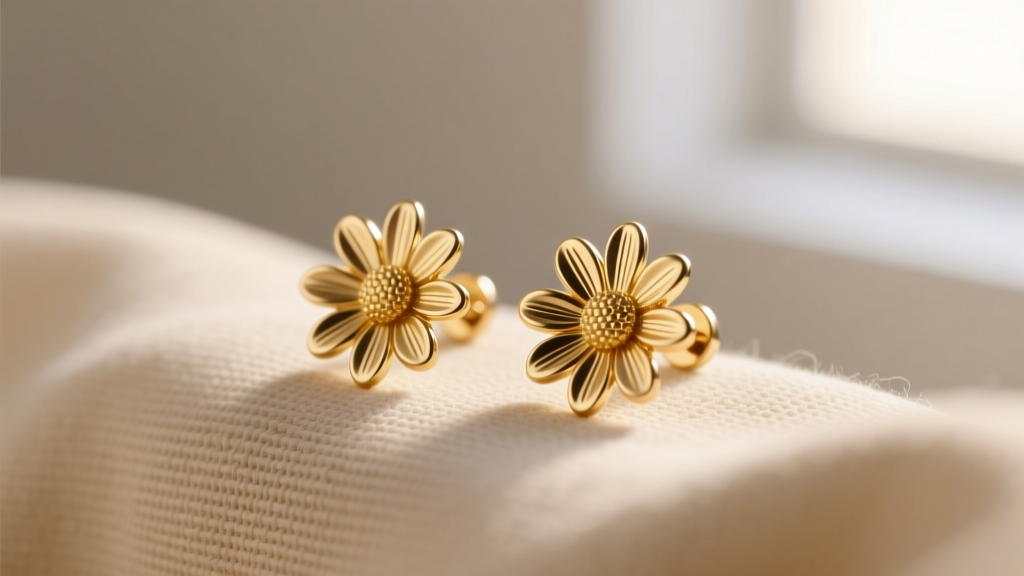
The Physics of Oversized Florals: Weight, Gauge, and the Lever Effect
When shopping for big flower stud earrings, most buyers focus entirely on the visual impact of the petals and gemstones. However, as a jewelry appraiser, I look straight at the post and the backing hardware. The transition from a standard 8mm stud to an oversized 25mm-40mm floral piece fundamentally changes the physics of how the earring interacts with your earlobe. The 'droop factor' is the primary failure point in budget-friendly oversized studs.
A standard 20-gauge (0.81mm) earring post is perfectly adequate for lightweight solitaires. But when you mount a 30mm brass or silver flower face weighing 7 to 12 grams onto a 20G post, you create a lever. The weight of the flower pulls downward, bending the post and causing the earring to point toward the floor. In 2026, the hallmark of a high-value oversized stud is an 18-gauge (1.02mm) or even 16-gauge (1.29mm) post, paired with a post placement that is offset 2mm to 3mm above the dead-center of the flower. This slight upward offset counteracts gravity, allowing the flower to sit flush against the lobe without requiring constant adjustment.
Hardware and Backing: The Unsung Heroes of Value
A $15 pair of big flower stud earrings will almost always ship with standard butterfly friction backs. These are inadequate for oversized florals. The small surface area of a butterfly back will dig into the neck and fail to support the front-heavy weight. True value in the mid-tier ($45–$90) includes jumbo silicone stabilizers or flat-disc screw-backs. These distribute the 10+ gram weight across a wider surface area of the earlobe, preventing the dreaded 'torn lobe' stretching effect over time.
2026 Material Tier List & Pricing Matrix
To accurately assess whether you are getting a fair deal, you must understand the material compositions currently dominating the market. According to the FTC Jewelry Guidelines, terms like 'gold vermeil' and 'gold plated' have strict legal definitions regarding base metals and plating thickness. Here is how big flower stud earrings break down across three distinct budget tiers this year.
| Tier | Material Composition | Price Range (2026) | Lifespan & Durability | Skin Sensitivity Risk |
|---|---|---|---|---|
| Budget | Cast Brass with PVD Gold Plating (0.1 - 0.3 microns) | $18 - $35 | 6-12 months before base metal exposure | High (Nickel/Copper allergies) |
| Mid-Tier | Sterling Silver Base with Gold Vermeil (2.5+ microns) | $55 - $110 | 2-4 years with proper care | Low (Hypoallergenic base) |
| Investment | Solid 14k/18k Gold with Vitreous Enamel or Guilloché | $280 - $650+ | Lifetime / Heirloom | None |
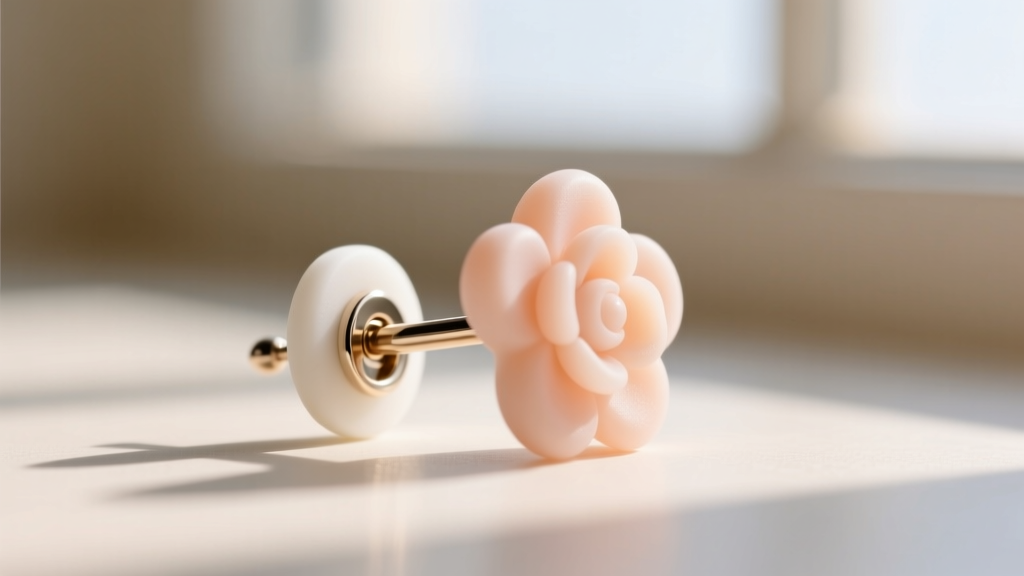
The Enamel Trap: Cold Epoxy vs. Vitreous Glass
Many big flower stud earrings feature vibrant, colorful petals. In the budget and lower-mid tiers, this color is achieved using 'cold enamel,' which is essentially a hardened epoxy resin. While cheap to produce, cold enamel is highly susceptible to UV yellowing and will chip if the earring is dropped on a hard surface. Investment-tier florals utilize vitreous enamel—a powdered glass fused to the metal at over 1,400°F. As noted by GIA Jewelry Care experts, vitreous enamel is incredibly durable, colorfast, and possesses a depth of translucency that epoxy simply cannot mimic. If a brand charges over $120 for a pair of floral studs, verify that they are using kiln-fired glass enamel, not painted resin.
Assessing Craftsmanship: Casted vs. Die-Struck Petals
The manufacturing method dictates the structural integrity of the flower's petals. Thin, delicate petals on a large surface area are prone to snapping if squeezed in a jewelry box or caught on a sweater.
- Casted (Budget/Mid-Tier): Molten metal is poured into a mold. This allows for intricate, 3D floral designs but often results in microscopic porosity (air bubbles) within the metal. Casted petals are brittle and can snap under lateral pressure.
- Die-Struck (Mid/Investment): Metal is stamped under immense pressure from hardened steel dies. This compresses the molecular structure of the gold or silver, making the petals incredibly dense, lightweight, and resistant to bending. Die-struck big flower stud earrings will always offer superior long-term value, even if the initial design looks slightly less 'sculptural' than casted alternatives.
Smart Buying Framework: Where to Spend and Where to Save
If you want the bold, maximalist look of oversized florals without compromising your earlobe health or wasting money on disposable fashion jewelry, follow this decision matrix:
Spend on the Post and Backing: Never compromise on the hardware. If you find a beautiful budget brass flower stud but it has a thin 20G post, take it to a local bench jeweler. For about $25-$40, a jeweler can laser-weld a thicker 16-gauge titanium or steel post onto the back of the flower, instantly upgrading the structural integrity and making it safe for heavy, all-day wear.
Save on Gemstone Accents: If you want the sparkle of diamond-accented petals, opt for high-quality lab-grown melee diamonds or precision-cut cubic zirconia set in prongs. Avoid budget 'glued-in' rhinestones, as the adhesive degrades with skin oils and body heat, guaranteeing that you will lose stones within the first three months of wear.
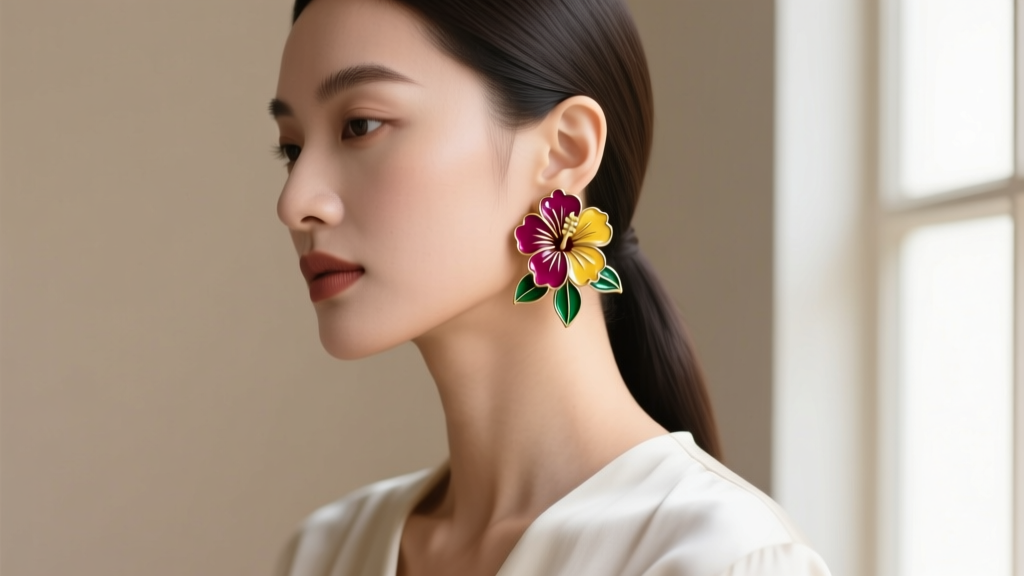
Appraiser's Tip: When trying on big flower stud earrings in-store or evaluating them upon delivery, perform the 'tap test.' Gently flick the edge of the largest petal. A high-quality, die-struck or solid metal piece will emit a dull, solid thud. A hollow, casted, or poorly soldered piece will emit a high-pitched, metallic rattle or 'ting,' indicating weak structural joints that will eventually fail.
Ultimately, the true value of big flower stud earrings in 2026 is not found in the sheer size of the carat weight or the flashiness of the gold tone. It is found in the engineering of the post, the density of the metalwork, and the quality of the enamel. By prioritizing structural ergonomics over superficial plating, you can secure oversized statement pieces that remain comfortable, secure, and visually stunning for years to come.


