How to Authenticate & Clean PAJ 925 China Earrings
Learn how to authenticate, clean, and restore PAJ 925 China sterling silver earrings with our expert step-by-step guide and troubleshooting tips.

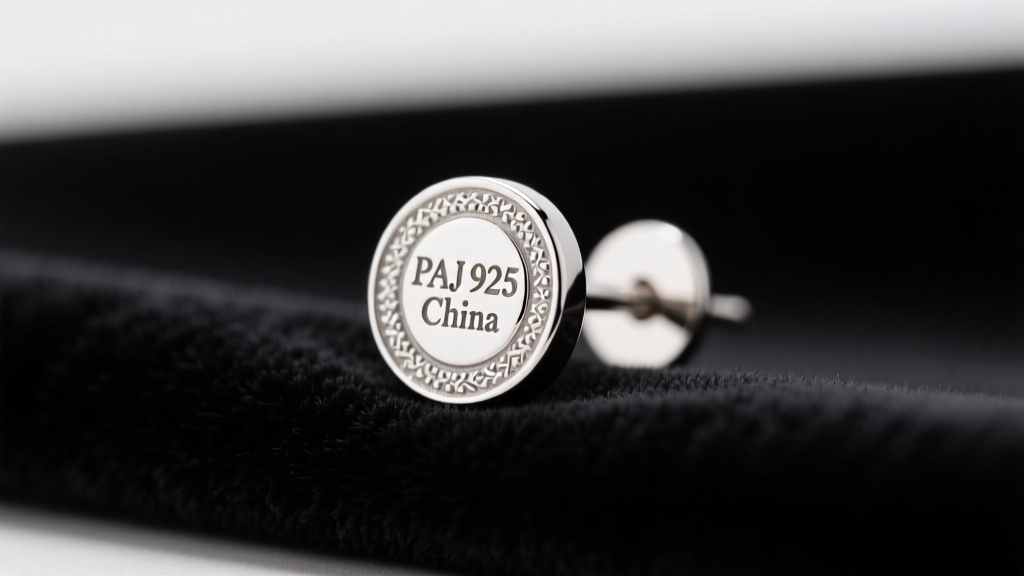
Finding a pair of earrings stamped with "PAJ 925 China" at an estate sale, vintage boutique, or even in your own jewelry box can spark immediate curiosity. As we navigate the jewelry market in 2026, understanding specific manufacturer hallmarks and country-of-origin stamps is more critical than ever for verifying authenticity and value. Whether you are dealing with vintage studs, classic hoops, or intricate dangles, this comprehensive step-by-step guide will teach you how to authenticate, properly clean, and maintain your PAJ 925 sterling silver earrings.
Decoding the "PAJ 925 China" Hallmark
Before diving into cleaning and testing, it is essential to understand exactly what the microscopic stamps on your earring posts or backing actually mean. According to the Federal Trade Commission (FTC), precious metal jewelry sold in the United States must be accurately stamped for metal purity and, if imported, must bear a country-of-origin mark.
What Does "PAJ" Stand For?
The "PAJ" stamp is a registered maker's mark. Historically, it has been most closely associated with Prime Art & Jewel, a prominent jewelry manufacturing company that produced pieces for numerous well-known fashion and bridge jewelry brands (such as Judith Jack) from the 1980s through the 2010s. In some modern contexts, PAJ may also represent a specific overseas manufacturing code for a contracted Chinese factory producing mass-market sterling silver goods. Regardless of the specific corporate entity, the presence of PAJ alongside a 925 stamp generally indicates a legitimate, commercially produced piece of sterling silver jewelry.
The 925 Purity Standard
The "925" stamp is the universal hallmark for Sterling Silver. As detailed by the Gemological Institute of America (GIA), sterling silver is an alloy consisting of exactly 92.5% pure silver and 7.5% other metals—almost always copper. Pure 999 silver is far too soft to hold the structural integrity required for a 20-gauge (0.81mm) earring post, making the copper alloy essential for durability.
The "China" Origin Stamp
The word "China" simply denotes the country of manufacture. Following strict U.S. Customs and Border Protection (CBP) regulations implemented in the early 2000s, all imported jewelry must be visibly marked with its country of origin. If your earrings lack this stamp but feature the PAJ 925 mark, they were likely produced prior to these strict enforcement mandates or were manufactured domestically.
Step-by-Step Guide to Authenticating Your Earrings
Counterfeiters often stamp base metals with "925" to deceive buyers. Follow these three non-destructive and minimally invasive steps to verify your earrings.
Step 1: The Neodymium Magnet Test
Silver is paramagnetic, meaning it exhibits no noticeable attraction to magnets. Base metals like iron, nickel, or steel (often used in cheap fakes) are ferromagnetic.
- Equipment: Use a strong neodymium magnet (N42 grade or higher). Standard fridge magnets are too weak to yield accurate results.
- Action: Hold the magnet near the earring post and the decorative face.
- Result: If the earring snaps to the magnet or shows any magnetic drag, it is not solid 925 silver. It is likely silver-plated brass or steel.
Step 2: Thermal Conductivity (The Ice Test)
Silver possesses the highest thermal conductivity of any common metal. It transfers heat rapidly.
- Action: Place an ice cube on a flat surface. Press the decorative face of the earring directly against the ice.
- Result: Genuine 925 silver will feel freezing to the touch almost instantly, and the ice will begin to melt against the metal significantly faster than it would against room-temperature plastic or glass.
Step 3: Acid Testing (For Stubborn Pieces)
If visual and physical tests leave you doubting, an acid test provides chemical certainty.
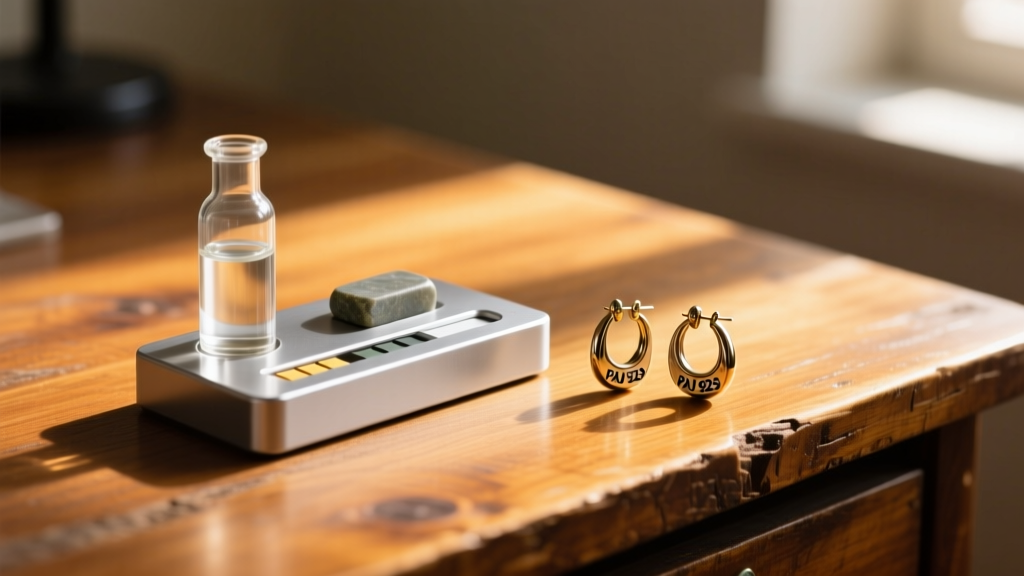
- Buy a standard precious metal testing kit containing Schwerter's solution (silver testing acid) and an unglazed testing stone.
- Rub the earring post firmly against the stone to leave a small metallic streak. (Do this in an inconspicuous area to avoid scratching the visible face).
- Apply one drop of the silver testing acid to the streak.
- Color Reaction: A dark, blood-red color confirms 925 sterling silver. A bright red indicates 999 fine silver. Brown, green, or blue indicates base metals or lower-grade silver (like 800 coin silver).
The Science of Tarnish and Safe Restoration
Sterling silver tarnishes due to the 7.5% copper content reacting with sulfur compounds in the air, humidity, and cosmetics, forming silver sulfide (Ag2S). This manifests as a yellowish, brown, or black film. Never use abrasive toothpaste or harsh chemical dips on vintage PAJ earrings, as these strip away the patina and micro-scratch the metal.
The Electrochemical Reduction Bath (Step-by-Step)
This method reverses the chemical reaction, converting silver sulfide back into pure silver without removing any metal.
Warning: Do NOT use this boiling water method if your PAJ earrings feature glued-in gemstones, pearls, opals, or turquoise. The heat will melt the jeweler's epoxy and shatter heat-sensitive stones. For gemstone pieces, use a specialized liquid silver foam and a microfiber cloth instead.
- Line a glass bowl with aluminum foil, shiny side facing up.
- Place your tarnished PAJ 925 earrings in the bowl, ensuring they physically touch the aluminum foil.
- Boil a pot of water. For every cup of boiling water, add 1 tablespoon of baking soda (sodium bicarbonate). Expect fizzing.
- Carefully pour the hot baking soda solution into the bowl, completely submerging the earrings.
- Let them sit for 3 to 5 minutes. You may notice a faint sulfur (rotten egg) smell—this means the chemistry is working.
- Remove the earrings with wooden tongs, rinse thoroughly under cool distilled water, and buff dry with a lint-free microfiber cloth.
Troubleshooting Common PAJ 925 Earring Issues
Even authenticated, genuine sterling silver earrings present unique wear-and-tear challenges. Below is a diagnostic table for the most common failure modes associated with mass-market 925 silver earrings.
| Issue | Root Cause | Expert Solution |
|---|---|---|
| Green Earlobes | The 7.5% copper alloy reacting with your skin's natural acids and lotions, creating copper chloride. | Coat the earring post and butterfly backing with a thin layer of clear, hypoallergenic nail polish, or have a local jeweler apply a flash rhodium plating. |
| Bent Earring Posts | 925 silver is relatively soft. Standard 20-gauge (0.81mm) posts bend easily when pushed through thick lobes or dropped. | Do not use steel pliers, which will mar the silver. Use nylon-jaw jewelry pliers to gently roll and straighten the post back to a 90-degree angle. |
| Black Crevices | Oxidation trapped in intricate filigree or stamped textures where polishing cloths cannot reach. | Use a soft-bristled baby toothbrush dipped in a mild, phosphate-free dish soap and warm water to gently agitate the crevices. |
| Loose Butterfly Backs | The friction notches on the 925 post have worn smooth over years of use. | Replace standard friction backs with La-Poussé locking backs or silicone stoppers, which do not rely on post notches for security. |
Valuation and Market Pricing in 2026
If you are looking to buy or sell PAJ 925 China earrings, understanding their market position is key. PAJ is generally recognized as a manufacturer of high-quality fashion or "bridge" jewelry, rather than luxury fine jewelry.
- Basic Studs and Hoops: Simple cubic zirconia (CZ) studs or plain wire hoops typically trade on secondary markets (like eBay, Poshmark, or Etsy) for $15 to $35.
- Semi-Precious Stone Pieces: Earrings featuring genuine amethyst, topaz, or garnet, especially in vintage Judith Jack designs manufactured by PAJ, can command $45 to $85 depending on the condition of the stones and the intricacy of the metalwork.
- Scrap Value: If the earrings are heavily damaged or missing stones, their value defaults to the melt value of the silver. With silver prices fluctuating, a standard pair of 5-gram earrings yields roughly $3 to $5 in scrap melt value.
Proper Storage to Prevent Future Tarnish
Once you have authenticated and restored your PAJ 925 earrings, proper storage is the final step in the preservation process. Tarnish is a product of exposure to airborne sulfur and humidity.
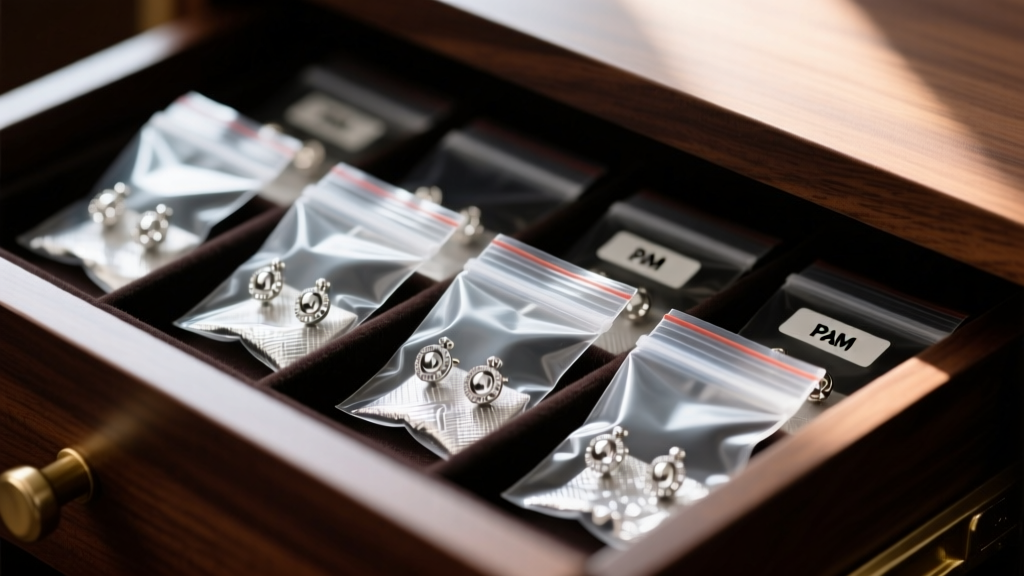
Never store sterling silver in open-air jewelry trees or on bathroom countertops. Instead, place each pair of earrings in an individual, airtight polyethylene ziplock bag. Squeeze out as much air as possible before sealing. For maximum protection, drop a 3M Anti-Tarnish Strip or a small silica gel desiccant packet into each bag. The anti-tarnish strip will absorb ambient sulfur gases, keeping your 925 silver bright and polished for years without the need for constant chemical cleaning. By following this meticulous, step-by-step protocol, your vintage and modern PAJ sterling silver earrings will remain a pristine, wearable part of your collection.


