Antique Style Earrings: 2026 Value & Budget Guide
Discover how to evaluate antique style earrings in 2026. Compare pricing tiers, material grades, and hidden value traps in our expert budget guide.

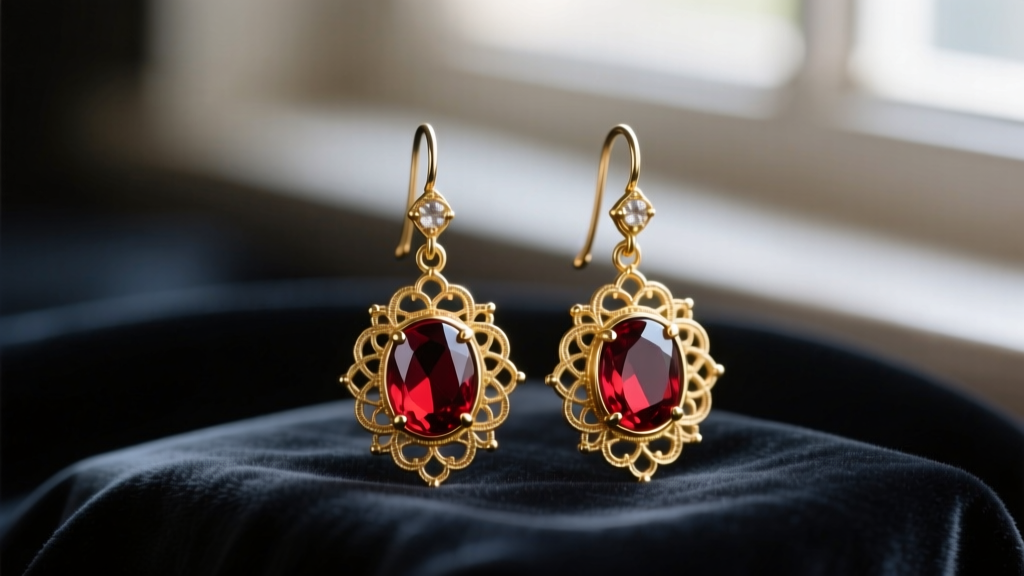
The Real Cost of "Antique" vs. "Antique-Style" Earrings
Navigating the market for antique style earrings in 2026 requires a sharp eye and a solid understanding of jewelry metallurgy. The resurgence of historical revivalism and "quiet luxury" has flooded the market with pieces that look like they belong in a Victorian parlor or an Art Deco speakeasy. However, there is a massive financial and qualitative chasm between genuine historical artifacts and modern reproductions. As a buyer, your primary goal is to ensure you are paying reproduction prices for reproduction materials, rather than being upsold on artificially inflated "antique-style" pieces.
To accurately assess value, we must first establish the industry-standard terminology. According to Lang Antiques University, a leading authority on historical jewelry, the terms are strictly defined by age and origin:
- Antique: Jewelry that is 100 years old or older (currently, pieces made in 1926 or earlier).
- Vintage: Jewelry that is at least 20 to 99 years old, representing a specific era's style.
- Antique-Style (Reproduction): Modern jewelry manufactured to mimic the aesthetics, motifs, and techniques of historical periods, regardless of the materials used.
When you are shopping for antique style earrings, you are almost exclusively looking at the third category. The value assessment, therefore, shifts from historical provenance to material integrity, craftsmanship, and brand markup.
Material Breakdown: What You Are Actually Paying For
The most common trap in the antique-style market is deceptive metal plating. Because historical aesthetics rely heavily on intricate filigree, milgrain detailing, and oxidized contrast, manufacturers often use cheap base metals to keep costs down while mimicking the look of solid precious metals.
Precious Metals: Vermeil, Gold-Filled, and Solid Karats
If a pair of antique style earrings is marketed as "gold," you must verify the exact classification. The Federal Trade Commission (FTC) strictly regulates these terms to protect consumers from deceptive marketing:
- Gold Plated (Flash Plating): Often less than 0.5 microns of gold over brass or copper. This is the standard for sub-$50 antique style earrings. It will wear off within months, exposing base metals that can cause contact dermatitis or turn the earlobe green due to copper oxidation.
- Gold-Filled (GF): Must contain at least 5% (1/20th) of the total weight in solid gold, mechanically bonded to a base metal core. A 14k gold-filled leverback earring offers excellent longevity and is a hallmark of mid-tier, high-value antique reproductions.
- Vermeil: Sterling silver (925) plated with at least 2.5 microns of 10k, 14k, or 18k gold. This is the premium standard for high-end antique style earrings, offering the hypoallergenic benefits of silver with the rich luster of gold.
Gemstones: Paste, Rhinestones, and Modern Simulants
Historical earrings frequently featured "paste" (hand-cut, high-lead-content glass) or foil-backed rhinestones. Modern antique style earrings rarely use true hand-cut paste. Instead, they utilize molded glass, machine-cut Cubic Zirconia (CZ), or synthetic corundum. While CZ offers superior brilliance and durability (8.5 on the Mohs scale compared to glass's 5.5), it lacks the historical charm of antique paste. When assessing value, ensure you are not paying a premium for "vintage-style crystals" that are essentially mass-cut CZs sourced for pennies.
2026 Pricing Matrix: Budget Tiers for Antique Style Earrings
To help you benchmark your purchases, we have categorized the current market for antique style earrings into four distinct pricing tiers. Use this matrix to determine if a seller's asking price aligns with the actual material and labor costs.
| Tier | Price Range (USD) | Typical Materials | Hardware & Craftsmanship | Longevity |
|---|---|---|---|---|
| Fast Fashion | $15 - $45 | Zinc alloy, brass, flash-plated, molded glass/CZ | Thin 22g wire, stamped butterfly backs, epoxy-set stones | 6 - 12 months |
| Artisan Reproduction | $80 - $250 | Sterling silver, thick vermeil, 1/20 14k gold-filled | Standard 20g wire, cast leverbacks, prong-set semi-precious stones | 5 - 10 years |
| High-End Revival | $300 - $800 | Solid 14k/18k gold, platinum accents, genuine sapphires/diamonds | Hand-engraved milgrain, secure screw-backs or custom leverbacks | Lifetime / Heirloom |
| Genuine Antique | $1,500+ | Historical alloys, old-mine cut diamonds, natural pearls | Period-correct shepherd hooks or early screw-backs | Requires conservation |
Hidden Value Traps and Hardware Failure Modes
When evaluating antique style earrings, the devil is in the details—specifically, the hardware and structural integrity. Many buyers focus entirely on the face of the earring, ignoring the components that actually interact with the ear and bear the structural load.
Wire Gauge and Ear Piercing Health
The standard gauge for a healthy, standard earlobe piercing is 20-gauge (0.81mm) or 18-gauge (1.02mm). Cheap antique style drop earrings frequently use 22-gauge (0.64mm) or even 24-gauge wire for the shepherd hooks to save on metal costs. This ultra-thin wire is prone to bending, snapping under the weight of a dangle, and can actually cause the "cheese-cutter effect," where thin wire slowly migrates through the earlobe tissue under stress. Always verify the wire thickness before purchasing dangle or drop styles.
Solder Joints and Hinge Mechanics
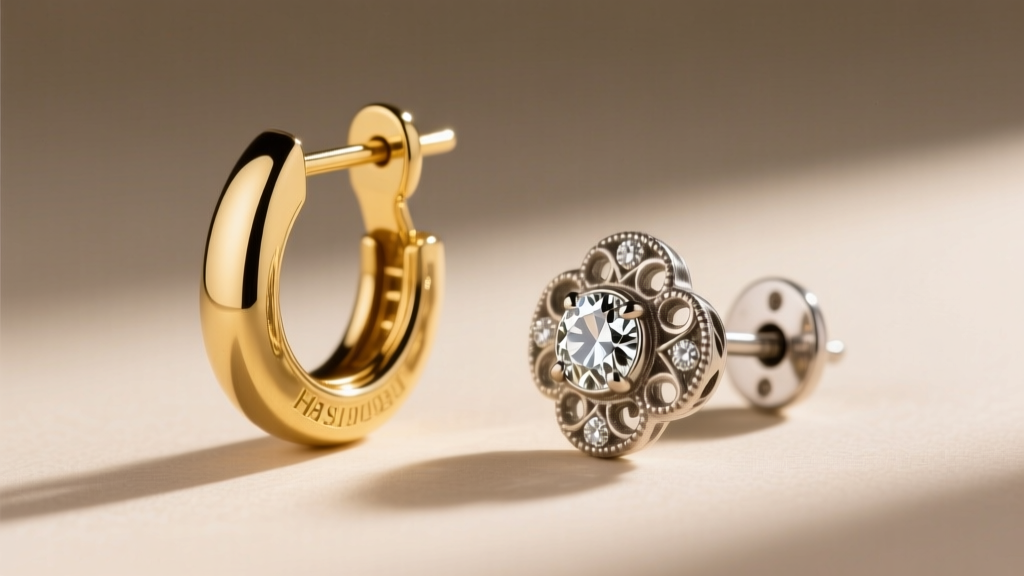
If you are buying antique style huggies or hoop earrings with a leverback closure, inspect the hinge. Mass-produced reproductions often use weak, spot-welded hinges that fail within a year. High-value pieces will feature laser-soldered or traditional torch-soldered hinges that move smoothly without lateral wobble. Furthermore, check the clasp catch; it should engage with a definitive "click" and require intentional pressure to open.
The Foil-Back Degradation Trap
Many Georgian and Victorian reproduction earrings attempt to mimic the deep, reflective sparkle of foil-backed gemstones. In genuine antiques, the foil is sealed within a closed-back bezel. In modern budget reproductions, the foil is often glued to the back of an open-setting stone using cheap epoxy. When exposed to sweat, humidity, or cosmetics, this epoxy degrades, the foil oxidizes and turns black, and the stone becomes dull and cloudy. This is a catastrophic failure mode that renders the earring unwearable. Always opt for open-back settings with faceted stones that rely on their own optical properties rather than degrading foil backings.
How to Authenticate and Assess Value Like a Pro
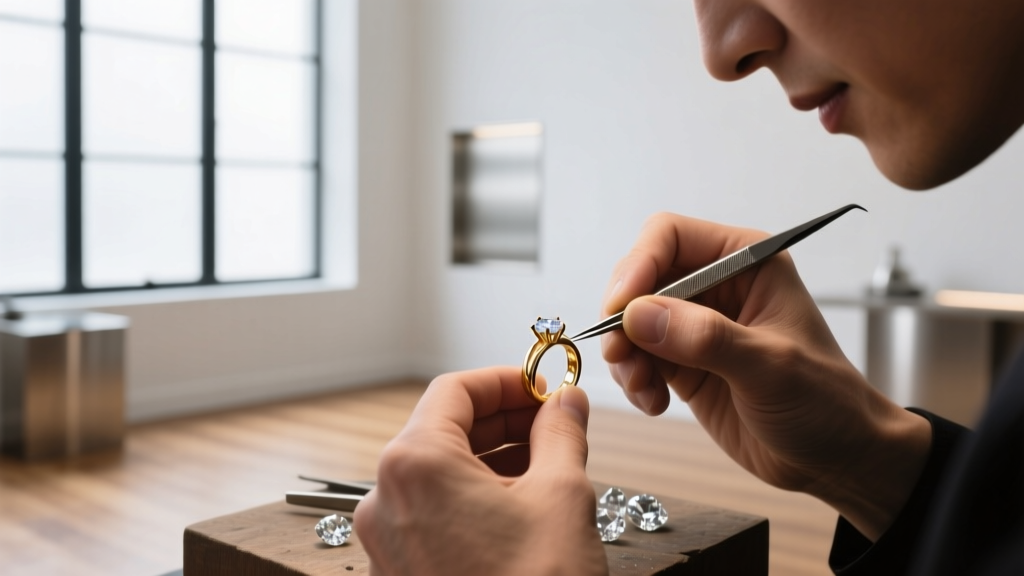
Even when you know you are buying modern antique style earrings, you must verify that the materials match the seller's claims. The Gemological Institute of America (GIA) emphasizes the importance of hallmark verification and gemological testing, even for contemporary revival pieces.
"A true hallmark indicates the maker and the metal purity. In modern reproductions, look for the '925' stamp for sterling silver or the '1/20 14k GF' stamp for gold-filled items. An unmarked piece claiming to be precious metal should immediately trigger skepticism and a request for X-ray fluorescence (XRF) testing data."
When shopping online, demand high-resolution macro photography of the earring posts, clasps, and solder joints. If a seller cannot provide a clear image of the metal hallmark or the exact gemstone setting technique (e.g., bead-set vs. glue-set), walk away. True value in the antique-style market is rooted in transparency and verifiable craftsmanship, not just an aesthetically pleasing vintage filter on a product photo.
Final Verdict: Maximizing Your Budget
The market for antique style earrings in 2026 offers incredible opportunities for buyers who know what to look for. To maximize your budget, avoid the "fast fashion" tier entirely; the cost-per-wear is abysmal due to rapid material degradation. Instead, target the Artisan Reproduction tier ($80-$250). By focusing on pieces crafted from 1/20 14k gold-filled wire or heavy sterling silver vermeil, paired with 20-gauge hardware and prong-set semi-precious stones, you secure the romantic, historical aesthetic you desire without paying the exponential premiums associated with solid gold or genuine historical artifacts. Always prioritize structural hardware integrity over sheer visual size, and your antique style earrings will remain a staple in your wardrobe for decades.


